
Staged to Deceive: When Open House Presentation Crosses the Line from Strategy into Fraudulent Concealment

Every week during the spring market, I walk through properties where someone — a seller, a stager, an agent — has made decisions I recognize. The furniture arranged to bisect a sightline. The lamp placed on a floor where a lamp has no business being. The freshly applied semi-gloss on a ceiling that, three months earlier, was showing something a buyer would want to know about.
Most of what I see is legitimate. Staging is legal. It is, in fact, part of the job. But there is a distinction between presenting a property in its best light and deploying presentation as concealment — and that distinction has been litigated, in New York appellate courts, with enough regularity that any seller proceeding to an open house without understanding where the line falls is taking a risk they haven’t priced.
The Legal Framework: Fraud and Misrepresentation in the Staging Context
New York fraudulent concealment doctrine, as articulated in the residential real estate context, requires a plaintiff to establish: (1) that the defendant possessed knowledge of a material fact; (2) that the defendant concealed that fact; (3) that the concealment was intentional; (4) that the plaintiff relied on the concealment to their detriment; and (5) that damages resulted. New York Pattern Jury Instructions — Civil §3:20 sets out the general fraud elements, which post-closing real estate disputes have mapped onto the staging context with increasing frequency.
The critical first element — knowledge — is where many seller defenses in these cases begin and often end. A seller who genuinely did not know that the subfloor beneath the area rug had water damage is in a materially different legal position than one who called a remediation company, received an estimate, and then covered the affected area before listing. Discovery in post-closing litigation has a way of surfacing that history: contractor invoices, insurance claims, text message chains with agents about how to present the problematic room.
The Appellate Division, Second Department — whose jurisdiction covers Suffolk and Nassau Counties, as well as the other downstate counties where most Long Island real estate litigation is resolved — has addressed fraudulent concealment claims in residential transactions through a framework that treats the seller’s actual knowledge as a threshold question, and the method of concealment as the factual core of the fraud analysis.
What the Cases Actually Involve: The Recurring Staging Patterns
Post-closing litigation in New York residential real estate does not typically involve exotic fact patterns. The staging decisions that generate claims fall into a recognizable cluster.
Floor and subfloor concealment. An area rug placed over visible water damage, buckled boards, or an area of subfloor that has been affected by a prior leak is among the most commonly litigated staging choices. Courts have declined to hold that furniture placement is per se fraudulent — buyers have an independent duty to inspect — but where a seller can be shown to have placed covering over a specific known defect with knowledge of that defect, the concealment element is substantially satisfied.
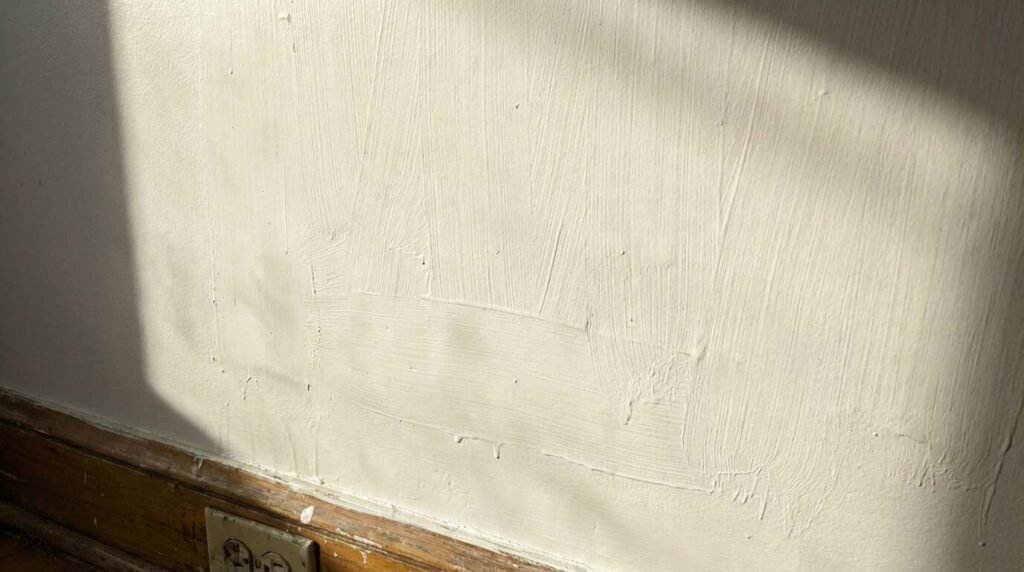
Moisture and mold masking. Fresh paint applied to a wall or ceiling that previously showed active moisture intrusion or documented mold has generated claims in the Second Department. The evidentiary challenge for plaintiffs is demonstrating that the seller knew the paint concealed an existing condition rather than completed a legitimate repair. The defense — that the remediation was done, the paint was a finish coat, the condition no longer existed — is available but requires documentary support. Where remediation records exist, they tend to be produced in discovery. Where they don’t, courts have drawn inferences.
Strategic lighting. Rooms with ceiling defects — staining, cracking, evidence of prior leaks — benefit from low-angle lighting that directs visitor attention toward windows and away from overhead surfaces. This is a staging convention sufficiently well-known that it appears in bar association CLE materials on seller exposure. Courts have not held lighting choices to be independently actionable, but they have permitted such choices to be introduced as circumstantial evidence of intent to conceal in cases where a concealed defect was also present.
Scent masking. The use of fragrance — diffusers, candles, freshly baked goods — during open houses has appeared in deposition testimony in cases involving properties with documented moisture or mold histories. Like lighting, scent masking alone has not generated liability findings. Its evidentiary significance is as corroborating context: in a case where the defendant knew of a mold problem, covered it with paint, and then deployed fragrance diffusers during the open house, each element contributes to the intent analysis.

The Buyer’s Independent Duty to Inspect — and Its Limits
New York courts apply the doctrine of caveat emptor to real estate transactions with meaningful force. A buyer who had the opportunity to observe a condition during a showing or open house, or who had the opportunity to conduct a home inspection and either declined or failed to pursue visible indicators, faces significant headwinds in establishing post-closing misrepresentation claims.
The Second Department has been clear, however, that caveat emptor does not protect active fraud. The buyer’s duty to inspect is a duty to observe what is observable — it is not a duty to detect what has been specifically concealed from observation. A buyer who walked across a freshly laid area rug during an open house, saw nothing anomalous, and closed on the property has not waived a fraud claim if it later emerges that the rug was placed there by the seller specifically because the subfloor beneath it was water-damaged and the seller knew it.
This is the precise point where the staging-as-concealment analysis turns. The question is not whether the buyer looked at the floor. The question is whether what the seller placed on the floor was designed to prevent the buyer from seeing what was there.
Professional Stagers and Agent Exposure
A staging professional who is retained and directed by a seller to conceal a known defect is not a neutral party. Whether a stager’s liability attaches in a particular case depends on their knowledge of the underlying condition — staging companies are generally not home inspectors, and absent evidence that the stager knew they were covering a specific known defect rather than simply positioning furniture for aesthetic effect, independent stager liability is rare.
The seller’s agent is in a different position. RPL §443 establishes the broker’s duty to the seller and the broker’s obligations in dealings with buyers and other parties. An agent who knows of a condition — because the seller told them, because the condition was visible before staging, because prior disclosure documents reference it — and who participates in a presentation strategy designed to prevent buyers from detecting it has moved beyond the boundaries of permissible advocacy for their principal.
NYSBA Real Property Law Section guidance on seller representation addresses the agent’s obligation to avoid participating in active concealment, distinguishing it from the general obligation to present the property favorably. The distinction is not always clean in practice, which is why pre-listing conversations about known conditions and their proper disclosure are not optional for agents who understand their exposure.
The Standard a Plaintiff Must Meet — and Why It Matters
A buyer who discovers a defect after closing and believes it was concealed during the open house faces a burden of proof that is meaningful but not insurmountable. Proving that the seller knew of the defect is the threshold question, and in the era of email, text, and insurance claims, the documentary record available in discovery is often more complete than sellers anticipate when they decide how to present a room.
The damages analysis in these cases typically encompasses cost of remediation, diminution in value, and consequential damages depending on the severity of the defect. Rescission remains available in extreme cases, though courts apply it with restraint in post-closing residential contexts given the equitable disruption it requires.
What I tell sellers is simpler than the case law. Staging is legal. Concealment is not. If there is a condition in the house that requires covering rather than disclosing, the covering is not the solution — the disclosure is. A properly disclosed condition that a buyer accepts is a closed matter. A concealed condition that a buyer discovers is a litigation.
The open house is not where that choice gets made. It is where the consequences of that choice become visible.
This post is for informational purposes only and does not constitute legal advice. Consult a licensed New York real estate attorney regarding your specific situation.
Real estate markets change. For current listings and market data, contact Pawli at Maison Pawli.
You Might Also Like
- The Disclosure Doctrine at the Open House: What Sellers Are Legally Required to Reveal
- The Staging Mistake That Costs Long Island Sellers $15,000 at the Table
- The Seller’s Disclosure Form Is a Legal Document
Sources
- New York Pattern Jury Instructions — Civil §3:20 (Fraud and Fraudulent Concealment)
- New York Real Property Law §443 — Disclosure of Broker’s Role
- New York State Bar Association Real Property Law Section
- New York Real Property Law §§460–467 — Property Condition Disclosure Act
This post is part of our comprehensive guide: The Long Island Open House: What Sellers Must Disclose, What Buyers Should Ask, and What the Law Actually Says.