The Hidden Clause: How Nassau County’s Post-War Deed Covenants Have Quietly Collided With FHA Rules — and What Long Island First-Time Buyers Can Do About It
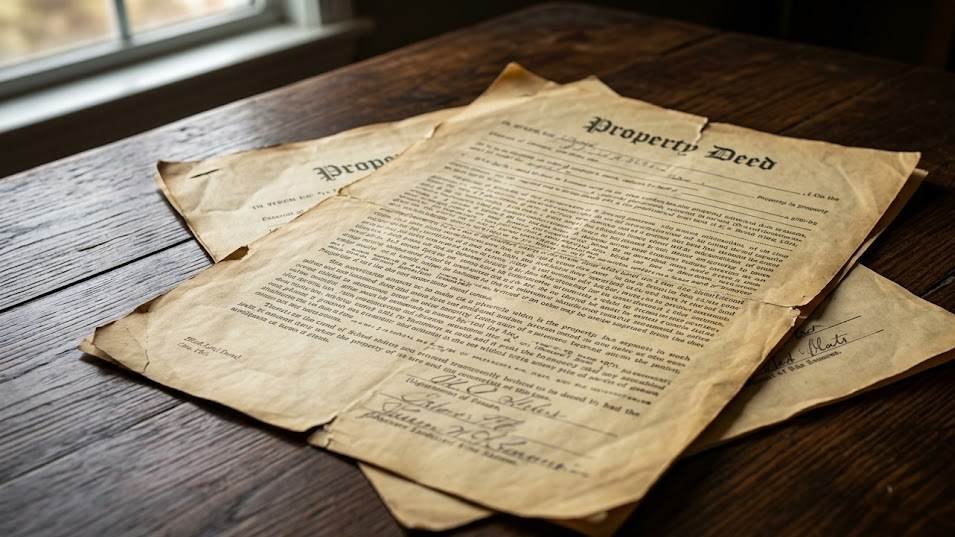
There is a document buried in the Nassau County Clerk’s archive that most Long Island homebuyers will never read — and that most real estate attorneys, however good, may never specifically flag. It is not a dramatic document. It is, in fact, almost aggressively routine-looking: a standard deed from the late 1940s or early 1950s, the pages faded to the color of old newspaper, the language dense with the formality of mid-century legal prose. But somewhere in those pages — often on the third or fourth sheet, beneath the boilerplate recitations of consideration and metes and bounds — there may be a clause that has, decades later, the potential to kill a first-time buyer’s FHA loan approval at the worst possible moment.
I want to be careful here, and precise. This is not a crisis story, and I am not in the business of manufacturing alarm. But it is a story about the gap between what buyers know and what their paperwork actually says — and in my years working with buyers across Nassau and Suffolk, I have found that gap to be consistently wider than it should be.
The Document Trail Begins in 1947
To understand how this particular collision happens, you have to go back to the beginning of modern Long Island — which is, in many respects, the beginning of the modern American suburb. When Levitt & Sons broke ground on their Nassau County development in 1947, they were building more than houses. They were building a legal architecture — a set of deed restrictions and covenants that would govern how those homes could be used, modified, and sold for decades to come.
The most notorious of those covenants — the racial restrictions that barred non-white buyers from Levitt’s planned communities — were declared unenforceable by the Supreme Court in 1948 and definitively prohibited by the Fair Housing Act of 1968. But many Long Island homeowners who pull their original deeds today find that language still physically present in their documents, unenforceable as a matter of law but indelibly printed in the record. Researchers and journalists have documented this phenomenon in Nassau County deeds for years. The Long Island Board of Realtors acknowledged as recently as 2020 that such language “has been removed in some places, but does still linger in others.”
The racial covenants are the part of this history that gets discussed. What gets discussed less are the other covenants — the operational ones, the land-use restrictions, the resale conditions — some of which were designed to protect the developer’s investment in a planned community and were never formally struck down or superseded. These are the clauses that, under specific circumstances, can interact badly with modern federal mortgage policy.
The Federal Rule That Changed the Equation
In May 2003, HUD published a final rule under 24 CFR 203.37a establishing what is now commonly known as the FHA anti-flipping rule. The core provision is simple: a property being resold within 90 days of the seller’s acquisition date is not eligible for FHA mortgage insurance. This 90-day clock runs from the date the seller’s deed was recorded — not from the closing date, not from the move-in date — to the date all parties execute the new sales contract.
The rule was designed to address a specific and well-documented form of predatory lending: quick-turnaround property flipping, where investors would purchase distressed homes, apply a cosmetic renovation, and resell at inflated values to unsophisticated buyers using FHA-backed financing. As codified in HUD Handbook 4000.1 — the governing document for FHA single-family mortgage insurance — the rule has no exceptions for innocent parties. If the seller has held the property for fewer than 91 days, the FHA loan is denied. Full stop. The rule is reactive in form but absolute in application: it does not matter why the sale is happening quickly, only that it is.
HUD waived this rule during the post-2008 foreclosure crisis — briefly allowing FHA financing on quickly resold REO properties to help stabilize communities — but that waiver expired at the end of 2014 and was not renewed. Since then, the 90-day restriction has been in full effect, with a narrow set of exemptions for sales by HUD itself, certain government agencies, approved nonprofit organizations, and employer-relocation situations.
Where the Collision Happens
Now here is where the two histories — the post-war deed covenants and the modern federal mortgage rules — can run into each other.
Certain deed restrictions from planned post-war developments were written not to prohibit resale but to control its timing and conditions. Some developer covenants from this era included requirements that a buyer hold a property for a minimum period before reselling, or that resale be conducted through specific channels. On the surface, these look like the developer protecting the community character of a new planned neighborhood. In practice, they created a set of title encumbrances that have, in some circumstances, complicated the chain of ownership in ways that downstream buyers — particularly FHA buyers — never anticipated.

The mechanism of collision is this: FHA’s 90-day rule measures time from the seller’s recorded acquisition. But if a property changed hands through a transaction that involved a covenant-restricted resale — one that was technically premature under the original deed language, creating a cloud on title — a subsequent buyer using FHA financing may find themselves caught between the title issue and the federal resale restriction simultaneously. The title insurer discovers the encumbrance. The FHA loan requires clear title. The closing collapses.
This is not a hypothetical. Title insurance underwriters — the people who actually read original deeds cover to cover before committing to insure a transaction — have documented conflicts of this kind in Long Island properties with post-war developer histories. It is not common. But it is not rare enough to ignore, and the buyers who encounter it are almost always first-time buyers who had no reason to expect it.
What the Nassau County Clerk’s Archive Actually Contains
Nassau County property records are publicly searchable through the Nassau County Clerk’s Office, accessible at nassaucountyny.gov. Any buyer, any attorney, any title researcher with patience and a document number can pull original deeds going back to the Levitt era and read precisely what covenants were attached to a given property at the moment of first sale. The Levittown Public Library also maintains a historical collection of original Levitt sales contracts, which provides context for what standard developer language looked like during the period of peak construction.
What you find in those records, if you look carefully, is that Levitt & Sons — and developers who followed their model across Nassau and western Suffolk — attached covenant packages that governed far more than racial composition. They governed landscaping maintenance schedules. They governed fence construction. They governed what kinds of structures could be added, and in some cases, what conditions had to be met before transfer. Not all of these restrictions were time-limited. Not all of them were superseded by statute. And not all of them were flagged to buyers at the time of sale as conditions that would travel with the deed to every subsequent owner.
The New York State Bar Association’s Real Property Law Section has addressed the persistence of deed covenants in its published advisories, noting that under New York law, a covenant that “runs with the land” binds subsequent owners even if those owners had no direct relationship to the original grantor. The question of whether a particular covenant has lapsed — through disuse, through statutory reform, through a court’s finding of abandonment — is a legal analysis that must be done property by property. There is no blanket answer.

The 91-to-180-Day Window: A Secondary Trap
Even buyers who clear the 90-day threshold face an additional layer of FHA scrutiny. If a property is resold between 91 and 180 days from the seller’s acquisition date and the resale price is 100 percent or more above what the seller paid, HUD requires a second independent appraisal. The lender must document the increased value; it cannot simply rely on the original appraisal. This provision exists to prevent a subtler form of the same fraud the 90-day rule targets — slower flips where cosmetic improvements justify inflated comps that a single appraiser, particularly one with a prior relationship to the seller, might be willing to support.
On Long Island in 2026, where compressed inventory and sustained buyer demand have driven prices sharply upward even in 90-to-180-day holding windows, this secondary provision is more frequently triggered than buyers and their agents realize. A seller who purchased a distressed property in January and lists it in April at a price reflecting both renovation costs and current market appreciation may be entirely legitimate. But if the math crosses the 100-percent threshold, the FHA buyer faces a second appraisal requirement that can add cost, time, and uncertainty to a transaction already under pressure. I’ve seen rate locks expire in exactly this window.
What to Do Before You Make an Offer
I will tell you what I tell my own clients, particularly those using FHA financing. Before you fall in love with a house — before you write the offer — your agent should establish two things clearly: the date the current seller took title (which is a matter of public record, verifiable through the county clerk) and whether any prior deed restrictions affect the property. This is not a complex ask. It takes a competent search and a careful read.
The 90-day calculation is mechanical and easy to verify. Pull the recorded deed date for the seller. Count forward. If you are within that window, and the seller has no exemption status, you need a loan product other than an FHA-insured mortgage. Conventional loans, VA loans, and USDA loans have their own resale timing considerations, but they do not share FHA’s categorical 90-day prohibition.
The deed covenant question is less mechanical and requires actual legal review — not a title search summary, but a reading of the original instrument. If you are purchasing a home in a community developed between 1945 and 1965 anywhere in Nassau or western Suffolk, ask your attorney to pull the original deed and read the full covenant package. Not just the schedule of easements. The full text. This is not extra work. It is the basic work. And it is the kind of thing that distinguishes a transaction that closes cleanly from one that falls apart at the title review stage after months of effort.
A Note on What This Is Not
I want to close with a clarification, because I think the history here can generate more anxiety than the current situation warrants. The overwhelming majority of post-war Long Island homes transact without any of these complications. Nassau County’s housing stock is deep, well-documented, and mostly free of the kind of covenant tangle I’ve described. The FHA anti-flipping rule is designed to target predatory behavior, not ordinary family transactions, and it does not affect the vast majority of resales.
What I am describing is a narrow but real category of risk that is almost entirely preventable — not through panic, but through preparation. Read the original deed. Know your seller’s acquisition date. Work with an attorney who has done this before on Long Island, not one who is learning the territory at your expense. That combination of knowledge and representation is the difference between a transaction that closes and one that doesn’t.
The houses are good. The market, despite its challenges, is real. The paperwork is where attention belongs, and it always has been.
—
*This is for informational purposes only — consult a licensed attorney or financial advisor for your specific situation.*
*Real estate markets change. This post reflects conditions as of April 2026. For current listings and market data, contact [Pawli at Maison Pawli](https://maisonpawli.com/about/).*
—
This is for informational purposes only — consult a licensed attorney or financial advisor for your specific situation.
You Might Also Like: The Complete Guide to Buying a Home on Long Island’s North Shore — the full buyer’s guide covering every stage of the North Shore home purchase, from mortgage to closing.
Real estate markets change. This post reflects conditions as of April 2026. For current listings and market data, contact Pawli at Maison Pawli.