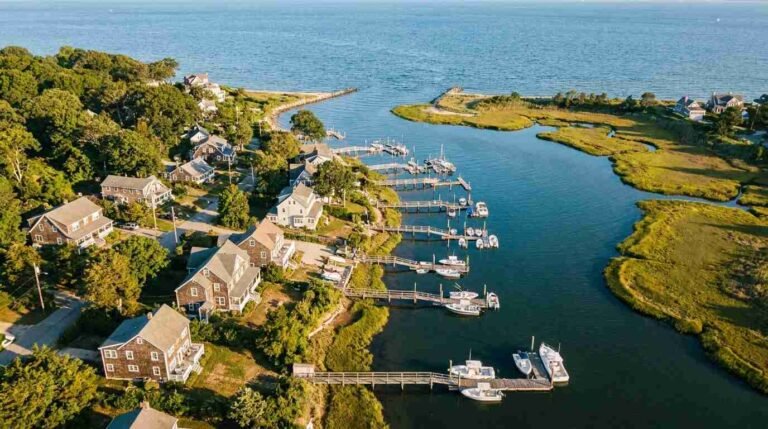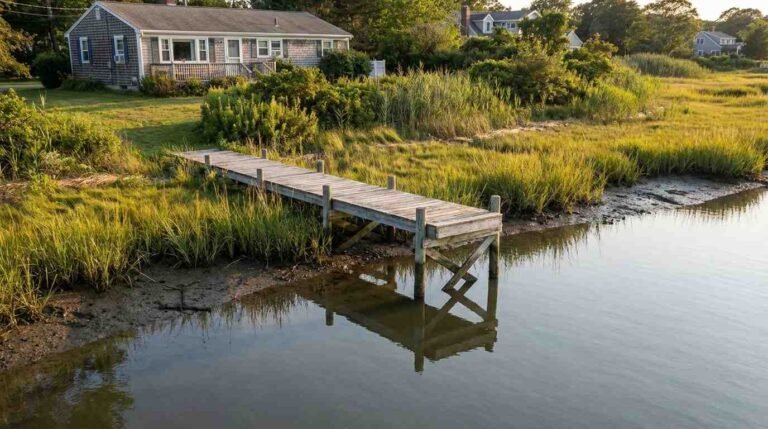
Where Does Your Property Actually End? The Legal Swamp of East End Dock Rights
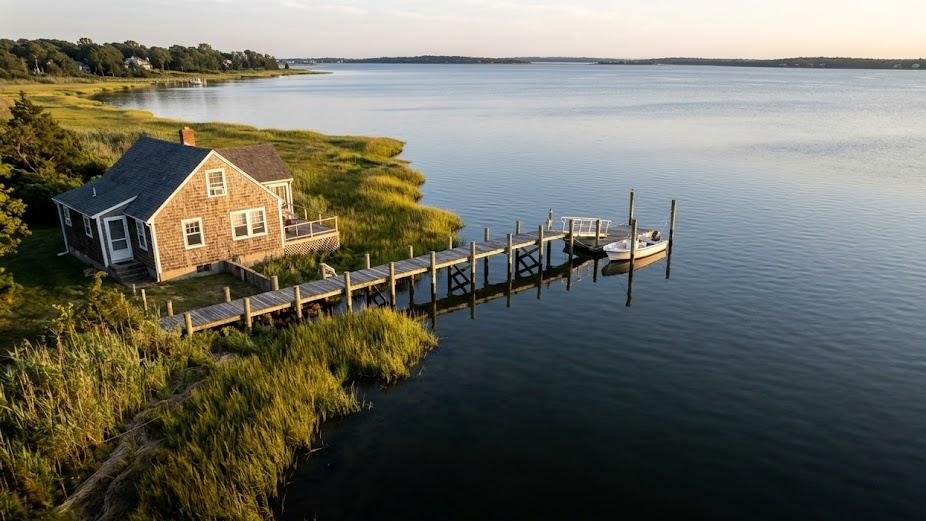
You bought the beach house. You bought the view. The question is whether you bought the right to do anything with the water in front of it.
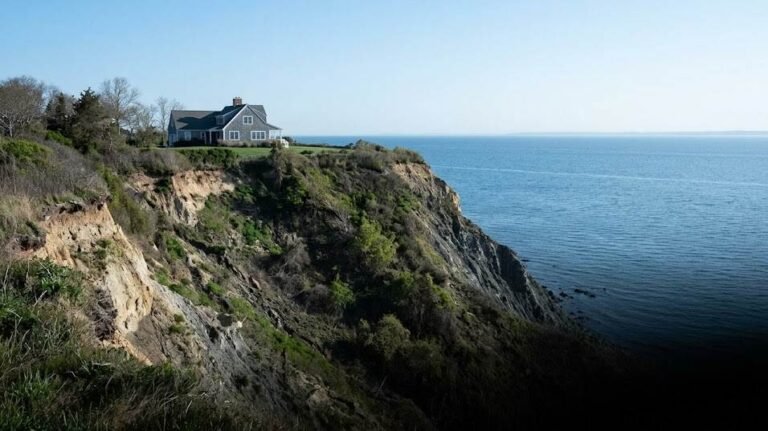
On Long Island’s East End, waterfront property is among the most desirable — and most legally complicated — real estate in the state. The assumption most buyers bring to a waterfront purchase is that the land and the water are a package deal: you own the shore, you own access, you can build a dock if you want one. That assumption is wrong often enough that it should be tested on every transaction, without exception.
Riparian rights on Long Island are older than the paved roads, older than the county itself. Some of them date to colonial land grants issued by English governors in the seventeenth century. And in a place where the law has been layered for that long, the gap between what a buyer thinks they’re getting and what they’re actually getting can be — and frequently is — significant.
A Brief History of the Legal Seabed
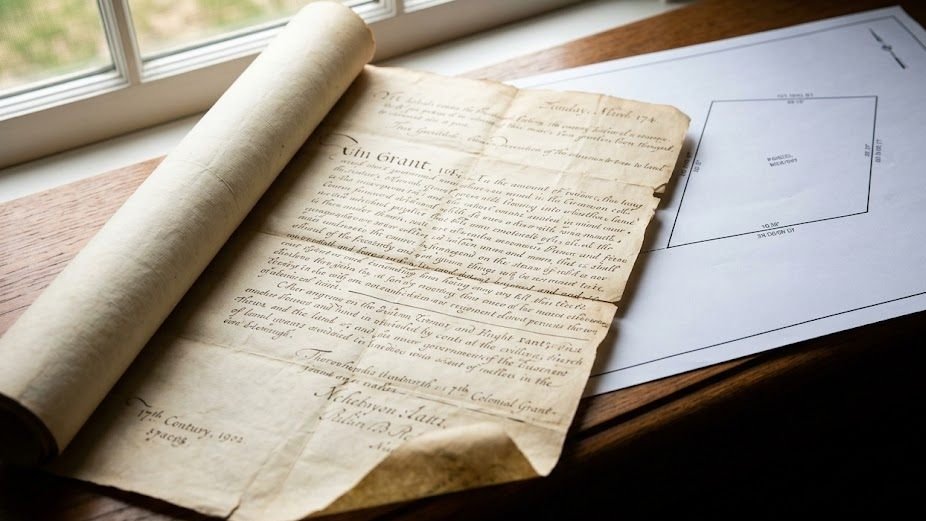
To understand who owns what under Long Island’s tidal and navigable waters, you have to go back to 1686. That year, Governor Thomas Dongan issued a patent to the Town of Southampton that granted the town’s trustees ownership of certain underwater lands — the bottomlands beneath local bays, harbors, and tidal creeks — in trust for the residents of the town. Similar patents followed for other East End towns.
These documents — known collectively as the Dongan Patents — established what became the Southampton Town Trustees, one of the oldest continuously operating governmental bodies in the United States. The Trustees still exist. They still hold jurisdiction over specific underwater lands in Southampton. And their authority over those bottomlands is not historical curiosity — it is active and legally enforceable today.
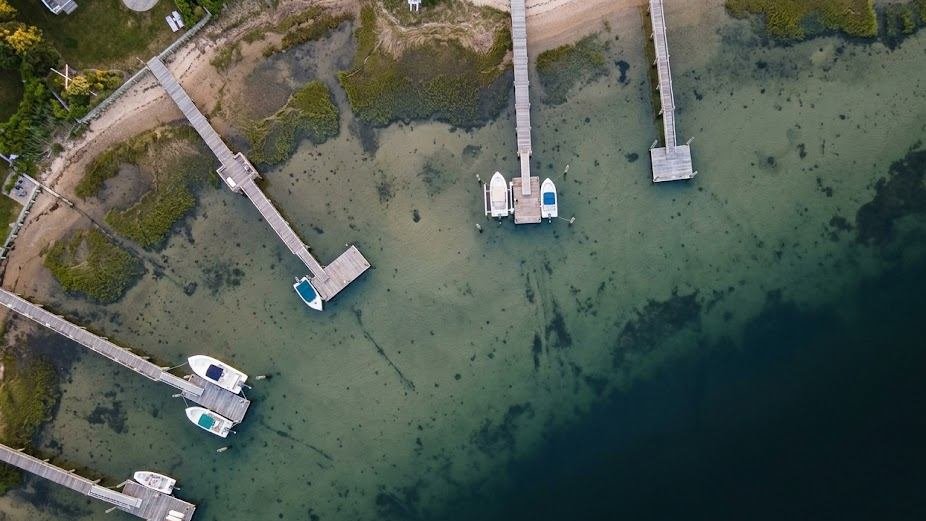
The practical implication is this: the underwater land beneath certain East End waterways was never conveyed to private owners when the adjacent upland was sold. It remained — and remains — in trust under the Trustees. Which means that a buyer who purchases waterfront property on Shinnecock Bay or Mecox Bay or Quantuck Creek may own the upland to the mean high water mark and nothing beyond it. The bay bottom is not theirs. And a dock, by definition, has to be anchored to something.
Beyond the Dongan Patent areas, a parallel system of state ownership applies. The New York State Office of General Services, through its Bureau of Land Management, administers the state’s underwater lands — the bottomlands beneath navigable waters that were not granted to municipalities or private parties through historic patents. In most cases, the state retains ownership of the submerged land beneath navigable tidal waters. Private ownership of underwater land exists — it can be conveyed by deed if it was originally granted — but it is the exception rather than the rule, and it needs to be verified through a title search that specifically addresses underwater land rights.
What Are Riparian Rights, Exactly?
Riparian rights are the bundle of legal rights that attach to property adjacent to water. They include, in general terms: the right to access the water, the right to use the water for reasonable purposes, the right to wharf out to navigable depth, and in some jurisdictions, rights related to the use of the foreshore (the zone between mean high and mean low water).
The problem with applying any general definition to Long Island is that riparian law here is jurisdictionally fragmented in ways that make generalization unreliable. What a waterfront owner can do in Southampton may differ from what they can do in East Hampton, which may differ again from what applies on the bay side of Shelter Island or along the Great Peconic Bay. The governing authority — whether it’s the Trustees, the state OGS, the Army Corps of Engineers, the DEC, or the relevant town’s Department of Land Management — depends on the specific waterbody, the specific lot, and the specific use contemplated.
The right to “wharf out to navigable depth” is the one that most buyers care about, because it is the source of dock rights. At common law, a riparian owner whose property abuts a navigable waterway has the right to build a structure over the water to reach navigable depth, provided it does not unreasonably interfere with navigation. But that common law right is now layered beneath a set of state and federal permit requirements that condition — and sometimes effectively prohibit — its exercise.
The Permit Stack
Assume for a moment that you own a waterfront lot, your upland title is clean to mean high water, and the underwater land is either yours or subject to a recognized riparian right to construct a dock. You still cannot simply build one.
NYS DEC Tidal Wetlands Permit. Any structure within or adjacent to tidal wetlands — which, on Long Island, means any dock touching tidal water — requires a permit from the Department of Environmental Conservation under the Tidal Wetlands Act. The DEC will evaluate the structure’s potential impact on wetland habitat, water quality, and aquatic resources. Approval is not guaranteed, and conditions may limit the dock’s size, materials, and configuration.
Army Corps of Engineers Section 404/10 Permit. Federal jurisdiction over navigable waters means the Army Corps has independent authority over dock construction. For most residential docks, a nationwide permit (NWP 57, for residential pier construction) is available, but it comes with its own conditions — structure dimensions, proximity to navigation channels, seasonal construction restrictions.
Town or Municipal Permit. Every East End town has its own code requirements for waterfront structures. These vary significantly and may impose setbacks, height limits, length limits, or outright prohibitions in certain zones. Southampton, East Hampton, Shelter Island, Riverhead, and Southold all have distinct code provisions. In Trustees-controlled areas, a separate Trustees permit is required in addition to the town’s own permitting process.
Underwater Land Authorization. If the underwater land is state-owned (OGS jurisdiction), a license or easement from the state may be required before any structure can be anchored to the bottom. This is a separate process from the DEC and Army Corps permits, and it is one that frequently gets overlooked.
The cumulative effect of this permit stack is that a buyer who purchases waterfront property expecting to build a dock within the first construction season should realistically budget eighteen to twenty-four months for the permitting process alone — and that assumes no significant opposition from neighbors or resource agencies.
What to Verify Before Closing
Given all of the above, here is what I look for in every waterfront transaction:
Deed language regarding underwater land. Does the deed convey to mean high water only, or does it extend to mean low water? Does it include any express grant of underwater land or bottomland? This is a specific title question that requires a title attorney with experience in waterfront transactions — not a standard residential closer.
Prior permit history. If the property has an existing dock, has it been maintained under valid permits? DEC tidal wetlands permits are typically issued with conditions and maintenance requirements. A dock that has been modified from its permitted configuration may be in violation — and that violation transfers with the property.
Trustees jurisdiction. For any East End property in Southampton or East Hampton, check whether the relevant waterway is subject to Trustees jurisdiction under the applicable Dongan Patent. The Trustees’ offices maintain records and can confirm jurisdiction quickly.
Navigability of the adjacent waterway. The right to wharf out to navigable depth presupposes that the water is navigable. On the East End, shallow tidal creeks and pond outlets may not qualify as navigable waters under the relevant legal definition, which affects both the riparian right itself and the Army Corps jurisdictional trigger.
Existing easements or shared access rights. In some waterfront subdivisions, dock rights or water access areas were established as shared easements rather than private rights appurtenant to each lot. Understanding the structure of those rights — and the obligations that come with them — matters for both use and maintenance.
The Buyer’s Question to Ask Before Making an Offer
The single most useful question a waterfront buyer can ask before making an offer is this: Can I build a dock on this property, and what would it take to do so?
The answer to that question — accurate, verified, specific — should be in hand before a contract is signed. Not during attorney review. Not at the inspection. Before the offer.
I raise this not to add friction to waterfront transactions, because waterfront property on Long Island’s East End is genuinely extraordinary and worth the legal complexity that comes with it. The views, the access, the quality of light over open water — these things are real, and they justify the premium buyers pay. But the premium should be for what the buyer is actually getting. And getting that right requires knowing, precisely, where the property ends and where the public water begins.
On the East End, that line was drawn in 1686. It has been litigated, interpreted, and layered over ever since. Know where it falls on your parcel. That is the beginning of a good waterfront transaction.
This post is part of my comprehensive guide to Buying Waterfront Property on Long Island’s North Shore: What Every Buyer Needs to Know — covering everything from flood insurance and DEC permits to bulkheads, riparian rights, and the waterfront buyer’s checklist.
Real estate markets change. This post reflects conditions as of April 2026. For current listings and market data, contact Pawli at Maison Pawli.
Sources
- Southampton Town Trustees — Dongan Patent (1686) and jurisdictional records: southamptontowntrustees.com
- New York State Office of General Services, Bureau of Land Management — Underwater Lands Program
- New York State Department of Environmental Conservation — Tidal Wetlands Program and permit guidance: dec.ny.gov
- U.S. Army Corps of Engineers, New York District — Section 10/404 Permit Program and Nationwide Permit 57
- New York Real Property Law — riparian and littoral rights framework
This post is for informational purposes only and does not constitute legal advice. Waterfront property law is highly jurisdiction-specific. Consult a licensed real estate attorney with experience in New York waterfront transactions before making any purchase or construction decisions.