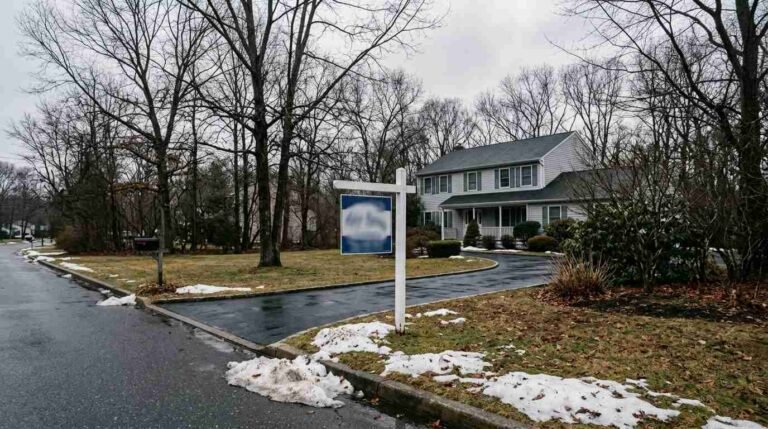
The Iron Ghost in the Yard: Why Sellers Need to Hunt Their Own Oil Tanks
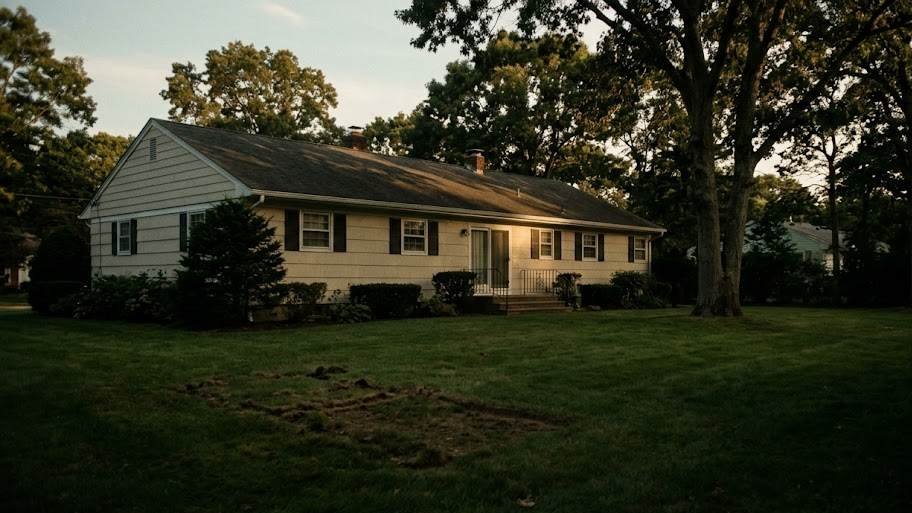
Before you put a sign on the lawn, you may need to dig up the past. Literally.
Somewhere beneath the backyards of Long Island’s postwar neighborhoods — behind the split-levels and Colonials and ranch houses built in the 1950s and ’60s — lie thousands of steel tanks that once held the heating oil that kept families warm. Most of those families are long gone. Many of the tanks are still there. And if yours happens to be among them, it will find you before your closing does.
This is one of the first things I tell sellers when we sit down together. Not because I want to alarm anyone, but because a buried underground storage tank — what the state calls a UST — is the kind of surprise that collapses a deal in the third quarter. After the inspection. After the buyer has already fallen in love. After you’ve mentally moved on. I’d rather surface the issue before we list than watch a transaction unravel over something we could have controlled.
How We Got Here
To understand why this is a North Shore problem specifically, you have to go back about seventy years.
After World War II, Long Island transformed almost overnight. Returning veterans bought starter homes by the tens of thousands. Levittown was the most famous example, but the same phenomenon played out from Hempstead to Riverhead — new housing tracts, new families, new infrastructure. And the dominant heating fuel of that era was oil.
Natural gas lines hadn’t yet extended to most of suburban Long Island. The infrastructure simply wasn’t there. So builders installed underground steel tanks — typically 275 to 550 gallons, buried three to five feet below grade — and connected them to the home’s boiler. It was standard practice. It was efficient. And for the next two or three decades, it worked exactly as designed.
What nobody designed for was the tank’s afterlife.
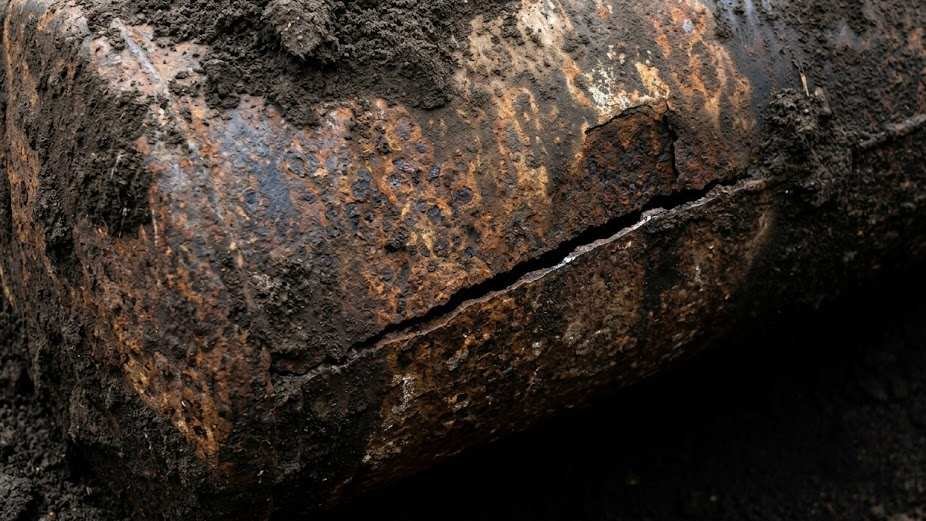
Steel corrodes. It does so slowly, then all at once. A tank that sat dry for twenty years after a family converted to gas heat doesn’t necessarily announce its failure. It just quietly rusts from the inside out, and when it finally gives way, the oil that remained — even a few gallons of residual product — seeps into the surrounding soil. That soil is often directly above the groundwater that feeds Long Island’s sole-source aquifer.
The New York State Department of Environmental Conservation has been tracking this problem for decades. Their petroleum spill database contains thousands of residential entries on Long Island alone — the vast majority tied to abandoned heating oil tanks that were never properly decommissioned.
What the Law Actually Requires
The regulatory landscape around residential USTs has tightened considerably, and sellers need to understand where they stand.
Under New York State DEC guidelines, residential heating oil tanks — even those that are no longer in service — are subject to specific handling requirements when a property transfers. The key word is abandoned: a tank that was simply left in the ground when the homeowner switched to gas or electric heat is not a closed tank. It is an abandoned tank. And an abandoned tank is a liability.
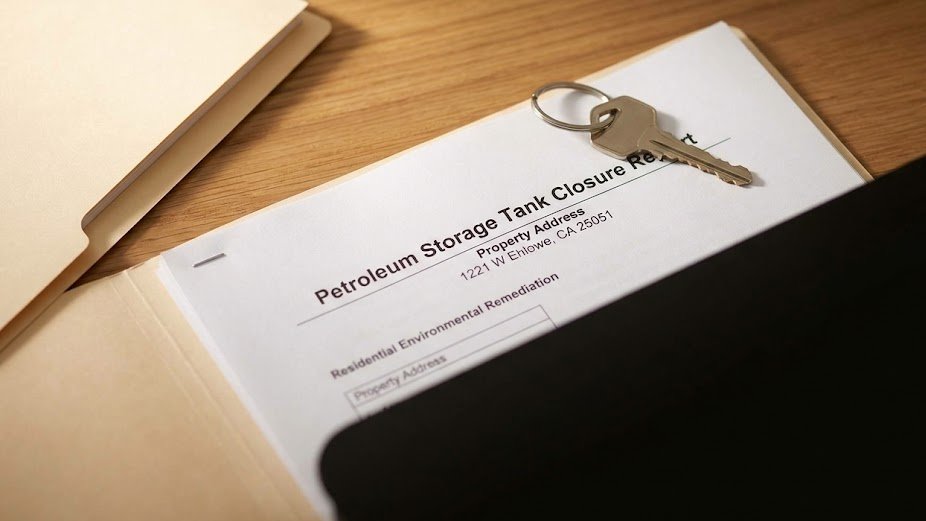
The DEC’s Division of Environmental Remediation requires that any known UST be either properly closed in place (filled with an inert material like sand or concrete slurry after cleaning) or removed entirely, with documentation. The documentation piece matters enormously for a real estate transaction — title companies and buyers’ attorneys will ask for it, and the absence of a closure certificate is, functionally, a red flag that cannot be waved away with reassurance.
If contamination is found during removal — and in older tanks, it often is — the property may trigger a petroleum spill registration with the state. That doesn’t automatically blow up a deal, but it does require a remediation plan, a timeline, and in some cases, monitoring that extends years beyond the closing date. Buyers and their attorneys know this. Their lenders know this even better.
I have watched deals fall apart at this exact moment: the buyer’s inspector locates evidence of a tank, the environmental report comes back with elevated petroleum hydrocarbons in the soil sample, and the buyer — who was otherwise ready to move — backs away from the uncertainty. Not because the contamination was catastrophic. Because the timeline was open-ended, and open-ended is the enemy of a closing date.
How to Find Out If You Have One
This is where sellers have real agency, and I always encourage them to use it.
Start with the house’s own history. If you’ve lived there for twenty or thirty years and you know the house was heated by oil when you moved in, think about when and how the conversion happened. Was the tank removed? Was there a permit pulled? Do you have any paperwork?
If you bought the house from someone else, pull the prior deed and any disclosure statements from that transaction. Look at old listing photos if you can find them. Check the basement: the presence of an old fill pipe stub, a vent pipe, or an abandoned supply line snaking toward an exterior wall are all indicators that a tank once existed — or still does.
Beyond the house itself, there are external resources worth checking. The NYS DEC maintains a publicly accessible Spill Incidents database (dec.ny.gov) where you can search by address for any registered petroleum spill events. Not every old tank generates a spill record, but any tank that did will appear there. The Suffolk County Department of Health Services also maintains some records for registered petroleum systems in the county.
The most reliable method, however, is a professional sweep. A licensed environmental firm can perform a magnetometer sweep of your property — essentially a non-invasive scan that detects buried metal — for a few hundred dollars. If a tank is present, they’ll find it. If it’s absent, you’ll have documentation that says so, which has its own value in a transaction.
The Strategic Play for Sellers
Here is the part that most sellers don’t fully grasp until they’re in the middle of a deal: proactive remediation is almost always cheaper than reactive remediation.
If you discover a tank before you list and handle it — proper removal or closure, soil sampling, a clean environmental report — you have converted a liability into a selling point. You can disclose the tank’s former presence and its resolution. You can show the documentation. You are telling the buyer, in effect: we found the complication and we eliminated it. That is a very different conversation than the one that happens when a buyer’s inspector finds it during due diligence.
The cost of tank removal varies based on size, accessibility, and whether contamination is present. A straightforward removal of a 275-gallon tank with no contamination might run $1,500 to $3,000. If contamination is present, remediation costs can escalate — but even a modest remediation handled upfront gives the seller control over the process, the timeline, and the narrative.
What sellers lose when the buyer finds it first is control. The buyer’s attorney will ask for a price reduction or a remediation escrow. The lender may require the issue to be resolved before closing. The timeline stretches. And the buyer, who has now spent several weeks imagining an environmental problem under the yard, begins to wonder what else might be lurking.
I’ve seen it go badly enough times to believe firmly in what I’d call the iron rule of USTs: find it yourself, or it will find you at the worst possible moment.
A Word About Disclosure
New York State’s seller disclosure law is clear on this point: known material defects must be disclosed. An abandoned underground storage tank is a material defect. If you know it’s there, you cannot simply not mention it and hope for the best.
I raise this not to create anxiety but to preempt the alternative. Sellers sometimes believe — wrongly — that silence on an environmental issue protects them. It does not. Failure to disclose a known UST can expose a seller to post-closing claims and, in cases where contamination caused measurable damage, litigation that is vastly more expensive than the remediation would have been.
The cleaner path, legally and practically, is always transparency. Disclose, document, remediate if necessary. That sequence protects everyone.
What Pawli Does Differently
When I take a listing on a home that was built before 1980 — and a significant portion of North Shore inventory falls into that category — one of my first questions is about the heating history of the house. Not because I’m trying to create problems, but because I would rather create a plan.
If there’s any ambiguity about a tank’s presence, I’ll recommend the environmental sweep before we go live. The cost is modest. The peace of mind is not. And the ability to walk into a listing appointment knowing exactly what’s under the ground — being able to hand a buyer’s agent a clean environmental report — is a competitive advantage that rarely gets discussed but consistently shows up in the outcome.
The postwar housing stock of the North Shore is one of its great assets. Solid construction, established neighborhoods, mature trees, commutable to the city. But that stock carries history — and sometimes that history is buried three feet underground in a rusted steel tank that nobody has thought about in thirty years.
Find it before your buyer does. Handle it with documentation. Move forward clean.
That’s the only version of this story that ends well.
Real estate markets change. This post reflects conditions as of April 2026. For current listings and market data, contact Pawli at Maison Pawli.
Sources
- New York State Department of Environmental Conservation — Petroleum Bulk Storage Program and Residential UST Guidelines: dec.ny.gov
- NYS DEC Spill Incidents Database: dec.ny.gov/cfmx/extapps/spills
- Suffolk County Department of Health Services — Environmental Quality Division
- New York State Property Condition Disclosure Act (Real Property Law § 462)
This post is for informational purposes only. It does not constitute legal, environmental, or financial advice. For guidance specific to your property, consult a licensed environmental professional and a qualified real estate attorney.
You Might Also Like: For a complete overview of everything involved in selling on the North Shore — pricing, staging, legal obligations, and closing — see The North Shore Seller’s Guide.