The Setauket Harbor Study Nobody Asked the Neighbors About
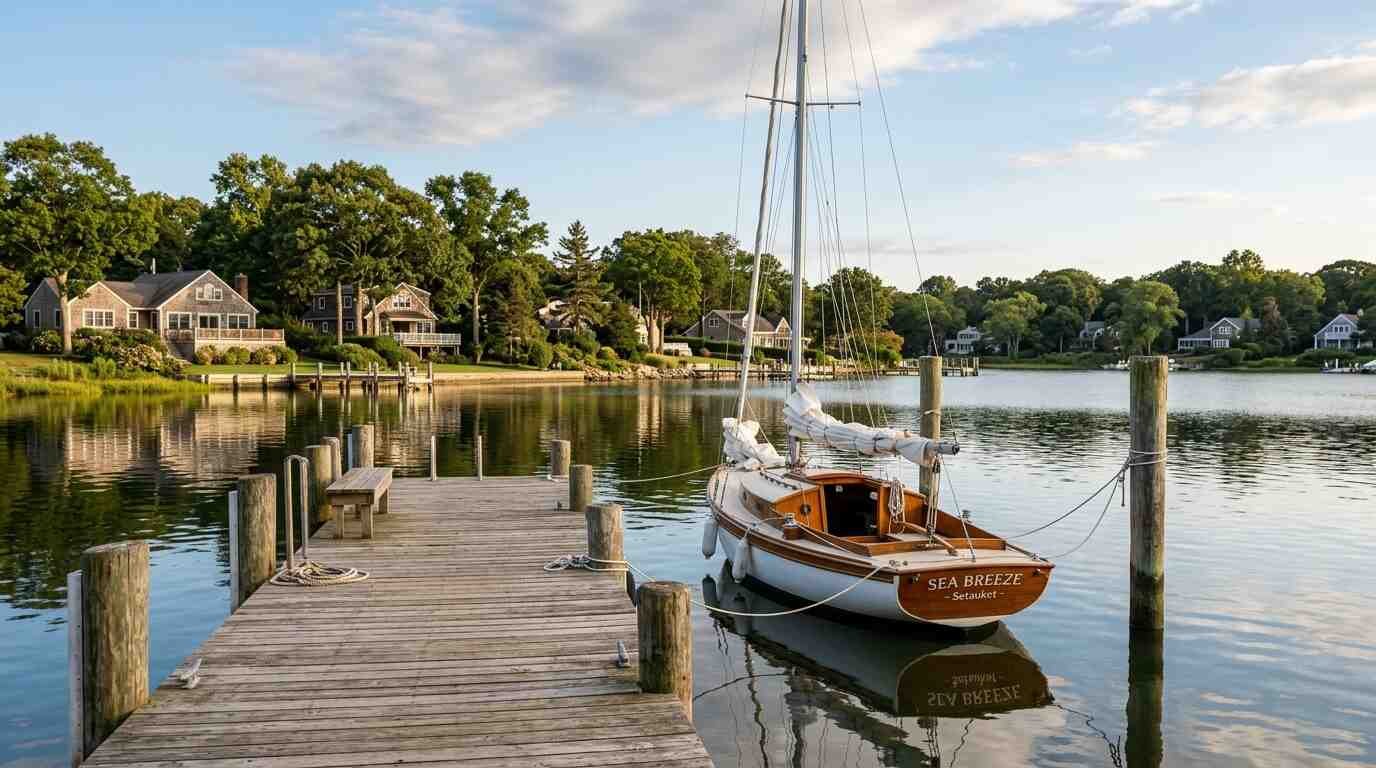
Setauket Harbor sits within a formally designated Harbor Complex — a regulatory overlay that covers Port Jefferson Harbor, Setauket Harbor, Little Bay, Conscience Bay, and the Narrows. That designation, established in Town of Brookhaven code, determines what can be built on the water, what permits are required before a dock goes in, and how mooring fields are managed. Most waterfront property owners in the area know some version of this. Fewer know the full scope of what’s currently being studied, tested, and proposed — or how those activities intersect with what their property can do.
An Active Harbor, Actively Monitored
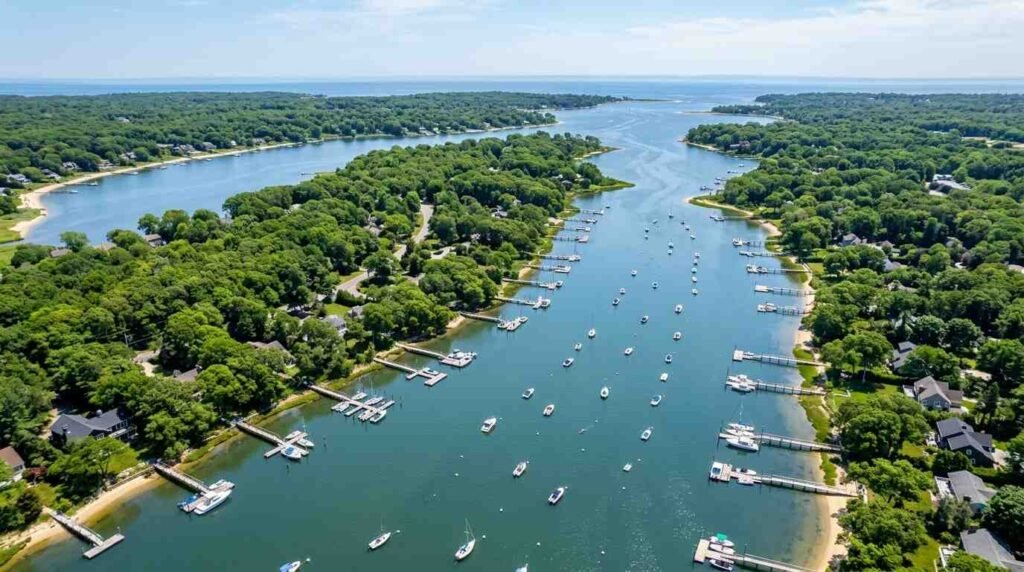
The Setauket Harbor Task Force has been conducting water quality monitoring in the harbor since its founding, now tracking more than eight years of field data. Twice a month between May and October, volunteers collect readings at a dozen locations across Port Jefferson and Setauket Harbors, measuring variables that include dissolved oxygen, nitrogen levels, and other indicators of marine ecosystem health. The organization partners with Save the Sound’s Unified Water Study, a coordinated monitoring program that allows comparable data to be collected across fifty harbors on both sides of Long Island Sound.
The harbor regularly ranks in the top five on the Sound for water quality. That standing matters — it reflects the cumulative effect of monitoring, advocacy, and coordinated environmental work over nearly a decade. It also establishes a baseline against which future changes are measured, which is where the regulatory implications begin to sharpen.
Nitrogen and What It Means for Dock and Mooring Permits
Nitrogen loading is the primary driver of water quality degradation in Long Island’s coastal harbors. It enters harbor systems from stormwater runoff, failing septic systems, and lawn fertilizers. In harbors where nitrogen accumulates, the result is algae blooms, reduced dissolved oxygen, and deteriorating shellfish habitat. Town of Brookhaven published a Setauket Harbor and Conscience Bay Stormwater Management Plan as far back as 2009, identifying the sources of nitrogen entering these waters and the strategies for reducing them.
The connection to waterfront property is direct. Stormwater management regulations, septic upgrade requirements, and water quality monitoring all feed into the Town’s permitting posture for dock construction and mooring placement. Under Brookhaven’s Bay and Harbor Bottoms chapter of the Town Code, the Division of Environmental Protection must consider navigation, public access, shellfishing, natural resources, public health, and the access of the waterway by local waterfront property owners when granting, denying, or limiting any mooring permit within the Harbor Complex.
That language gives the Town substantial discretion — and environmental study findings provide the factual basis on which that discretion gets exercised. A harbor whose water quality data shows stress can generate more restrictive permitting outcomes than one whose data is clean. Owners planning dock or mooring permits should understand that the data being collected by the Task Force and by county and state agencies is not merely scientific record-keeping. It informs regulatory decisions.
Kelp as Management Tool
One of the more unusual recent developments in the harbor involves aquatic farming. In partnership with Stony Brook University and the Town of Brookhaven, the Setauket Harbor Task Force has been cultivating sugar kelp in the harbor as a water quality intervention. Sugar kelp absorbs excess nitrogen and carbon dioxide from the water column, effectively providing biological remediation of the nutrient loading that stormwater contributes.
The Town of Brookhaven secured Long Island Sound Study grant funding to expand the oyster spawning and seeding program to include Setauket Harbor and Conscience Bay, building on work already underway in Port Jefferson Harbor. Oyster populations filter nitrogen and particulates from the water and help stabilize harbor sediment. The Setalcott Nation, whose name the harbor’s community takes its own from, is actively involved in kelp farming at Setauket Harbor near Poquott as part of this initiative.
These efforts represent a coordinated approach to harbor management that uses biological tools to address water quality pressures, alongside regulatory tools. For waterfront property owners, the practical implication is that the harbor environment they’re managing within is being actively shaped by public and civic actors whose activities affect permit contexts, habitat designations, and long-term water quality trajectories.
Mooring Field Regulations in the Harbor Complex
The Harbor Complex is governed by a specific chapter of Brookhaven Town Code — Chapter 74 — that establishes how vessels may be anchored, moored, and operated within these waters. Mooring permits in Setauket Harbor are administered through the Town’s mooring permit system, with Shore Road Marina providing launch services for permit holders in the harbor. Mooring tackle must meet Town specifications and be inspected before deployment.
In considering mooring applications, the Town gives preference to proposals that serve residents of Brookhaven or locally based property owner associations, and to proposed locations that avoid normal navigational lanes. These preferences exist in tension with the finite capacity of the harbor, which has limited deep-water mooring space. As the harbor’s use grows, so does the administrative pressure on the permit process.
Waterfront property owners with existing docks or moorings should note that dock permitting in Brookhaven operates under separate code provisions — Chapter 22 covers docks, piers, bulkheads, and jetties, while Chapter 81 addresses wetlands and waterways. A dock permit issued under one set of conditions does not insulate the property owner from regulatory changes that affect mooring rights or water access. The two are distinct permit categories that occasionally interact in ways property owners don’t anticipate until they’re in the middle of a construction or renovation project.
For a grounding in what waterfront lot surveys actually reveal — and how to read them before making an offer — the guide to reading a waterfront lot survey offers a practical starting point. The distinction between dock rights and mooring rights is also worth understanding before closing on waterfront property on the North Shore.

What Waterfront Buyers Should Be Asking
The environmental studies underway in Setauket Harbor don’t generate headlines. They appear in town board agendas, grant award announcements, and the periodic newsletters that the Setauket Harbor Task Force distributes to its membership. Buyers purchasing waterfront property in Setauket, Poquott, Old Field, or along the Conscience Bay shoreline rarely encounter this material as part of the transaction.
That gap matters. A buyer who doesn’t know the nitrogen loading history of the harbor they’re buying onto doesn’t know whether the dock permit they’re assuming is stable or whether the water quality trend line points toward more restrictive management in the future. A buyer who doesn’t know that Brookhaven’s mooring permit criteria explicitly weigh access for local waterfront property owners doesn’t know how to evaluate their rights relative to those of permit-seeking non-residents.
The Town of Brookhaven publishes board meeting agendas, environmental planning documents, and code amendments at brookhavenny.gov. The Setauket Harbor Task Force maintains its own monitoring data and project updates at savesetauketharbor.org. Neither source is obscure — both require knowing to look.
Buyers seriously considering waterfront property in the Setauket Harbor complex should also review how flood insurance works on the North Shore and what FEMA flood zone maps don’t capture about Sound-facing properties. The regulatory environment around these waters is layered, active, and worth understanding before the offer goes in — not after.
This is for informational purposes only — consult a licensed attorney or financial advisor for your specific situation. Real estate markets change. For current listings and market data, contact Maison Pawli at maisonpawli.com/about/.
Sources
- Setauket Harbor Task Force — water quality monitoring: savesetauketharbor.org
- TBR News Media — Setauket Harbor Task Force eight years of water testing: tbrnewsmedia.com/your-turn-setauket-harbor-task-force-eight-years-of-water-testing/
- Town of Brookhaven — Harbor Complex mooring regulations (Chapter 8): ecode360.com/8589954
- Town of Brookhaven — Port Jefferson Harbor Complex Waterway (Chapter 74): ecode360.com/8595358
- Town of Brookhaven — Docks code (Chapter 22): ecode360.com/8591237
- Town of Brookhaven — Mooring Permits: brookhavenny.gov/825/Mooring-Permits
- TBR News Media — Conscience Bay coverage: tbrnewsmedia.com/tag/conscience-bay/