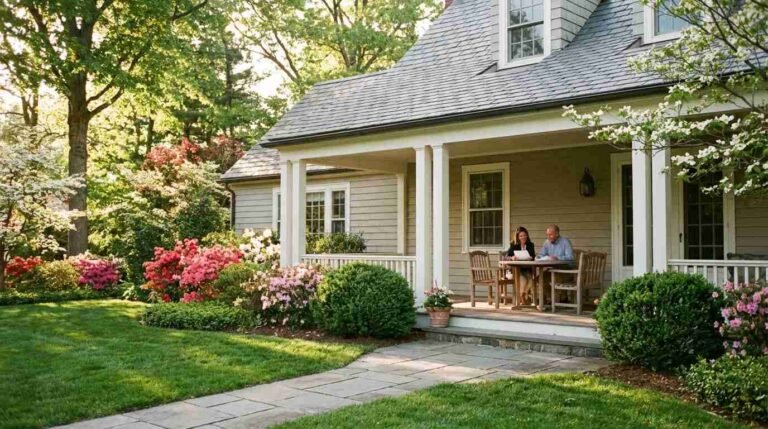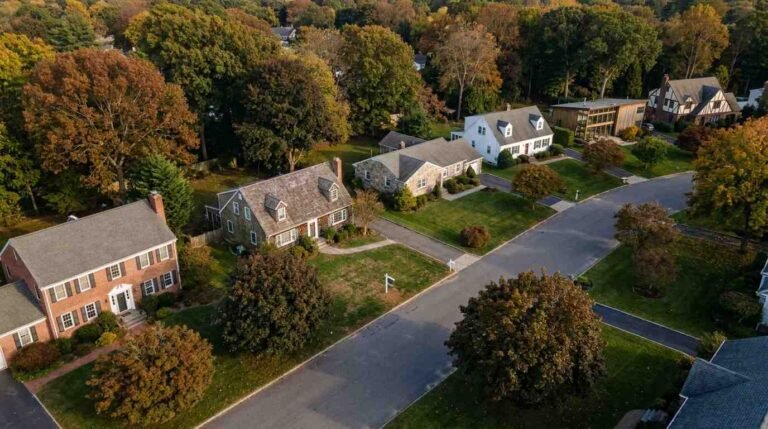
Hamptons-Adjacent Without the Hamptons Price Tag: The Long Island Towns Buyers Are Discovering in 2026
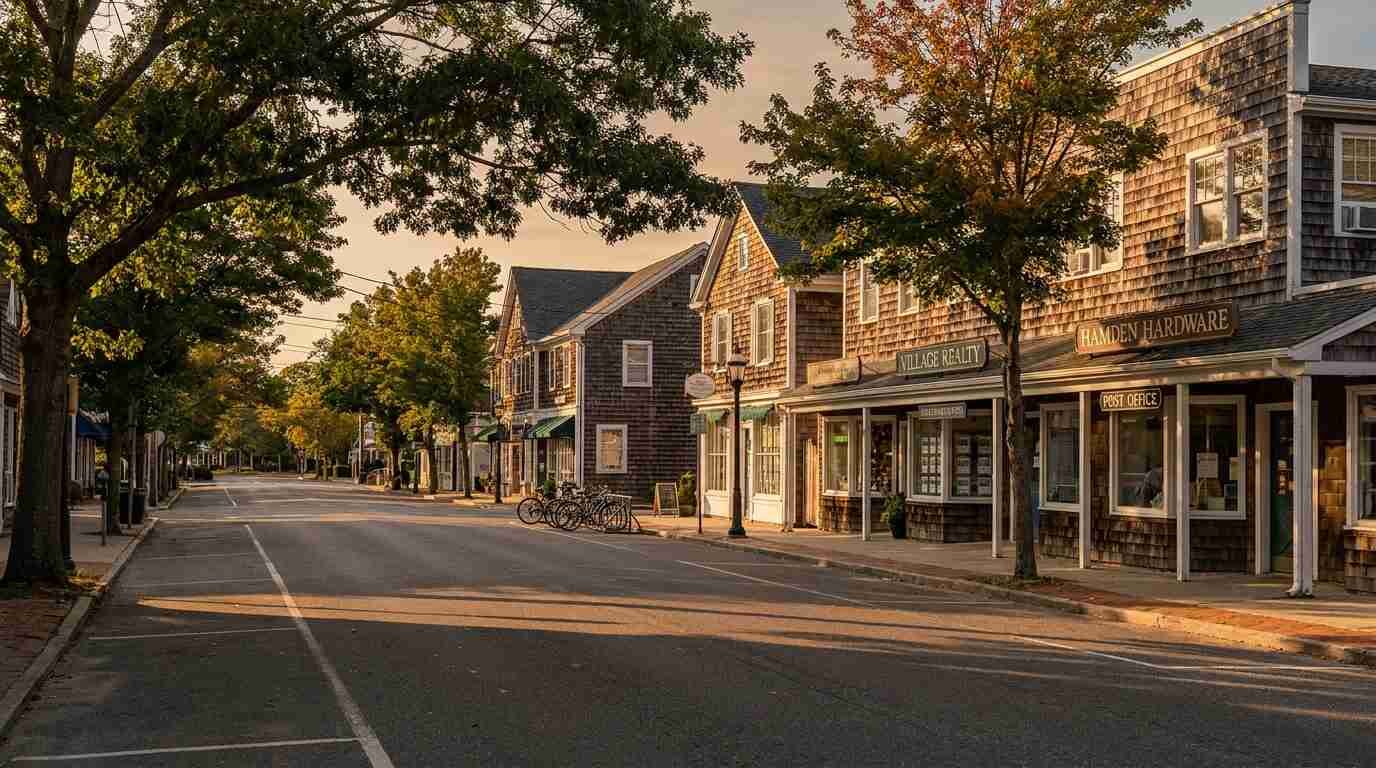
The Hamptons label has done a remarkable economic job for the better part of a century. It’s also become a price floor — a brand-attached premium that can add seven figures to two parcels with otherwise indistinguishable physical attributes once you cross from one zip code into another. For buyers who want the East End lifestyle but can’t or won’t pay the East End premium, the practical answer is increasingly geographic: stay west of where the brand thickens, and look at the towns just outside it.
This is not a new pattern. Buyers have been quietly making this trade for years. What’s changed in 2026 is the scale and the speed. As Hamptons-proper inventory tightens and pricing in the village cores stays remarkably resilient, the spillover into adjacent submarkets has become its own market category — visible enough that brokers are tracking it as a discrete segment rather than as overflow.
Why Buyers Are Looking East of Southampton Without Going All the Way
The geographic logic is simple. The Hamptons run east from Westhampton to Montauk. The premium does not run evenly along that line — it concentrates in specific village cores (Southampton Village, Bridgehampton, East Hampton Village, Sag Harbor) and the immediately surrounding agricultural reserve land, then thins as you move away. The further east you go, generally, the higher the median sale price. According to a recent overview of East End market data, Sagaponack has the highest median property sale price in the Hamptons at $7.4 million, with Bridgehampton next at $6.4 million, while the median sits dramatically lower in the western and edge communities. That gradient is the buyer’s opportunity.
The pattern of buyer behavior I’m seeing in 2026 breaks into three groups. The first is buyers who want a true Hamptons social and lifestyle experience but can’t justify the village-core premium — they’re looking west of the Shinnecock Canal or in the hamlets immediately north of the South Fork ocean line. The second is buyers who want the architectural and recreational profile (water access, agricultural surroundings, low density, walkable village center) without the brand layer — they’re looking at the North Fork or the western South Fork edge. The third is buyers who simply want a second home east of the Brookhaven line and have realized that paying for the actual lifestyle attributes is far cheaper than paying for the postal address.
All three groups are converging on the same set of towns.
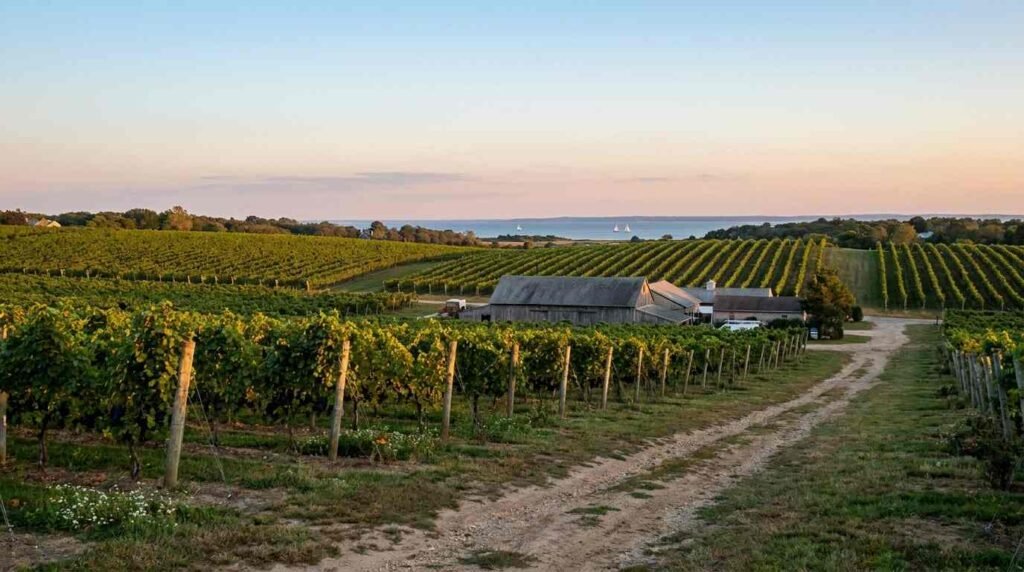
Towns Worth Watching: Westhampton Beach, Center Moriches, and Beyond
A short list of the markets where I’m seeing the most activity in 2026, with the caveat that all of these are real, functioning communities with their own identities — not just discount versions of somewhere else.
Westhampton Beach is the gateway. It is technically inside the Hamptons designation, which complicates the “adjacent” framing, but its pricing structure has historically run closer to the western edge of the market than to the Bridgehampton-Sagaponack core. It offers a walkable village center, real Atlantic ocean access via Dune Road, a performing arts center, and a strong year-round community — and it does it at price points that, while not modest in absolute terms, sit meaningfully below the eastern villages.
Quogue is the village immediately west and has historically operated as a quieter, family-oriented alternative to Southampton Village proper. The housing stock leans toward classic Hamptons architecture — shingle, traditional, with newer construction on infill lots. Buyers looking for a refined village character without the high-season social density tend to find it here.
Hampton Bays is the most affordable of the Southampton Town hamlets and has, fairly or not, historically carried less of the brand premium. The relevant detail for buyers in 2026 is that its waterfront profile — bay frontage, canal access, Shinnecock Bay — is genuinely strong, and the price-per-square-foot calculation on a bay-front Hampton Bays parcel can be one of the most efficient ways to buy real waterfront on the East End.
Center Moriches, East Moriches, and Eastport sit west of Westhampton, technically outside the Hamptons designation but on the same Atlantic-facing South Shore geography. The lifestyle profile is broadly similar — boating, bay access, a slower year-round community — and the price structure is materially different.
Remsenburg and Speonk are the quietest of the western Southampton Town communities. Remsenburg in particular has a long history as a refined, low-key alternative to the Hamptons social scene — significant homes, large lots, and a notable absence of commercial development.
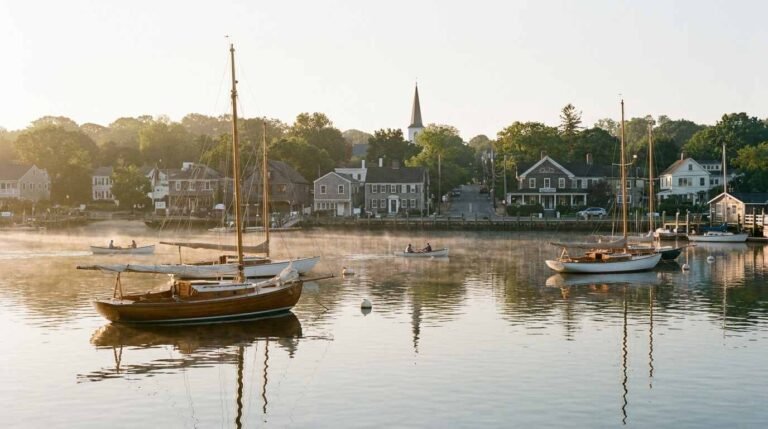
And then there is the North Fork — Greenport, Cutchogue, Southold, Mattituck — which is geographically not Hamptons-adjacent in the strict sense (it’s the other fork) but functionally adjacent in lifestyle terms, with farm-to-table culture, vineyards, working harbors, and price points that have, until recently, run dramatically lower than the South Fork equivalents. The arbitrage there is closing but it has not closed.
A piece I’ve written separately on North Fork investment relative to the Hamptons covers the Greenport-versus-East-Hampton calculation in more detail.
What You Actually Get for Your Money Compared to a Hamptons Listing
The honest version of this comparison requires acknowledging what changes and what doesn’t. The Atlantic Ocean doesn’t change between Bridgehampton and Westhampton Beach. The Long Island Sound doesn’t change between Sag Harbor and Greenport. The agricultural reserves and the vineyard culture and the working harbor character don’t change as you cross town lines. The school districts, the restaurant scene, and the social density do.
A buyer trading a Bridgehampton listing for a comparable Westhampton Beach listing is generally trading: a meaningful price reduction; a slightly less concentrated village commercial core; less high-season celebrity culture; a somewhat shorter LIRR ride; and the same Atlantic beach access via Dune Road. A buyer trading a Sag Harbor listing for a Greenport listing on the North Fork is trading: a more dramatic price reduction; a working maritime culture instead of a converted whaling-village social scene; a wine-country agricultural surround instead of horse-and-equestrian; and equivalent Sound and bay access on a quieter water.
What you don’t get, candidly, is the Hamptons social calendar at its full intensity. Whether that absence is a cost or a benefit is one of the more honest conversations to have with yourself before you decide where to look.
The Trade-Offs: Commute, Cachet, and Community
Commute time scales with distance, and the further west you go on the South Shore, the shorter the trip from Manhattan. Westhampton Beach is roughly 80 miles from the city; Bridgehampton is closer to 95; East Hampton is closer to 100. On the LIRR, the difference between the Westhampton station and the East Hampton or Montauk stops translates to meaningful time, especially in season when service slows.
Cachet is the harder trade. The Hamptons brand confers a specific kind of social legibility — for some buyers that matters, for others it actively repels. If the primary motivation for buying east is the address, then the adjacent strategy doesn’t work; the buyer is paying for the geography but missing the asset. If the motivation is the actual lifestyle — ocean, bay, farms, restaurants, small village character — the adjacent strategy works extremely well, because the lifestyle exists in all of these towns and the brand premium does not.
Community matters more than buyers tend to acknowledge. The year-round community of Westhampton Beach is different from the year-round community of Center Moriches is different from the year-round community of Greenport. None of these communities is interchangeable with the others. Buyers who buy on price alone, without spending time understanding the texture of the place, frequently regret it. I’d rather a buyer spend three weekends in three different adjacent towns than commit to one based on a comparative spreadsheet alone.
How to Find Listings Before They Hit the Broader Market
The mechanics of buying in the East End-adjacent submarkets are not the same as buying in a Nassau cul-de-sac. Inventory turns differently. A meaningful percentage of significant listings — especially in Quogue, Remsenburg, the eastern Moriches, and parts of the North Fork — transact before they ever appear on the broader public listing sites, or appear only briefly during a soft-launch window before going off-market.
The practical access points: relationships with brokers who actually work the submarket and who have the in-network conversations early; attendance at private broker opens, which are the structural mechanism by which pre-MLS inventory gets surfaced; and a clearly defined buyer profile (price range, financing readiness, geographic flexibility, decision timeline) communicated to the broker representing the buyer. A piece I’ve written on the off-market listing dynamic on Long Island goes deeper into how serious buyers actually find homes that aren’t yet public.
The other practical point: this is a market where speed matters less than preparation. The buyers who win in these submarkets aren’t the ones who can offer fastest — they’re the ones who can offer cleanly. Pre-approval that’s actually current, an attorney on standby, a clear inspection contingency framework. A clean offer in this market beats a slightly higher offer with structural friction more often than buyers expect.
Pawli’s take: The “Hamptons-adjacent” frame is useful but it’s also a little misleading. The towns that work for buyers in 2026 aren’t lesser versions of the Hamptons — they’re their own places with their own histories and their own character. The buyer who looks at Greenport and sees “cheaper Sag Harbor” is missing the point; Greenport is Greenport. The buyer who looks at Westhampton Beach and treats it as a runner-up Southampton is missing the point too. The arbitrage works because these places have their own value, not because they’re discount versions of something else. Buy them on their own terms and the math works. Buy them as substitutes and you’ve already lost the trade.
You Might Also Like
- North Fork vs. The Hamptons: Why Savvy Investors Are Quietly Choosing Greenport Over East Hampton
- Greenport, NY Is the Most Walkable Village on Long Island. Here’s the Exact Itinerary.
- The Bridge That Determines Everything: How the Ponquogue Bridge Drawspan Choke Point Controls Real Estate Pricing on Dune Road
- The Listing That Never Goes Public: How Serious Buyers Actually Find Off-Market Homes on Long Island
- Bridgehampton’s Quiet Renaissance: How the Village Between the Villages Became the Hamptons’ Most Coveted Address
Real estate markets change. This post reflects market conditions as of May 2026. For current listings and East End market data, contact Pawli at Maison Pawli. This post is for informational purposes only and is not legal or financial advice — consult a licensed attorney and financial advisor for your specific situation.
Sources
- Out East — Where Are the Hamptons and Why Are They So Popular?
- Kiplinger — Retire in the Hamptons: Finding the Right Town for Your Budget
- Town of Southampton — Official Site
- Town of East Hampton — Official Site
- Long Island Rail Road — MTA Schedule and Service
- Suffolk County Government