
The $40,000 Mistake: Why Long Island Fixer-Upper Buyers Keep Gutting Kitchens They Should Have Kept
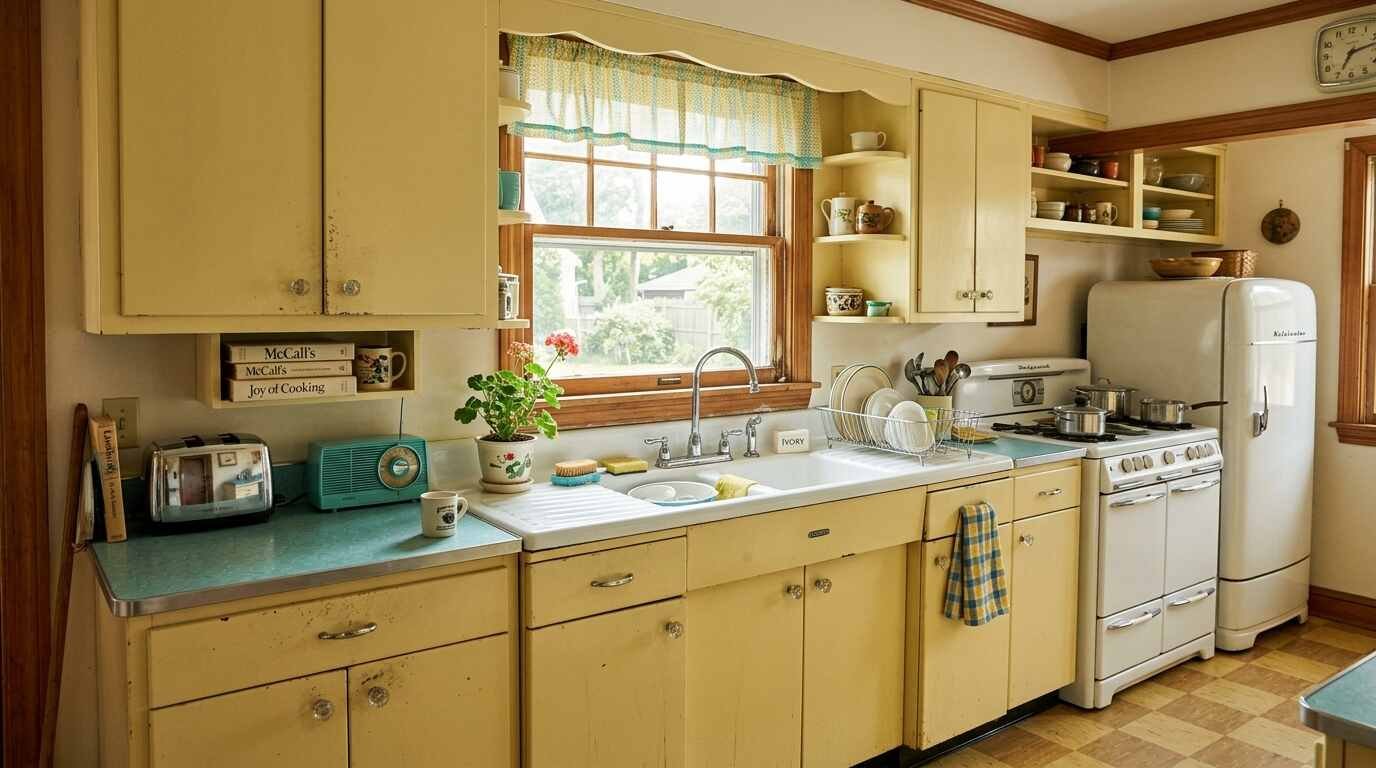
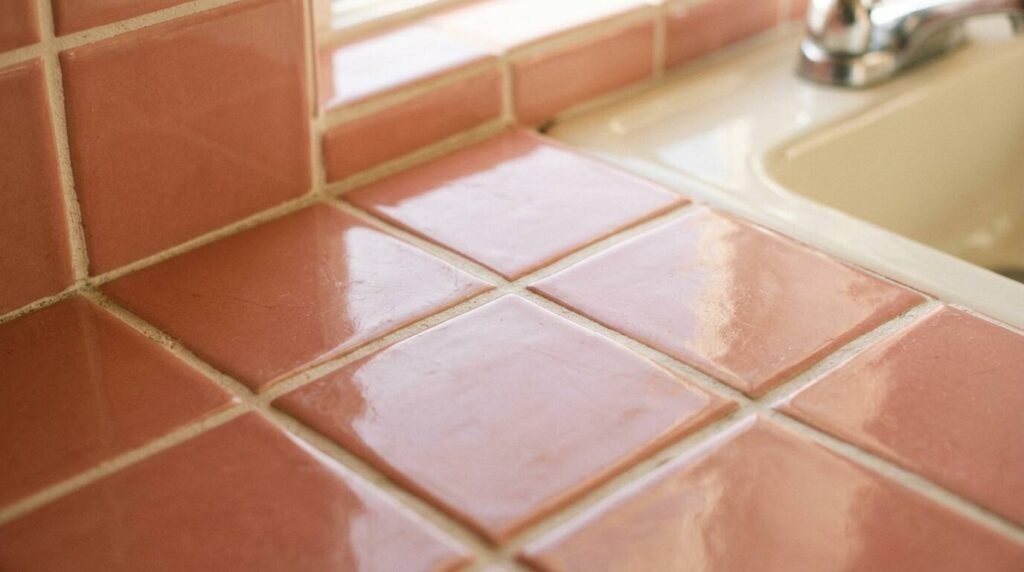
The first showing I walk into after a gut renovation always tells the story before the seller does. The kitchen is the giveaway — white shaker cabinets, waterfall quartz island, undermount sink, the same brushed-brass pulls you’ve seen in every remodeled kitchen from Smithtown to Syosset. The house sold six months ago, maybe $480,000. The new owners put in $60,000 worth of renovation. The kitchen is beautiful. And sitting in a dumpster somewhere is the original yellow birch cabinetry, the steel sink with the integral drainboard, and possibly — if the house is the right vintage — a set of pink ceramic tile in the bathroom that a Manhattan dealer would have bought for more than they paid for their first car.
I am not a sentimentalist about kitchens. If something doesn’t function, it goes. But Long Island’s mid-century housing stock has a particular problem: buyers come in with a gut-renovation mindset shaped by television, and they tear out things that were worth preserving — financially, functionally, and sometimes legally. On Long Island, what you rip out has consequences that extend well past aesthetics. So let me walk you through what I see, what it costs, and what I’d do instead.
The Housing Stock You’re Actually Buying
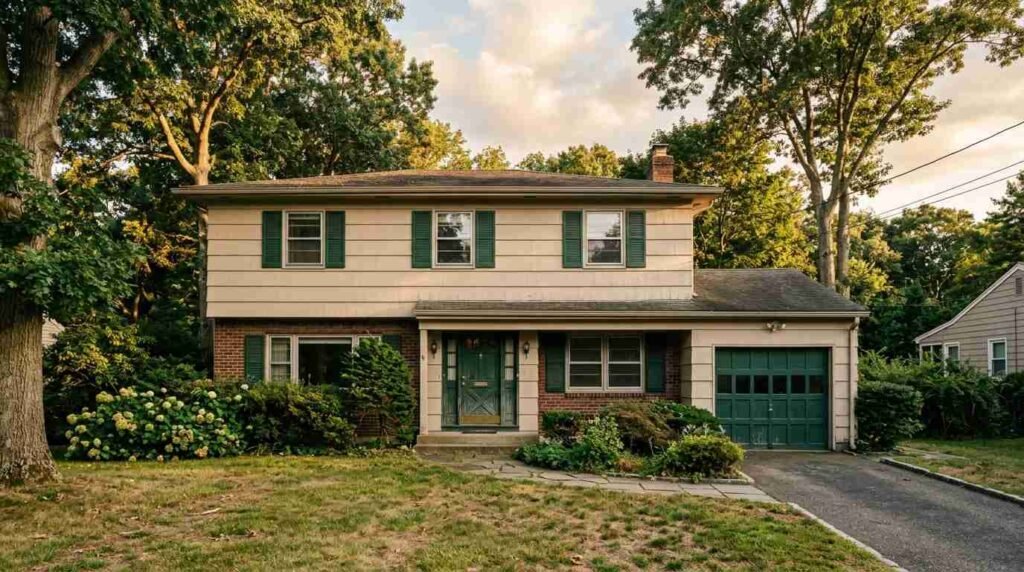
Long Island’s residential inventory is concentrated in a narrow construction window. The postwar suburban boom that William Levitt launched with Levittown in 1947 produced tens of thousands of Cape Cods, split-levels, and ranch houses across Nassau and Suffolk counties between roughly 1948 and 1965. These are not old houses in the way that a Huntington Victorian or a Cold Spring Harbor Colonial is old. They are mid-century houses — specific in their materials, their proportions, their building methods, and their original fixtures.
That specificity is the point. The kitchen installed in a 1955 Levittown Cape Cod was not a provisional placeholder waiting to be replaced. It was a considered product of postwar American design: steel cabinets, laminate countertops in colors that now register as retro, ceramic tile in what we’d now call vintage palettes, and appliances built with a materialism and heft that has not been replicated since. Much of what passes for “dated” in these kitchens is, in the current market, genuinely valuable.
The salvage economy around mid-century residential material is real and documented. Dealers in New York and New England actively seek intact sets of original ceramic tile — particularly the pink, avocado green, harvest gold, and powder blue palettes that define the late 1950s through early 1970s. Original steel kitchen cabinets, especially from brands like Geneva, St. Charles, and GE, command prices that surprise the homeowners who’ve been treating them as liabilities. Intact laminate countertops in period-correct colors, original cast-iron sinks, and built-in appliances from manufacturers like Chambers, O’Keefe & Merritt, and early Westinghouse all have documented resale markets.
Before you swing the first sledgehammer, call a salvage dealer. The worst outcome is that they confirm the material has no market value. The best outcome is that they cut you a check.
The Nassau County Assessment Equation Nobody Explains
Here’s where the renovation math gets complicated in a way that most buyers — and many agents — don’t anticipate.
Nassau County’s Department of Assessment treats renovations as assessable events. When you make a capital improvement to your home, the county can and does reassess the improvement and add the increased market value to your assessed value. Nassau does offer a Home Improvement Exemption — an eight-year decreasing exemption that shelters a portion of your improvement’s added value from property taxes. In the first year, 100% of the assessed value of the improvement is exempt. That percentage decreases each year until the exemption expires. The exemption applies to improvements with an equalized market value between $3,000 and $80,000. Anything above $80,000 in improvement value is not eligible for the exemption, by state law.
Here’s the practical consequence: a buyer who purchases a Nassau County home at $500,000, guts the kitchen for $60,000, renovates the bathrooms for $25,000, and finishes the basement for $30,000 has potentially triggered a six-figure improvement assessment. If the improvements push the assessed value above what the exemption can shelter, the resulting property tax increase can be substantial — and will persist for as long as the county holds that assessment.
In Nassau County, the 6% annual cap on residential assessment increases does not apply to increases resulting from construction or renovation. The cap that protects homeowners from arbitrary assessment creep does not protect them from renovation-triggered reassessments. This is not an argument against renovating. It is an argument for being strategic about which renovations you do, when you do them, how you scope them, and whether you file for the exemption before the county files for a reassessment. In Suffolk County, the dynamic is somewhat different — towns assess at varying equalization rates and have different exemption structures — but the core principle is the same: every permitted improvement is an assessable event. Know what you’re triggering before you pull the permit.
What I’d Actually Keep (And What Can Go)
The steel sink. If it’s original, it’s likely cast-iron-enameled steel with an integral drainboard. If the enamel is intact, keep it. If it’s chipped, get a quote for enamel restoration before you price out a replacement. Restoration often runs $300–$600. A quality replacement farmhouse sink runs $800–$2,000 before installation.
The ceramic tile. If the bathroom tile is intact, properly grouted, and free of structural moisture damage behind it, the case for replacement is almost always aesthetic, not functional. Intact mid-century ceramic tile is durable, easy to maintain, and increasingly sought after by a specific and growing buyer demographic. If you’re planning to sell within five to seven years, ask yourself whether you’re renovating for your taste or for the broadest possible buyer pool. Pink tile in a 1958 bathroom is a feature to the right buyer.
If the tile genuinely has to go, contact a salvage dealer before demolition. A full bathroom set of intact mid-century tile in a desirable color can fetch several hundred to several thousand dollars depending on quantity, condition, and rarity of the color.
The cabinetry. Original steel kitchen cabinets in good condition have salvage value and potentially significant aesthetic value. Original wood cabinets in good structural condition are worth refinishing or refacing before replacement. The cost to reface existing cabinetry typically runs $4,000–$10,000 for a full kitchen. A comparable gut renovation with new cabinetry runs $25,000–$60,000 or more. The math matters.
What can go: aluminum single-pane windows, original electrical panels that haven’t been updated, deteriorating plaster that can’t be saved, and any bathroom tile with moisture damage behind the substrate. Gut the things that need gutting. Preserve the things that don’t need to go.
The ROI Math
A kitchen gut renovation in Nassau or Suffolk County currently runs between $40,000 and $90,000 depending on scope, materials, and contractor. Industry data from NAR and Remodeling magazine’s annual Cost vs. Value report consistently shows that major kitchen renovations recoup somewhere between 50% and 70% of their cost at resale. That means a $60,000 kitchen renovation may return $30,000–$42,000 when the home sells. The buyer is absorbing the difference.
A targeted kitchen refresh — new countertops, new appliances, paint, hardware, and lighting — typically runs $8,000–$20,000 and can return 75%–85% at resale because the improvement is calibrated to the home rather than wholesale replacements of things that worked. The math shifts in your favor when you preserve what can be preserved and renovate only what needs to go.
A Note on Permits
Every permitted improvement is a paper trail. Nassau and Suffolk counties track permitted work. When you pull a permit for a kitchen renovation, the county knows. When the work is inspected and closed, the county’s records reflect what was done. That information feeds the assessment process. This is not an argument against pulling permits — unpermitted work creates its own serious problems at resale, including title issues, liability exposure, and mortgage complications. But it is a reason to understand what each permit triggers before you file it.
For more on how the property tax picture works on the North Shore, my post on the Suffolk County Tax Grievance Deadline covers the appeal process in detail — worth reading before you renovate if you’re in Suffolk.
What I Tell My Buyers
The fixer-upper conversation I have most often with buyers goes something like this: the house needs work, but it’s priced to reflect that. The question isn’t whether to renovate. The question is what kind of renovation will actually improve your position — financially, aesthetically, and in terms of the property tax bill you’ll carry for the next decade.
The answer is almost never “gut everything and start over.” The answer is usually something more considered: fix what’s broken, preserve what has value, update what’s truly outdated, and be very precise about what you spend and why. Long Island’s mid-century housing stock was built by people who took construction seriously. Before you gut it, understand what you have. If you’re looking at a fixer-upper on the North Shore and want to think through the renovation math before you make an offer, I’m happy to walk through it with you. That’s the kind of conversation that should happen before the contract, not after the demo crew shows up.
This is for informational purposes only — consult a licensed contractor, tax professional, and financial advisor for guidance specific to your property and situation.
Real estate markets change. This post reflects conditions as of April 2026. For current listings and market data, contact Pawli at Maison Pawli.
You Might Also Like
- What the Suffolk County Tax Grievance Deadline Actually Means for You
- The Lock-In Effect: Why North Shore Inventory Is So Tight Right Now
- Salt, Spray, and Staging: Beating Coastal Wear and Tear Before You List
This post is part of the North Shore Fixer-Upper Guide — a complete resource covering what to buy, what to skip, and what to budget before you make an offer on a Long Island fixer-upper.