Govee Wi-Fi Water Leak Detector Review: Cheap Sensors for the Spots Where Long Island Homes Leak
As an Amazon Associate I earn from qualifying purchases. A commission may be earned if you buy through this link, at no extra cost to you.
Water damage rarely announces itself. A supply line weeps behind a washing machine, a water heater seeps overnight, and by the time anyone notices, the floor has soaked it up. A leak sensor is a small device that sits on the floor and sounds an alarm, or sends a phone alert, when water touches its contacts. Govee’s Wi-Fi water sensors are among the cheapest on the market, and this review looks at what they do, what the reviews say, and where a low price has limits.
A note on method. This review draws on Govee’s product pages, on a review roundup that aggregates PCMag and Tom’s Guide, on Consumer Reports’ general testing description and on insurance-claim statistics. It is not based on hands-on testing, and nothing here claims otherwise. This post is general information, not legal, insurance or inspection advice. Ask your insurance carrier and a licensed New York attorney or broker about coverage and disclosure questions that apply to your home.
Why a cheap sensor is worth thinking about
ConsumerAffairs, citing the Insurance Information Institute, reports that water damage and freezing claims made up nearly 24 percent of U.S. homeowners insurance claims in 2021, making them the third most common type. It gives the average claim for 2017 to 2021 at about $12,514. The article was last updated in March 2024 and its figures mostly cover years before that, so treat the numbers as rough. It also says gradual damage from long-term leaks may be denied by insurers, a point to raise with a carrier, not a promise either way.
Those figures explain the appeal. A $44 kit that catches a slow leak early costs a small fraction of a typical claim, and a deductible can be large. What a sensor cannot do is stop water. It tells someone, quickly, and a person still has to shut the valve.
What Govee’s pages say
Govee’s U.S. store lists a Wi-Fi water leak detector bundle with one gateway and three sensors at $43.99, down from $54.99, with other bundles offering more sensors or a sensor-cable option. The sensors are rated IP67 for water resistance and are battery powered, with a stated life of up to five years. Govee gives a wireless range of about 1,804 feet between sensor and gateway. The alarm volume is adjustable up to 105 decibels, and alerts go to the app and by email. The system works with Alexa, Google and IFTTT, and the app lets a user locate a sensor by making it beep.
The gateway matters. Govee’s page says smart control requires it, and the gateway plugs into household current, not a battery. The page is inconsistent about whether the gateway is included in every option, so a buyer should check the exact bundle. The page also does not state which Wi-Fi band the gateway uses, nor whether basic local alarms work without it.
What reviewers found
A roundup at Smart Home Explorer describes a Govee Wi-Fi water sensor as a low-priced pick at about $9 to $12 per sensor, with alerts through the app, text, Alexa and Google, and quick setup. It credits PCMag with calling it the best value in water leak detection and Tom’s Guide with praising its ease of setup and consistent alerts. It lists the downsides as slower detection, 20 to 30 seconds against under 15 for a premium competitor, Wi-Fi range that can be weak in basements and detached buildings, and limited recognition by insurers.
There is a mismatch to be aware of. That roundup says its Govee model needs no hub and connects straight to 2.4 GHz Wi-Fi, while Govee’s current bundle is sold with a gateway. Govee sells more than one water sensor, and reviews of one do not carry over automatically to another. The roundup also publishes no Govee-specific test data, so its figures come from aggregated opinion, not from measurement.
Consumer Reports says it rates leak detectors on leak detection and convenience, looking at setup, wireless strength and whether a detector catches both small and large leaks. The excerpt reviewed showed no Govee model or result.
Where a Long Island homeowner might place them, and the limits
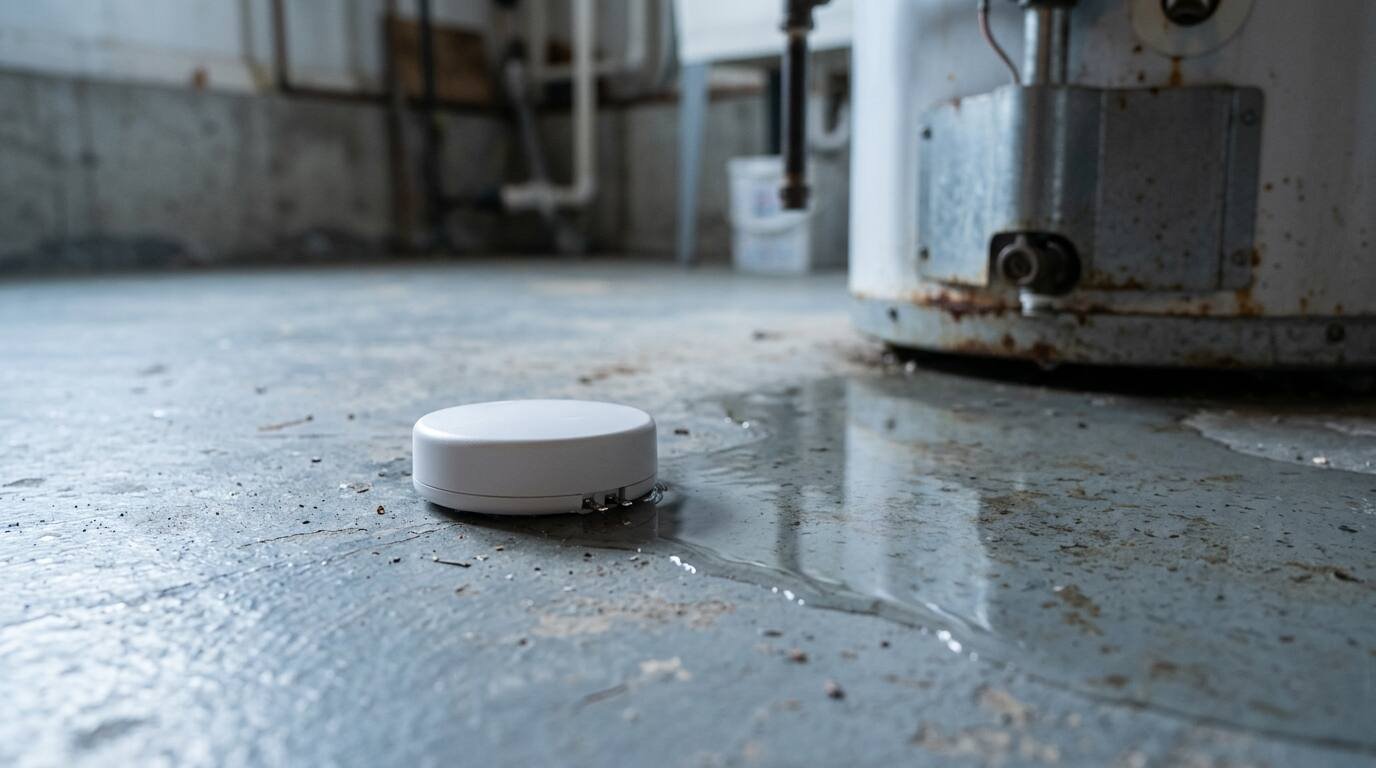
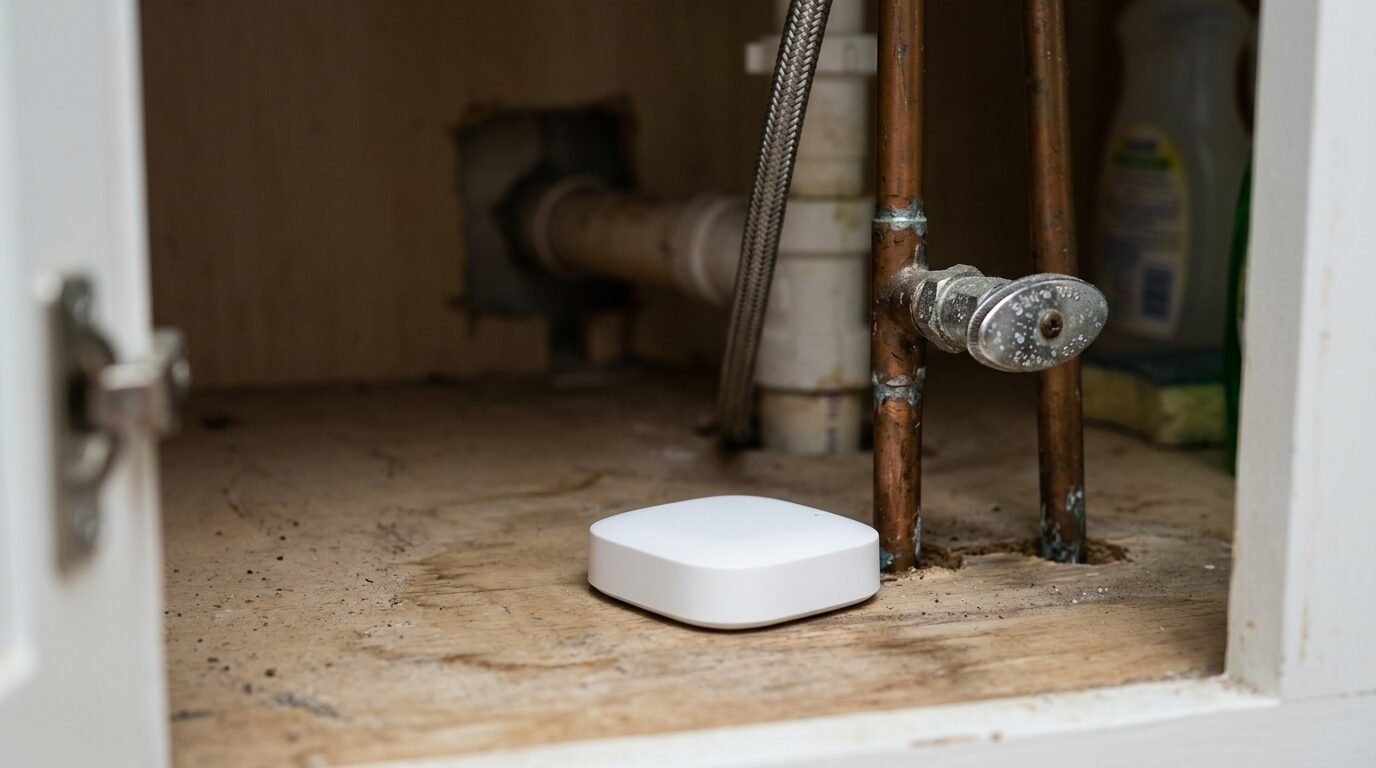
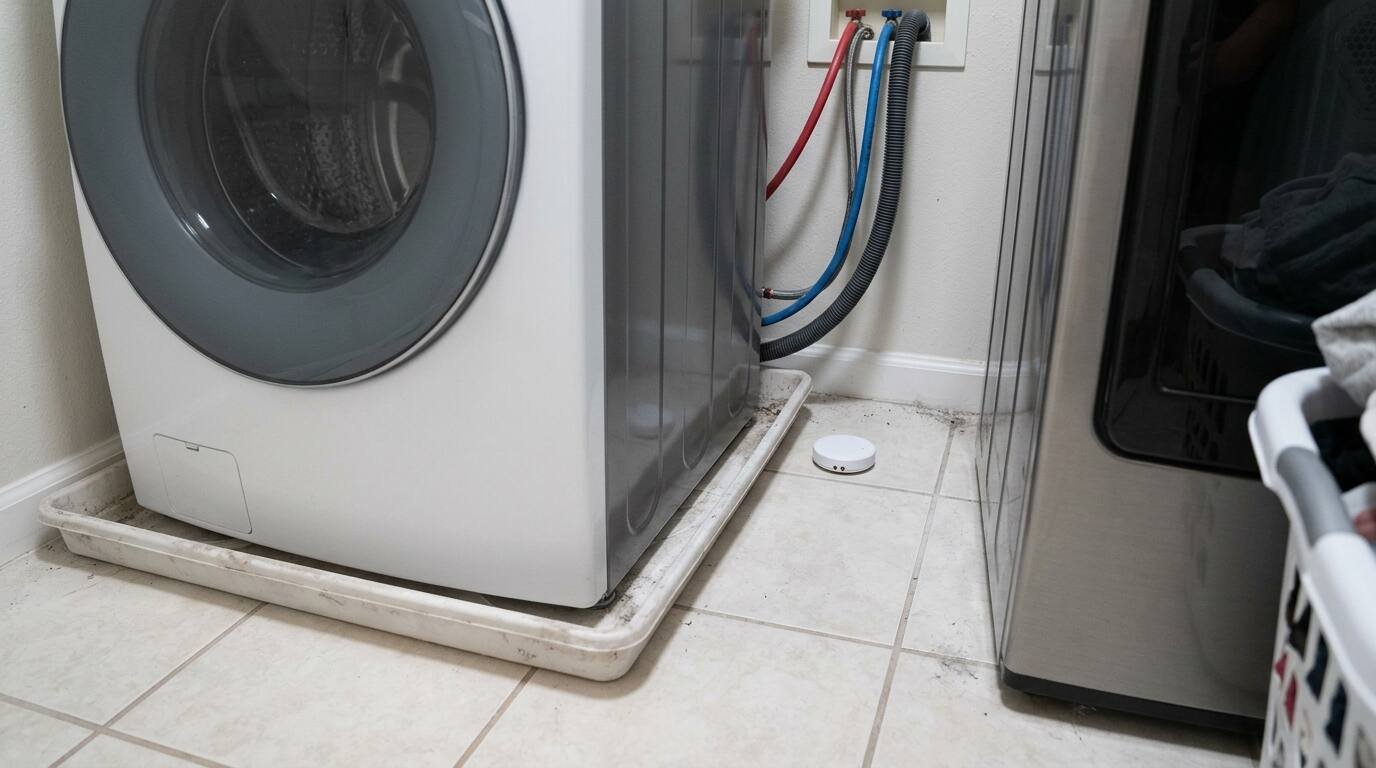
The obvious spots are the ones where a leak is likeliest and least visible: beside a water heater, behind a washing machine, under a kitchen or bathroom sink, near a sump pit or in a basement low point. That list reflects common practice, not a finding from the sources. It also helps to place sensors where a phone alert will actually arrive, which is a reason the Wi-Fi range warning matters for a basement.
There are two limits worth stating. First, insurer recognition is spotty: the roundup says only one carrier in its check listed this type of sensor as qualifying for a discount, so a buyer hoping for a premium break should ask the carrier before buying. Second, the sensor measures water at a point on the floor. It does not watch pipes inside walls, and it does not replace a shutoff valve, a drain pan or a periodic look at the plumbing.
Pros, cons, who it suits, and who should skip it
- Pros: priced at $43.99 for a gateway and three sensors on Govee’s page.
- Pros: IP67 sensors with a stated battery life of up to five years.
- Pros: adjustable alarm up to 105 decibels and app and email alerts.
- Pros: reviewers cited by one roundup praise setup and consistent alerts.
- Cons: needs a gateway on household power for smart alerts.
- Cons: reviewers note slower detection than premium systems and Wi-Fi range problems in basements.
- Cons: limited insurer recognition, per one roundup.
- Cons: no independent lab data on this exact bundle was found.
- Cons: it alerts but does not shut off water.
It suits owners and renters who want cheap early warning near appliances, and buyers who want to add monitoring to a home they have just purchased. It is a poor fit for anyone who needs automatic shutoff, or who expects an insurance discount without checking with the carrier.

The verdict, and where to find it
A basic leak sensor at this price is easy to justify. The Govee kit does what it says, according to the reviews that were found, with caveats about range, speed and the gateway. It is not the best system on the market, and it does not claim to be. For a homeowner who has none, it is a reasonable first step.
You can find the Govee Wi-Fi Water Leak Detector (sensor and gateway bundle) through the button at the top of this post or the link here. Because I link through an affiliate account, I earn a commission if you buy, at no extra cost to you. Govee sells several similar models, so confirm that the listing is the gateway bundle with the sensor count you want.
This post is general information, not legal, insurance or inspection advice. Ask your insurance carrier and a licensed New York attorney or broker about coverage and disclosure questions that apply to your home.
As an Amazon Associate I earn from qualifying purchases. A commission may be earned if you buy through this link, at no extra cost to you.