Setauket’s Oldest Restaurant Has Outlasted Three Generations of Landlords
Most restaurants close within their first few years. The ones that don’t tend to share a specific set of structural advantages — and in the Three Village area, those advantages are visible in plain sight, if you know what you’re looking at.
Two establishments in particular have earned the right to call themselves long-running anchors of the community. The Setauket Village Diner at 238 Route 25A in East Setauket has been family owned and operated since 1967. Not rebranded. Not sold to a group. The same family, in continuous operation, across more than five decades. A few miles away, the Country House Restaurant on North Country Road in Stony Brook has been operating in its current form since 1978 — and in a building constructed in 1710, which means the structure itself has been hosting meals, meetings, and travelers for longer than the United States has existed as a country.
Both establishments have outlasted recessions, pandemic closures, interest rate cycles, and the wholesale transformation of the restaurant industry around them. The reasons have less to do with the food than most people assume.
The Building Question
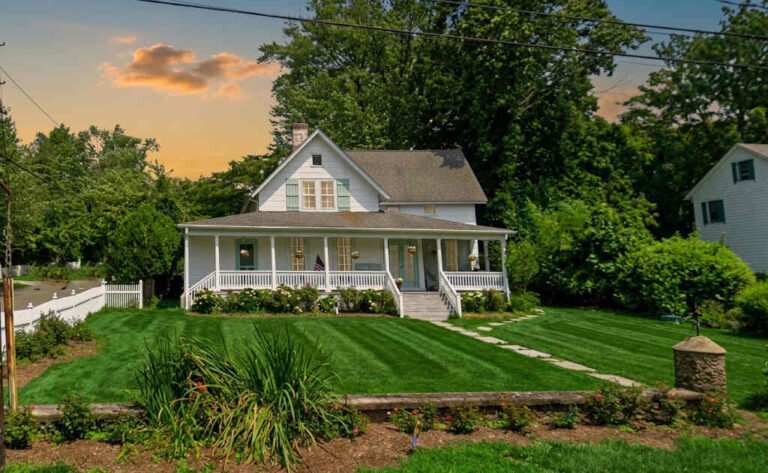
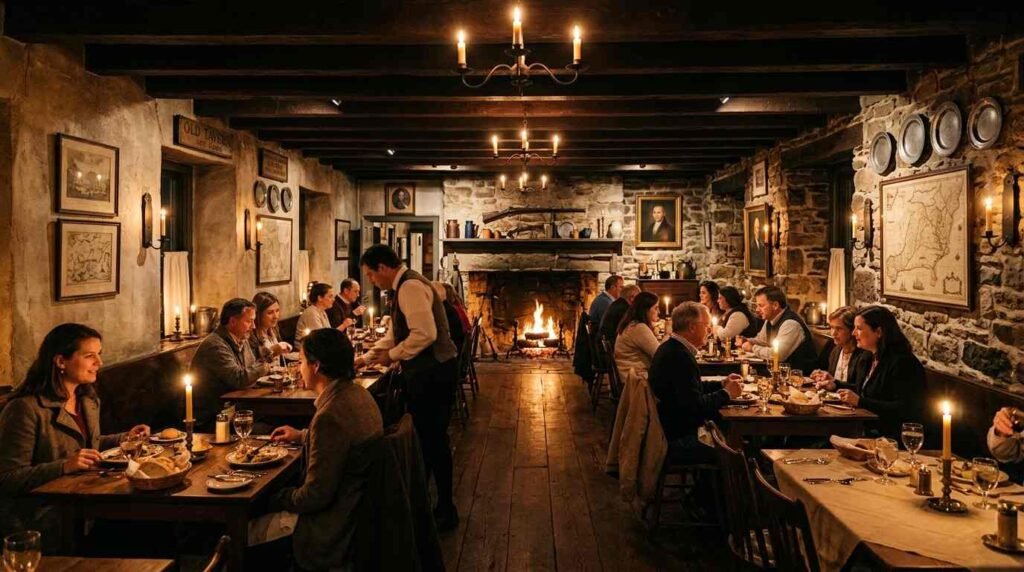
The Country House makes the structural point most directly. The property at 1175 North Country Road was a private residence from 1710 until 1970, when it opened as a restaurant called the 1710 House. The current iteration — the Country House — has been in operation since 1978 under the ownership of the Wendelken family, and later Bob Willemstyn, who worked at the restaurant for 27 years before purchasing it in 2005. At no point in that history did the restaurant need to absorb the risk of a landlord raising rent, selling the building to a developer, or declining to renew a lease.
That stability is not incidental to the restaurant’s survival. It’s the mechanism of it.
For a restaurant operating in leased space, every lease renewal is a renegotiation of the fundamental economics of the business. Commercial rents on the North Shore have shifted considerably over the past two decades. A restaurant that negotiated its space at one rate in 2005 faces a very different conversation at renewal — and if the location is desirable, the landlord holds the leverage. The restaurant either absorbs the increase or moves. Moving kills most restaurants; the regulars who formed the core of the business don’t always follow.
The Setauket Village Diner occupies a different position. Located in a shopping center on Route 25A, it operates as a tenant rather than an owner. What has insulated it is something else: family continuity and the specific economics of a diner format, which tends to run lower overhead than a full-service dinner restaurant, and which builds repeat traffic from a genuinely local base rather than destination diners.
Community Loyalty as Real Asset
In both cases, the customer base built over decades functions as something close to a structural moat. Families whose children went to Three Village schools have been eating at the Setauket Village Diner for two generations. That loyalty is not transferable. A new operator taking over the same location would not inherit it.
The Country House has cultivated a different version of the same dynamic. The building’s historical associations — it served as a meeting point during the Revolutionary War era, with connections to the Culper Spy Ring that operated throughout the Three Village area, as documented in the Abraham Woodhull and Culper Ring history explored here — give it a narrative gravity that pure culinary reputation cannot replicate. Visitors specifically seek out the building. The restaurant exists within a story that predates the concept of dining out.
George Washington’s network of spies gathered in these villages, and the streets they left behind still shape the area’s identity today. The Country House sits at the intersection of that history and present-day community life in a way that makes it genuinely irreplaceable.
What This Looks Like From a Real Estate Perspective
The analogy to residential real estate is direct. Homeowners who own their property outright — no landlord, no lease renewal risk — have a stability that renters do not. The same logic applies at the commercial level. A restaurant that owns its building can absorb a bad year, or two bad years, without facing an existential rent conversation. The cost structure is fixed in a way that leased space is not.
In the Three Village market specifically, commercial property ownership is relatively rare among small restaurant operators. Most of the strip centers and mixed-use buildings along Route 25A are owned by investment groups or families who have held them through appreciation cycles. A tenant restaurant is always, in some sense, dependent on the continued patience of the landlord.
The Country House’s owner-occupied model is the exception. And the exception has, over 40-plus years, demonstrated considerably better survival odds than the norm.
There’s a secondary factor worth noting: menu consistency. Both establishments have maintained recognizable identities over their long operating histories. Neither has chased trend cycles aggressively. This creates a reliable expectation for the returning customer base — a low-friction reason to come back.
Why New Restaurants Keep Opening Here, and Why Many Close
The Three Village area generates a consistent pipeline of new restaurant openings. The demographics support it: a college town, a hospital corridor, high residential density, and a population with above-average household income. The trade area is real.
But the same dynamics that make the area attractive to new operators make it expensive to sustain. Commercial rents reflect the demand. Staffing costs on the North Shore have risen considerably. And the customer base, while loyal to long-established places, does not automatically transfer that loyalty to newcomers.
The restaurants that survive long-term in this market — the ones that become institutions rather than operators — tend to share the characteristics that the Setauket Village Diner and the Country House have demonstrated across their operating histories: ownership stability, either of the building or of the business itself; a local customer base built over years; and a menu identity consistent enough to function as a standing invitation rather than a novelty.
That formula is less exciting than a restaurant concept built around current trends. It is also, demonstrably, more durable.
For buyers and sellers considering the commercial real estate dimension of the North Shore market, the restaurant sector provides a useful case study in what building ownership does to business longevity — and how the two are more closely connected than they first appear.
Real estate markets change. For current listings and market data, contact Maison Pawli at maisonpawli.com/about/.
Sources
- Setauket Village Diner official website: setauketdiner.com
- Country House Restaurant official history: countryhouserestaurant.com
- TBR News Media — Country House Restaurant coverage: tbrnewsmedia.com/tag/country-house-restaurant/
- Ward Melville Heritage Organization — Country House history: audio.stonybrookvillage.com