Harbor Views Are Commanding a Premium Again — Inside Port Jefferson’s Surprisingly Resilient Market
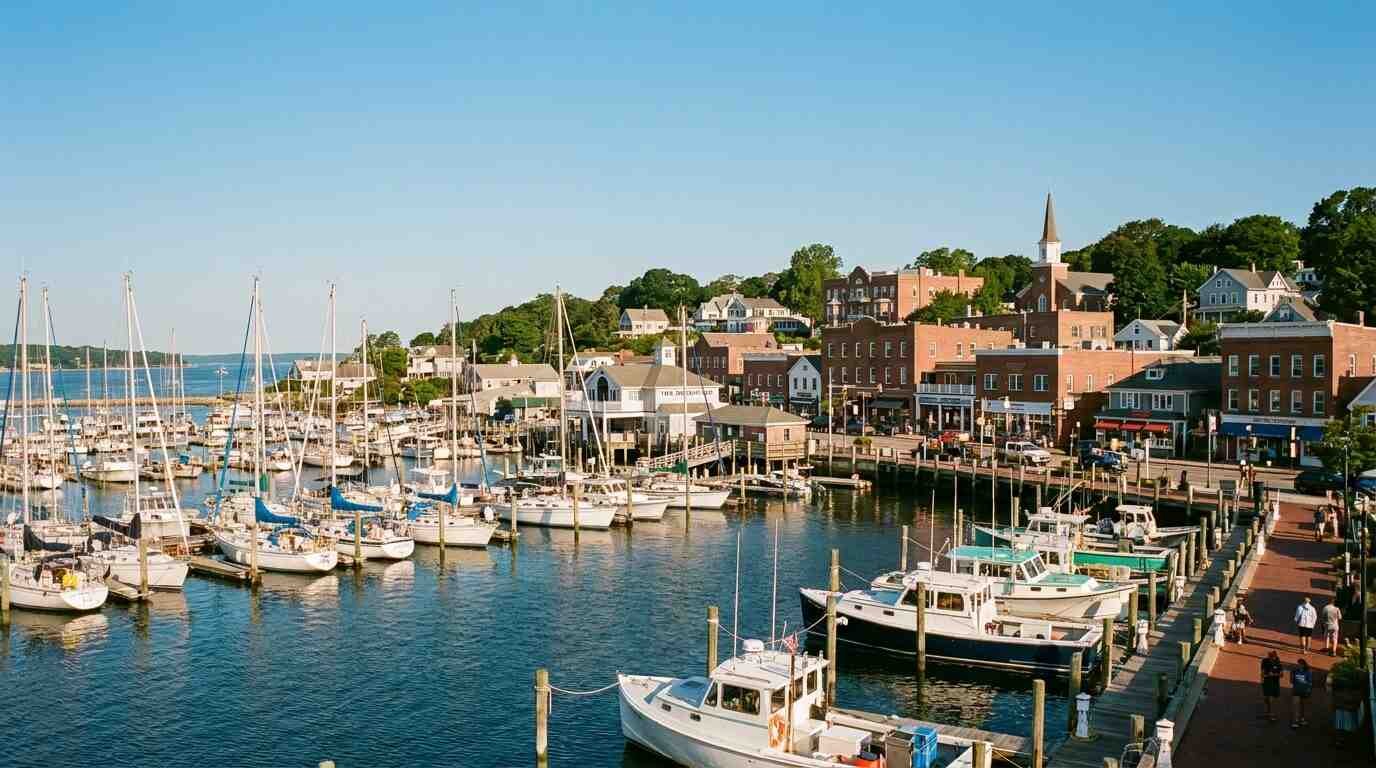
Most of Suffolk County is cooling. Port Jefferson hasn’t gotten the memo — and the reason has less to do with interest rates and more to do with what $650K still buys you when you can walk to a ferry.
I’ve been watching this market long enough to know that Port Jefferson operates by its own logic. Other North Shore towns follow the county trend lines. Port Jefferson argues with them. The combination of factors that drives prices here — the harbor, the walkability, the ferry connection to Connecticut, the physical constraint on developable land — insulates it from macro headwinds in ways that ZIP codes five miles east or west simply don’t experience.
That dynamic has come into sharp relief in 2024. Here’s what’s driving it, and what it means if you’re thinking about buying or selling in the village.
—-
Port Jeff by the Numbers: Median Price, Inventory, and Sale-to-List Ratios
Port Jefferson’s median sale price has held notably stronger than broader Suffolk County through 2024 — a divergence that’s visible in closed-sale data for ZIP code 11777 on OneKey MLS and that reflects structural characteristics of the market rather than temporary momentum. In a county where softening has been more pronounced in mid-market price bands, Port Jefferson has been one of the outliers.
The village micro-market — the walkable, harbor-adjacent area within a mile of the ferry terminal — has been particularly resilient. Sale-to-list ratios in that core zone have remained above the county average even as the broader Long Island market has drifted lower. Days on market in the village have stayed compressed relative to comparable price points elsewhere in Suffolk.
Inventory is the variable worth watching most closely. Active listings in 11777 remain constrained. The village’s zoning structure, combined with the physical limitation of buildable land between the harbor and the bluffs, means new supply cannot arrive to relieve demand the way it can in less geographically defined markets. When a well-positioned property comes to market here, it’s competing against a limited field of alternatives — and buyers feel that scarcity before the numbers confirm it.
—-
Why the Village Micro-Market Behaves Differently Than Greater Suffolk
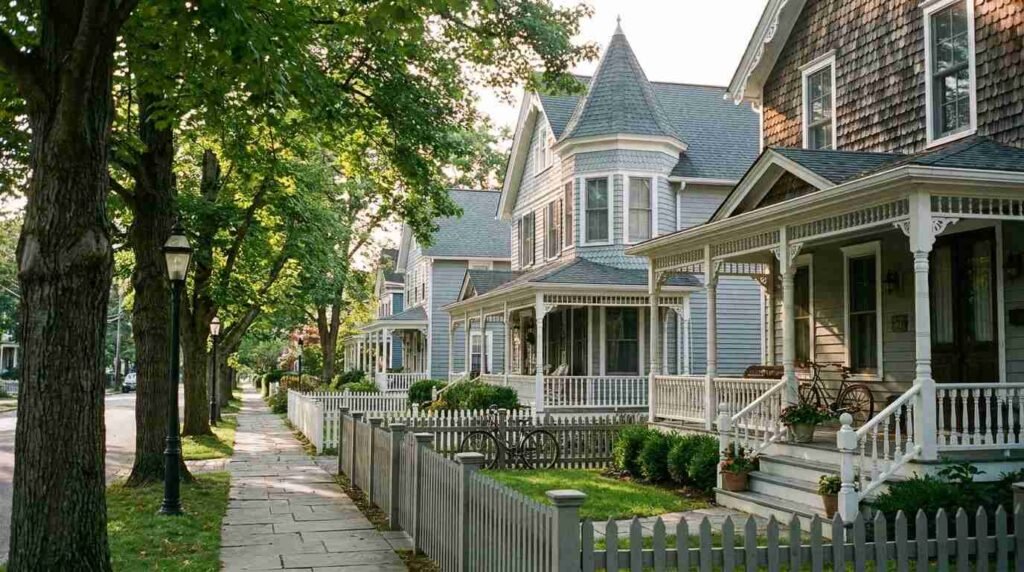
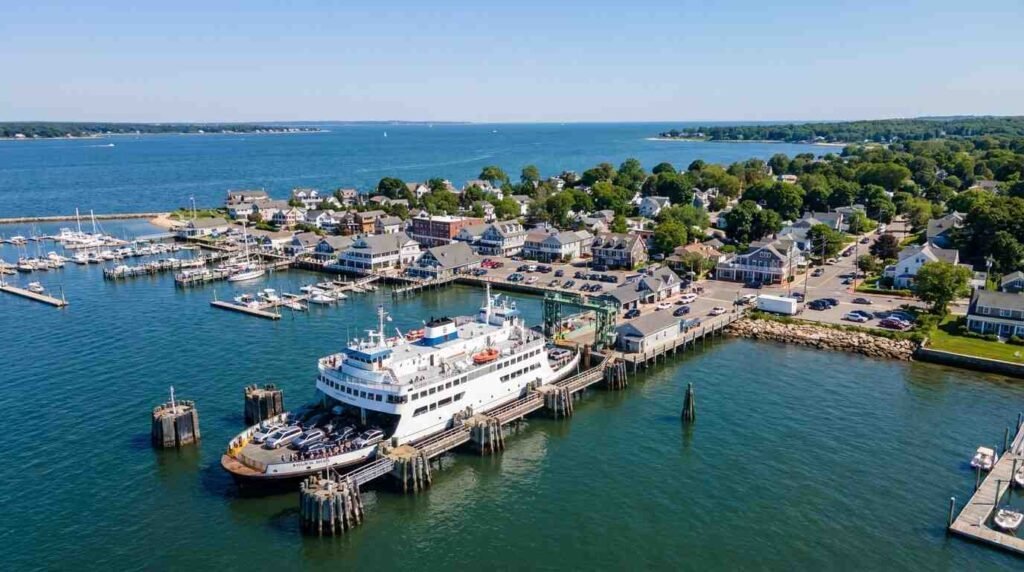
Port Jefferson’s zoning is one part of the story. The geography is the other. The village sits at the terminus of a harbor that narrows as you move inland, which means waterfront and near-waterfront properties are genuinely finite — there’s no equivalent expansion zone waiting to be developed. The bluffs to the north, the harbor to the south, the historic district commercial core in between: it is a contained place, and contained places hold value differently than sprawling ones.
The commercial street life matters too. Main Street in Port Jefferson is one of the few genuinely walkable commercial corridors on the North Shore. Restaurants, boutiques, the ferry terminal, the farmers market — a buyer who moves here gets a lifestyle amenity that doesn’t show up in the price-per-square-foot calculation but absolutely shows up in demand. I’ve written about how Port Jefferson’s walkable character survived when comparable towns lost theirs — that piece on the village’s urban DNA gets into the planning history if you want the longer story.
It isn’t just buyers who have noticed. TBR News Media, which covers the North Shore closely, reported on the wave of new apartment development in Port Jefferson — noting that developers like The Gitto Group specifically designed their projects to serve people “choosing to downsize in Port Jefferson,” with residents consistently citing the community itself as the reason they stayed. That stickiness is exactly what underpins the for-sale market’s resilience.
The net effect is that Port Jefferson buyers aren’t just buying a house. They’re buying access to something that cannot be replicated, which means they price that access into their offers.
—-
The Harbor-View Premium: How Much More Are Buyers Actually Paying
The harbor-view premium in Port Jefferson is real, documentable, and larger than most buyers expect before they start looking here.
From what I’ve observed in the market and what available closed-sale data directionally supports, properties with direct or partial harbor views command a meaningful premium over comparable non-view properties in the same neighborhood. For a home priced around $700K without a view, a harbor-facing equivalent at the same square footage and condition level will consistently close higher — sometimes substantially so. The gap widens as you move into the upper price tiers, where the view becomes a primary driver of the offer rather than one factor among several.
The view premium is also more durable than other value-adding factors. A kitchen remodel depreciates relative to the neighborhood as finishes date. A harbor view appreciates relative to how hard it becomes to find one.
—-
Who’s Buying in Port Jefferson Right Now — and What They Want
The buyer pool in Port Jefferson in 2024 skews toward two cohorts, and they’re quite different from each other.
The first is the empty-nester or pre-retirement buyer — typically someone in their mid-50s to early 60s who has sold a larger house in a nearby town and is sizing down without sacrificing quality of life. They want walkability. They want to be able to reach a train or a ferry. They want a house that doesn’t require them to get in a car to eat dinner. Port Jefferson delivers that in a way that Miller Place or Sound Beach, for all their genuine appeal, simply doesn’t match.
The second cohort is the out-of-state or remote-work buyer who has discovered that the Bridgeport & Port Jefferson Ferry connection gives them options that didn’t exist the same way before hybrid work normalized. The crossing to Connecticut becomes an occasional commute rather than a daily one, which changes the calculus entirely. For a buyer working a three-day office week in Bridgeport or beyond, Port Jefferson becomes a viable full-time base rather than a weekend retreat.
Both cohorts share a strong preference for move-in ready condition. The Port Jefferson buyer is not typically a fixer-upper buyer — they’re paying a premium for the location and they want the house to match. Properties that come to market with deferred maintenance or dated condition sit noticeably longer here than turnkey equivalents at the same price point.
—-
What This Means If You’re Thinking About Selling in the Next 12 Months
For Port Jefferson sellers, the fundamental story is favorable: you’re in a constrained market, demand remains comparatively strong, and the buyer pool — while smaller than it was in 2021 — is composed of serious, qualified buyers with clear motivation.
The nuances matter, though. Harbor-view properties and properties within walking distance of the village core should be priced to reflect that premium — confidently, not apologetically. The market will reward correct positioning here more reliably than in softer surrounding markets.
For properties in Port Jefferson Station — the hamlet to the north of the village — the calculus is different. The Station is more affordable, more car-dependent, and more exposed to the broader Suffolk County trend lines. That’s not a knock; it’s a different product for a different buyer. But conflating the two sub-markets is one of the more common mistakes I see sellers and their agents make. If you’re selling in the village, understand what you have. If you’re selling in the Station, understand what you’re competing against. The distinction shapes everything from pricing to how you structure the showing experience.
For more on how pricing strategy functions differently across North Shore sub-markets, the post on Port Jefferson’s second act as a real estate market puts the current moment in longer historical context. And if staging and presentation are on your mind, what the first eight seconds actually cost Long Island sellers is worth reading before you list.
—-
Real estate markets change. This post reflects conditions as of 2024. For current listings and market data, contact Pawli at Maison Pawli.
—-