Greenport, NY Is the Most Walkable Village on Long Island. Here’s the Exact Itinerary.
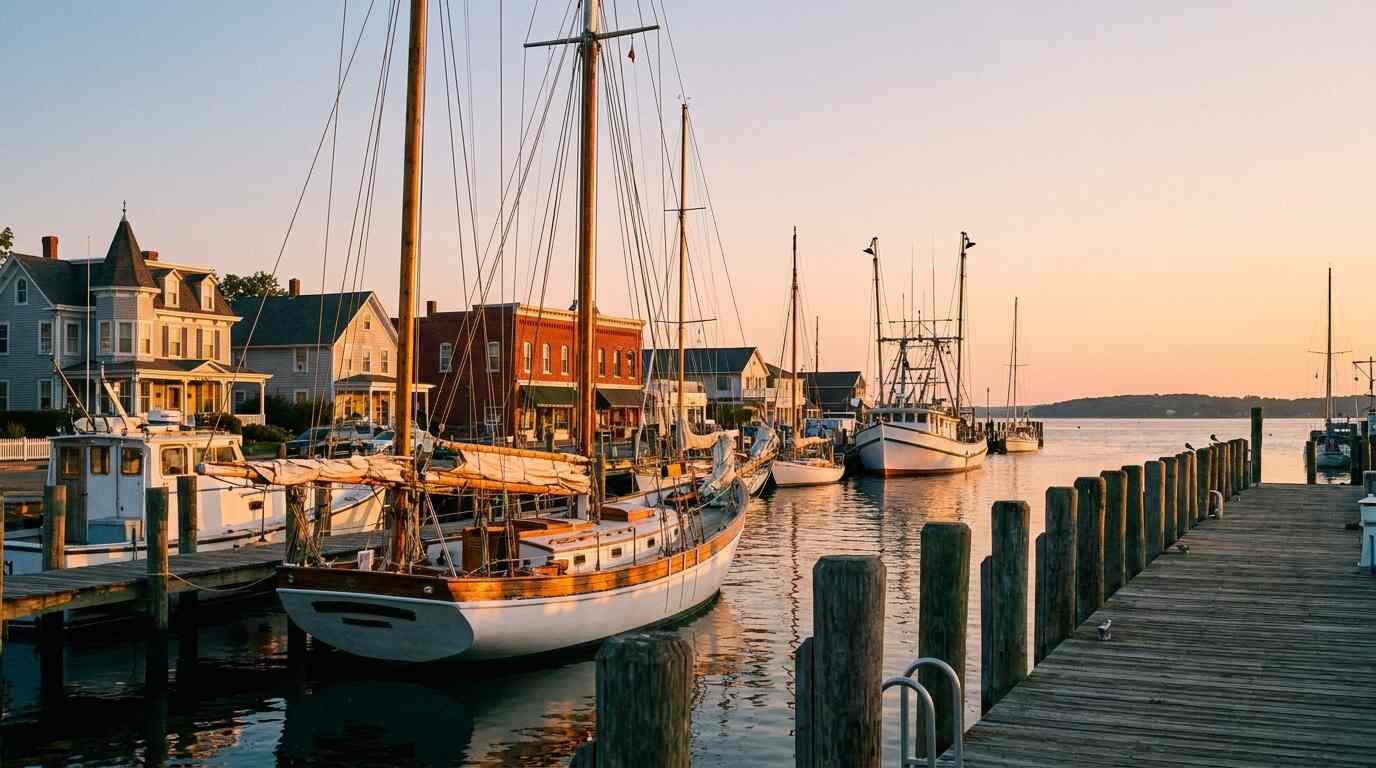
Long Island has a complicated relationship with walkability. Most of it was built around the assumption of a car — the parkways, the strip malls, the subdivisions that end in cul-de-sacs a quarter mile from anything you’d want to walk to. I say this not as a criticism but as context, because Greenport is the exception that makes the rule legible. It is a genuine village, the kind that exists in New England and the Hudson Valley and large stretches of Europe, where the geography of the place was decided before the automobile arrived and was never substantially revised afterward.
That is not an accident. It is the result of Greenport’s working waterfront history — the ferry crossings, the commercial fishing operations, the shipbuilding economy that gave the village its original footprint and then declined slowly enough that the buildings stayed. What you have now is a village that functions because it was built to function, and that draws visitors from across the New York metropolitan area who want to spend a day in a place that doesn’t require a car to navigate.
Here is how to spend that day correctly.
Why Greenport Works in a Way Most Long Island Towns Don’t
The incorporated Village of Greenport sits at the eastern end of the North Fork of Suffolk County, with the North Ferry terminal at its northern edge connecting to Shelter Island and, from there, the South Ferry to the Hamptons. That ferry connection is part of what keeps Greenport from feeling like a terminus. It is a through-point on a route that people actually use, which gives the village a quality of purposeful transit that tourist destinations built on tourism alone rarely achieve.
The walkable core runs roughly from the ferry terminal south along Front Street and then east along Main Street — less than half a mile covers most of what you came for. Within that perimeter: the harbor, the carousel, the oyster bars, the wine shops, the galleries, and enough restaurant inventory to support a serious dinner at the end of a long afternoon. A village that covers this much ground in this little distance is not something Long Island produces often.

Morning: The Harbor, the Market, and the Right Breakfast
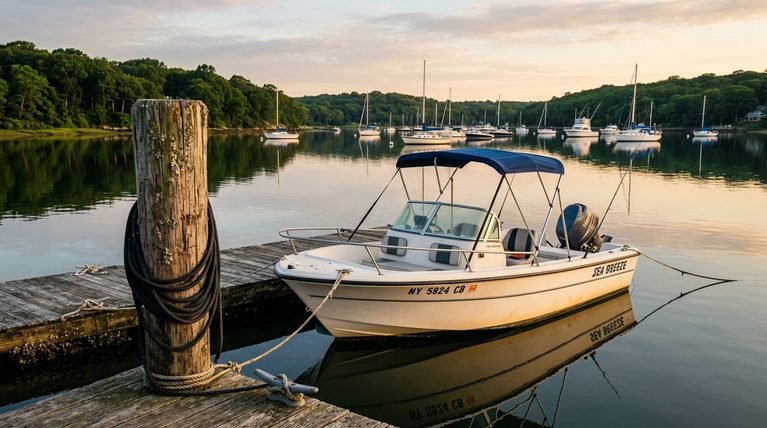
Arrive early enough to have the harbor to yourself. The North Ferry dock in the morning, before the first serious cross-traffic begins, is worth the timing — the light on Shelter Island across the channel is particular in the early hours, and the working waterfront character of Greenport is most visible when the boats are being rigged rather than docked after the day.
From the harbor, walk south on Front Street. The Saturday Farmers Market, when it runs in season, is worth a stop for local produce, preserves, and the kind of conversation that happens when the people selling the food grew it themselves. If you’re visiting on a non-market day, the village’s café options along Main Street will carry the morning adequately.
Breakfast recommendation: take your time. Greenport rewards the visitor who moves slowly. The village is not designed for efficiency.
Afternoon: Tastings, the Carousel, and Mitchell Park
Mitchell Park occupies the waterfront south of the ferry terminal and anchors the afternoon portion of any proper Greenport itinerary. The restored 1920s B&B Carousell — a historic carousel with its original hand-carved horses, operational and documented as a restoration project of the Village of Greenport — is one of those objects that reads as charming and, if you look at it carefully, as something considerably more. The craftsmanship in the carving predates mass production and reflects the same regional woodworking tradition that the North Fork has always sustained quietly.
The park itself is a functional waterfront green with views across the harbor that in clear weather extend toward Shelter Island. It is the kind of public space that justifies the phrase “quality of life” in a way that most discussions of that phrase do not.
Wine, from here, is logical. Greenport’s proximity to the North Fork’s American Viticultural Area means that the local wine shops carry a depth of regional inventory that you won’t find in the metropolitan area retailers. Several tasting rooms with Greenport-area presence are walkable or a short drive; the Long Island Wine Council’s published maps identify them. If you are visiting in fall during harvest season, the atmosphere on the North Fork changes in ways that I’ve written about in some detail — the short version is that October is the insider’s season and worth planning around.
Where to Eat Oysters and Why Greenport Is the Right Place to Do It
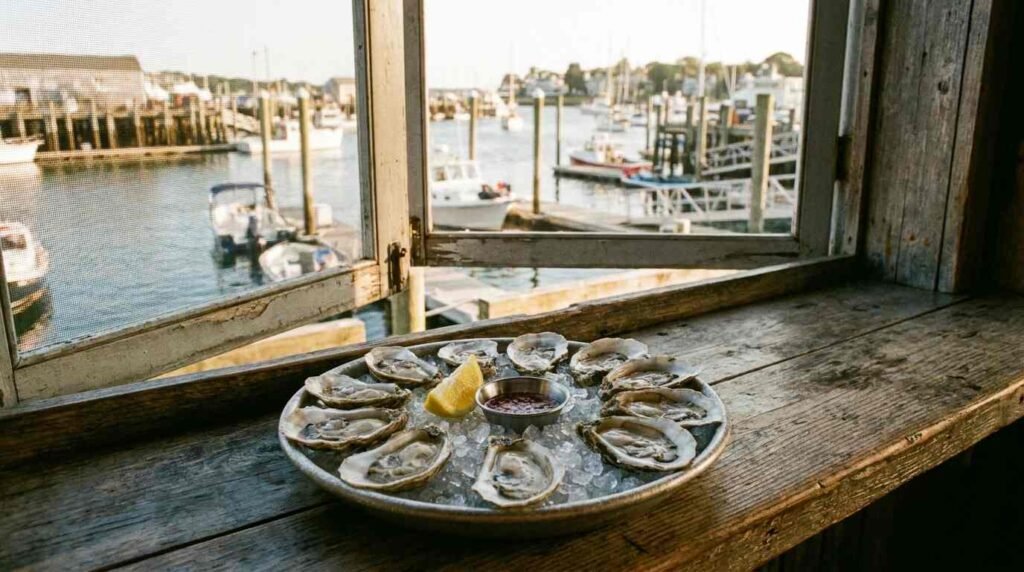
Claudio’s Clam Bar holds a distinction that is verifiable through New York State historic documentation: it is the oldest restaurant in New York State operating in continuous service under the same family. The Claudio family has been on that waterfront location since 1870. That fact is worth sitting with for a moment before you order.
The oysters are the right thing to order, and the reason Greenport is the right place to eat them is geographic. The Peconic Bay estuary system that forms the eastern end of Long Island’s North Fork is productive shellfish habitat — the salinity levels, water temperature, and tidal patterns produce a particular flavor profile in the oysters harvested here. Eating an oyster at Claudio’s in Greenport is eating it about as close to its origin as a restaurant setting allows.
Beyond Claudio’s, Greenport has accumulated enough restaurant inventory in the past fifteen years that a serious dinner here no longer requires managing expectations. The North Fork Table & Inn, with its documented James Beard connections and commitment to regional sourcing, has raised the standard for what a meal on the North Fork can mean. Call ahead — this is not a walk-in situation.
What to Know If You’re Thinking About Buying Here Instead of Just Visiting
This is where I’ll step out of the itinerary format for a moment, because the question comes up more than you’d think.
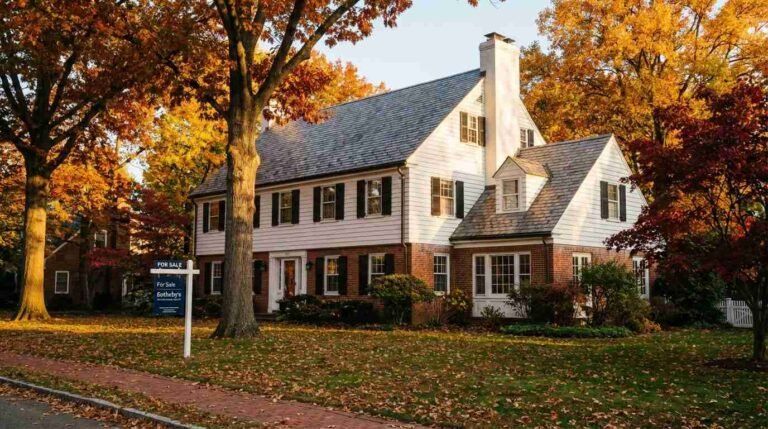
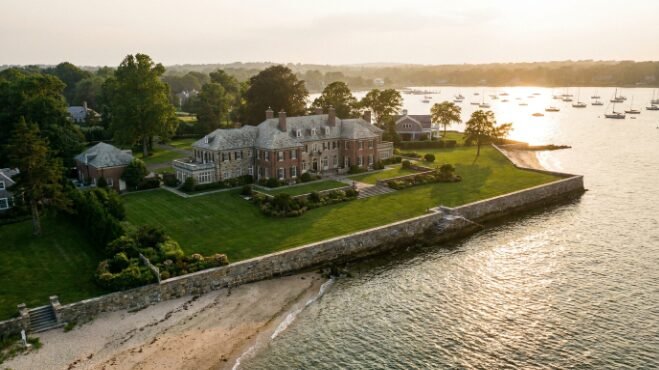
The buyers who walk Greenport for a day and start doing arithmetic in their heads are responding to something real. The village has a quality of place that is not replicable on the North Shore, and it exists in a market that — compared to the Hamptons, compared to the Gold Coast, compared to the western North Shore communities — still reflects the actual history of a working village rather than the premium applied to a curated lifestyle product.
That is changing. The Riverhead gateway to the North Fork has attracted developer attention, and the ripple effects move east. Greenport’s market is not what it was five years ago, and the inventory of unrenovated properties at entry-level prices has thinned considerably. What remains tends to move quickly and attract buyers who have been watching longer than they’d like.
If the day-trip has started to feel like reconnaissance — which is a completely legitimate way to use a day in Greenport — I’m happy to make that conversation explicit. Maison Pawli covers the North Fork alongside the North Shore, and the market dynamics on both sides of that territory are something I track closely. The architectural history of Greenport specifically — the commercial block record that tells the story of the village’s maritime economy — is something I covered in more depth here if you want context before we talk.
The ferry back to the mainland, whenever you’re ready, runs on the North Ferry schedule from the terminal at the north end of the village. Plan your departure with enough margin to stand on the dock for a few minutes before boarding. The light at the end of an afternoon in Greenport, looking back at the harbor from the ferry approach, is worth being present for.
You Might Also Like:
- Greenport Before the Galleries: Reading the Village’s Commercial Block Architecture as a Maritime Industry Timeline
- North Fork Wine Country Has a Secret Season. It’s Not Summer.
- Riverhead, NY Real Estate Market 2026: The Gateway Town That Got Serious
Sources:
- Village of Greenport — Municipal Records — incorporated village and ferry terminal documentation
- North Ferry Company — Shelter Island crossing schedules
- Claudio’s Restaurant — New York State Historic Documentation — continuous family operation since 1870
- Mitchell Park Carousel — Village of Greenport restoration records — 1920s B&B Carousell restoration
- Long Island Wine Council — North Fork AVA Map — regional winery locations and seasonal information
- TTB American Viticultural Area: North Fork of Long Island — federal AVA designation