Coldwell Banker vs. Boutique Brokerage: Why the Brand Name on the Sign Doesn’t Sell Your Home

There’s a particular reassurance that comes with the Coldwell Banker sign, or the RE/MAX balloon, or the Keller Williams yard placard. I understand it. These are familiar names, national scale, decades of visibility. They signal stability in a moment when sellers are handing over the keys to one of the largest financial assets of their lives.
But here’s the thing about that reassurance: it’s brand equity, not service equity. And when I look at what sellers on the North Shore are actually receiving in exchange for a 5–6% commission at a large national brokerage, the gap between the brand promise and the listing experience is wider than most sellers realize until they’re already in the middle of it.

The Brand Myth: Why ‘National Reach’ Rarely Sells Your Specific Home
The national reach argument goes like this: a big brokerage has agents across the country, a recognizable brand, and exposure networks that boutique firms can’t match. When a buyer in Connecticut is relocating to Long Island, Coldwell Banker’s network will surface your listing to them.
The mechanism by which that actually happens — in the era of Zillow, Realtor.com, and universal MLS syndication — is worth examining.
Your listing’s reach is determined primarily by where it appears online. When an agent lists your home on the MLS, it syndicates automatically to Zillow, Trulia, Realtor.com, Homes.com, and dozens of other platforms, regardless of whether your brokerage is Coldwell Banker or Maison Pawli. The buyer in Connecticut sees your listing through the same channels either way.
National brand recognition does not translate into algorithmic preference on any of these platforms. Your listing appears based on search parameters — price range, bedroom count, location, school district — not the name of the brokerage holding the listing.
Where national brand investment actually goes: franchise marketing, agent recruitment, brand advertising, and regional market presence. None of that is targeted to your specific property. Research published in the Journal of Real Estate Research examining the relationship between brokerage brand and individual sale price found no statistically significant premium attributable to national brand affiliation. What predicted better outcomes: listing accuracy, listing quality (photography, description), and accurate initial pricing.
Agent Attention Per Listing: How Boutique Brokerages Outperform Big-Box Models
NAR productivity data offers a telling window into how listing attention works at large versus small brokerages.
According to NAR’s agent productivity studies, the median number of transaction sides completed annually by NAR members varies widely — but at large national franchises, high-producing agents routinely carry 20–35 active listings simultaneously. At that volume, each listing competes with the others for the agent’s time, energy, and advocacy.
Boutique brokerages operate differently by structural necessity. A boutique firm with a small roster of listings cannot hide behind volume. Every listing is visible to ownership. Every transaction reflects directly on the firm’s reputation in a local market where that reputation is everything.
When I take on a listing at Maison Pawli, I am the broker on that file. Not an agent who reports to a manager who reports to a regional director. The person who listed your home is the person negotiating your offers, attending your inspections, and answering your calls. That’s not a feature we advertise — it’s just how a boutique brokerage functions.
Marketing Quality Differences: MLS, Photography, Video, and Social vs. The Minimum
The MLS listing is the floor, not the ceiling. Every licensed agent in a participating board has access to it. The question is what they build on top of it.
At most large national franchise operations, the marketing allocation per listing is a standardized package: MLS entry, syndication, a property brochure, and some combination of social posts templated through the brokerage’s marketing tools. Professional photography may or may not be included depending on the agent, the commission tier, or the individual agent’s willingness to invest their own money.
This is not a criticism of individual agents at those firms — many are excellent, and many invest heavily in their listings’ marketing out of their own commission. But the system doesn’t guarantee it. What you get depends on which agent you happen to work with.
At Maison Pawli, every listing receives professional photography. For properties where it makes sense — waterfront, historic, architecturally distinctive — we add video walkthroughs and drone footage. The marketing strategy is built per property, not templated per tier.
The reason matters: on Long Island’s North Shore, where buyers are often coming from Manhattan, Brooklyn, or out of state and making decisions based heavily on digital presentation before scheduling an in-person showing, your listing’s first impression is its photography. Poor photography is not recoverable. Buyers scroll past it.

Commission Structures Compared: What Coldwell Banker, RE/MAX, and Keller Williams Actually Charge
Commission structures at large national franchises are not publicly standardized — they’re technically negotiable at the agent level, and individual agents within the same franchise may quote different rates. But RealTrends and NAR data give us a reasonable picture of the ranges in practice.
Coldwell Banker franchises typically operate at 5–6% total commission, split between listing and buyer’s side. RE/MAX uses an agent-centric model where agents pay desk fees and keep a higher commission percentage, often resulting in total commission rates of 5–6% to the seller. Keller Williams operates on a similar franchise model, with 5–6% being standard in most Long Island markets.
At these commission rates, here’s what a seller on Long Island is paying at common price points:
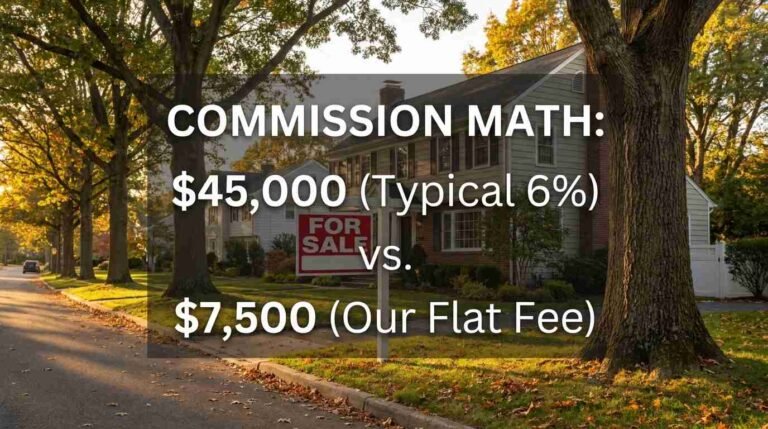
| Sale Price | 5.5% Commission | Maison Pawli Professional (1%) | Seller Savings |
|---|---|---|---|
| $600,000 | $33,000 | $6,000 | $27,000 |
| $750,000 | $41,250 | $7,500 | $33,750 |
| $900,000 | $49,500 | $9,000 | $40,500 |
| $1,200,000 | $66,000 | $12,000 | $54,000 |
These savings don’t require sacrificing service. They require choosing a brokerage whose business model isn’t built on perpetuating a commission structure that predates the internet.
Why Independent Boutique Firms Like Maison Pawli Are Capturing Market Share on Long Island
The shift in the North Shore market toward boutique brokerages is not hard to explain. The sellers who’ve done their homework — who’ve run the net proceeds math, who’ve compared what they’re getting from different listing options, who’ve read the post-NAR settlement landscape — are asking better questions than sellers were asking a decade ago.
The “national brand” argument holds less water when every buyer is already finding listings through Zillow. The “full service” argument requires scrutiny when that service is being delivered by an agent managing 25 other files. The “you get what you pay for” argument gets complicated when a 1% listing fee comes with professional photography, direct broker attention, and a net proceeds number that’s $33,000 better.
Maison Pawli was built on the premise that North Shore sellers deserve a brokerage built around their outcomes, not around franchise royalties and brand advertising. The sign in the yard matters less than what the broker is doing every morning to get your home sold.
The brand name isn’t what closes deals on Long Island. The broker is.
You Might Also Like
- Why Long Island Home Sellers Are Leaving $30,000 on the Table With Traditional 6% Commissions
- Ready to Sell Your Home? Here’s What You Need to Know
- The Staging Mistake That Costs Long Island Sellers $15,000 at the Table
Real estate markets change. For current listings and market data, contact Pawli at Maison Pawli.
This post is for informational purposes only and does not constitute legal or financial advice. Consult a licensed attorney or financial advisor for guidance specific to your situation.