
Earnest Money Is Not a Deposit: The Legal Distinction That Determines Who Keeps It
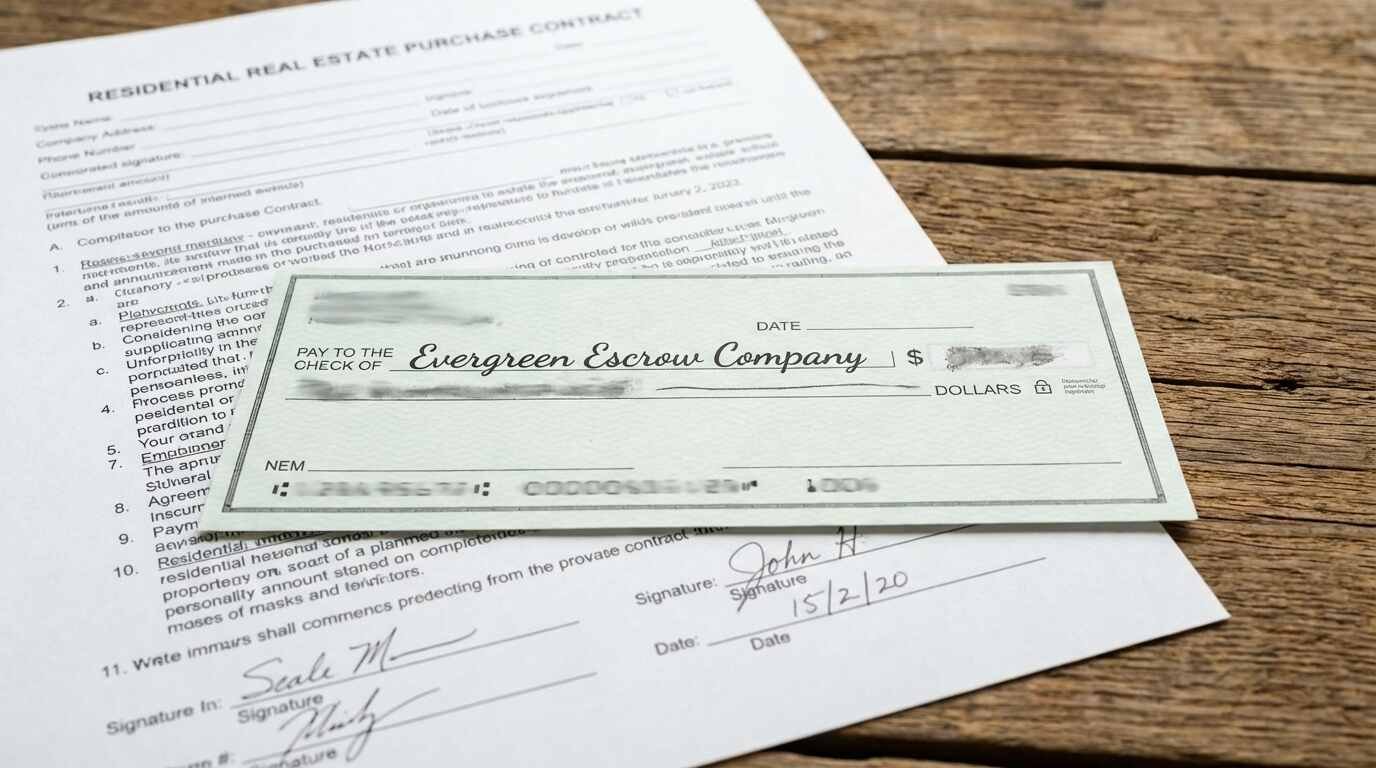
When I work with first-time buyers, I watch them absorb a great deal of new vocabulary quickly — contingency, escrow, title commitment, commitment letter. Most of it they absorb correctly. Earnest money is the one they almost universally misunderstand, because they hear it described as a deposit, and a deposit implies refundability.
It is not a deposit. Under standard contract law, earnest money functions as liquidated damages — a pre-agreed sum that transfers to the non-defaulting party as compensation when the defaulting party fails to perform. The conditions under which it is refundable are specific and contractual. The conditions under which it is forfeited are equally specific, and missing a deadline by twenty-four hours is enough.

The Liquidated Damages Framework
The legal treatment of earnest money as liquidated damages derives from the Restatement (Second) of Contracts § 356, which governs the enforceability of damage clauses agreed to in advance. For a liquidated damages clause to be enforceable, the agreed amount must be a reasonable estimate of actual harm, and actual harm must be difficult to calculate precisely at the time of contracting.
In residential real estate, both conditions are routinely satisfied. When a buyer defaults on a purchase contract, the seller’s actual damages — carrying costs, re-listing expenses, potential price reduction in a softened market, lost opportunity cost — are genuine but imprecise. A pre-agreed earnest money figure, typically one to three percent of purchase price, has been repeatedly upheld by courts as a reasonable liquidated damages estimate in that context.
The California Association of Realtors RPA-CA purchase agreement contains an explicit liquidated damages clause in Paragraph 21, under which the earnest money constitutes the seller’s sole remedy in the event of buyer default — unless the buyer and seller have initialed an alternative provision. New York and most Northeast jurisdictions operate under similar frameworks, with variation in how default is defined and what notice is required.
What this means for a first-time buyer is precise: earnest money is not refundable by default. It is refundable under the specific conditions defined in the contract, and only those conditions.
What Contingency Deadlines Actually Do
Standard purchase agreements include multiple contingency periods — inspection, financing, and in some transactions, attorney review. Each period has a defined duration and, critically, a defined notice requirement. To preserve the right to exit under a contingency, the buyer typically must deliver written notice of exercise within the contingency period. Not the business day after. Not by phone call. Written notice, delivered as specified, within the defined window.
NAR Professional Standards documentation and state real estate commission records both reflect a recurring pattern: buyers who believed they were protected by a financing contingency missed the written notice deadline and lost their earnest money as a result. The financing contingency did not fail — the financing itself was the problem, or was not yet resolved — but the failure to exercise the contingency in writing and on time converted what should have been a protected exit into a default.
Documented cases from state commission complaint filings include buyers who lost between 0,000 and 5,000 in earnest money by missing financing contingency deadlines by as little as one day. In each case, the contract language was unambiguous. The buyer’s recourse against their agent or broker depended on whether they received timely notice of the deadline — a secondary dispute that did not restore the money.
The Financing Contingency Is Not the Commitment Letter
A common source of earnest money loss among first-time buyers involves a misunderstanding of what the financing contingency protects against, and when it expires.
The financing contingency is satisfied — and expires — when the buyer receives a mortgage commitment letter, not when the loan closes. If a commitment letter arrives but is later revoked because of a change in the buyer’s financial profile — a job change, a new debt obligation, a gap in employment documentation — the financing contingency has already been released. The buyer cannot re-invoke it. If the loan then fails to close, the buyer is in default, and the earnest money is at risk.
The CFPB’s first-time buyer resources address this sequencing, but it is rarely communicated to buyers with the precision the situation warrants. The commitment letter is not the same as a clear-to-close. Between commitment and closing, a buyer’s continued financial profile is under observation, and changes can unravel the transaction without reinstating contingency protection.
What First-Time Buyers Should Demand Before Signing
The contract language governing earnest money and contingency deadlines is not boilerplate in the sense of being inconsequential — it is boilerplate in the sense of being standardized and therefore readable. First-time buyers should be able to answer the following before signing any purchase contract: What is the earnest money amount, and where is it held? Under what specific conditions is earnest money fully refundable? When does each contingency period begin, and when does it expire? What is the required form and delivery method for contingency notice? What constitutes buyer default under this contract, and what are the consequences?
If a buyer cannot answer those questions after reviewing the contract with their attorney, they should ask again until they can. The contract is the governing document. What buyers hear verbally at negotiation has no legal weight relative to what the signed document says.

The terminology used in real estate transactions is not neutral. “Good faith deposit” implies goodwill and reversibility. “Liquidated damages” implies a legal mechanism with defined triggers and consequences. Both describe the same money. Only one of those descriptions prepares a buyer for what happens if something goes wrong.
This post is for informational purposes only and does not constitute legal or financial advice. Consult a licensed real estate attorney for guidance specific to your transaction.
You Might Also Like: The Complete Guide to Buying a Home on Long Island’s North Shore — the full buyer’s guide covering every stage of the North Shore home purchase, from mortgage to closing.
Real estate markets change. For current listings and market data, contact Pawli at Maison Pawli.
You Might Also Like
- Beyond the 30-Year Fixed: Mortgage Options First-Time Buyers on Long Island Rarely Hear About
- The Ghost Appraiser Problem
- Down Payment Mirages: The Long Island Housing Assistance Programs That Close Without Warning