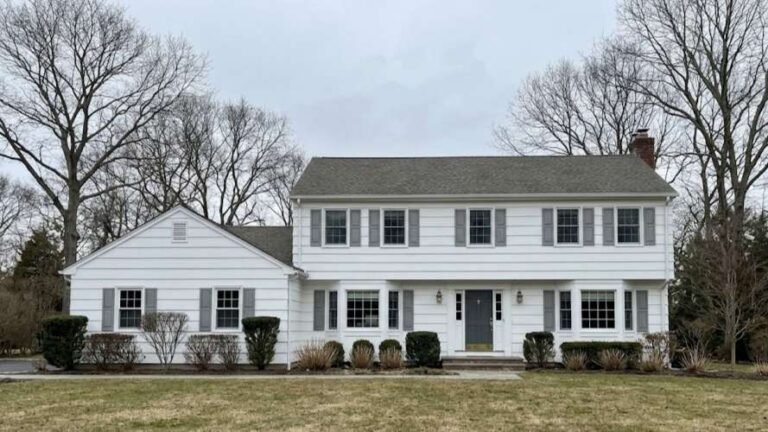
The Ghost Appraiser Problem: What FHA’s Oversight Structure Can’t Catch — and What Long Island Buyers Should Understand

Somewhere between the accepted offer and the closing table, a number gets written down that determines, officially, what a home is worth. That number — the appraised value — decides whether the lender will fund the loan, at what amount, and whether the buyer is paying a fair price or an inflated one. For first-time buyers using FHA financing, it is one of the most consequential figures in the entire transaction.
Most buyers trust it completely. They have no particular reason not to. The appraiser is on a federal roster, credentialed by the state, approved by the lender. The process seems airtight.
It is mostly airtight. But “mostly” is doing a lot of work in that sentence, and I think first-time buyers on Long Island deserve to understand where the gaps are — because our market, more than most, creates conditions that make those gaps consequential.
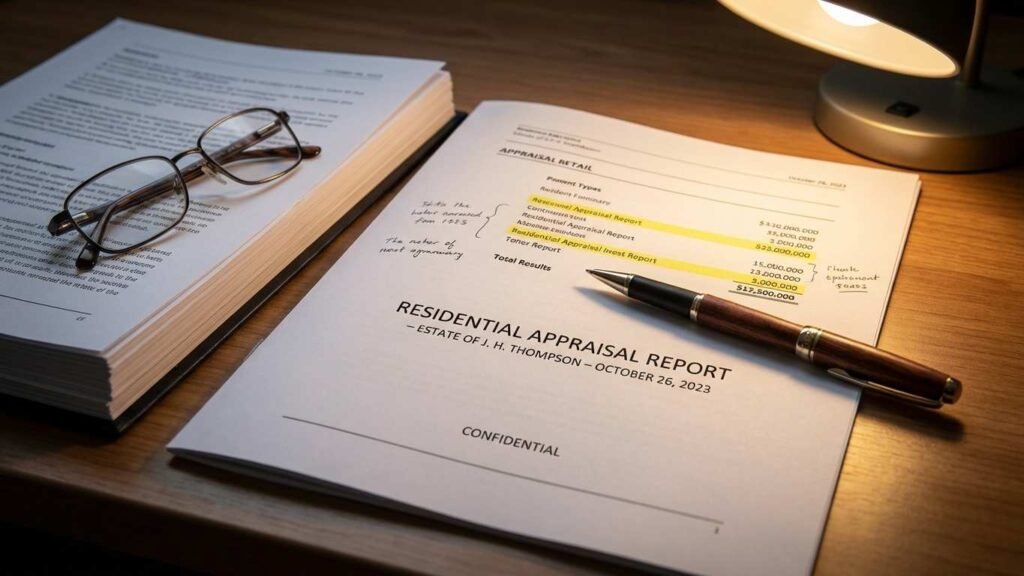
How the FHA Appraiser System Is Supposed to Work
FHA-insured loans require that property appraisals be conducted by appraisers on HUD’s FHA Appraiser Roster. To get on that roster, an appraiser must be state-certified — in New York, that means credentialed through the Department of State’s Division of Licensing Services — and must appear on the Appraisal Subcommittee’s National Registry, which is the federal-level database maintained by the ASC.
The system is layered by design. State licensing provides the baseline. The national registry aggregates that data. HUD’s roster uses the national registry to verify active status. When a lender searches for an FHA-approved appraiser, they’re pulling from that roster — and the system is designed to prevent ineligible appraisers from appearing in results.
Federal regulations are specific about what disqualifies an appraiser: loss of state certification due to disciplinary action, prosecution for fraud or misrepresentation, failure to perform appraisals in accordance with HUD standards, debarment from federal programs. When any of these occur, automatic removal from the FHA roster is required.
The word “automatic” sounds reliable. In practice, the execution of that automatic process has been documented as imperfect.
What HUD’s Own Auditors Found
In 2024, HUD’s Office of Inspector General released audit report 2024-NY-0001: “HUD’s FHA Appraiser Roster Is Generally Reliable but Opportunities to Improve Data Management Exist.” The OIG selected this audit specifically because a prior audit had already identified weaknesses in roster oversight — meaning this was the second time around on a known problem.
The findings were measured but specific. The roster was, on balance, reliable — HUD’s system controls generally prevented ineligible appraisers from being assigned to FHA transactions. But the OIG found that HUD did not always remove ineligible appraisers within specified timeframes when their licenses had expired or disciplinary actions were pending. HUD’s systems also lacked historical data on appraiser roster statuses, which would have allowed HUD to evaluate reliability over time. And the policies, procedures, and regulations governing roster management “did not consistently align, were not clear, or were undocumented.”
The OIG’s recommendations included updating policies, improving data management, and adding quality assurance steps to verify roster accuracy over time. These are reasonable recommendations. They are also, notably, recommendations made in response to documented gaps — gaps that existed during the years when many of today’s North Shore homeowners made their initial purchases.
A separate, earlier OIG audit found more pointed problems: HUD’s appraiser review process was “not adequate to reliably and consistently identify and remedy deficiencies associated with an appraiser.” The review triggers were reactive — they generally required a complaint, an audit referral, or a state disciplinary action to initiate review of an individual appraiser’s work. Proactive pattern-based monitoring of appraiser output was limited.

Why Long Island’s Market Is Particularly Vulnerable
An inflated appraisal is easiest to sustain in markets where comparable sales are thin, turnover is low, and time pressure is high. Long Island’s North Shore housing market checks all three boxes.
Inventory has been historically constrained — I wrote about the lock-in effect and why sellers aren’t moving in an earlier piece, and those dynamics remain relevant. When a market has limited comparable sales data, an appraiser has wider latitude in selecting and adjusting comps. In a market with abundant data and fast turnover, an outlier appraisal is easier to challenge on its face. In a compressed inventory market, the same outlier can be harder to dispute because there are fewer clean data points to anchor a counter-argument.
This is not an accusation directed at any appraiser or any transaction. It is a structural observation about how appraisal methodology works in thin markets — one that HUD’s own definition of property flipping effectively acknowledges. The agency’s anti-flipping rule exists precisely because “artificially inflated value, often abetted by a lender’s collusion with the appraiser” is a documented pattern in real estate fraud — and that pattern is most viable where market data is sparse.
New York State’s Department of State Division of Licensing Services publishes appraiser disciplinary actions publicly at dos.ny.gov. The FHA Appraiser Roster is searchable through HUD’s FHA Connection portal. These are public records. The pattern of enforcement actions in New York — the rhythm of when actions are taken, against whom, and for what — is visible to anyone who takes the time to look.
What This Means for Buyers Today
The good news: the FHA appraisal system, despite its documented gaps, works reasonably well in the majority of transactions. The OIG concluded the roster was “generally reliable.” HUD has implemented improvements since earlier audits. The vast majority of FHA appraisers perform their work competently and in good faith.
The caution: “generally reliable” and “your specific appraisal is accurate” are different claims. A buyer who paid an inflated appraised value five years ago — because the appraisal supported a number that felt high but not absurdly so — may only discover that problem now, when they’re trying to refinance and the current market doesn’t support what they paid. The FHA appraisal process assigns a single appraiser, selected by the lender, using their discretion in comp selection and adjustment. Buyers generally have no direct role in that process.
Understand what an appraisal is and isn’t. An FHA appraisal establishes whether the property meets HUD’s minimum property standards and whether the value supports the loan amount. It is not a guarantee of market value accuracy, nor is it a substitute for an independent home inspection.
Request the appraisal report and read it. Buyers are entitled to a copy of the appraisal under FIRREA. When you receive it, look at the comparable sales selected. Are they in the same neighborhood, the same general vintage, and of genuinely comparable size and condition? If the comps are pulling from a wider geographic area than you’d expect, ask your attorney or mortgage broker why.
Know that reconsideration of value is possible. If you believe the appraisal is incorrect, HUD 4000.1 allows a borrower to request a Reconsideration of Value (ROV) through the lender. The lender must submit the request to the appraiser with any additional comparable sales data or factual errors you’ve identified. This doesn’t guarantee a revised value, but it is a documented right that many buyers never exercise because they don’t know it exists.
Check the appraiser’s credentials yourself. The FHA Appraiser Roster is searchable at entp.hud.gov. The New York State appraiser credential database is accessible through the Department of State at dos.ny.gov. Verifying that your assigned appraiser is active, credentialed, and free of unresolved disciplinary actions takes five minutes and requires no legal expertise.
Consider your lender’s stake in the appraisal. FHA lenders are insured by the government against borrower default, which means the lender’s direct financial exposure to an inflated appraisal is limited. The buyer carries that risk personally. The incentive asymmetry is worth holding in mind.
The Larger Point
None of the institutions involved in a first-time buyer’s transaction are designed to be adversarial. The lender wants to close the loan. The appraiser wants to issue a defensible report. The title company wants a clean chain of title. HUD wants to maintain its insurance fund. These interests are generally aligned with the buyer’s interest — but they are not identical to it.
The buyer is the only party in the transaction for whom the number on the appraisal has personal, long-term, lived consequences. The buyer is the one who will pay that mortgage for the next thirty years, or sell at a loss if the appraisal was wrong, or struggle to refinance when the market doesn’t support what they were told the property was worth.
That is not an argument for paranoia. It is an argument for engagement. Read the appraisal. Check the credentials. Ask the questions. The system works best when the person with the most at stake participates in it rather than trusting it passively.
On the North Shore, I work with buyers who want to understand what they’re buying at every level — the property, the price, the paper behind it. If that’s how you want to approach this, I’d welcome the conversation at maisonpawli.com/about.
This is for informational purposes only and does not constitute legal or financial advice. No individual appraiser is named or implicated in this post. For questions about a specific appraisal or transaction, consult a licensed New York real estate attorney or mortgage professional.
You Might Also Like: The Complete Guide to Buying a Home on Long Island’s North Shore — the full buyer’s guide covering every stage of the North Shore home purchase, from mortgage to closing.
Real estate markets change. This post reflects conditions as of spring 2026. For current listings and market data, contact Pawli at Maison Pawli.
You Might Also Like
- Beyond the 30-Year Fixed: Mortgage Options First-Time Buyers on Long Island Rarely Hear About
- The Lock-In Effect: Why North Shore Inventory Is So Tight Right Now
- Down Payment Mirages: The Long Island Housing Assistance Programs That Close Without Warning
Sources
- HUD Office of Inspector General, Audit Report 2024-NY-0001: “HUD’s FHA Appraiser Roster Is Generally Reliable but Opportunities to Improve Data Management Exist” (hudoig.gov)
- HUD OIG, “Implementation Weaknesses Existed in All Major Phases of the FHA Appraiser Review Process” (hudoig.gov)
- HUD 4000.1 Single Family Housing Policy Handbook — Property Flipping definition; Reconsideration of Value provisions
- 24 CFR § 200.204 — Actions HUD may take against unsatisfactory appraisers
- Federal Register, Final Rule: Prohibition of Property Flipping in HUD’s Single Family Mortgage Insurance Programs, May 2003
- New York State Department of State, Division of Licensing Services, Appraiser Credential Database: dos.ny.gov
- HUD FHA Appraiser Roster — public search: entp.hud.gov/idapp/html/apprlook.cfm
- Appraisal Subcommittee National Registry: asc.gov
- HousingWire, “HUD Tightens Rules for FHA Appraiser Roster,” January 2026