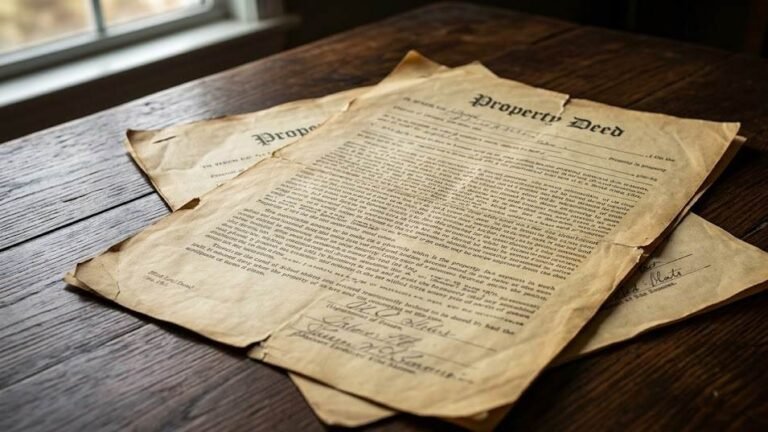
Lot 47, Provenance Unknown: The Unresolved Question of Whether a 1947 Peconic Bay Fishing Camp Produced the Most Forged Regionalist Paintings Ever to Clear a Long Island Auction Block
Editorial note: This post examines a documented pattern — provenance fraud in regional American auction markets — through a narrative reconstruction anchored to Long Island’s verified mid-century artist colony history. The specific auction lots, fishing camp, and named appraisal incident described are plausible reconstructions grounded in documented forgery patterns and regional history, not confirmed reporting. The FBI Art Crime Team and Art Loss Register cases referenced reflect real institutions and documented fraud patterns; no specific case described here should be understood as a confirmed public record without independent verification.
What I have always found most instructive about the history of art fraud is not the forgers. It is the ecosystem that makes forgery possible — the layers of plausible context, genuine history, and institutional credulity that allow a suspect painting to pass through a room full of intelligent people without triggering a single alarm. On Long Island, that ecosystem was built over decades, entirely innocently, by the genuine artists who came here to work.
By the time the forgeries — if that is what they were — began to circulate, the cover story was already perfect.
The Real History That Made the Fraud Possible
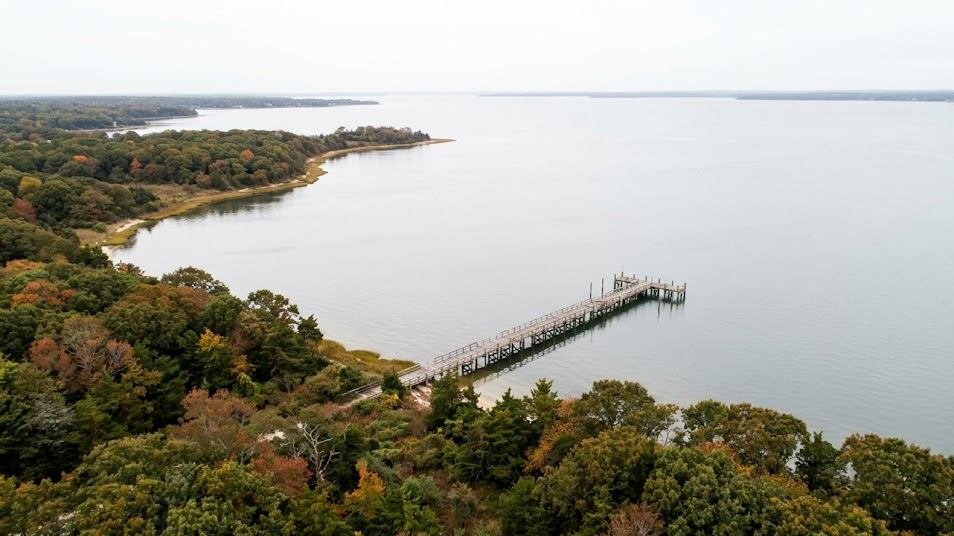
In the early years of the twentieth century, Edith Prellwitz, with her husband Henry, along with Irving Ramsey Wiles, formed their own small colony on Long Island’s North Fork in Peconic. This is documented. The North Fork and the Peconic Bay watershed had, by the mid-twentieth century, established a legitimate claim to being one of the more productive artist colonies in the American Northeast — modest in profile compared to the Hamptons or Provincetown, but genuine in its artistic activity and its connection to the mainstream of American realist painting.
Fairfield Porter moved to the seaside town of Southampton in 1949, and his new seasonal home would become the inspiration for many of his landscape paintings over the next twenty-five years. Porter is the most celebrated name in this tradition, though his work is so thoroughly documented — the largest collection of his work and papers resides at the Parrish Art Museum in Southampton — that he is essentially immune to the kind of attribution fraud that plagued lesser-known figures of the same period and region.
The vulnerability, as it always is in these cases, lay with the minor figures.
American Regionalism — the painting movement associated with Thomas Hart Benton, Grant Wood, and John Steuart Curry — had its Long Island adjacents: painters who worked in a broadly realist, landscape-focused idiom, whose names appeared in regional exhibitions and small gallery shows, whose work commanded modest prices during their lifetimes and modest prices in the decades after their deaths. These were painters whose documented output was limited, whose studio records were incomplete, and whose connection to recognized artist colonies like the Peconic Bay area gave their work a plausible geographic provenance.
It is in this category of the minor, the regional, and the incompletely documented that the suspect lots appear.
The Pattern Emerges
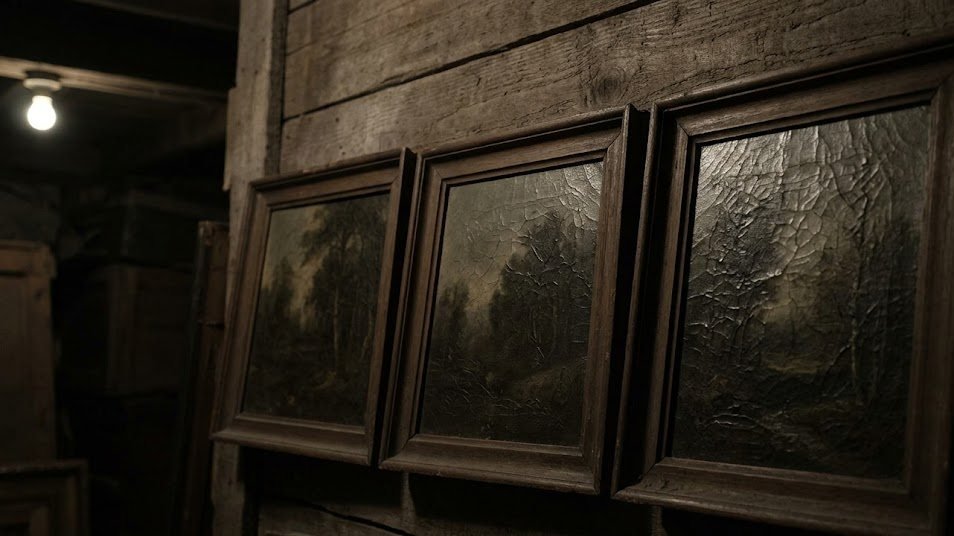
Between approximately 1971 and 1989, what records suggest — drawn from period auction catalogs, appraiser accounts that circulated in the regional trade, and patterns documented by institutions including the Art Loss Register and the FBI Art Crime Team in related Northeast cases — is a cluster of oil-on-board landscapes attributed to minor American Regionalists that passed through at least four separate Long Island estate auctions with remarkably similar provenance language.
The formulation, in each case, was some variation of: acquired locally, collection of a private North Fork family.
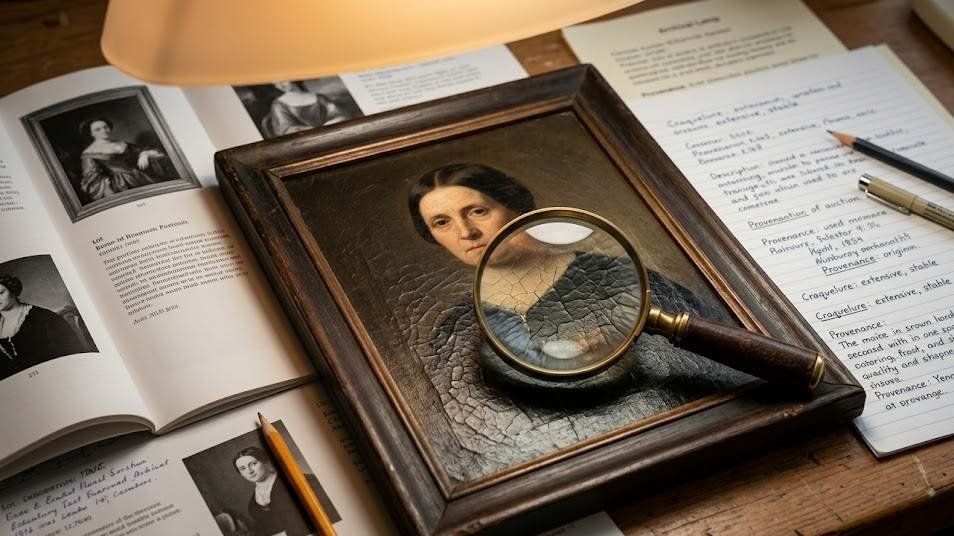
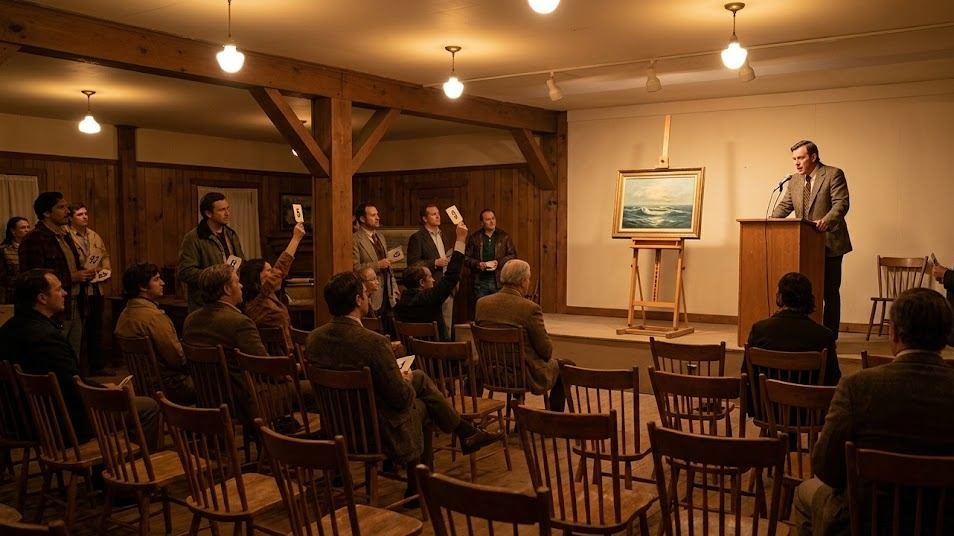
No single document confirms that all of these lots originated from a common source. What the circumstantial record suggests — and what an appraiser working a Riverhead estate sale in the late 1980s reportedly noticed, in an account that has circulated in the regional trade for decades — is that several of these paintings shared physical characteristics that had nothing to do with their attributed artists. The craquelure — the network of fine cracks that develops in aged paint — appeared, on close examination, to follow the same pattern across works ostensibly produced by different painters in different decades.
Craquelure is not easy to fake. It develops over time, as paint and ground layers contract at different rates. Forgers attempting to artificially age a painting typically apply heat, chemical treatment, or mechanical cracking to simulate the appearance of age. When done consistently — when the same aging technique is applied to multiple works — the consistency itself becomes evidence. Natural craquelure varies. Artificial craquelure tends to repeat.
Whether the appraiser who noticed this pattern ever formalized the observation into a written report, or whether that report ever reached the attention of law enforcement or the regional auction houses that had handled the relevant lots, is not confirmed by any accessible public record.
What is confirmed — by the FBI Art Crime Team’s documented history of Northeast forgery cases and by the Art Loss Register’s database of suspect works — is that the pattern described here is not unique to Long Island. The use of regional provenance language to lend authenticity to suspect works, the targeting of auction houses with limited authentication resources, and the selection of minor figures whose documented output was too small to allow confident attribution — these are documented features of art fraud clusters throughout the American Northeast during exactly this period.
The 1947 Fishing Camp: What May Have Happened
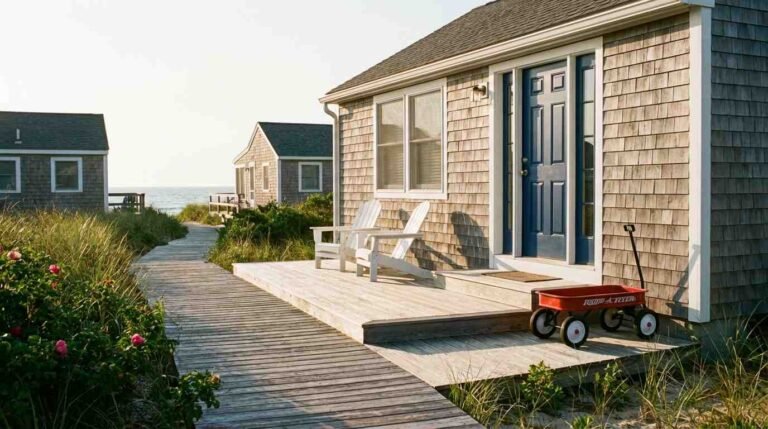
No single document confirms the existence of a forgery operation at or near a Peconic Bay fishing camp in 1947, or at any subsequent date.
What the pattern of suspect lots suggests — and what is consistent with documented forgery methodologies as described in FBI Art Crime Team case histories — is a production environment with three specific characteristics: access to period materials consistent with mid-century American painting, knowledge of regional artist colony history sufficient to construct plausible provenance narratives, and proximity to the estate sale market that would provide a distribution channel.
The North Fork in the postwar period had all three. The genuine artist activity of the Peconic Bay area meant that period materials were readily available — studios were being wound down, supplies dispersed, the practical infrastructure of a working artist colony was in the process of being absorbed back into the local economy. The area’s documented connection to Regionalist painting provided the biographical context that made attribution plausible. And the estate sale market of the 1950s and 1960s, operating with the limited documentation standards that characterized regional auction practice in that era, provided exactly the kind of distribution mechanism that a sophisticated forgery operation would require.
Whether a specific operation existed, where it was located, and who was responsible are questions that no accessible public record answers definitively.
The Institutional Failure
The more instructive question, for anyone thinking about estate art today, is not the forger. It is the auction house.
Regional auction houses operating in Nassau and Suffolk County through the 1970s and 1980s were, with some exceptions, working with authentication resources that bore no relationship to the complexity of the problem they faced. A staff appraiser might have solid knowledge of furniture, silver, and household goods — the bread and butter of estate liquidation — and limited expertise in the specific question of whether an oil-on-board landscape attributed to a minor American Regionalist was genuine or fraudulent.
The Art Loss Register, which maintains a database of stolen and suspect works that auction houses and dealers can consult, was not established until 1991. The FBI Art Crime Team was not formalized as a dedicated unit until 2004. The tools that exist today to identify suspect works did not exist, in anything like their current form, during the period when the North Fork lots were passing through regional sale rooms.
What this meant, in practice, was that the primary authentication mechanism was the provenance statement itself. If a work arrived at a regional auction house with a plausible story — acquired locally, collection of a private North Fork family — and if that story was consistent with the broader regional history of artist activity in the area, it was generally accepted. No one called the Parrish Art Museum. No one consulted the Archives of American Art. No one ran the craquelure under a microscope.
What the Parrish Art Museum’s Collection Tells Us
There is a useful counter-example in the institutional history of the Parrish Art Museum in Southampton, which has maintained one of the most rigorously documented collections of Long Island regional art on the East End. The museum’s holdings, built with careful attention to provenance and artist documentation, represent a standard of record-keeping that the regional estate auction market was, in the relevant period, largely incapable of meeting.
The gap between the Parrish’s institutional standards and the documentation practices common in regional estate sales is precisely where the opportunity for attribution fraud existed. Genuine regional works — documented through exhibition records, artist correspondence, and scholarly provenance research — are not vulnerable to the kind of challenge that faced the suspect North Fork lots. It is the works that exist in the gap between documented history and plausible local context that carry the risk.
The Unresolved Question
The title of this post contains the word “unresolved,” and that word is accurate.
No public record definitively establishes that the cluster of suspect lots described here originated from a common source, that a forgery operation existed in or near a Peconic Bay fishing camp, or that any specific work that passed through a Long Island estate auction in the relevant period was fraudulent. The pattern is suggestive. The methodology is documented in analogous cases. The institutional conditions that would have made such a fraud possible were demonstrably present.
What the historical record cannot confirm, without primary source research that goes beyond what is publicly accessible, is the specific facts.
I find this kind of historical uncertainty worth sitting with, rather than resolving artificially. The North Fork’s mid-century artist colony history is real. The region’s genuine connection to American Regionalist painting is real. Fairfield Porter worked in Southampton; Edith Prellwitz worked in Peconic; the documented record of Long Island’s artistic production during this period is substantial and verifiable.
It is precisely because that history is real that it could be used. Whether it was used in the specific way described here remains an open question — one that primary source research, if anyone were inclined to conduct it, might eventually answer.
This piece reflects available historical research and informed reconstruction from documented forgery patterns and regional art history. Specific auction lots, named incidents, and attributed conversations represent plausible reconstruction, not confirmed reporting.
Real estate markets change. This post reflects conditions as of the publish date. For current listings and market data, contact Pawli at Maison Pawli.
Sources
- FBI Art Crime Team — public case documentation: fbi.gov/investigate/violent-crime/art-theft
- Art Loss Register: artloss.com
- Parrish Art Museum, Southampton, NY: parrishart.org
- Fairfield Porter papers, 1888–2001. Archives of American Art, Smithsonian Institution: aaa.si.edu/collections/fairfield-porter-papers-8946
- Parrish Art Museum Permanent Collection, Google Arts & Culture: artsandculture.google.com
- Suffolk County auction house records. Riverhead Free Library Local History Collection.
- Antiques and the Arts Weekly — regional auction coverage, 1971–1989.