Beyond the 30-Year Fixed: Mortgage Options First-Time Buyers on Long Island Rarely Hear About

The thirty-year fixed mortgage is the furnished model apartment of home financing — familiar, comfortable, and designed to make you stop asking questions. Walk in, look around, sign. Everything is in its place. The question nobody asks is whether the layout actually suits them.
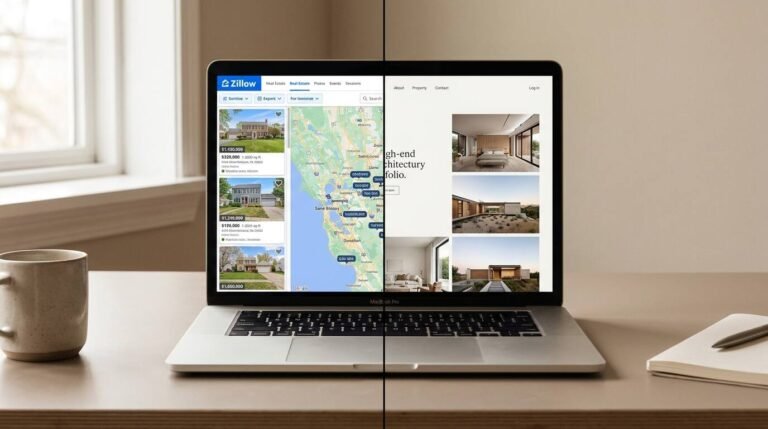
On Long Island, where the entry point for a North Shore home has climbed well past what most people imagined when they first started saving, the financing conversation matters as much as the property search. Buyers who spend months on Zillow but thirty minutes with a lender are, in my experience, the ones who leave money on the table — or leave the market entirely, convinced they’re priced out when they are not.
There are structures your lender may not mention. Not because they’re hiding anything, but because the thirty-year fixed is the default, and defaults don’t require explanation. This piece covers three alternatives worth understanding before you make your first offer: New York State’s SONYMA programs, the 2-1 buydown, and the circumstances under which an adjustable-rate mortgage earns a second look.
This is not financial advice. None of what follows substitutes for a conversation with a licensed mortgage professional who knows your income, your credit profile, and your specific goals. What I can offer is the map. You’ll need someone else to help you navigate it.
New York State Has a Mortgage Agency, and Most Long Island Buyers Have Never Heard of It
The State of New York Mortgage Agency — SONYMA, a subsidiary of New York State Homes and Community Renewal — has existed since 1970. Its purpose is specific: help qualified first-time buyers purchase homes with below-market interest rates and meaningful down payment assistance. It is a public benefit corporation, not a private lender. Its programs are not subprime instruments. They are state-backed, fixed-rate, and fully legitimate.
And they are dramatically underutilized on Long Island.
SONYMA offers two primary mortgage programs for first-time buyers. The first, Achieving the Dream, carries the agency’s lowest available interest rate and is designed for buyers at lower income levels. The second, the Low Interest Rate Program, offers competitive rates at slightly broader income eligibility thresholds and accommodates 1-to-4 family homes, condominiums, cooperatives, and manufactured homes.
Both programs are 30-year fixed-rate mortgages. Both require as little as 1% in verifiable cash from the borrower on 1- and 2-family homes (3% for co-ops and 3-to-4 family properties). Both come with 120-day rate locks on existing homes — 240 days for properties under construction. Both can be layered with other grants and subsidies without limit.
Here is what makes SONYMA genuinely relevant to the North Shore market, where buyers often assume they earn too much to qualify for any assistance: the income and purchase price limits for Nassau and Suffolk counties are substantially higher than the statewide figures. As of limits effective August 2025, Suffolk County buyers can qualify for the Achieving the Dream program with household incomes up to $158,300 for 1-to-2 person households and up to $184,680 for households of three or more. The purchase price ceiling for a single-family home in Suffolk — and Nassau — reaches $1,255,920 on the non-target limit.
Read that number again. SONYMA’s purchase price ceiling for a Suffolk County single-family home is over a million dollars. The program is not a poverty-line instrument. It was calibrated for expensive markets.
The Down Payment Assistance Loan, or DPAL, can be layered onto either primary program. It provides zero-interest, no-monthly-payment second loan up to 3% of the purchase price, capped at $15,000. The loan is forgiven entirely after ten years of occupancy. If the home is sold or refinanced within the first decade, repayment is prorated — 1/120th of the balance per month of occupancy. Buyers who close and stay, which is most buyers, will never repay a cent of it.
An enhanced version, DPAL Plus, offers up to $30,000 for income-qualified buyers at 60% or below area median income. Funding is limited and issued first-come, first-served — a genuine constraint worth noting.
One important distinction: SONYMA does not originate loans directly. You apply through a participating lender. A list of approved lenders is maintained on the SONYMA website at hcr.ny.gov. Not every lender offers every program, and not every loan officer at a participating institution has deep familiarity with the products — which is why it’s worth asking specifically, by name, before you assume eligibility.
The agency also requires completion of a homebuyer education course, which is a reasonable condition and, frankly, one more buyers should go through regardless of their financing path.
The 2-1 Buydown: Borrowing Tomorrow’s Rate Environment, Today
The 2-1 buydown is not a loan type. It is a financing structure layered onto a conventional fixed-rate mortgage — and in the current rate environment, it is one of the more useful tools available to first-time buyers negotiating in a market where sellers still have room to offer concessions.
The mechanics are straightforward. In the first year of the mortgage, the borrower’s effective interest rate is reduced by 2 percentage points below the note rate. In year two, the reduction narrows to 1 point below the note rate. In year three, the loan settles at the full locked rate, where it remains for the life of the term. The difference is not forgiven — it is funded upfront, deposited into an escrow account, and applied monthly to supplement the borrower’s payment.
The critical detail: the upfront cost is most commonly funded by the seller, not the buyer. In a market where a seller has concession room but is reluctant to reduce the list price — which affects comparable sales data — a concession structured as a buydown can deliver substantially more perceived value to the buyer than an equivalent price reduction. A $10,000 seller concession applied to the purchase price shaves perhaps $40 to $50 from a monthly payment. That same $10,000 deposited into a buydown escrow can reduce payments by several hundred dollars a month in year one.
For the first-time buyer, those first two years are often the most financially strained — closing costs absorbed, moving expenses paid, the house inevitably presenting a list of things that need doing. The breathing room a buydown creates during that window is not cosmetic. It’s real liquidity at the precise moment buyers need it most.
What the buydown does not do: it does not reduce the rate permanently, and it does not change the loan amount for which the buyer qualifies. Qualification is based on the full note rate. The reduced payment is the benefit — not a path to a larger mortgage.
One further note, worth stating plainly: the buydown is a hedge against the present, not a prediction of the future. Buyers who use a 2-1 buydown are sometimes planning to refinance when rates improve. That is a reasonable strategy, not a guarantee. Rates will move as they move. The value of the buydown is the certainty of lower payments now, not a promise about what comes later.
The Adjustable-Rate Mortgage, Revisited
The adjustable-rate mortgage carries reputational damage it has not entirely deserved since 2008, when specific products — the Option ARM, the interest-only ARM, the teaser-rate instrument with no documentation requirements — contributed to a foreclosure crisis. The product has been rebuilt since then under far more stringent federal oversight. The conversation deserves a reset.
A standard 7/1 or 10/1 ARM today locks the interest rate for the initial fixed period — seven or ten years, respectively — at a rate that is typically lower than the prevailing 30-year fixed. After that initial period, the rate adjusts annually based on a benchmark index, subject to caps: on the first adjustment, on each subsequent adjustment, and on the lifetime adjustment ceiling above the initial rate.
For a specific buyer in a specific situation, this structure merits consideration. The first-time buyer who is purchasing their starter home on the North Shore — fully expecting to upsize within seven to ten years as the family grows or circumstances change — is not taking on the same risk as a retiree buying their last home. The fixed period may well expire before the buyer intends to keep the loan. The lower initial rate translates to a lower payment, lower total interest in the fixed period, or the ability to apply more of each payment to principal.
None of this is a blanket recommendation. The ARM carries genuine risk for the buyer who intends to stay indefinitely or whose income does not have room to absorb a rate adjustment at the end of the fixed period. The structure requires an honest conversation about timeline, tolerance for uncertainty, and financial cushion. But dismissing it entirely — as many buyers and even some loan officers do reflexively — leaves a legitimate option unexamined.
What This Means on the North Shore
Every spring, I work with buyers who have done everything right — saved responsibly, built their credit, assembled their pre-approval — and still feel like the market is a closed room. What I try to offer is not false encouragement but an accurate picture of the full toolkit.
SONYMA’s Long Island limits are not common knowledge. They should be. A dual-income household earning a combined $155,000 may assume they earn too much for any state program. The limits say otherwise. A buyer negotiating on a home that’s been sitting for sixty days may not think to ask for a seller-funded concession structured as a buydown. It doesn’t occur to most people to ask. A buyer financing a starter home with a clear horizon of seven to eight years may never have had anyone explain that an ARM, in their specific situation, is not the same thing as a risk they can’t manage.
The conversation about mortgage structure is as important as the conversation about which street, which school district, which house. At Maison Pawli, I think about the whole picture — not just the transaction, but the financial life the transaction opens or forecloses.
If you’re considering your first purchase on the North Shore and want to understand what financing structures actually apply to your situation, I’d welcome the conversation. You can reach me through maisonpawli.com/about/.
This post is for informational purposes only and does not constitute financial, legal, or mortgage advice. Income limits, purchase price ceilings, and program terms referenced are subject to change. Verify current SONYMA program details directly at hcr.ny.gov/sonyma or with a participating lender before making any financing decisions.
Real estate markets change. This post reflects conditions as of April 2026. For current listings and market data, contact Pawli at Maison Pawli.
Sources
– SONYMA Program Overview — New York State Homes and Community Renewal: hcr.ny.gov/sonyma – SONYMA Achieving the Dream Program: hcr.ny.gov/achieving-dream-program – SONYMA Low Interest Rate Program: hcr.ny.gov/low-interest-rate-program-0 – SONYMA Achieving the Dream Income and Purchase Price Limits (Effective August 11, 2025): hcr.ny.gov/atd-income-and-purchase-price-limits – SONYMA Down Payment Assistance Loan: hcr.ny.gov/sonyma-programs – SONYMA Preparation & Eligibility: hcr.ny.gov/preparation-eligibility – Consumer Financial Protection Bureau — Mortgage Education Resources: consumerfinance.gov – “What Is a 2-1 Buydown Loan and How Does It Work?” — The Mortgage Reports, May 2024: themortgagereports.com
You Might Also Like: The Complete Guide to Buying a Home on Long Island’s North Shore — the full buyer’s guide covering every stage of the North Shore home purchase, from mortgage to closing.




3 Comments