Pending Home Sales Rose in March — But the Year-Over-Year Gap Tells the Real Story
Two headlines came out of the same NAR report in April, and most people only read the first one.
The first: pending home sales rose 1.5% in March 2026, beating expectations. The second, buried in paragraph four of every media summary: they’re still down 1.1% from March of last year. Both of those things are true simultaneously. Understanding why they’re both true — and what the gap between them means — is more useful than any single takeaway from any single report.
I’ve been watching this index for years. The Pending Home Sales Index is one of the better leading indicators we have, because pending contracts typically close one to two months after signing. What the March data is telling us is that the market is functional but not free. Buyers are moving, but not at the pace the headline number implies.
What the NAR’s Pending Home Sales Index Actually Measures
Unlike closed sales data, which reflects deals made six to twelve weeks earlier, the Pending Home Sales Index captures contracts that are signed but not yet completed. Think of it as real-time intent. When the index rises, it means buyers are actively signing contracts now — which tends to predict closed sales volume in the months ahead.
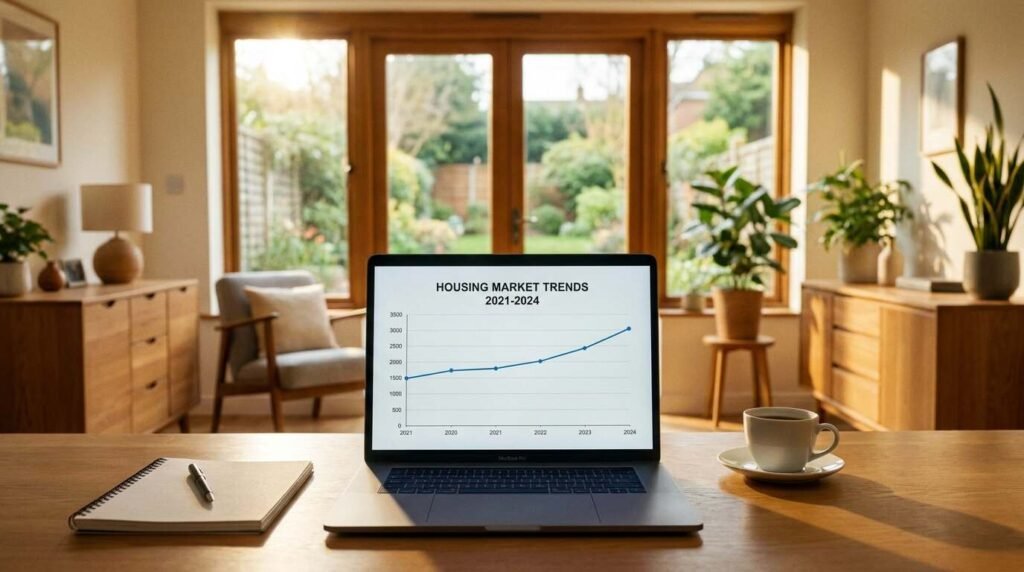
In March, the index came in at 73.7, up from 72.1 in February. That sounds like recovery. But the baseline context is important: an index reading of 100 corresponds to 2001 contract activity levels. We are at 73.7. The market is operating well below historical norms by contract volume, and has been for some time. A 1.5% monthly gain in that environment is encouraging — but it’s not a signal to throw out your pricing strategy and expect multiple offers.
According to NAR Chief Economist Dr. Lawrence Yun, “Contract signings rose in March despite higher mortgage rates, pointing to pent-up housing demand.” The phrase “pent-up demand” is doing a lot of work in that sentence. What it actually means: buyers exist, they want to move, and they’re running out of patience with waiting for rates to hit a magic number. That’s a good thing for sellers. It does not mean the market is overheating.
Why Pending Sales Are Up Monthly But Down Year-Over-Year
The monthly improvement is real, but the year-over-year decline tells a different story. In March 2025, more contracts were signed than in March 2026. The reason isn’t that buyers disappeared. It’s that inventory constraints, elevated rates, and affordability pressure have collectively compressed the pool of completed transactions throughout the cycle.
At the same time, active listing inventory has been growing. Nationally, the existing-home supply reached 4.1 months in March, up from 3.8 months in February and above the 4.0 months recorded a year ago. More homes on market is generally good for buyers — more options, slightly longer decision windows, marginally reduced competition. For sellers, it means pricing precision matters more than it did in 2022, when you could overprice and still receive multiple offers.
The rate picture adds another layer. Rates averaged 6.18% in March, which — while lower than recent peaks — is still high enough to sustain what economists call the lock-in effect: homeowners who refinanced at 3% during the pandemic are reluctant to sell into a 6% rate environment because their next mortgage would cost them significantly more. That’s been one of the primary reasons North Shore inventory has stayed tight even as demand softened.
Regional Breakdown: Where Deals Are Getting Done
The regional picture is more useful than the national figure. The Northeast gained 4.4% month over month in pending sales in March — a meaningful uptick — but was still down 6.5% year over year. That’s the tension playing out on Long Island in real time: buyers are engaging, but the annual comparison is unflattering.
The South was the standout regionally, up 3.9% month over month and 2.3% annually. NAR attributed this to price cuts in several Southern markets combined with robust job growth — a combination that moved buyers off the fence. We don’t have that dynamic here. The North Shore does not have a glut of price-reduced inventory. What we have is persistent affordability pressure offset by strong long-term demand from buyers relocating from the city, buyers upsizing from more affordable communities, and buyers who have simply decided that North Shore proximity to water, quality schools, and genuine community is worth the stretch.

The Difference Between a Stalled Market and a Selective One
This is the distinction I keep coming back to. A stalled market is one where buyers exist but can’t find financing, can’t qualify, or have genuinely lost confidence in the asset class. That is not what the March data describes. What it describes is a selective market — one where buyers are engaged but careful, where price sensitivity is higher than it was two years ago, and where homes that are priced correctly and presented well are moving, while homes that are not are sitting.
The difference matters enormously for how sellers should approach listing strategy right now. If the market were stalled, I’d say wait. If it were overheating, I’d say list immediately and price aggressively. What I’m actually seeing is a market where preparation and precision win. Buyers are doing more research before they make offers. They’re using the inspection contingency properly. They’re reading disclosures. They are, in short, behaving like the serious buyers they are — and they deserve a seller who is equally prepared.
What This Data Means If You’re Buying or Selling Right Now
For buyers: the window of reduced competition that opened in late 2025 is narrowing, not widening. Purchase application volume is up more than 20% year over year as of late April. More buyers are entering the market. If you’ve been waiting for rates to fall further before committing, you should understand that the buyers coming in behind you are not waiting. Rates at 6.37% — the most recent PMMS figure — are meaningfully lower than they were a year ago. The market is not going to go dormant waiting for 5.5%.
For sellers: the March pending data confirms that buyer demand is real and responsive to supply. If you have a home that’s priced well and genuinely ready to show, you are not entering a void. You’re entering a market where motivated buyers are actively signing contracts. The challenge isn’t demand — it’s alignment between asking prices and what that demand will support. For a deeper look at how we approach pricing strategy for sellers on the North Shore, Pricing to the Penny is a useful read before you set a number.
The headline says the market is complicated. That’s accurate. But complicated and opportunity-free are not the same thing.
—-
Real estate markets change. This post reflects conditions as of May 7, 2026, and draws from NAR data released April 21, 2026. For current listings and market intelligence, contact Pawli at Maison Pawli.
This is for informational purposes only — consult a licensed financial advisor for guidance specific to your situation.
—-
Sources
- NAR Pending Home Sales Report — March 2026 (released April 21, 2026)
- NAR Pending Home Sales Index
- NAR Existing-Home Sales Report — March 2026
- HousingWire: Pending home sales tick up in March despite higher rates
- Freddie Mac PMMS — May 7, 2026
- Advisor Perspectives: Pending Home Sales Unexpectedly Jump March 2026
- Maison Pawli: Pricing to the Penny
- Maison Pawli: The Lock-In Effect — Why North Shore Inventory Is So Tight
—-