The Home Inspection Red Flags That Matter Most on Long Island’s Older Housing Stock
The inspection report comes in at forty-seven pages, and somewhere around page twelve — between the note about the bathroom exhaust fan venting into the attic and the photograph of a junction box with the cover plate missing — buyers start to panic. I’ve been in this business long enough to have talked people off this ledge more times than I can count, and I’ll tell you what I tell them: the length of an inspection report is not the measure of a house’s problems. It’s the measure of a thorough inspector doing their job.
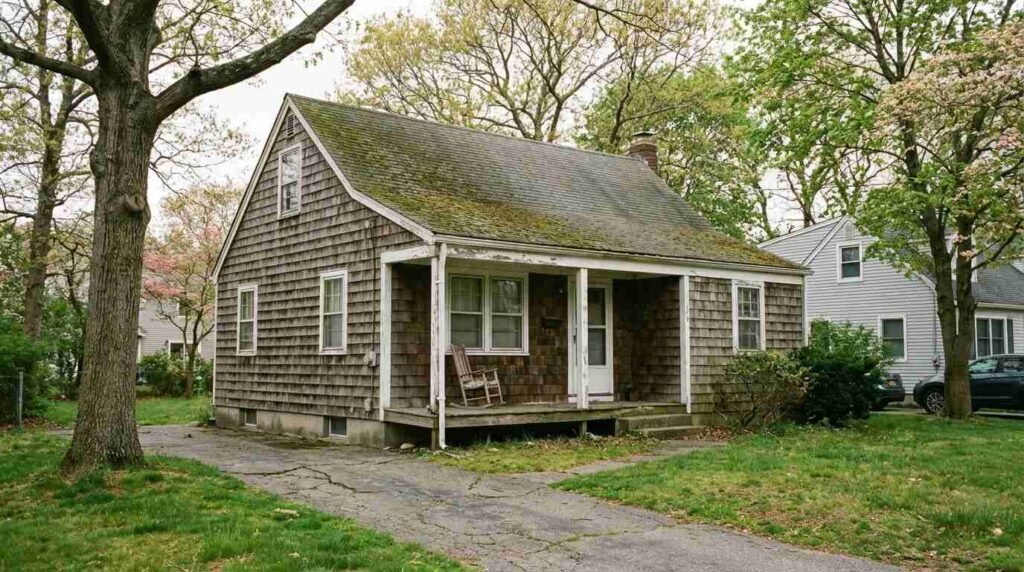
What actually matters in those forty-seven pages is a small number of findings that fall into a specific category: defects that are expensive, difficult to remediate, or that signal systemic problems rather than isolated maintenance failures. On Long Island’s housing stock, those defects cluster in predictable ways. The region’s inventory skews heavily toward homes built between 1920 and 1975 — a period that precedes many modern building codes, involves materials we now know to be problematic, and reflects construction practices that varied enormously in quality. Knowing where to look, and what you’re looking at when an inspector flags something, makes the difference between a buyer who negotiates intelligently and a buyer who either panics or misses what matters.
This is what I tell buyers before they open the report.
The Foundation Question
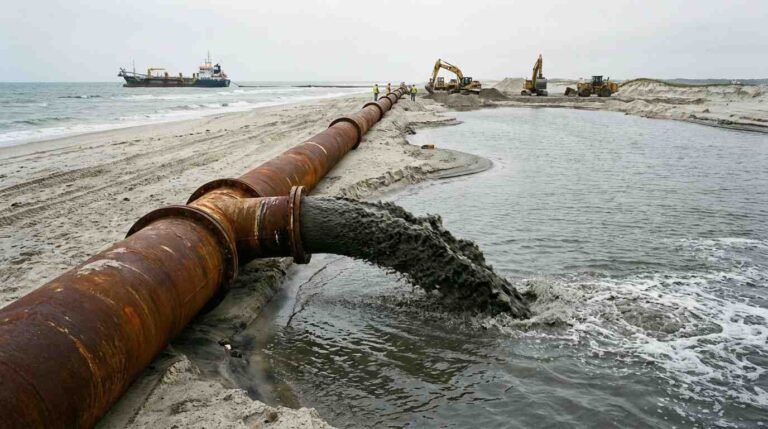
Long Island’s glacial geology is remarkable — and, for homeowners, occasionally inconvenient. The island is literally made of glacial deposits: till, outwash, moraines. The soil composition varies block by block, and in some North Shore communities, that variation means dramatic differences in load-bearing capacity and drainage under the slab.
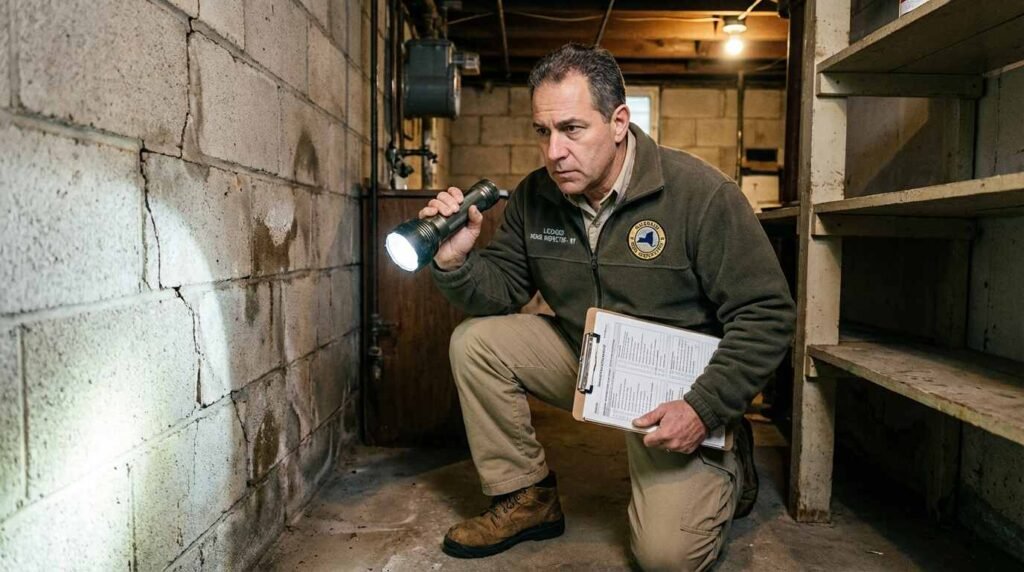
Older homes — particularly the Cape Cods, split-levels, and ranches built in the 1950s and 1960s — were frequently built on poured concrete slabs or on shallow foundations that assumed a consistency of soil behavior that sometimes wasn’t there. The glacial till problem, which I’ve written about in the context of ranch renovations, is real: expansive soil conditions can exert lateral pressure on foundation walls that produces cracking patterns inspectors describe as “stair-step” or “horizontal” cracks — and the distinction matters. Vertical hairline cracks in poured concrete are common and often benign; horizontal cracks in a block foundation wall, or stair-step cracks in masonry, are structural flags that warrant a structural engineer’s review before you proceed.
Inspectors will photograph cracks and note them. What they will not always do — because it’s not within the scope of a general home inspection — is tell you whether a crack represents active movement or historical settlement. If your inspector notes foundation cracking, ask whether they recommend a structural engineering follow-up. That follow-up costs a few hundred dollars and will tell you something the inspection report cannot.
Oil Tanks: Above-Ground, Below-Ground, and the Paper Trail Between Them
This is the one that surprises out-of-state buyers the most. Long Island has a legacy oil tank problem that is disproportionate to most of the rest of the country. For decades, home heating oil was stored in underground tanks — often 500 to 1,000 gallon steel tanks buried in the yard. Those tanks have been corroding since they were installed, and a leaking oil tank creates environmental contamination that is expensive to remediate and can delay or kill a sale entirely.
The law now requires abandonment or removal of underground tanks when properties transfer, but the documentation trail on whether this has happened — and been done correctly — is inconsistently maintained. When I represent a buyer, we look at three things: the current inspection, the seller’s disclosure form (which should note any known tank history), and the DEC’s petroleum bulk storage registry, which tracks sites with reported spills.
An above-ground oil tank is less acute but still relevant — inspectors will note its age, condition, and any visible staining around the base. A tank approaching or past 20 years is approaching end of life, and replacement runs $2,000–$4,000 or more depending on scope. This is a negotiation item, not a deal-killer, but you want to know it before you’re at the table.
For sellers reading this: the buried oil tank question doesn’t go away by ignoring it. I’ve written separately about why sellers need to hunt their own oil tanks before the buyer’s inspector finds the problem for them.
Electrical Panels: What the Labels Mean and What They Don’t
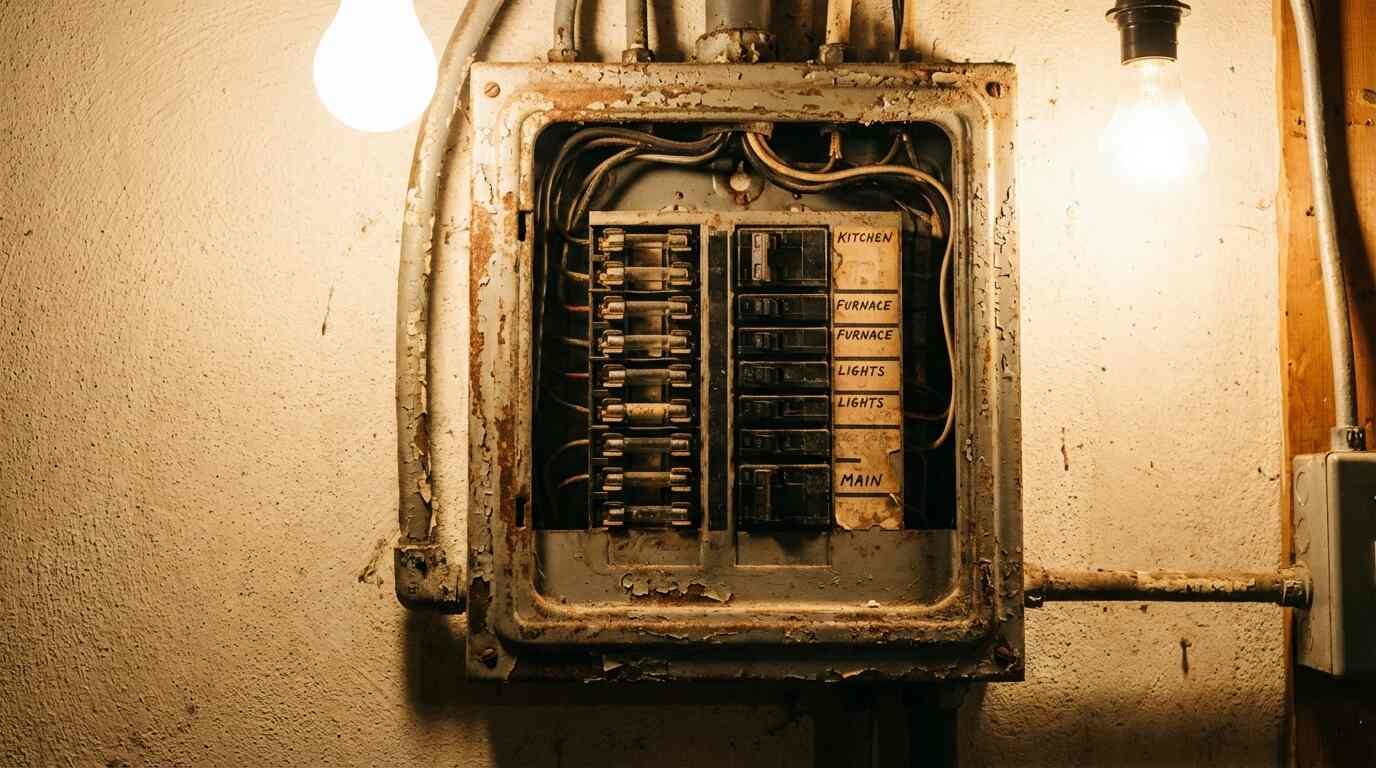
A significant portion of Long Island’s pre-1970 housing stock has electrical panels that have been upgraded in pieces rather than comprehensively. What this produces is a house where the service entrance was brought from 100A to 200A at some point, but the wiring behind the walls is still the original cloth-sheathed wire from 1952. Or a panel where a previous owner added a sub-panel in the garage using wire gauged for a different amperage than the breaker protecting it.
There are two things inspectors flag that warrant particular attention. First: Federal Pacific Electric (FPE) Stab-Lok panels. These were installed widely through the 1970s and have a documented history of breaker failure. Many insurers will not write a policy on a home with an FPE panel, or will require replacement within a defined period. If your inspector identifies one, get an electrician’s opinion and a replacement quote before you close. Second: aluminum wiring. Aluminum wiring was used in some residential construction during the late 1960s and into the 1970s as copper prices spiked. It’s not inherently dangerous but requires specific connectors and devices to be used safely, and older aluminum-wired homes frequently have the original devices — a combination that carries elevated fire risk. An electrician can assess and address this, but it’s material to the cost of ownership.
Asbestos: The Material That’s Everywhere Until It Isn’t
Asbestos was used in residential construction in a remarkable number of applications — pipe insulation, floor tiles, ceiling tiles, exterior siding, roofing shingles, joint compound — until its phaseout in the late 1970s. A Long Island home built before 1978 is very likely to contain some asbestos-containing material somewhere.
The critical distinction is between asbestos-containing material that is in good condition and undisturbed — which poses minimal risk and is frequently best left alone — and material that is damaged, friable, or in locations where it will be disturbed by renovation work. General home inspectors are not licensed asbestos inspectors and typically will not test for asbestos; they’ll note the presence of materials that may contain it and recommend further testing.
Where this becomes an acute budget issue is in renovation planning. A buyer who intends to gut a kitchen or bathroom in a 1965 home needs to factor asbestos testing and potential abatement into the renovation budget before construction begins, not after. The asbestos abatement cost for a significant renovation scope can run from a few thousand dollars to substantially more, depending on what’s found. I’ve covered this in more detail for fixer-upper buyers in The Asbestos Ceiling Nobody’s Talking About.
Roofing: Age, Layers, and the Third Shingle Question
Long Island gets weather — nor’easters, remnant tropical systems, ice damming in cold winters. Roofing takes a beating, and a roof that looks adequate from the street may be at or past end of life on closer inspection.
The standard asphalt shingle roof lasts roughly 20–25 years under normal conditions. Inspectors will estimate the roof’s age and condition, and flag whether there are multiple layers of shingles (common in older homes where roofers shingled over rather than tore off). Two layers is the maximum that most building codes allow; a third layer is a code violation and, more practically, a sign that a full tear-off and replacement is due. Tear-off roofing jobs run significantly more than overlay jobs, and a roof replacement in 2026 for an average-size Long Island house runs $15,000–$30,000 depending on size, pitch, and materials.
What many buyers miss: a seller’s disclosure form should note the age of the roof and any known repairs. Cross-check the disclosed age against what the inspector observes, because the two don’t always align.
HVAC: The System That’s Easy to Underestimate
Forced hot air systems, steam heat, hydronic baseboard heat — Long Island homes have all of them, often in unexpected combinations where the original system was partially replaced and partially not. Inspectors will note the age of the boiler or furnace and the condition of the distribution system.
A boiler or furnace approaching or past 20 years is functioning on borrowed time. Replacement costs vary: a standard gas furnace runs $3,000–$6,000 installed, while a boiler replacement can run considerably more depending on the system’s complexity and the fuel source. Central air conditioning units have their own age curve; a compressor past 15 years is a potential replacement item.
What buyers often overlook is the duct system or hydronic distribution. An aging furnace attached to a duct system that was never properly balanced, or a boiler feeding baseboard radiators that haven’t been bled in years, produces heating and cooling that doesn’t perform the way it should — and fixing the distribution system costs separately from replacing the mechanical equipment.
What to Do When the Report Lands
The most useful thing a buyer can do after receiving an inspection report is ask the inspector one question: if this were your house, what would you fix first? Inspectors who work with buyers regularly know how to distinguish the urgent from the routine, and that single question often produces a better orientation than re-reading the full report.
The second thing is to get quotes. Not estimates — quotes, from licensed contractors, on the specific items you’re considering negotiating. Buyers who negotiate based on inspection findings without contractor quotes are negotiating blind. A seller who knows you have a real number in hand is in a different conversation than a seller who is responding to a buyer’s anxiety.
And the third thing, which is the one I always mention: a house with a long inspection report is not necessarily a worse house than one with a shorter report. It is frequently just an older house with a thorough inspector. The houses I worry about most are the ones where the inspection report is suspiciously clean on a 1958 Cape Cod that clearly hasn’t been touched in fifteen years. That’s not a good inspection. That’s an inspector who wasn’t looking hard enough.
For buyers working through the full purchase process — from financing to title to contingencies — the Complete Guide to Buying a Home on Long Island’s North Shore covers the full transaction arc, including the contingency mechanics that give you room to negotiate after the inspection comes in.
This is for informational purposes only — consult a licensed home inspector, structural engineer, and attorney for your specific situation.
You Might Also Like – The Inspection Contingency Is Not a Formality: What Buyers Waive When They Sign Without Reading – The Asbestos Ceiling Nobody’s Talking About – Beyond the 30-Year Fixed: Mortgage Options First-Time Buyers on Long Island Rarely Hear About
Real estate markets change. This post reflects conditions as of April 2026. For current listings and market data, contact Pawli at Maison Pawli.
Sources – New York State Department of Environmental Conservation, Petroleum Bulk Storage Registry: dec.ny.gov/chemical/8485.html – U.S. Environmental Protection Agency, Asbestos in Your Home: epa.gov/asbestos/asbestos-your-home – Consumer Product Safety Commission, Federal Pacific Electric panel documentation: cpsc.gov – American Society of Home Inspectors, Standards of Practice: homeinspector.org – NYS Department of Health, Indoor Air Quality / Asbestos guidance: health.ny.gov/environmental/indoors/asbestos