Your Beach House Is Sitting on Gold — Here’s How to Price It Before Memorial Day
Every year around the first week of April, something shifts in the Fire Island market. The ferry schedule hasn’t changed. The boardwalks are still quiet. But the buyers — the serious ones, the ones who have already done the math on a summer rental versus what it would cost to just own the thing — are very much awake.
I’ve been watching this window for years. And the sellers who use it well walk away with meaningfully more money than those who wait until June when the island is full and the urgency, paradoxically, is gone.
The window is real. The question is whether you’re going to use it.
Why the Pre-Memorial Day Window Is Different
Fire Island operates on its own market logic. It isn’t the North Shore, where buyers are weighing school districts and commute times and whether the garage fits two cars. It’s a market driven almost entirely by one question: can I have my summer?
That question peaks in early spring. Buyers — many of them repeat players who have rented for years and are finally ready to own — start looking in February and March. The Fire Island Pines market follows a clear pattern: spring is active as buyers plan for summer, prices are higher, and homes sell faster. Summer itself is busy, but it’s spring when buyers are sharpest and most motivated.
What this means for sellers: listing in April means competing with almost nothing. Inventory on Fire Island is structurally thin. At any given time, Zillow shows only a handful of active listings across the entire island. List in late spring with a well-prepared home and you are not competing against six similar properties — you may be competing against one, or none.
National data reinforces the timing: homes sold in May earn a seller premium of over 13% above automated valuation, according to ATTOM Data Solutions, with buyer traffic peaking between March and July. On a $1.2M Fire Island beach house, that premium isn’t theoretical — it’s a real number with a comma in it.
This is for informational purposes only — market conditions change. Verify current figures with a licensed agent before making pricing decisions.

Step 1: Decide Now, Not in May
The single most common mistake I see Fire Island sellers make is treating summer as their deadline. “We’ll list when the season starts.” By the time the season starts, the motivated spring buyer has already bought something else — or gone back to renting for another year.
Data from the National Association of Realtors confirms that spring listings attract a higher volume of offers than listings in any other season, and homes listed in spring sell an average of 20 days faster than those listed in winter.
For a Fire Island seller, 20 extra days on market in summer is not a minor inconvenience — it’s the difference between capturing the pre-season buyer and chasing a market that has moved on.
Your action item: If you’re considering selling, make the decision before April 15th. Not to list tomorrow, but to start the prep work now.
Step 2: Spring Photography Is Everything
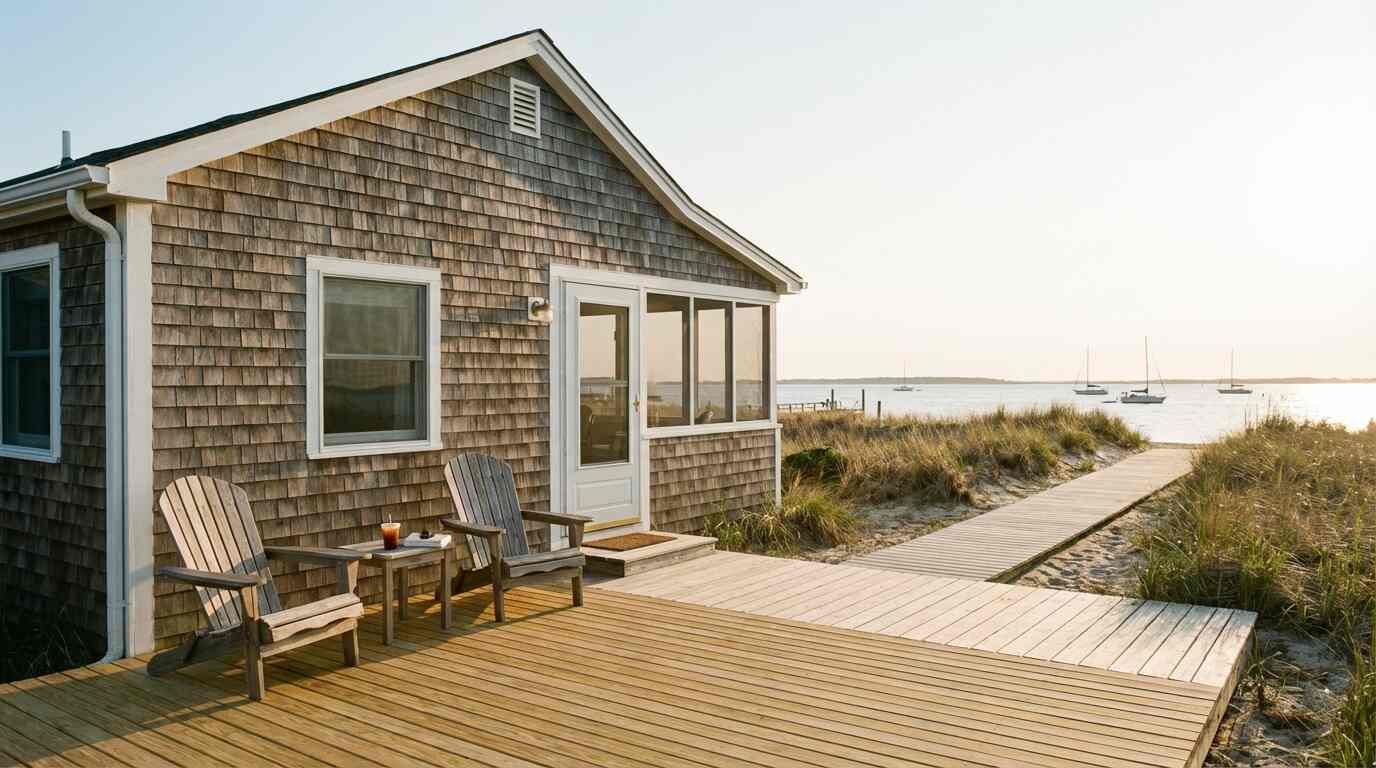
I cannot overstate this. A beach house photographed in November — weathered shingles, dead ornamental grasses, the dock out of the water — will not move the same buyer who sees the same house photographed in April, when the deck furniture is back out, the sun angle over the bay is right, and the whole property communicates the thing it’s actually selling: the summer.
Hire a photographer who has shot Fire Island before, or who shoots coastal properties specifically. Schedule the shoot for a Tuesday or Wednesday morning in mid-to-late April — the light off the bay at 9 a.m. is something a buyer on the Upper West Side will feel in their chest when they see it on a screen.
Before-and-after reality check:
One seller I know listed a Fair Harbor cottage in late June with off-season photos. It sat for 38 days and eventually sold below ask. The following year, a comparable property two blocks over listed in late April with spring photography and deck furniture styled by a local stager. It received two offers within two weeks and sold at list. The only structural variable was timing and presentation.
Step 3: Which Upgrades Actually Move the Needle
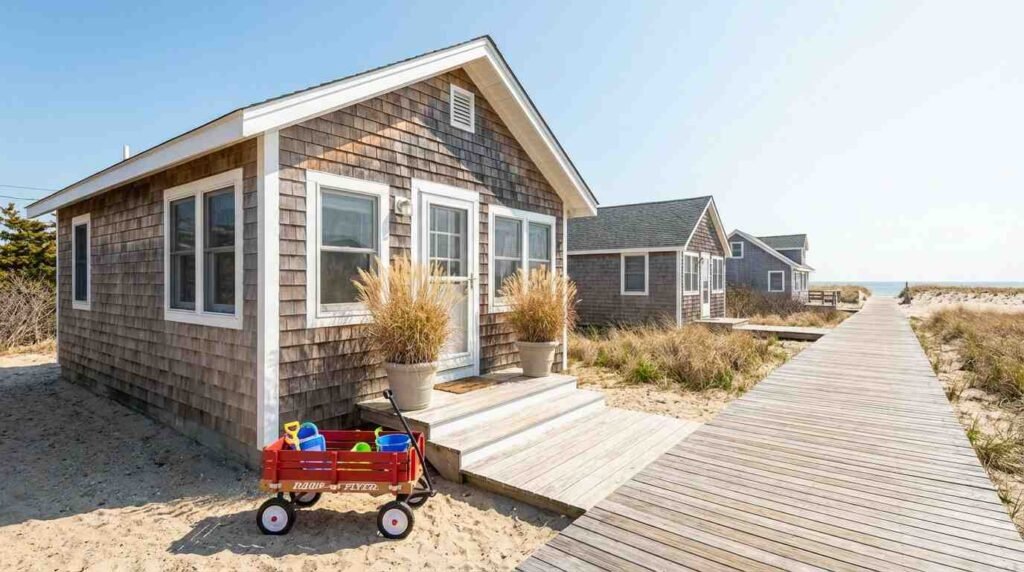
This is where the HGTV mythology and the Fire Island reality diverge. On a mainland North Shore home, a kitchen renovation might add $40,000 to $80,000 in value. On Fire Island, buyers are not buying a kitchen — they’re buying the deck, the walk to the beach, and the whole compressed summer life the property represents.
The upgrades that matter:
Outdoor shower. This is not optional. A clean, well-built outdoor shower — cedar slats, good pressure, a simple hook for towels — is the single most loaded amenity in a beach house listing. Buyers notice it immediately. Budget: $800–$2,500 depending on current condition.
Deck condition. Weathered, splintering boards signal deferred maintenance and suggest the rest of the house may carry the same neglect. Power wash and seal existing boards if they’re structurally sound. Replace boards that are soft or visibly damaged. Budget: $500–$3,000.
Paint. The exterior of a beach house takes a beating from salt air. A fresh coat in a period-appropriate coastal color — navy shutters, white clapboard, cedar-gray shingles — signals care. Don’t paint everything, but don’t list with peeling trim. Budget: $1,500–$4,000.
Interior: keep it simple. De-clutter completely. The furnished beach house aesthetic is intentional and spare — rough linen, bleached wood, a basket or two, the good lamp. Remove anything that reads as mainland suburban. Don’t replace the kitchen.
What doesn’t matter: A kitchen remodel. A bathroom gut. New flooring under outdoor rugs. These are costs you will not recover in a seasonal market where the buyer is buying an experience, not a renovation.
Step 4: Pricing Into the Window
Fire Island is a thin-comp market. In some communities, fewer than five homes sell in a calendar year. This means pricing is more art than science, and the seller who understands this has an advantage over the one who treats Zillow’s estimate as gospel.
The pre-Memorial Day window gives you pricing leverage — but only if you use it correctly. Price too high and you’ll miss the motivated spring buyer and end up in a summer stale listing. Price at or just below the likely market range and you create urgency in a buyer pool that knows exactly how few properties come available.
Work with an agent who has actual Fire Island transaction history. Not general South Shore experience. Fire Island comp analysis requires cross-community comparison, rental income capitalization when relevant, and lot premium weighting — none of which a mainland-only agent will know how to apply.
Real estate markets change. For current listings and market data, contact Pawli at Maison Pawli.
The Bottom Line
The spring listing window on Fire Island is not a rumor. It is documented, seasonal, and repeatable. The sellers who act in April — with proper photography, targeted upgrades, and pricing informed by real comp analysis — consistently outperform the sellers who wait for summer to announce itself.
Your beach house is sitting on gold. The question is whether you’re going to dig before the rush, or after it.
You Might Also Like
- Salt, Spray, and Staging: Beating Coastal Wear and Tear Before You List
- The Dune Road That Drowned: How Fire Island’s Original Shore Road Disappeared Beneath the Atlantic
- Selling History: How to Price and Market North Shore Pre-War Details
Sources
- Redfin Housing Market Data — Fire Island, NY: https://www.redfin.com/city/22770/NY/Fire-Island/housing-market
- ATTOM Data Solutions, Spring Seller Premium: https://kdshomebuyers.net/articles/best-time-to-sell-house
- National Association of Realtors seasonal listing data via Terrie O’Connor Realtors: https://tocr.com/blog/spring-sellers-have-an-edge-heres-why/
- 2024 Real Estate Transactions, Fire Island Pines: https://snaptroid.blog/2024-real-estate-transactions-fire-island-pines-ny/