
What a Title Search Does Not Find: The Encumbrances That Survive Closing Invisible to the Record
When I hand a client their title commitment and they see the words “Schedule A” at the top of the first page, most of them stop reading there. Schedule A shows the proposed insured, the coverage amount, the legal description of the property. It is the page that confirms the transaction is moving forward. It is not the page that matters.
Schedule B is the page that matters.
What the Title Commitment Actually Is
A title commitment is not a warranty of clear title. It is a conditional promise by a title insurance company to issue a policy — subject to the exceptions, requirements, and exclusions listed in Schedule B. When buyers treat the commitment as proof that title is clean, they are misreading the document in the way that costs money after closing.
The ALTA 2021 Owner’s Policy — the industry standard form — divides Schedule B into two parts. Schedule B-I lists requirements that must be satisfied before the policy issues: open mortgages to be discharged, judgments to be released, survey issues to be resolved. Schedule B-II lists the exceptions from coverage — the encumbrances, restrictions, and conditions that the policy will not cover regardless of when or how they arise.
Schedule B-II is the document buyers need a real estate attorney to read before they close.

The Categories of Risk Schedule B-II Contains
Easements and rights-of-way. A title search finds recorded easements — utility easements, drainage easements, access rights granted by prior owners. But prescriptive easements, which arise through long, open, and continuous use without the owner’s permission, are often not recorded anywhere. They exist in the physical use of the land, not in the county clerk’s index. Standard title policies either exclude them outright or require a survey endorsement to address them. A neighbor who has used a strip of your property for twenty years may have a legal right to continue using it that no title search will reveal.
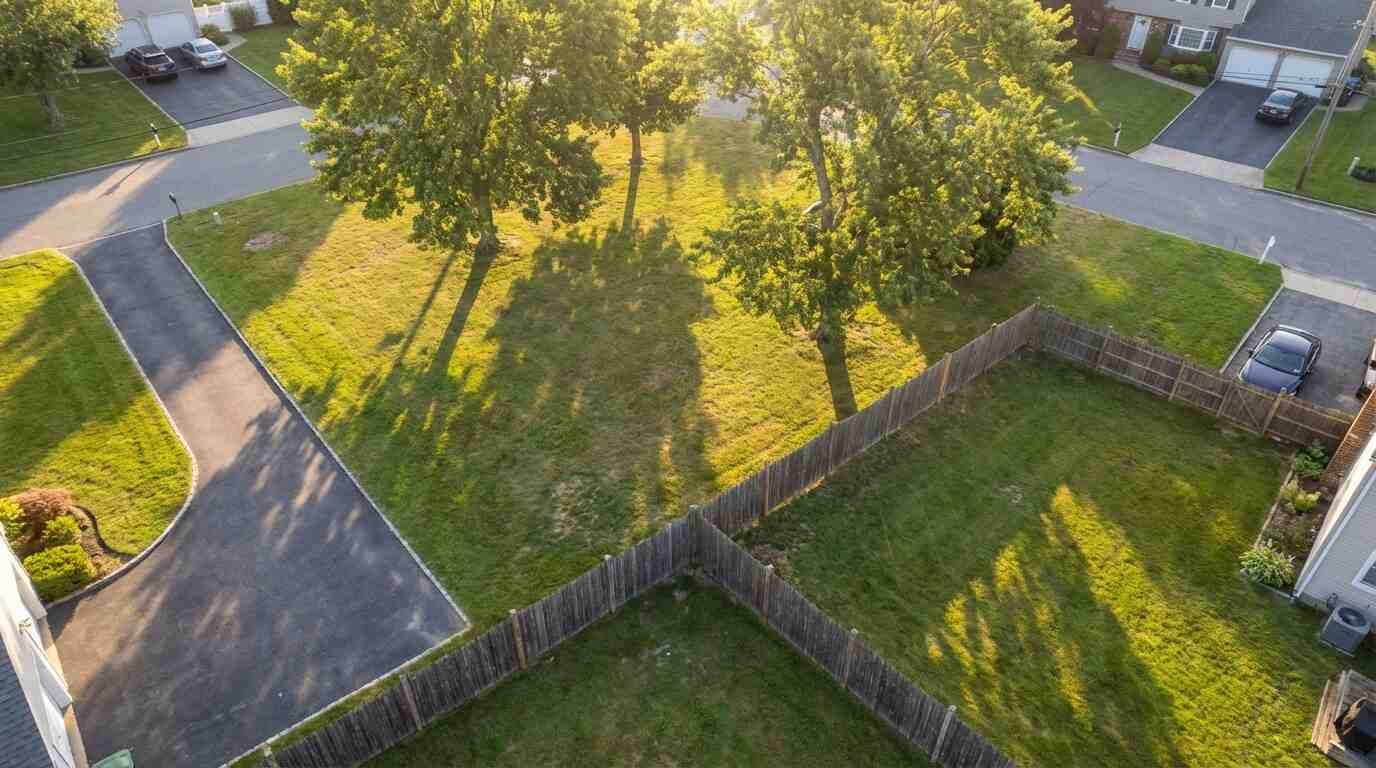
Boundary and survey disputes. Title insurance covers the legal description in the deed. It does not guarantee that the physical improvements on the property match that legal description. Encroachments — a fence installed by a prior owner six inches over the property line, a garage addition that crosses into an easement area — are invisible to the record search and excluded from coverage unless the buyer obtains a survey endorsement. On Long Island’s older North Shore properties, where lot lines were drawn decades ago and additions were built without permits, this is a real exposure.
Unrecorded liens. Mechanic’s liens in New York arise from the date work commences, not from the date they are recorded. A prior owner who commissioned a renovation, failed to pay the contractor, and closed the sale before the lien was filed has handed the buyer an obligation that no title search would have found — because it wasn’t in the record yet. Title policies contain specific exclusions for liens arising from work contracted for or commenced before the policy date that are not yet recorded.
HOA super-priority claims. This is where the stakes become highest. Nevada’s Bank of America, N.A. v. SFR Investments Pool 1, LLC, 427 P.3d 113 (Nev. 2018), resolved a circuit split about HOA super-priority lien statutes that had significant financial consequences for thousands of lenders and buyers. Under Nevada Revised Statutes § 116.3116 — and similar statutes in other states — a homeowners association can foreclose on a property for unpaid assessments in a manner that extinguishes even a first mortgage.
New York does not have an HOA super-priority statute of the Nevada variety, but common interest community associations do have lien rights for unpaid assessments. Those rights survive closing if not addressed. The HOA resale package — not the title commitment — is where buyers find the assessment history. The two documents must be read together.
Matters Not of Public Record. The ALTA policy’s Schedule B-II explicitly lists “facts which a correct survey would show, and which are not shown by the public records.” This is the exclusion that covers the fence on the wrong lot line, the driveway that extends onto the adjacent parcel, and the well easement that the prior owners honored by custom but never reduced to writing. These are not edge cases on older North Shore properties. They are common.
What Endorsements Can Cover — and What They Can’t
Title endorsements are riders that modify the base policy to provide coverage the standard form excludes. A survey endorsement (ALTA 9) provides some coverage for matters a survey would reveal. An access endorsement confirms legal vehicular access to the property. An endorsement addressing zoning compliance — not universal — confirms that the current use does not violate recorded restrictions.
Endorsements add cost and require underwriting. Not every exception can be endorsed over. A prescriptive easement that is actively disputed, for example, will not be covered regardless of endorsement — the title company will not insure a known, active claim. Buyers who want comprehensive coverage need to identify the Schedule B-II exceptions early enough in the process to negotiate endorsements before closing.
The Practical Instruction
Read Schedule B-II of your title commitment before you release any contingencies. Have your real estate attorney identify which exceptions are standard form language — present in virtually every commitment and representing minimal practical risk — and which are property-specific exceptions that require analysis. Ask the title company to identify what endorsements are available for each non-standard exception. And compare the commitment to the survey: what the survey shows and what the title covers are not always the same.
The title commitment tells you what the policy won’t cover. That list is worth the time it takes to read.
This post is for informational purposes only and does not constitute legal advice. Title insurance requirements and coverage vary by policy form, endorsement, and jurisdiction. Consult a licensed real estate attorney before closing.
Sources:
- ALTA 2021 Owner’s Policy: https://www.alta.org/title-insurance-and-settlement-company-best-practices/forms/
- Bank of America, N.A. v. SFR Investments Pool 1, LLC, 427 P.3d 113 (Nev. 2018)
- Nevada Revised Statutes § 116.3116
- ALTA Homeowner’s Policy of Title Insurance (2013): https://www.alta.org
You Might Also Like: The Complete Guide to Buying a Home on Long Island’s North Shore — the full buyer’s guide covering every stage of the North Shore home purchase, from mortgage to closing.