The Japanese Art of Ma and the Western Rooms Finally Getting It Right
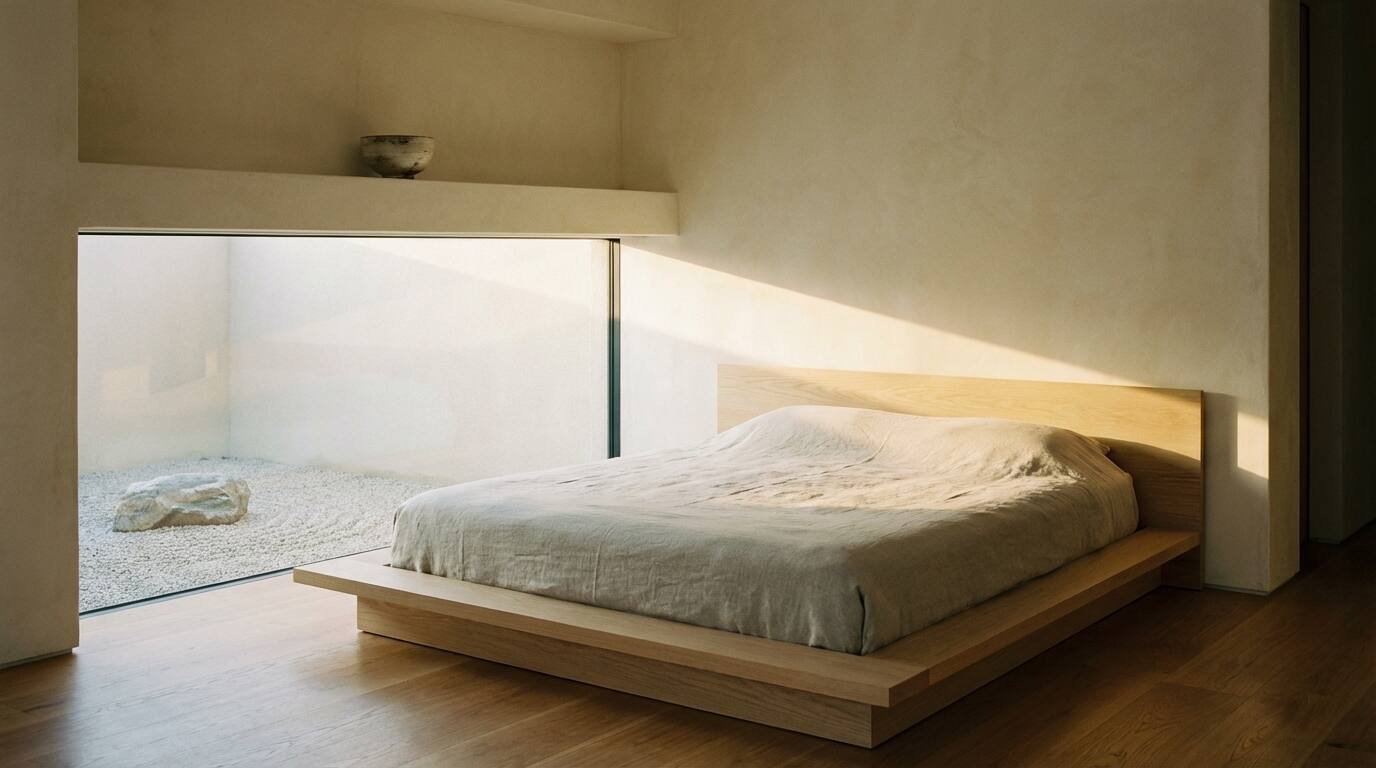
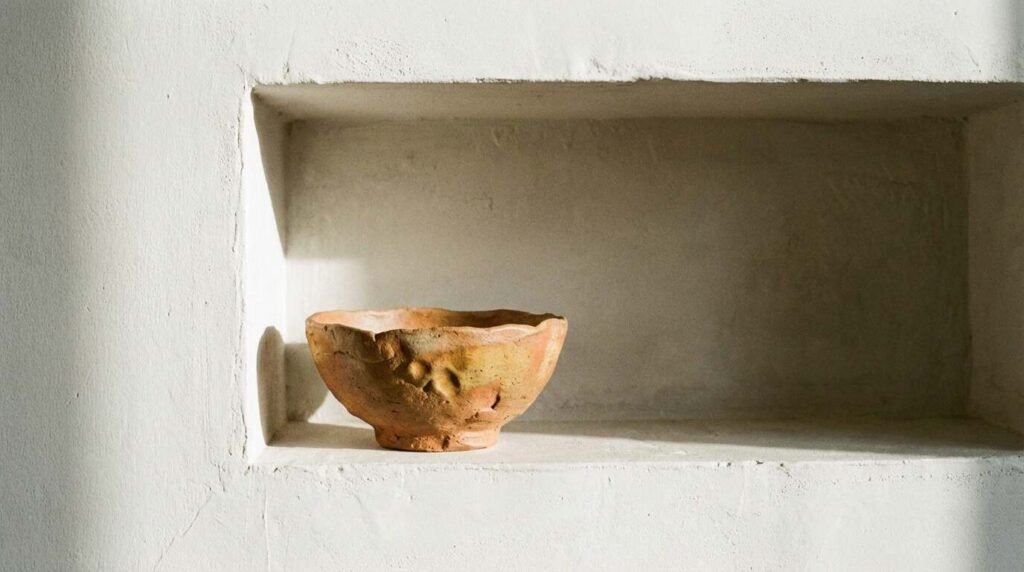
There is a room I keep returning to in my mind. I saw it in a magazine — not a photograph of a room for sale, not a staging exercise, not a before-and-after. Just a room. A low platform bed in pale oak. A single ceramic bowl on a shelf cut into plaster. A window with no curtain, looking out onto a walled courtyard with one stone and a rectangle of gravel raked into parallel lines. Nothing else.
The room wasn’t empty. That’s the thing. It was precisely, intentionally full — full of the space between things, full of the light that had room to move, full of a particular silence that only arrives when there’s nothing unnecessary competing for your attention. I clipped it and kept it for years before I understood why it affected me the way it did.
The Japanese call it ma. And it has taken Western interior design an embarrassingly long time to understand what that actually means.
Not Minimalism. Not Decluttering. Something Else Entirely.
The Western design world has spent the last decade reaching for ma without knowing its name. The minimalism trend. The Marie Kondo moment. The backlash against maximalism. All of it gestures toward something real — the intuition that rooms feel better when they breathe — but none of it gets to the philosophical root of what ma actually is.
Ma (間) is a concept embedded in Japanese aesthetics, architecture, and music. It is usually translated as “negative space” or “pause,” but those translations carry a Western implication that something is absent. In Japanese thinking, ma is not absence. It is the presence of interval — the designed, deliberate, meaningful gap between things. The silence between notes that gives music its tension and release. The threshold between rooms that marks a change in psychological register. The space in a room that allows the eye to come to rest.
Kengo Kuma, the Japanese architect perhaps most responsible for bringing ma into international architectural conversation, has written and spoken extensively about the concept in the context of his practice. Where Western modernism gave us the open plan — the democratic, undifferentiated field of space — Kuma’s work pursues something different: a series of conditions, intervals, and thresholds that make a building feel lived-in before anyone has lived in it. His residential projects routinely deploy materials — stone, bamboo, washi, water — not as surfaces but as membranes that define the quality of the space they bound. The space between the bamboo louvers in a Kuma facade is not a gap. It is a designed interval. The light that passes through it is part of the architecture.
This is the distinction that matters: ma is not what you remove. It is what you place.
The American Translation
The design studio Commune, founded in Los Angeles by Roman Alonso, Steven Johanknecht, and Pamela Shamshiri, has built an international practice around interiors that feel unmistakably of their place — California light, natural material, a physical ease — while consistently achieving a spatial quality that owes more to Japan than to Malibu.
What Commune does particularly well is the interval. In their documented project work — hotels, residences, retail spaces — they return repeatedly to the designed pause: a low table with nothing on it that has a reason for being where it is; a doorway that doesn’t open directly into a room but into an ante-space, a visual decompression before you arrive; a shelf that holds one thing, placed with the deliberateness of a curator who knows that adding a second object would halve the presence of the first.
They have not always used the word ma. But the philosophy is legible in the work. The studios they’ve designed in particular show it: spaces where the desk, the chair, and the wall behind it are in a conversation that depends on the open floor between them. Remove the openness and the conversation collapses. The space is the relationship.
This is becoming, slowly, a more common fluency in American design culture — particularly among the designers working in what might loosely be called the natural luxury register: interiors that signal expense not through ornamentation but through material quality and spatial generosity. The discipline to leave something out, to hold the interval, to resist the impulse to fill.
What Ma Actually Requires
There is a misreading of ma that has produced a lot of cold, inhospitable rooms. The Instagrammable apartment with bare white walls and three possessions arranged on a concrete shelf. The hotel lobby that feels less like a welcome and more like a rebuke. This is not ma. This is performance minimalism — reduction for its own sake, emptiness without intention.
Ma requires that every object placed in a space earns its placement. The bowl on the shelf is there because, in that particular position, in relation to that particular wall and that particular light at that particular hour of the day, it does something to the room that the room needs done. The space beside it is not empty. It is the bowl’s necessity made visible.
This is why ma is extraordinarily difficult to achieve through subtraction alone. You cannot take furniture out of a room and arrive at ma. You have to build toward it — understanding what the room needs in order for the interval to read as intentional rather than unfinished. It requires, paradoxically, a very active engagement with space. The pause is designed. The silence is composed.
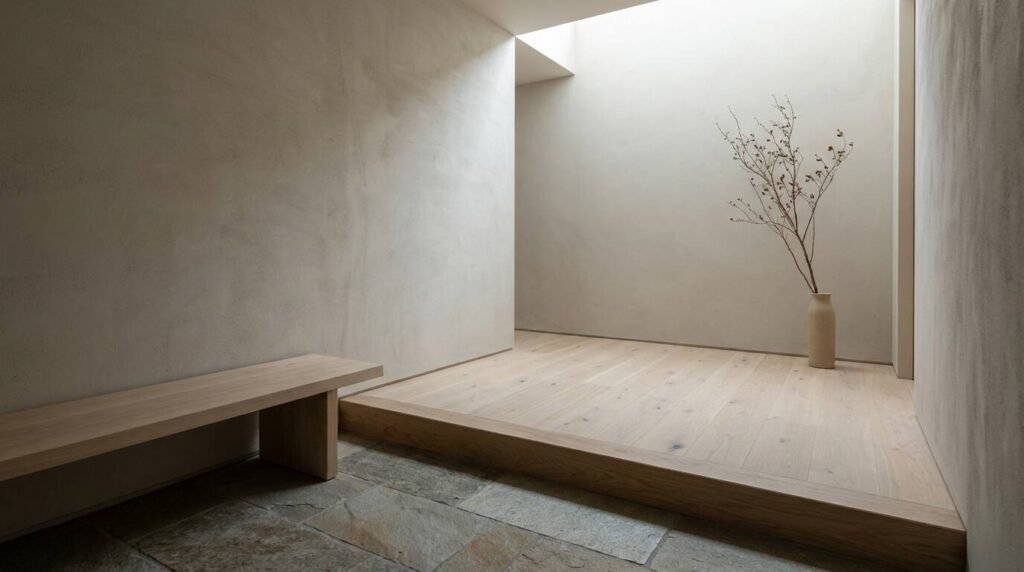
In architectural terms, this often means attending to threshold conditions that Western design typically ignores. Where does a room begin? What is the experience of entering it — not the experience of being in it, but the moment of crossing into it? Japanese domestic architecture has always been attentive to the genkan, the entry vestibule that marks the transition from outside to inside, from shoes to bare feet, from the world to the home. The genkan is an interval. It is ma in functional form — a pause that makes the room beyond it possible.
Western homes almost never have this. The front door opens into the living room, or the hall, with no designed moment of transition. Some of the most interesting recent residential work in the United States has begun to address this — entry antechambers, framed views that guide the eye before the foot, material changes underfoot that signal a shift in register.
The V&A and the Longer Arc
The Victoria and Albert Museum’s 2023 acquisitions in the area of Japanese spatial and design culture reflect what feels like a broader institutional recognition that Japanese aesthetics represent not a niche influence but a foundational shift in how Western design is thinking about space. The objects the V&A holds — textiles, architectural models, designed artifacts — are increasingly being contextualized not as decorative items but as spatial arguments. Each one a position on what a room is for and what it owes the person inside it.
This is the ground-level change: the recognition that a room is not a container for furniture, but a condition for living. That what a room does to you when you walk in — whether it slows you down, opens something in your chest, makes you want to sit without checking your phone — is designed just as deliberately as the furniture itself. That the interval is not what’s left over after the objects have been placed. The interval is the point.
I think about this when I walk through homes — which, in my line of work, happens often. The rooms that stay with me are rarely the ones that were styled for the showing. They’re the ones where someone made a decision about what to leave out, and had the confidence to live with the space that opened up. Those rooms have something the staged ones don’t. They have ma — even if no one in them has ever used the word.
You Might Also Like
- The Servant Stair and the Service Wing: What the Hidden Architecture of Gold Coast Estates Reveals About Today’s Luxury Floor Plans
- Why the Vanderbilt Mansion at Centerport Was Designed to Feel Like No American House That Had Ever Been Built Before
- The Dutch Saltbox Hiding in Plain Sight: How Huntington’s 1819 Walt Whitman Birthplace Encodes a Building Tradition That Died Almost Everywhere Else
Sources
- Kengo Kuma & Associates: https://kkaa.co.jp/en/
- Commune Design (Los Angeles): https://communedesign.com/
- Victoria and Albert Museum — Japanese design collection: https://www.vam.ac.uk/collections/japanese-design
- Japan Foundation: https://www.jpf.go.jp/e/