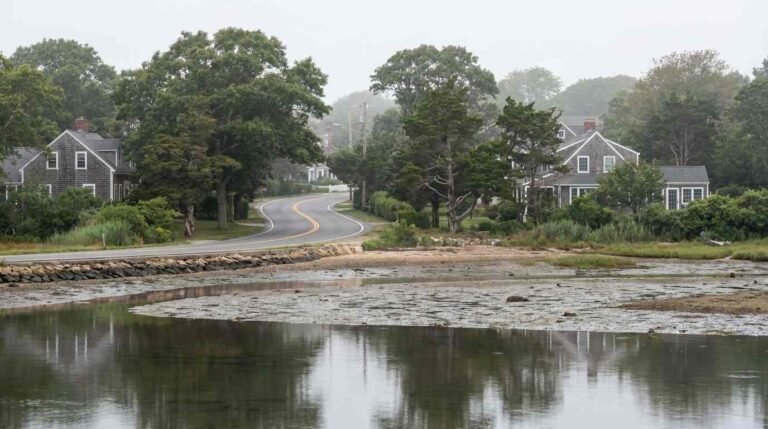
The Forgotten Factory Town: How Hauppauge Industrial Park Rose From a Potato Field
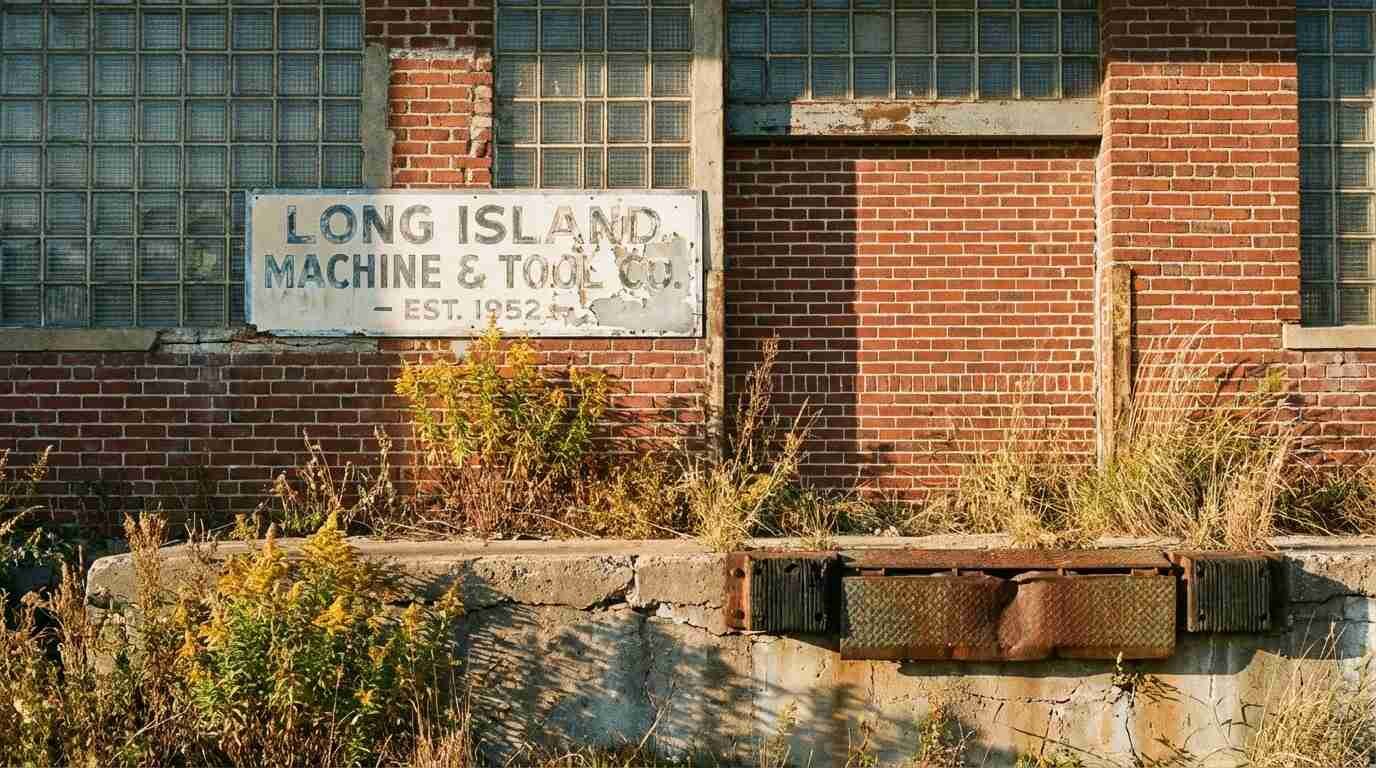
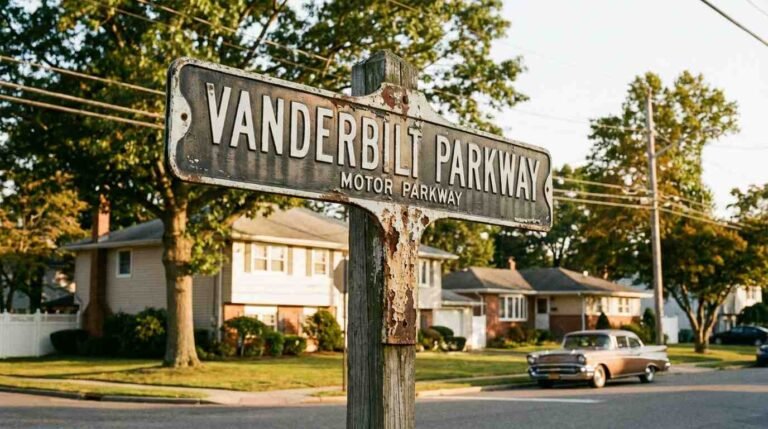
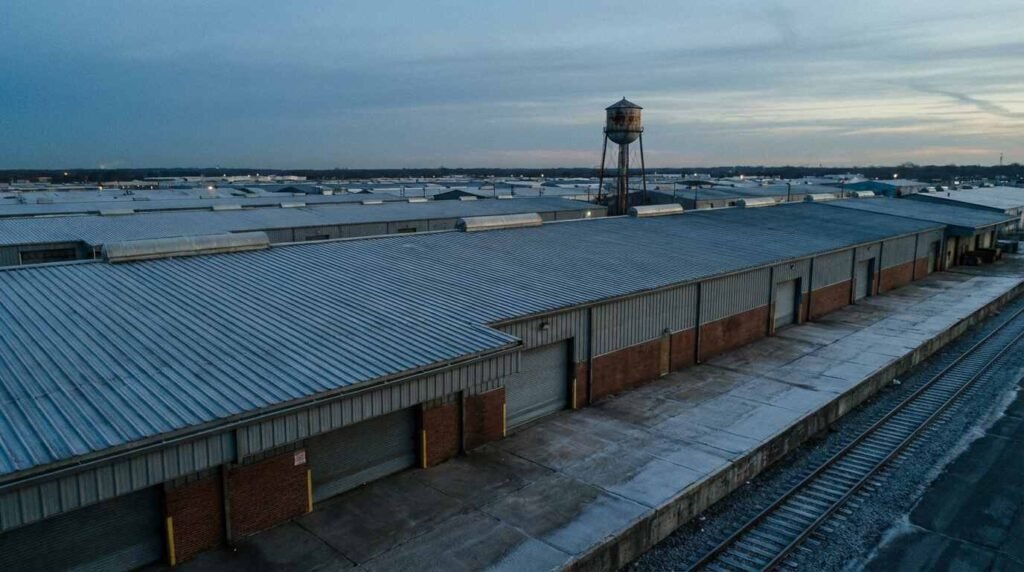
There’s a stretch of Motor Parkway in Hauppauge — just past the LIE overpass, before the light at Wireless Boulevard — where you can look out the window of your car and see six or seven decades of economic history laid out in one continuous strip. Warehouses. Light manufacturing. Tech firms. Biomedical companies. A food distributor. A defense contractor. A sign for a staffing agency. All of it moving past in about forty-five seconds at highway speed, unremarkable unless you know what was here before.
Potato fields. All of it, potato fields.
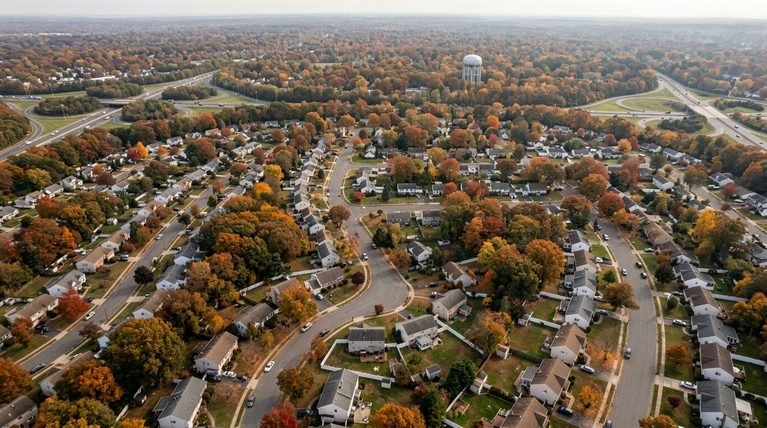
I’ve sold homes in Commack and Smithtown long enough to know that buyers coming from the city don’t always register why mid-island neighborhoods feel the way they do — why the streets are wide and the yards are generous, why the tax base is stable, why the commute times are what they are. The answer, more often than not, traces back to a zoning decision made in the early 1950s, a few miles south of where the houses stand.
The Hauppauge Industrial Park — now officially rebranded as the Long Island Innovation Park at Hauppauge — is the backbone that nobody talks about when they talk about Long Island suburban life. And if you’re buying or selling in the mid-island market, understanding what it is and why it exists tells you a great deal about why these neighborhoods have held their value the way they have.
From Winnecomac to Wireless Boulevard
The land has deep roots. The Nissequogue and Nesaquake peoples called this area Winnecomac — “pleasant lands” — and the kettleholes and rolling hills left by glacial retreat gave it a particular topographic character that persists today, even buried under decades of asphalt and loading docks.
By the early 20th century the area was almost entirely agricultural. The Mackay Radio and Telegraph Company installed a major communications facility here in 1936, but the surrounding land remained farmland. The street that now runs through the center of the park — Wireless Boulevard — is the only surviving memorial to that era.
The transformation began in earnest after World War II, when New York State started actively pushing industry out of the congested boroughs and into the suburbs. The logic was straightforward: decentralize manufacturing, reduce pressure on New York City infrastructure, and build a new tax base in communities that were absorbing the postwar population surge. Long Island, with its flat land, highway access, and proximity to the city, was an obvious target.
Suffolk County’s Industrial Development Agency facilitated the land assembly that would become the park. By the 1950s and into the 1960s, what had been agricultural parcels were being rezoned and developed into what became one of the most consequential economic projects in Long Island’s history. The Smithtown Historical Society holds records documenting the transition of local farmsteads during this period — the change was not slow or gradual. It was deliberate, and it moved quickly.
The Before-and-After Nobody Talks About
Here is what the renovation analogy gets exactly right: when you gut a house down to the studs and rebuild it with new infrastructure — new plumbing, new electrical, new HVAC — the house that comes back is fundamentally different from the one that was there before, even if it looks similar from the street. The same thing happened to mid-island Suffolk County in the postwar decades.
Before: scattered agricultural hamlet, limited tax revenue, minimal public infrastructure.
After: industrial park generating hundreds of millions in annual tax contribution, funding school districts, road improvements, and municipal services across Smithtown and Islip. According to HIA-LI, the organization that stewards the park today, its 1,300 companies generate an economic output of over $13 billion and employ more than 55,000 workers.
That’s not background noise. That’s the structural spine of an entire regional economy.
When the Hauppauge school district’s budget gets funded, when Smithtown Central maintains its strong academic rankings, when local roads get maintained, when emergency services are staffed — a significant portion of that capacity traces directly to the tax revenue flowing out of the industrial park. And that, in turn, is part of why residential neighborhoods in Commack, Smithtown, Hauppauge, and Nesconset have remained desirable over fifty-plus years without the volatility you see in communities built on thinner economic foundations.
The Zoning Story Is the Real Estate Story
Every renovation project has a moment where the zoning department becomes the most important character in the narrative. Hauppauge’s is worth understanding because it set a template.
New York State and Suffolk County worked together to establish industrial zoning that was deliberately buffered from residential areas. The parks were designed with internal road networks, keeping heavy truck traffic off residential streets. Green buffers were incorporated. The park’s design — whatever you think of mid-century planning aesthetics — was intentional about not bleeding into the neighborhoods that were being built around it.
The result was something unusual: a major industrial zone that actually enhanced neighboring residential values rather than depressing them. Employment without encroachment. Jobs without intrusion.
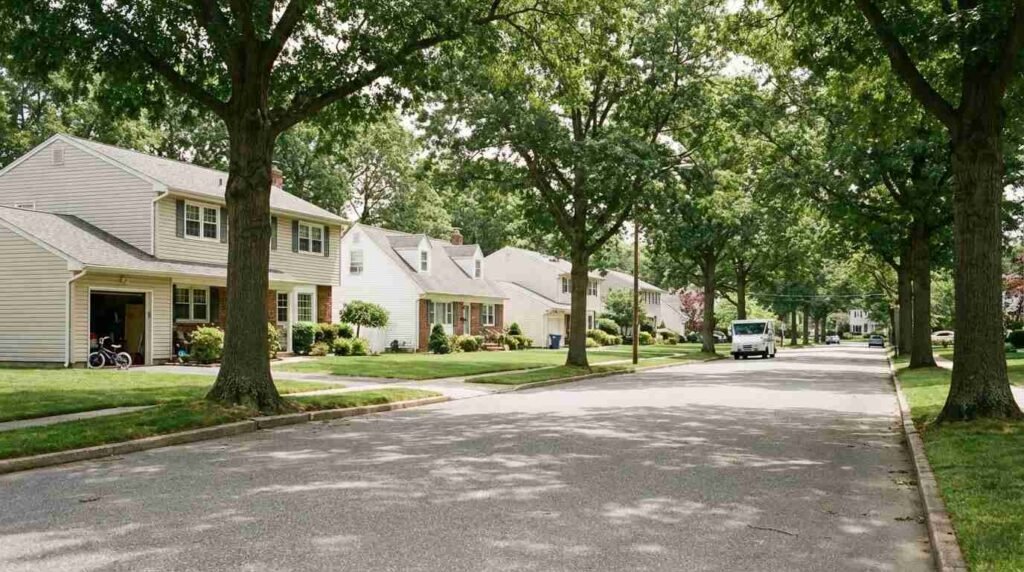
Buyers today who come to Commack or Smithtown and ask why the neighborhoods feel more stable than comparable mid-island markets in Nassau County are, without knowing it, asking about zoning decisions made seventy years ago. The park is why Commack’s post-war cape houses and ranch homes haven’t aged into obsolescence the way similar housing stock did in communities without an economic anchor.
⚠️ The specific zoning timelines and development phasing described above are drawn from publicly available historical accounts. For precise dates and documentation, the Suffolk County IDA historical records and Smithtown Historical Society archives are the authoritative sources.
What the Name Change Signals
In recent years the park formally rebranded as the Long Island Innovation Park at Hauppauge — a name that tells you something about where the next chapter is headed. The traditional manufacturing and light industrial tenants that built the park’s first decades are still there, but they’re now sharing space with biomedical firms, tech companies, and professional services. The HIA-LI has talked publicly about a “Blueprint for Innovation” — essentially a master plan for repositioning the park as a knowledge economy hub while maintaining its manufacturing core.
For real estate buyers, that trajectory matters. A park transitioning toward higher-value, higher-wage industries means the workforce it draws will trend toward buyers who can sustain the residential market around it. That’s not a guarantee — markets shift and plans don’t always execute — but it’s a meaningful signal when you’re evaluating the long-term demand picture for mid-island neighborhoods.
I’ve had that conversation with clients looking at Hauppauge and Nesconset in particular. The park is right there. That’s not a liability. For the last seven decades, it has been the single most consistent economic stabilizer in mid-island Suffolk County, and there’s little in the current picture to suggest that changes.
A Note for Buyers and Sellers
If you’re buying in the Smithtown, Commack, or Hauppauge market, a few things are worth knowing.
The residential stock around the park is genuinely varied. Mid-century ranches and cape cods — many of them built specifically to house the workers and managers who moved to the area during the park’s early growth years — coexist with later colonial construction and more recent development. The ranches in particular tend to price below what comparable square footage commands in North Shore coastal markets, but they often sit on larger lots and in established neighborhoods with significant tree canopy. They’re worth looking at before dismissing.
The Smithtown Central School District, which serves much of this area, is consistently well-regarded. That matters for families, obviously, but it also matters for long-term resale — school district reputation is one of the stickier drivers of residential value on Long Island.
And if you’re selling in this area: the industrial park story is a legitimate selling point that often goes unmentioned. Not the park itself as a visual amenity — it isn’t one — but what it represents: a durable economic anchor that has underwritten residential stability in this area for generations. That story is worth telling.
Real estate markets change. For current listings and market data, contact Pawli at Maison Pawli.
You Might Also Like
Before the Bulldozer: How a Forgotten Depression-Era Government Program Pre-Framed Thousands of Long Island Homes Still Standing Today · The Stroad That Ate Jericho Turnpike: How One Road Fragmented Five North Shore Communities · The Lock-In Effect: Why North Shore Inventory Is So Tight Right Now
Sources
HIA-LI organizational history and park statistics · Long Island Innovation Park at Hauppauge overview, HIA-LI · Hauppauge, New York — Wikipedia · “Did You Know: The Hauppauge Industrial Park, Part 1,” Hauppauge Patch, 2012 · Smithtown real estate market data (March 2026), Movoto