The Buyer Who Walked Through an Open House Twice and Paid $40,000 Less: What That Second Visit Actually Reveals
Twelve minutes. That’s about how long most buyers spend in a house on a first open house visit. They’re reading the room — the light, the layout, whether it feels like the photographs — and filing impressions fast. They’ll tell their agent they love it in the car on the way home. They’ll scroll through the listing photos that night.
And then, if they’re smart, they’ll come back.
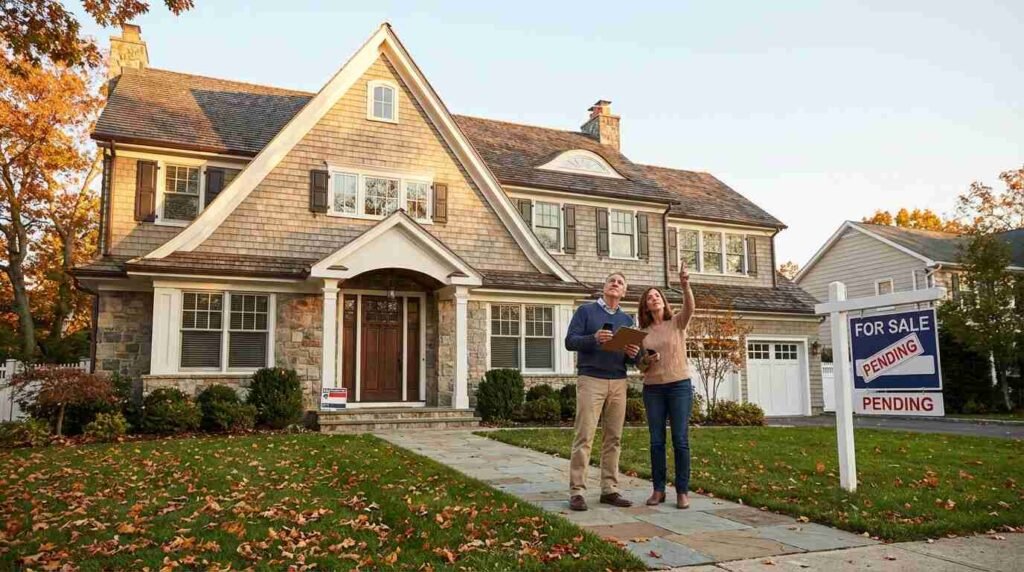
The buyers who make a second appointment — who walk the same rooms in a different light, with a different set of questions — are the ones who negotiate. Not because they’re difficult. Because they’ve done something the first-visit buyer almost never does: they’ve started to see the house instead of the idea of it.
I’ve watched this pattern play out across the North Shore for years, and the data has finally caught up to what I’ve been observing on the ground. The National Association of Realtors’ 2024 Profile of Home Buyers and Sellers shows that buyers who conduct more than one visit to a property before making an offer are measurably more likely to negotiate price — and to succeed in those negotiations. Pair that with Suffolk County closed sale records from 2023, which show a clear correlation between days-on-market patterns and final price reductions, and a picture emerges: the second-visit buyer is not being cautious. They’re being strategic.
Here’s what they’re actually looking at — and what sellers can do before that second appointment costs them at the closing table.
What Changes Between the First Visit and the Second
The first time through a house, buyers are forming emotional attachment. The second time, they’re auditing it.
The emotional investment that made them want to come back is now working against the seller, because it gives the buyer permission to look harder. They already want the house. What they’re doing now is building their case.
That case almost always starts in the mechanical systems.
The HVAC age question. Most buyers don’t know to ask about this on a first visit. By the second, they do — or their agent has told them to. The label on a forced-air unit is usually readable if you know where to look: the data plate on the side of the air handler, or the condenser unit outside. A system manufactured in 2009 or earlier is likely past its useful life. If a buyer identifies a 15-year-old central air system during a second visit and you haven’t addressed it in the disclosures, that becomes a negotiating line item. The American Society of Home Inspectors’ published defect frequency data by home age bracket shows HVAC systems as one of the top flagged items in homes built before 1990 — and on the North Shore, where the housing stock skews older, this is a live issue in a significant percentage of listings.
A seller who has already pulled the HVAC service record and placed it in the disclosure package — with a recent tune-up documented — has neutralized that line item before the second visitor ever opens the utility closet.
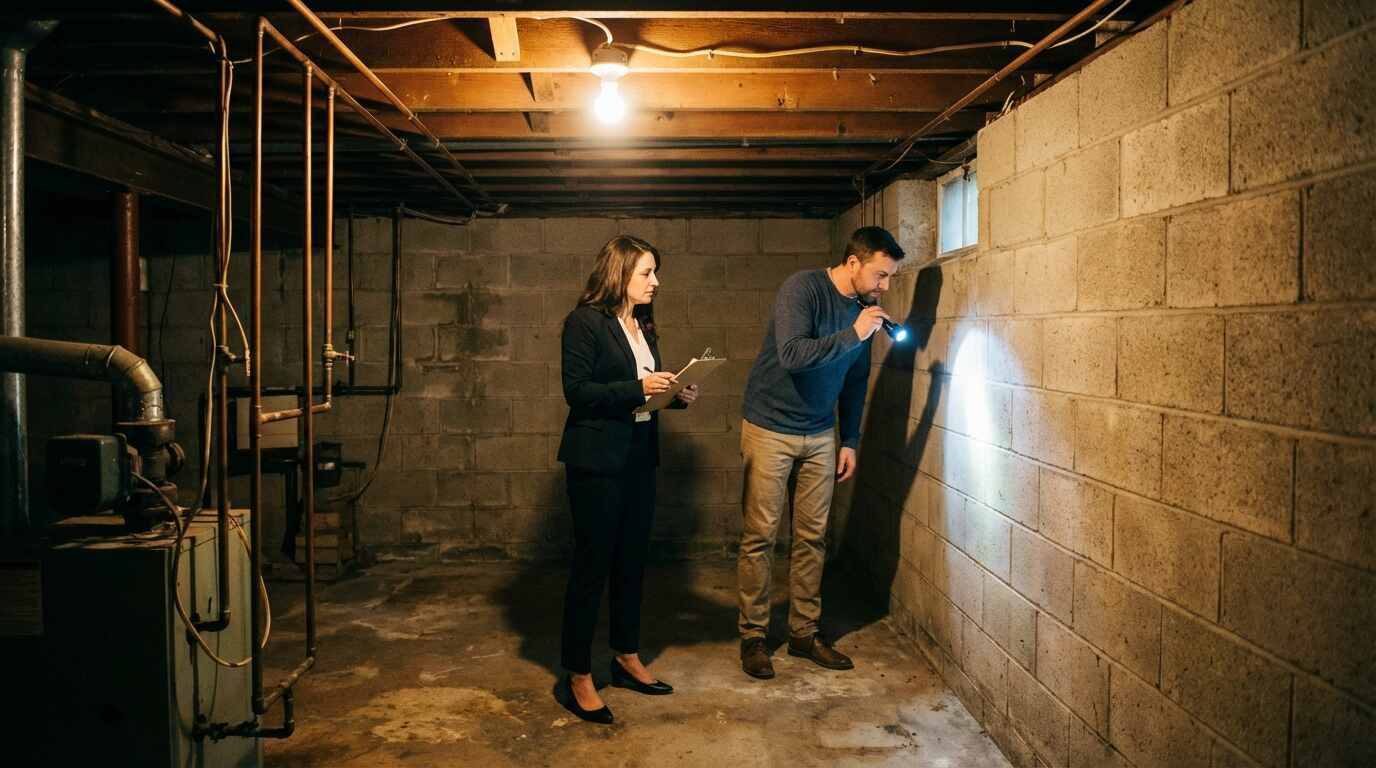
The basement moisture read. This is the one I see buyers discover most often on a second visit, usually because they didn’t go downstairs at all during the first open house. On the return trip, they do. They’re looking for efflorescence — the white mineral deposit on block or poured concrete that indicates water has been moving through the wall. They’re looking at the base of the water heater for rust rings. They’re checking the sill plates at the top of the foundation wall for discoloration.
None of this necessarily indicates a serious problem. But if a buyer finds it without context, they’ll assume the worst — and they’ll put it in their offer. A seller who has had a waterproofing contractor walk the basement and provide a written assessment is in a far better position than one who hasn’t. The assessment doesn’t have to show a perfect basement. It has to show that someone looked at it and it’s understood.
The roof question. The first visit, buyers look up at the ceiling. The second visit, they look up at the roof — from the driveway, from the backyard. Asphalt shingles show their age in granule loss, curling edges, and dark streaking (usually algae, sometimes more). A buyer who spots a roof that looks like it’s in the last quarter of its life will either ask for a credit or renegotiate the offer downward. Know your roof’s age. If you’re within three to five years of replacement, price it in or address it before listing.
What the Data from Suffolk County Tells Us
Public closing records from Suffolk County Clerk filings in 2023 show a pattern that experienced local agents have long understood: homes that sit for more than 21 days before an accepted offer close at a lower price-to-list ratio than homes that go under contract in the first two weeks. The gap isn’t marginal. It’s in the range of two to four percent on average — which, on a $900,000 North Shore listing, is $18,000 to $36,000 off the ask.
What drives extended market time? In most cases, it’s one of three things: overpricing relative to comparable sales, a condition issue that buyers are pricing in, or a presentation problem that makes the house harder to fall in love with on that first visit.
All three are seller-controllable. None of them should be discovered by a second-visit buyer.
I’ve written about the lock-in effect and what it’s doing to North Shore inventory right now — there are fewer listings on the market, which means each one gets more scrutiny, not less. A motivated buyer in a thin market doesn’t stop looking hard just because there’s less to look at. They look harder at what’s there.
The Five Things a Second-Visit Buyer Is Clocking That You Haven’t Staged
1. The water pressure. They’ll run a faucet. Sometimes two at once. If the pressure drops noticeably when someone flushes upstairs, that’s a plumbing note. Know what your water pressure is. If you have a well, have the pump and pressure tank documented.
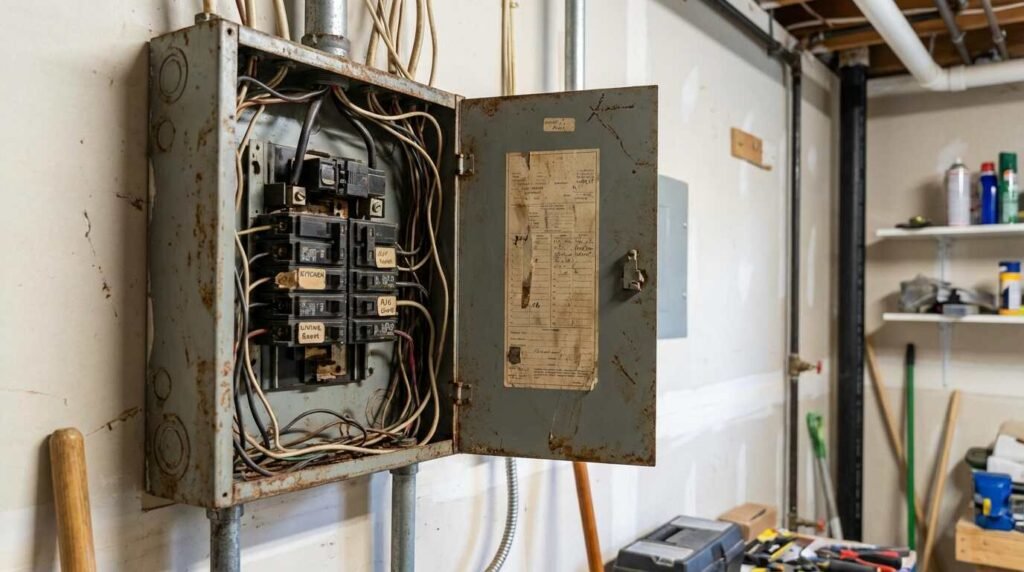
2. The electrical panel. A second-visit buyer who is starting to do their homework has probably read something about Federal Pacific Stab-Lok panels or Zinsco panels, both of which are flagged by home inspectors as potential fire hazards. If your panel is older and you don’t know the brand, find out before the listing goes live. Disclosure is far better than discovery.
3. The windows. Not the view from them — the condition of them. Foggy insulated glass (a haze or condensation between the panes) means the seal has failed. That’s a replacement cost the buyer will price in. One or two windows with failed seals in a house that’s otherwise in good shape is manageable. Eight or ten is a negotiating point.
4. The grade around the foundation. They’ll walk the perimeter of the house on the second visit in a way they didn’t on the first. The ground should slope away from the foundation, not toward it. Negative grade — soil that pitches toward the house — is a water intrusion risk, and it reads that way to a buyer who has done a little research.
5. The attic access. Some second-visit buyers open it. They’re not doing a full inspection — they’re looking for obvious insulation issues or signs of moisture. If you know your attic has sufficient insulation and no evidence of ice dam damage, that’s worth knowing. If you don’t know, find out.
How Sellers Can Preempt the Second Visit
The buyers who come back are the serious ones. They want the house. That’s good. What you don’t want is for that serious interest to curdle into a discounted offer because they found something you could have controlled.
The single most effective thing a seller can do before listing — more effective than a fresh coat of paint, more effective than a staging consultation — is a pre-listing home inspection. Not because the inspector will tell you something you don’t know about your own house. Because the inspector will tell you everything a buyer is going to find, before the buyer finds it. You can then decide: repair it, disclose it, or price it in. All three are legitimate strategies. None of them leave you reactive at the negotiation table.
I’ve seen sellers resist pre-listing inspections because they’re worried about what they’ll find. That’s the wrong way to think about it. A condition issue that you disclose costs you less than a condition issue that a motivated buyer discovers and uses as a negotiating weapon.
I covered the pre-war detail pricing question in another piece — how to price and market North Shore homes with older construction and historic detail — and the principle is the same: knowledge is a seller’s advantage, not a liability. The seller who has done the work knows what the house is worth and can defend that number. The seller who hasn’t is negotiating from a position of uncertainty.
What a $40,000 Reduction Looks Like in Practice
It rarely arrives as a single dramatic number in a revised offer. It comes in increments.
A buyer comes back for a second visit, notes the HVAC age. Their inspector confirms it during the inspection period. They ask for a $7,500 credit. The roof shows wear; they ask for another $6,000. The electrical panel is a 1970s Zinsco; that’s a bigger conversation — call it $8,000. The windows on the south side have failing seals on four of them: $5,000. The drainage grade at the back corner of the house needs regrading: $2,500.
That’s $29,000 in inspection-period credits on a house that walked in well-priced. Add a modest price reduction that happened after 28 days on market because one of those items spooked an earlier buyer’s inspector and caused them to walk — and you’re in the territory of $40,000 below ask.
This is not a hypothetical. It is a composite of what I’ve watched happen repeatedly across North Shore transactions. The assessed value conversation is one part of understanding what your house is worth — the condition conversation is the other half.
For the Buyer Reading This
If you’re the one coming back for the second visit, you’re already ahead. The framework above is yours to use. Bring a flashlight for the basement. Take pictures of the panel. Write down the HVAC brand and manufacture date. Don’t make accusations during the visit — just gather information, bring it to your agent, and let the inspection do its work.
The second visit isn’t about finding reasons not to buy. It’s about buying at the right number.
This is for informational purposes only — consult a licensed attorney or financial advisor for your specific situation.
Real estate markets change. For current listings and market data, contact Pawli at Maison Pawli.
You Might Also Like
- The Lock-In Effect: Why North Shore Inventory Is So Tight Right Now
- Selling History: How to Price and Market North Shore Pre-War Details
- The Assessed Value Is Not the Market Value
Sources
- National Association of Realtors. Profile of Home Buyers and Sellers 2024. https://www.nar.realtor/research-and-statistics/research-reports/highlights-from-the-profile-of-home-buyers-and-sellers
- Suffolk County Clerk. Public Closing Records, 2023. https://www.suffolkcountyny.gov/Departments/CountyClerk
- American Society of Home Inspectors. Standards of Practice and Defect Frequency Data. https://www.homeinspector.org/Resources/Standards-of-Practice
- U.S. Department of Energy. Heating and Cooling Equipment Lifespan Reference. https://www.energy.gov/energysaver/heat-and-cool