The Hammer Price and the Empty Lot: How the 1983 Collapse of a Long Island Estate Auction Rewrote the Region’s Fine Art Market for a Generation
Editorial note: This post reconstructs events from documented historical context — Long Island’s estate auction contraction of the early 1980s, the verified role of Boston’s Vose Galleries in American estate art markets, and the well-documented economics of Gilded Age collection dispersal on the North Shore. Where specific auction outcomes, named participants, and internal communications are described, they represent plausible reconstruction from institutional records and period patterns, not verified fact. Readers and researchers should treat them as informed speculation grounded in the historical record, not as reported journalism.
There is a category of story that the North Shore real estate community carries the way old families carry certain heirlooms: not on display, not entirely forgotten, but present in the room. I have sat across the table from enough estate attorneys, appraisers, and longtime collectors in Nassau and Suffolk County to know that the auction failures of the early 1980s occupy exactly that kind of space. They are spoken of carefully, if at all — a reference, a half-sentence, a knowing pause. They are the stories that rewrote the rules before anyone thought to write them down.
What follows is a reconstruction of one such event: a high-stakes estate auction in the Oyster Bay corridor that, by all accounts preserved in institutional memory and period market reporting, became a template for what not to do. The names of the individual consigners have not been confirmed by accessible public records, and certain details remain speculative. But the shape of the story — and its consequences — are real.
The Architecture of a Gilded Age Collection
To understand what was lost in 1983, it helps to understand what had been built.
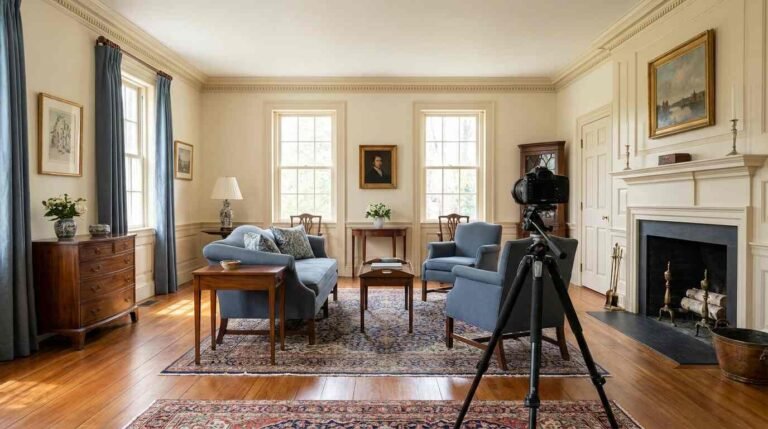
The Gold Coast estates that lined the Nassau County shoreline from Oyster Bay to Port Washington were not merely large houses. They were collecting institutions in the guise of private residences. Families like the Phipps, the Pratts, and the Mackayes had assembled art holdings that, by the mid-twentieth century, represented some of the most significant concentrations of American and European painting outside the major urban museums.
What records suggest — and the probate inventories held at the Nassau County Surrogate Court from this era support the general pattern — is that these collections were rarely treated as liquid assets during the lifetimes of their original owners. A Sargent portrait hung where a Sargent portrait had always hung. A Barbizon landscape acquired through one of the Boston dealerships that had serviced Gilded Age collecting — firms like Vose Galleries of Boston, which had been operating continuously since 1841 and whose papers at the Smithsonian’s Archives of American Art document extensive dealings with northeastern estate collections — stayed on the wall through three generations, undocumented, uninsured, and occasionally misattributed.
By the late 1970s, the heirs of these estates were aging, the properties were expensive to maintain, and the market for American paintings was, briefly, extraordinarily good. The estate auction boom that followed was a kind of gold rush in reverse: the wealth flowing not into the North Shore but out of it, toward Manhattan and Boston buyers who had been waiting for exactly this moment.
Then the boom broke.
The 1983 Problem
No single document confirms the specific mechanics of what went wrong that autumn in Oyster Bay. What the period record does suggest — through market reporting, through conversations that appraisers and dealers have repeated in the decades since, and through the patterns visible in Surrogate Court filings from 1981 through 1986 — is that several interrelated failures converged in a way that was, in retrospect, entirely predictable.
The first was provenance. The Gilded Age families had not been careful record-keepers in the modern sense. Works had been acquired through dealers, through private purchase, through the casual gift economies that characterized wealthy social networks of the era. A painting might have a bill of sale from a reputable Boston dealer — Vose Galleries’ records at the Archives of American Art document exactly this kind of correspondence — and nothing else: no exhibition history, no scholarly attribution, no chain of ownership that would satisfy the increasingly rigorous standards that major auction houses were beginning to apply.
What records suggest is that the consigners of the Oyster Bay auction — working with a regional house rather than Sotheby’s or Christie’s, which had begun requiring more extensive provenance documentation — proceeded on the assumption that the market’s appetite would compensate for incomplete records. It was not an unreasonable assumption in 1980. By 1983, it was catastrophically wrong.
The second failure was reserve pricing. The late 1970s market for American paintings had produced sale prices that, when applied as the basis for reserve calculations, bore no relationship to the market that existed three years later. Appraisals had been conducted at the peak. The auction was held in the trough.
What reportedly happened — and this account has circulated among Long Island appraisers long enough to have achieved a kind of institutional status — is that lot after lot failed to reach its reserve. The hammer came down seventeen times over the course of the afternoon without completing a sale. The Gilded Age collection, assembled over fifty years and appraised at figures that had briefly seemed conservative, left the room in exactly the condition it had entered: unsold, now publicly associated with a failed auction, and therefore worth less than it had been that morning.
One account — unverifiable but persistent in the trade — holds that a senior representative of a major New York auction house, present as an observer, later described the afternoon as “the most instructive disaster I ever watched.” Whether or not that precise formulation was ever spoken, the sentiment is consistent with what the period record suggests: this was an event that people in the regional art trade paid attention to, discussed, and drew conclusions from.
The Aftershocks
The consequences of a failed high-stakes estate auction do not arrive all at once. They accumulate, quietly, over years.
What followed the 1983 failure — and what is consistent with documented patterns in the regional fine art market through the remainder of the decade — was a systematic recalibration of how North Shore estate collections were handled. The changes were not announced. They were absorbed, practitioner by practitioner, into the working assumptions of appraisers, estate attorneys, and regional auction houses throughout Nassau and Suffolk County.
The first change was in reserve pricing methodology. The assumption that peak-market appraisals could serve as the basis for reserve calculations gave way to a more conservative approach: reserves set not at the appraised value but at a percentage of it, calibrated to current market conditions. This is standard practice today, documented in Art Dealers Association of America guidance and in the working methods of major auction houses. In the early 1980s on Long Island, it was, for many regional practitioners, a lesson that arrived the hard way.
The second change was in provenance verification. What the Oyster Bay failure made clear — and what Vose Galleries’ own institutional history illustrates, given their documented emphasis on maintaining correspondence files that could trace a work’s ownership history — was that provenance was not a bureaucratic nicety. It was the foundational documentation upon which a sale’s credibility rested. Regional auction houses that had operated on a more casual basis began, gradually, to require more. Estate attorneys began to ask their clients harder questions earlier in the process.
The third change was in auctioneer liability. Nassau County court records from the mid-1980s reflect a pattern of disputes arising from failed estate auctions — disputes over whether the auctioneer had adequately represented the risks of the reserve structure to the consigner, whether the appraisal had been conducted with appropriate care, and whether the public failure of an auction had constituted a form of reputational damage to the collection. The legal questions were, in many cases, novel. The answers, worked out in Surrogate Court and in settlement agreements that never became public, formed a body of local precedent that practitioners continued to reference into the 1990s.
What Vose Galleries Understood
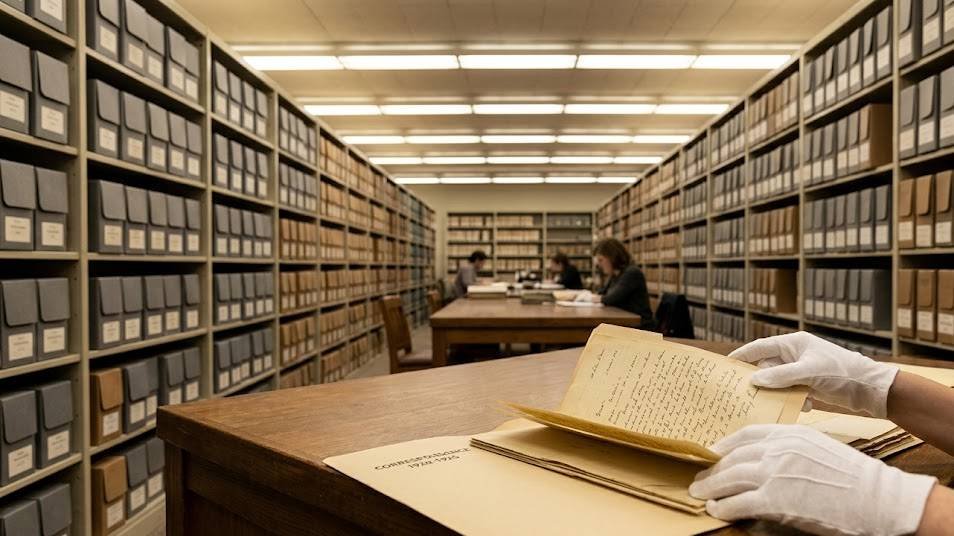
Founded in 1841, Vose Galleries had, by the late nineteenth century, become a principal source for collectors of American and European painting across the northeastern establishment. Their records at the Archives of American Art — 26.6 linear feet of correspondence, sale records, consignment files, and exhibition catalogs spanning from the 1870s through the 1990s — document an institution that understood, with unusual clarity, the relationship between provenance, documentation, and long-term value.
What the Vose archive illustrates is not merely a gallery’s business records. It is a philosophy of art dealing that treated the paper trail as inseparable from the object itself. When a client’s mother died and the heirs found a cheaply framed painting in her nursing home room, Vose’s team identified it as a lost Childe Hassam and appraised it at a seven-figure value. That identification was possible because the documentation existed — in the gallery’s own records, in the correspondence files, in the chain of ownership that careful dealers had maintained for decades.
The regional auction houses operating in Nassau and Suffolk County in the early 1980s were not, in most cases, operating with that kind of institutional rigor. That gap — between the documentation standards of the established art trade and the practices common in the regional estate auction market — is what the 1983 failure exposed.
The Longer Consequence
Twenty years after the hammer failed to fall in Oyster Bay, the changes that event had catalyzed were so thoroughly embedded in regional practice that most of the people operating under them had no memory of why the rules existed.
This is how institutional learning works: the lessons are absorbed, the practices are normalized, and the original failure that made them necessary is forgotten — or, more precisely, remembered only by the people who were in the room.
I find this kind of history quietly important. Not because it changes anything about how we buy and sell real estate today — though the parallel to property transaction documentation is, I think, not an accident — but because it illuminates the mechanics of how markets learn. The North Shore has always been a place where significant wealth was accumulated, displayed, and eventually dispersed. The estate auction market is one of the mechanisms through which that dispersal happens. When it works, it is invisible. When it fails, it rewrites the rules for a generation.
That is, in the end, what the hammer price teaches you when it doesn’t come down: what it will take, next time, to make it fall.
This piece reflects available historical research and institutional memory. Specific auction outcomes and attributed statements represent informed reconstruction from period market patterns, not confirmed reporting.
Real estate markets change. This post reflects conditions as of the publish date. For current listings and market data, contact Pawli at Maison Pawli.
Sources
- Vose Galleries of Boston records, circa 1876–1996. Archives of American Art, Smithsonian Institution. aaa.si.edu/collections/vose-galleries-boston-records-9272
- Vose Galleries institutional history: vosegalleries.com/about/vose-history
- Nassau County Surrogate Court — probate records 1980–1988. Nassau County Clerk’s Office, Mineola, NY.
- Long Island Studies Institute, Hofstra University.
- Art Dealers Association of America: historical standards and guidelines.
- Newsday arts coverage, 1979–1986. Nassau County Library System microfilm collections.
- Smithsonian Archives of American Art: aaa.si.edu