The Pine Barrens Line: Selling on the Edge of Long Island’s Deepest Woods
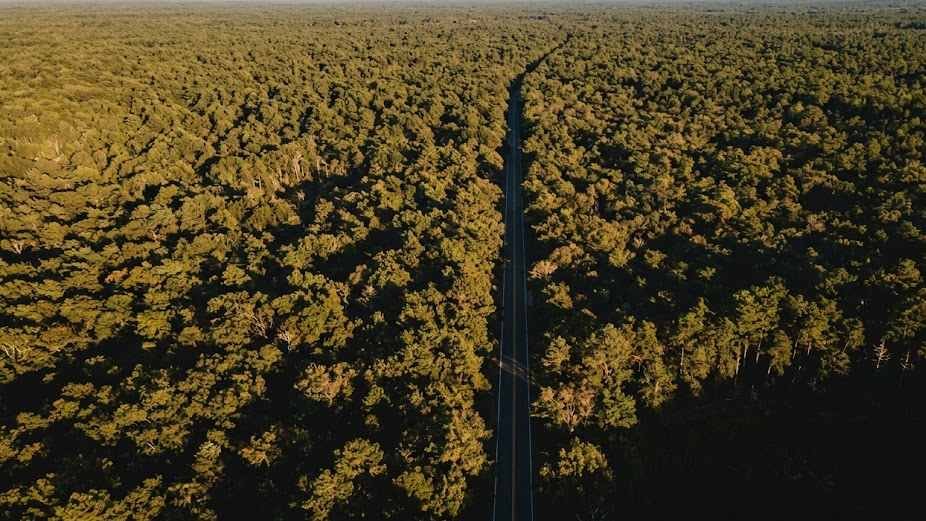
Sell a house near the Pine Barrens and you aren’t just selling bricks. You’re selling proximity to 100,000 acres of legally protected wilderness — one of the largest intact oak-pine ecosystems on the Eastern Seaboard, sitting directly above an aquifer that supplies drinking water to roughly 2.5 million people. The 1993 Long Island Pine Barrens Protection Act drew a line across the map of Suffolk County that doesn’t move, doesn’t negotiate, and doesn’t care about your asking price.
If your property is on or near that line, your selling strategy changes. Here’s what you need to know before you list.
What the Act Actually Did
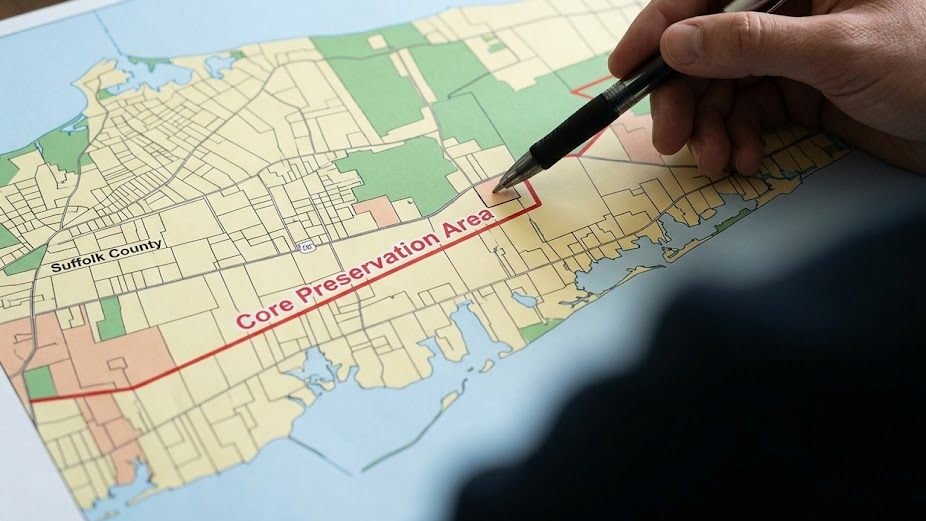
The Long Island Pine Barrens Protection Act of 1993 established one of the most consequential land-use frameworks in New York State history. Under the Act, roughly 100,000 acres of central Suffolk County were designated as a protected zone, administered by the Central Pine Barrens Joint Planning and Policy Commission. That zone was divided into two distinct categories — and the distinction between them is everything for sellers.
The Core Preservation Area covers approximately 52,000 acres. Development within the Core is, for all practical purposes, prohibited. This is not a soft restriction. The Core exists to protect the aquifer recharge zone and the ecological integrity of the barrens themselves. Residential and commercial development is essentially foreclosed. If your property falls within the Core, what you are selling is the land’s conservation value — which is real and has a market, but it is not the residential development market.
The Compatible Growth Area covers the remaining acreage and operates under a different set of rules — but “compatible growth” should not be mistaken for unrestricted growth. Development within the Compatible Growth Area requires adherence to specific density limits, water management standards, and in many cases, the purchase or transfer of Pine Barrens Credits — a tradeable development rights system established by the Commission that allows landowners in restricted areas to sell their development potential to builders working in designated receiving zones.
The Commission’s legislative records make clear that this system was designed to achieve a dual goal: protect the barrens permanently while providing landowners a mechanism to realize some economic value from restricted land. It is a sophisticated framework. It is also one that most residential real estate agents have never read closely.
The Aquifer Underneath Everything
To understand why the state drew such a hard line in 1993, you have to understand what’s below the surface.
The Pine Barrens sit atop the Peconic Aquifer System — the primary source of drinking water for eastern Long Island. The sandy, highly permeable soils of the barrens are uniquely effective at filtering rainwater down into the aquifer. That recharge function is the reason the aquifer stays viable. Compromise the surface — through development, through chemical runoff, through impervious coverage — and you compromise the water supply for a significant portion of Suffolk County.
This is not a talking point. It is a hydrological fact that drove the legislation and continues to drive the Commission’s enforcement posture. When you are selling near the Pine Barrens, you are selling near something that the state has decided, definitively, is more valuable as open land than as developed land. That determination is permanent. There is no variance path that undoes it.
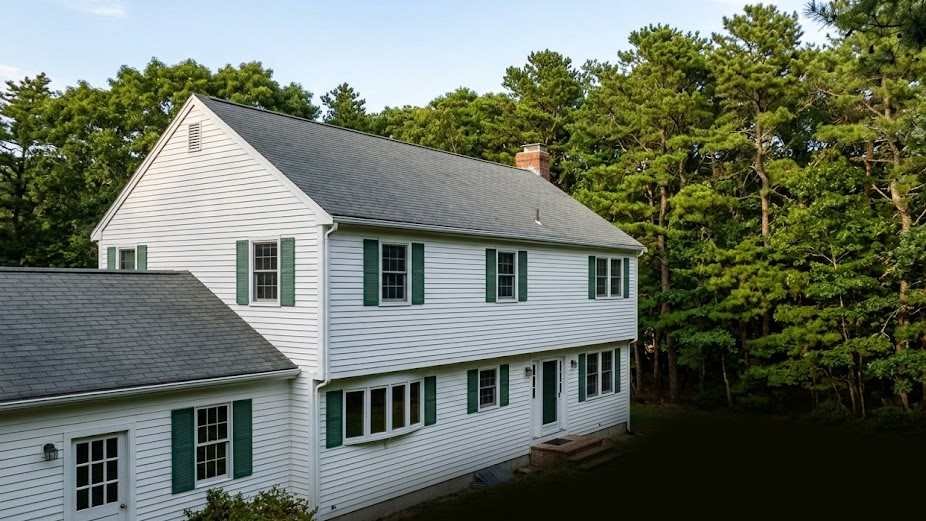
For buyers, that permanence is actually a feature. The woods behind a house in Manorville or Middle Island or Westhampton are not going anywhere. No developer is going to clear them. No strip mall is going in. What you are looking at today is what your children will look at twenty years from now. That is a genuinely rare thing on Long Island, and sellers who understand this can make it central to their pitch rather than peripheral to it.
What Sellers Get Wrong
The most common mistake I see from sellers near the Pine Barrens is treating the proximity as a neutral fact rather than a marketing asset — or, worse, as something to downplay because they’re anxious about the zoning restrictions.
Both instincts are wrong.
Buyers who are considering properties near the Core Preservation Area are not ignorant of what the Pine Barrens Protection Act means. The ones who need to be educated aren’t your buyers — they’re the ones who would have asked you to clear the trees anyway. Your buyers are the ones who want the deer in the yard, the quiet road, the dark sky at night. They want the permanence. They want to know that the thing they’re buying can’t be taken away by a development decision five years from now.
The second mistake is failing to understand what the restrictions actually mean for the subject property specifically. “Near the Pine Barrens” covers a significant amount of Suffolk County. Whether your parcel falls within the Core, within the Compatible Growth Area, or simply adjacent to the designated boundary has major implications for what a buyer can and cannot do with the land. A seller who doesn’t know which zone their property falls in — and who passes that uncertainty to a buyer — is creating a problem that will surface in due diligence.
Know your zone before you list. The Central Pine Barrens Commission maintains an interactive mapping tool on their website (pb.state.ny.us) where you can identify any parcel’s designation. Pull it. Understand it. If the property is in the Compatible Growth Area, understand what the density restrictions mean for any additions, outbuildings, or lot subdivisions the buyer might contemplate. If there are Pine Barrens Credits associated with the parcel, understand their current value.
Selling in the Compatible Growth Area: A Practical Guide
Properties within the Compatible Growth Area can be sold and developed — within constraints. Here’s what to communicate clearly:
Density and coverage limits are real. The Compatible Growth Area imposes specific restrictions on lot coverage, building footprint, and impervious surface. A buyer who is planning to add a large detached garage or significantly expand the house needs to know, before they make an offer, whether the zoning allows for it. Your agent should pull this information; if they haven’t, ask them to.
Water and septic standards are stricter. Because of the aquifer protection mandate, properties within the Compatible Growth Area are subject to enhanced nitrogen management standards that exceed typical Suffolk County requirements. Buyers planning new construction or major renovation will encounter these standards at the permit stage — and it’s better for everyone if this is understood upfront.
Pine Barrens Credits may be available. If your parcel has undeveloped acreage with restricted development potential, it may qualify for Pine Barrens Credits — essentially a mechanism to monetize land you cannot build on by selling the development rights to someone who can use them elsewhere. This is a real market. The Commission facilitates credit transactions, and the value of credits fluctuates. If you have a larger parcel with restricted portions, consult with the Commission or a land-use attorney about whether credits apply to your property.
Buffer and setback requirements apply to watercourses. If your property contains or abuts a stream, pond, or wetland within the barrens zone, additional buffer requirements apply. These can affect where structures can be placed and what landscaping is permissible near the water.
The Marketing Angle That Works
A property near the Pine Barrens, correctly positioned, sells a very specific kind of life: quiet roads, wildlife corridors, clean water, and the guarantee that the view does not change. On Long Island — where the development pressure has been relentless for eighty years — that guarantee has genuine monetary value.
The language that works is specific, not vague. Not “peaceful surroundings” but permanently protected woodland. Not “quiet neighborhood” but road frontage on a designated conservation zone. Not “nature nearby” but direct access to the barrens trail system. Buyers who want this life respond to the specificity because it tells them you understand what you’re selling.
And buyers who don’t want it — who have different priorities — self-select out early, which saves everyone time.
The Pine Barrens line is not a liability. It is a boundary that, on the right side of it, makes a property something genuinely singular: a home at the edge of 100,000 acres that will never be anything other than what it is.
That’s not a restriction. That’s a selling point.
Real estate markets change. This post reflects conditions as of April 2026. For current listings and market data, contact Pawli at Maison Pawli.
Sources
- Long Island Pine Barrens Protection Act of 1993 (New York State Environmental Conservation Law, Article 57)
- Central Pine Barrens Joint Planning and Policy Commission — legislative records and parcel mapping: pb.state.ny.us
- New York State Department of Environmental Conservation — Pine Barrens overview
- Suffolk County Water Authority — Peconic Aquifer System documentation
This post is for informational purposes only and does not constitute legal, environmental, or financial advice. Land-use regulations are subject to change and vary by specific parcel. Consult a licensed land-use attorney and your local municipality before making any development decisions.
You Might Also Like: For a complete overview of everything involved in selling on the North Shore — pricing, staging, legal obligations, and closing — see The North Shore Seller’s Guide.