The Cold Spring Harbor Phoenix: Buying and Saving Gold Coast Ruins
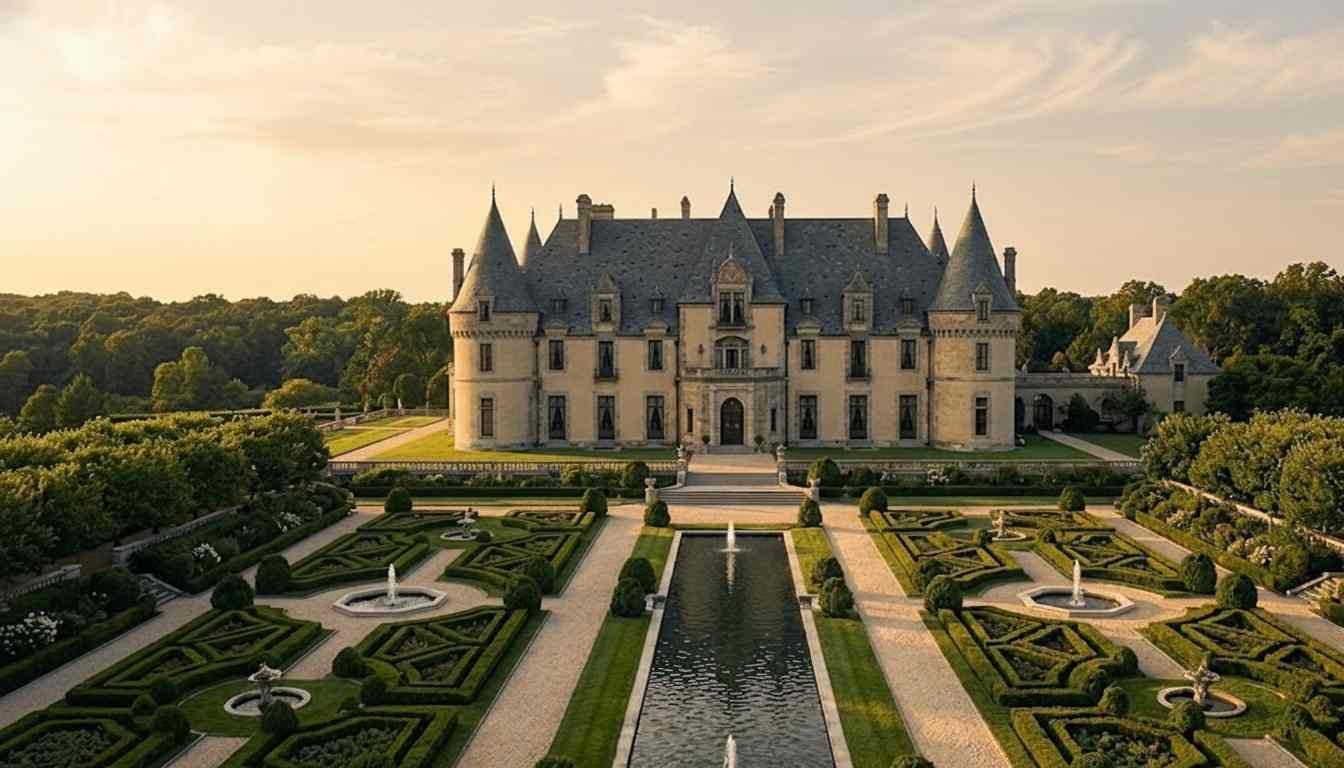
Oheka Castle was stripped bare by vandals and left to rot. Now it is the crown jewel of the Gold Coast. The lesson for buyers? Historic bones never really die if you have the vision and the capital.
Let me put a sharper point on that.
The story of Oheka is not, primarily, a story about architecture. It is not even really a story about real estate. It is a story about what happens when the judgment to see value in a ruin meets the will to do something about it — and what that combination produces at the far end of an honest accounting of what it will actually cost.
That story is worth telling carefully, because the Gold Coast is full of properties that need someone to tell it again.
What the Gold Coast Built
Between roughly 1880 and 1930, the North Shore of Long Island — the stretch running from Great Neck east through Oyster Bay, Cold Spring Harbor, Lloyd Neck, and into Huntington — became the site of one of the most concentrated bursts of estate building in American history. The people doing the building had names that still appear on the buildings they endowed: Vanderbilt, Morgan, Woolworth, Frick, Pratt, Whitney.
The houses they built were not houses in any vernacular sense. They were expressions of a moment in which serious capital had no tax burden on its accumulation, in which European architectural talent was available for hire and transport across the Atlantic, and in which the North Shore landscape — its rolling hills, its protected harbors, its position between the Sound and the open land of the island — provided a physical setting that could absorb a chateau without looking absurd.
Otto Hermann Kahn understood this better than most.
Kahn was a German-born banker, partner at Kuhn, Loeb & Company, one of the most powerful financial minds in early-twentieth-century America. He was also a serious patron of the arts — he funded the Metropolitan Opera for years and kept a particular kind of cultural sensibility that made him unusual among his peers. When he decided to build on the North Shore, he did not build modestly.
He purchased approximately 443 acres in Cold Spring Harbor and Huntington and commissioned the New York architectural firm Delano & Aldrich to design the main house. What they produced was a French chateau of approximately 109,000 square feet — 127 rooms, gardens designed with a formal axis, a water tower that doubled as a lookout, the whole complex positioned on the highest natural point on Long Island to capture the widest possible view of the surrounding landscape.
Construction was completed in 1919. Kahn named it Oheka — an acronym of his own initials: Otto, Hermann, Kahn.
It was, at the time of its completion, the second-largest private residence in the United States.
The Decline
Kahn died in 1934. The estate passed through a succession of institutional uses — a retreat center, a training school for merchant marines during World War II, a union-owned camp, a backdrop for a long period of neglect — before it arrived at what any honest observer would have to call its nadir.
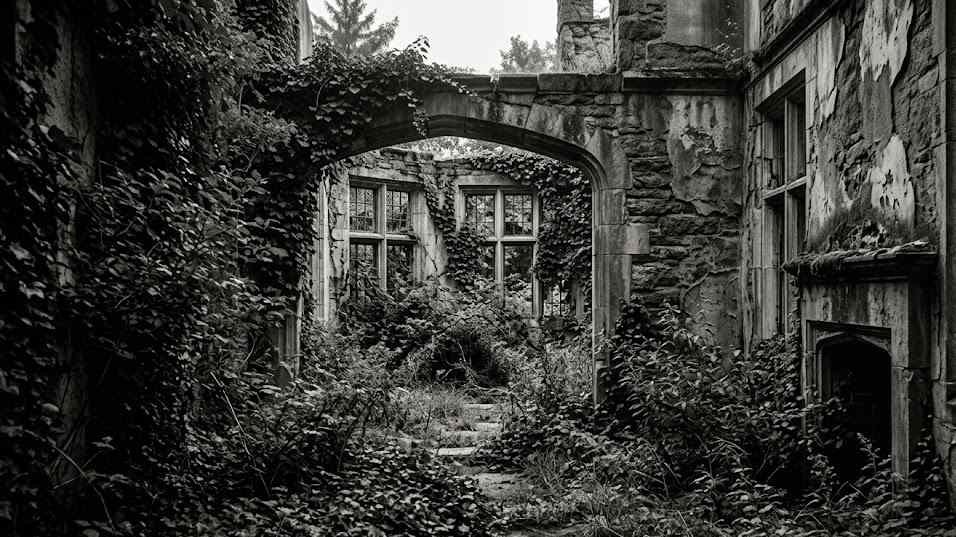
By the early 1980s, Oheka Castle had been vandalized extensively. The main house had been stripped of virtually every removable element of value: mantlepieces, ironwork, decorative plaster, hardware, fixtures. Windows were broken. Water had been working on the interior for years. The surrounding landscape was overgrown. What had been one of the most magnificent private properties on the Eastern Seaboard was, functionally, a ruin.
There is a particular quality to the decay of a great house, and it is not merely aesthetic. A house that was built to this scale and to this standard carries the evidence of its original quality even in decline. The bones of Oheka — its structural stone walls, the proportions of its rooms, the logic of its site plan — survived the vandalism and the neglect intact. But surviving is not thriving, and by the time a Long Island developer named Gary Melius entered the picture, the question was not whether Oheka was worth saving in theory. It was whether saving it in practice was survivable as a financial undertaking.
The Melius Restoration
Gary Melius purchased Oheka Castle in 1984. What followed was a restoration effort that took the better part of two decades and cost, by various estimates, tens of millions of dollars.
The scale of what had to be done was not limited to cosmetics. The roof needed replacement. The mechanical systems — which in a building of this size and age means plumbing, electrical, HVAC — required complete overhaul. The exterior stonework needed repointing and repair. The interior, stripped of its original elements, had to be either restored from historical documentation and period-accurate reproduction or simply rebuilt to a standard that honored the original quality of the construction.
What makes the Melius restoration instructive, beyond its sheer scope, is the approach that governed it. Melius did not treat Oheka as a renovation project. He treated it as a restoration — a meaningful distinction. A renovation asks what the space needs to be useful. A restoration asks what the space was and how to return it to that standard with the materials and craft available today.
That commitment produced a result that put Oheka back on the National Register of Historic Places — where it had first been listed in 1984 — and eventually transformed it into what it is today: a functioning estate hotel, event venue, and catering facility that operates at the highest level of the hospitality market.
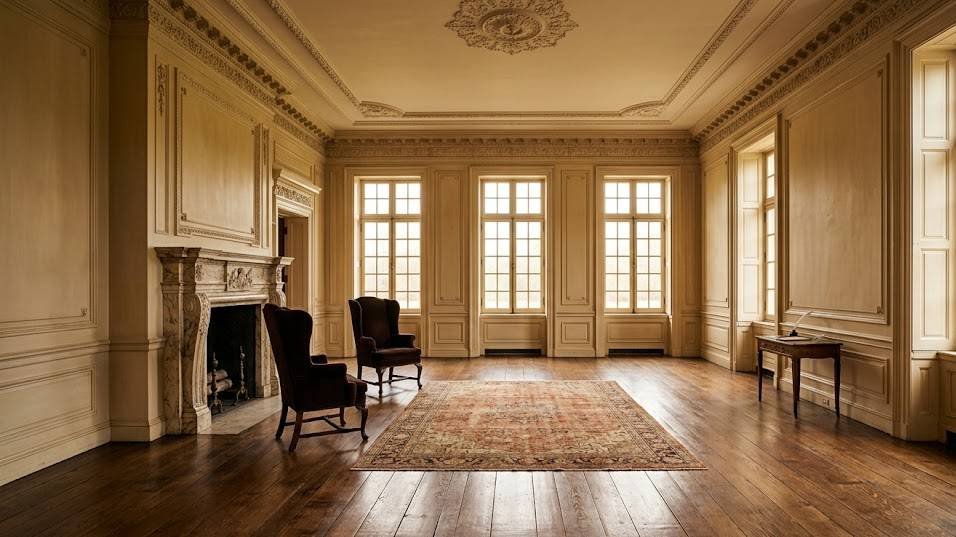
The restoration did not bring Oheka back to exactly what it was in 1919. That would be impossible, and the attempt would be dishonest. What it produced was a building that carries its history visibly, honestly, and with a kind of institutional dignity that most new construction never achieves.
What This Means for Buyers
I want to be careful here, because Oheka is exceptional — exceptional in its scale, in its history, in the resources that ultimately came to bear on its rescue — and it would be misleading to present it as a template. Most historic properties on the North Shore do not have 127 rooms and a claim to being the second-largest private residence in the country. Most historic restoration projects do not require the level of capitalization that Oheka demanded.
But the principles the Oheka story illustrates are not exceptional. They apply to historic properties at every scale, from a 1920s Craftsman bungalow in St. James to a derelict Colonial on one of the old estate roads in Lloyd Harbor.
Bones are the beginning and the end of the evaluation. A historic property’s structural integrity — foundation, load-bearing walls, roof structure — is the first question. Everything else is a matter of money and time and craftsmanship. But if the bones are sound, you have something real to work with. If the bones are compromised, you are often in a different conversation entirely.
The renovation cost is almost always higher than the estimate. This is not cynicism; it is the record of virtually every historic restoration that has been documented honestly. Old construction conceals surprises — materials that don’t meet current code, systems that interact in unexpected ways, discoveries behind walls that change the scope of work. The buyers who survive historic property restorations are the ones who budget a meaningful contingency from the beginning and treat it as a cost of the project rather than a worst-case scenario.
Regulatory involvement is not optional. Properties listed on the National Register of Historic Places, or in locally designated historic districts, are subject to review by State Historic Preservation Offices and, in some cases, local architectural review boards. This does not prohibit renovation or restoration — far from it. But it governs how it is done, and it means that any work affecting historically significant exterior or interior elements must be planned in coordination with preservation requirements. Buyers who come to these projects with patience and a respect for the process fare better than those who treat regulatory involvement as an obstacle.
The value case is real, but it is long-term. Historic properties on the North Shore that have been properly restored command prices that reflect their rarity, their craftsmanship, and their irreproducibility. You cannot build what Oheka is. You can only restore what it was. That irreproducibility is a genuine form of value, but it is not liquid value — it is the kind of value that compounds over time, that rewards buyers who hold and steward the property rather than those looking for a short-term return.
The Gold Coast Today
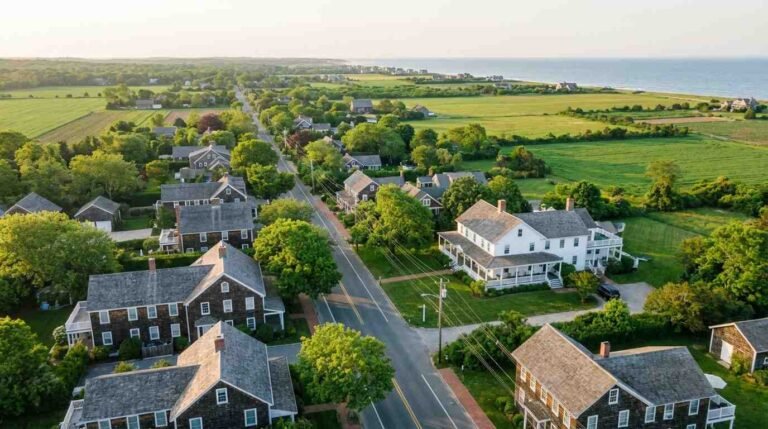
The Gold Coast in 2026 still holds properties that are, at various stages, somewhere between Oheka-circa-1980 and Oheka-circa-today. Some of them are landmarked and well-documented. Some of them are in private hands, on large parcels, quiet enough that they rarely come to market and receive little public attention when they do.
The buyers who find these properties and understand what they represent — who can see through the peeling paint and the overgrown boxwood to the quality of the original construction, who have the patience for the regulatory process and the capital for the contingency — those buyers are doing something that matters in a way that most real estate transactions do not.
They are extending the life of something that cannot be replaced. They are making a bet on permanence in a market that is, most of the time, indifferent to it.
That is not a bet that everyone should make. It requires a specific kind of disposition — and a specific kind of financial preparation — to make it well.
But for the buyers who are built for it, the Gold Coast still has ruins worth saving.
This is for informational purposes only and does not constitute legal, financial, or preservation regulatory advice. Historic property transactions involve complex legal, financial, and regulatory considerations — consult licensed professionals before proceeding. Property restoration costs and timelines vary significantly by project.
Real estate markets change. This post reflects conditions as of November 2025. For current listings and market data, contact Pawli at Maison Pawli.
Sources
- National Register of Historic Places — Oheka Castle listing (Nassau/Suffolk County historic properties): nps.gov/nr
- Huntington Historical Society — huntingtonhistoricalsociety.org (Confirm Oheka Castle historical records are accessible via this institution before publishing)
- New York State Office of Parks, Recreation and Historic Preservation — State Historic Preservation Office: parks.ny.gov/shpo
- Oheka Castle — official historical documentation: oheka.com
- The Gold Coast: Estates of Long Island’s North Shore — consult Cradle of Aviation or Long Island Museum archival collections for primary source documentation
Part of the Gold Coast Series: This post is one of fifteen pieces in the Maison Pawli Gold Coast cluster. For the full guide — surviving estates, architectural history, legal sediment, and what buyers need to know — visit The Gold Coast of Long Island: Gilded Age Estates, Architectural Heritage, and What Survives.


One Comment