The Setauket House Remodel: Replacing a Failing Leyland Cypress Line
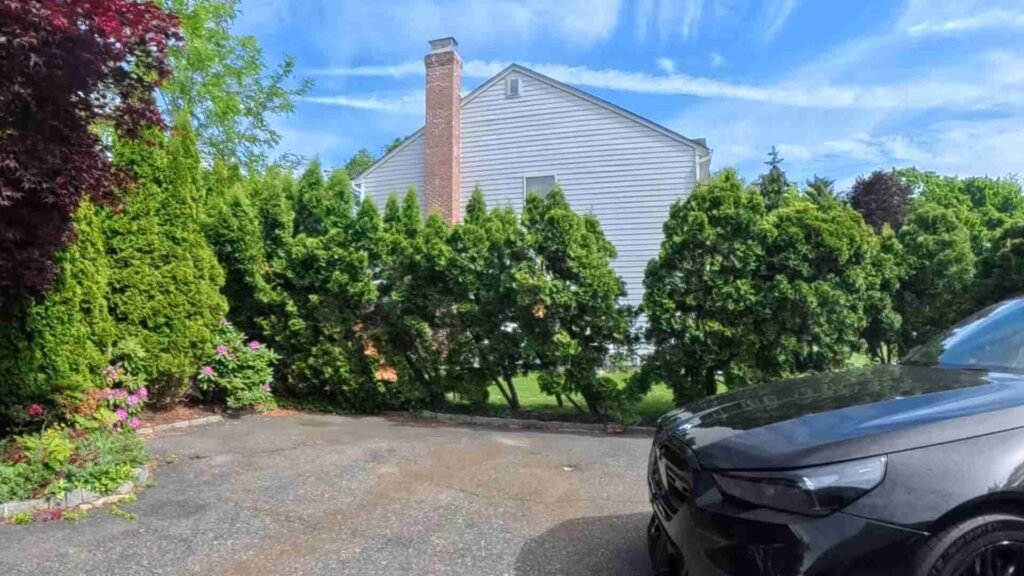
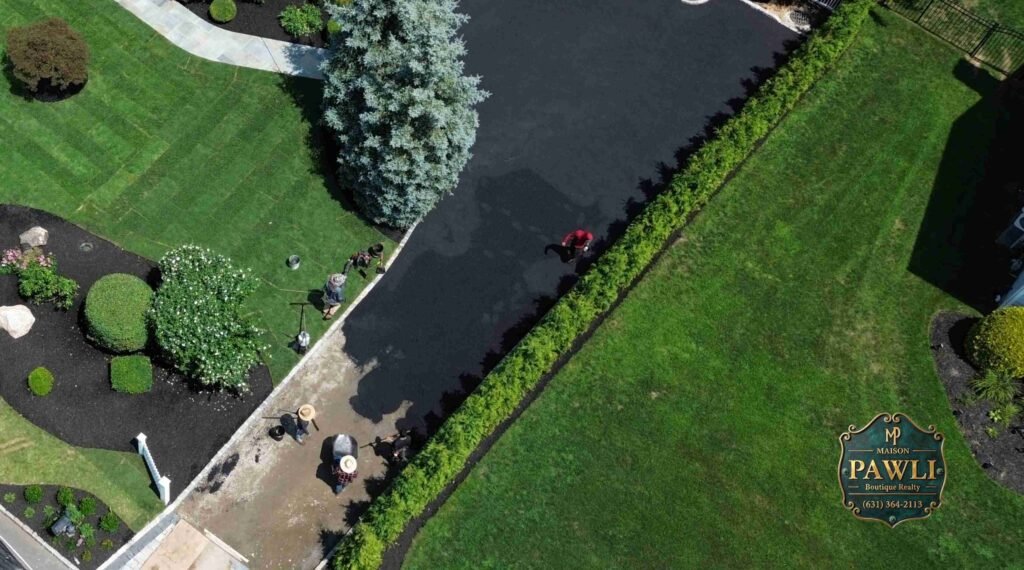
A property line is easy to ignore until something growing on it starts to fail. That’s what happened along the right-side boundary of this Setauket property, where a row of mature Leyland Cypress had spent years leaning further from vertical, cracking at the crown, and pushing new growth out at odd angles that had nothing to do with reaching for sun. Patches of orange-brown dieback had spread through several trees in the row, scattered rather than uniform — the kind of pattern that points toward disease rather than simple old age. The strip of ground in question does double duty — it separates the driveway from the neighboring yard, so whatever grows there is doing more than filling space. It’s the buffer between two households, and it had stopped doing its job well.
Why the Old Trees Came Out
Leyland Cypress earned its popularity honestly. It grows fast, fills a hedge row quickly, and for decades was the default choice for exactly this kind of privacy planting along a driveway or property line. The tradeoff is a vulnerability to canker diseases — Seiridium and Botryosphaeria are the two most common — that cause scattered branch dieback, structural weakening, and eventually the kind of lean and breakage this row was showing. Early symptoms typically show up as yellowing or fading foliage on isolated lateral branches that gradually turns reddish brown, with small cankers appearing as dark, cracked lesions on the bark, according to University of Maryland Extension — a pattern that tends to spread through a hedge over several seasons rather than announcing itself all at once. It isn’t a hypothetical risk for this region, either: a documented case in Peconic, in Suffolk County, tracked dieback across a well-established twelve-foot Leyland Cypress hedge, with reddish-brown foliage scattered through the canopy of several trees within the planting — the same pattern visible in this Setauket row before removal.
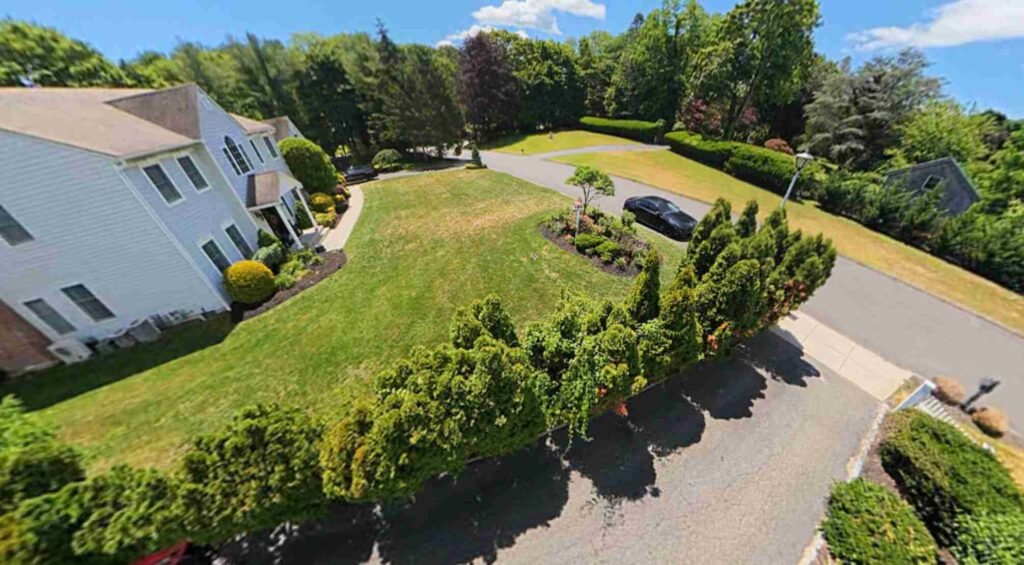
Once canker disease has worked through a hedge to this degree, pruning and cabling generally can’t reverse it. There is no consistently effective treatment for Seiridium or Botryosphaeria canker once a tree is infected, according to the Alabama Cooperative Extension System, which is part of why arborists and extension services tend to recommend removal and replacement over trying to nurse a badly affected hedge back to health. For a stand old enough to be structurally compromised and diseased, and situated on a boundary line where a failure could land on a driveway or a neighbor’s property, removal was the more defensible call. Homeowners facing a similar-looking hedge — scattered rust-colored dieback, branches leaning or snapping — should have a certified arborist confirm the diagnosis before deciding between treatment, partial removal, and a full replant; not every declining hedge is beyond saving, and a professional assessment is the only way to know which situation applies.
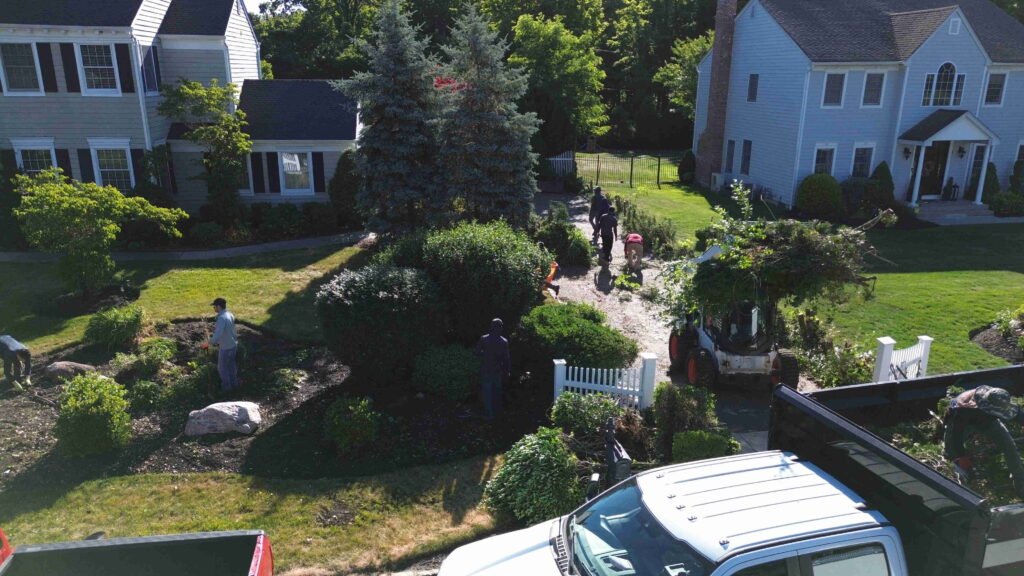
What Went In: Thuja ‘Green Giant’
The replacement is Thuja ‘Green Giant,‘ a hybrid arborvitae that has become one of the most widely planted privacy trees in the country — and it’s a deliberate upgrade from what came out, not just a like-for-like swap. Green Giant has largely replaced Leyland Cypress as the default choice for living fences over the past two decades, in part because it tolerates a wider range of soil conditions and resists the canker diseases that have plagued Leyland stands nationwide, per My Perfect Plants‘ grow guide. Under good conditions it puts on three to five feet of height a year, and a row of them fills in as a dense evergreen screen fast enough to block wind, sound, and sightlines within a few growing seasons rather than a few decades.
That adaptability matters on the North Shore, where soil composition can shift from sandy and fast-draining to heavier clay within the same neighborhood. Green Giant Arborvitae handles both conditions better than most comparable evergreens, tolerating wet spells without the root rot risk that sinks less forgiving species, according to Rolling Hills Property Management‘s guide to Long Island privacy trees. A nursery closer to home makes the same case for Long Island specifically: ‘Green Giant’ is a go-to plant for tall wind breaks, screening, and privacy, prized for its dense rich green color and its tolerance for a range of soil conditions, according to Heritage Farm & Garden’s guide to evergreen screening for Long Island landscapes — a useful read for anyone comparing arborvitae varieties against holly, spruce, or other regional options before committing to a full row.
Spacing and mature size are worth planning around before the first tree goes in the ground. Left unchecked, Green Giants can eventually reach well beyond what most property lines can comfortably hold, so tighter spacing at planting time trades a slightly slower initial fill for a hedge that stays manageable at maturity.
The Drip System: Getting Water to the Roots, Not the Driveway
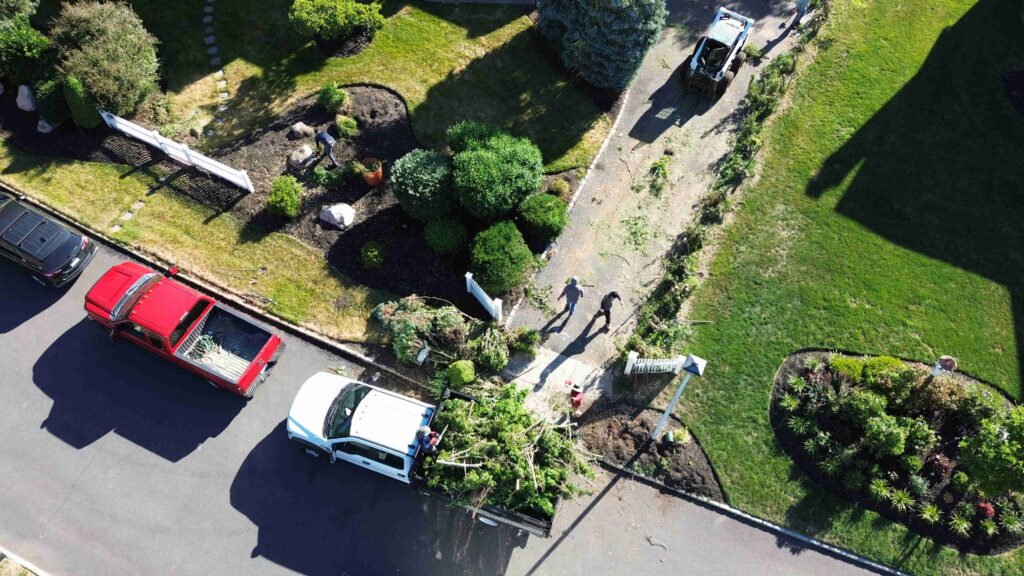
New trees along a property line have one job in year one: survive establishment. That’s a different watering problem than keeping an established hedge healthy, and it’s the reason this project included a new drip irrigation system rather than relying on the existing sprinkler heads to reach the line.
Overhead sprinklers lose a meaningful share of their output to evaporation and runoff before it ever reaches a root ball, and along a line this close to a paved driveway, some of that spray simply never lands where it’s needed. Drip irrigation delivers water slowly and directly to the root zone, which helps newly planted trees establish faster and encourages deeper root development, according to Orbit — the kind that makes a tree less likely to blow over in the next storm rather than more. Industry guidance from Rain Bird generally allows up to three years for a newly planted tree to fully establish its root system, and irrigation practices during that window shift as the tree matures — from frequent, shallow watering at the root ball early on to less frequent, deeper watering that pushes roots outward toward the eventual drip line.
For a property line row specifically, that gradual shift matters. The system installed here was sized for the establishment phase now, with room to expand the watering zone as the Green Giants mature and their root systems spread beyond the original planting holes.
What This Means for the Line Going Forward
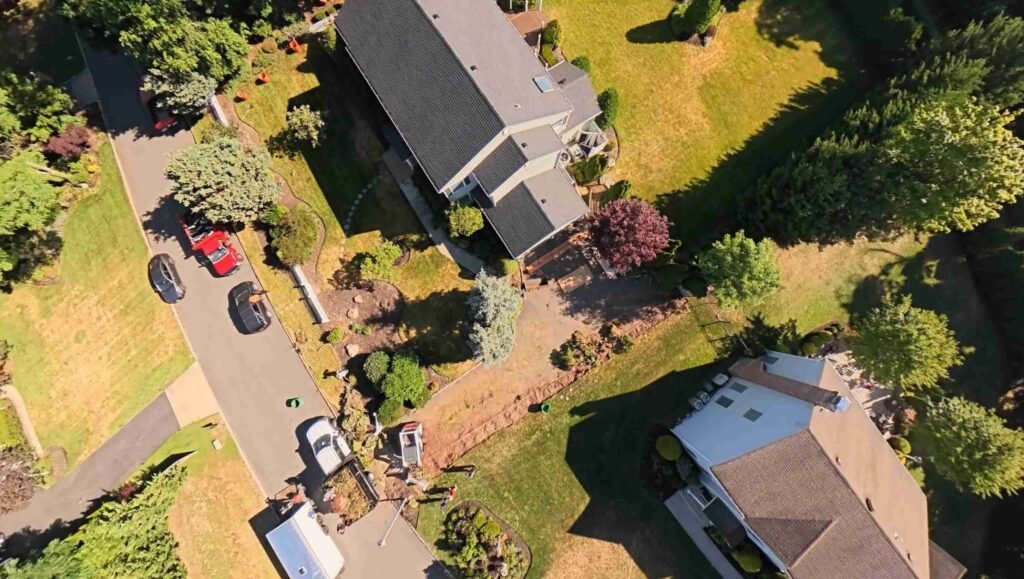
A privacy screen this young won’t do much screening yet. That’s the tradeoff with Green Giants: the payoff is real, but it isn’t immediate. Over the next several growing seasons, the row along this boundary should thicken from a scattered planting into the kind of dense green wall the species is known for — buffering the driveway from the neighbor’s yard the way the original trees once did, before age caught up with them.
Removing and replacing property line trees isn’t purely a landscaping decision, either. Where exactly a boundary sits, and what either neighbor is entitled to plant or remove near it, can vary by municipality and by the specific deed on file. Homeowners considering a similar project should confirm the property line itself — not just its approximate location — before removal begins, and loop in a licensed surveyor or attorney if there’s any ambiguity about where the boundary actually falls. This is for informational purposes only and isn’t a substitute for that kind of professional review.
Watch the Process
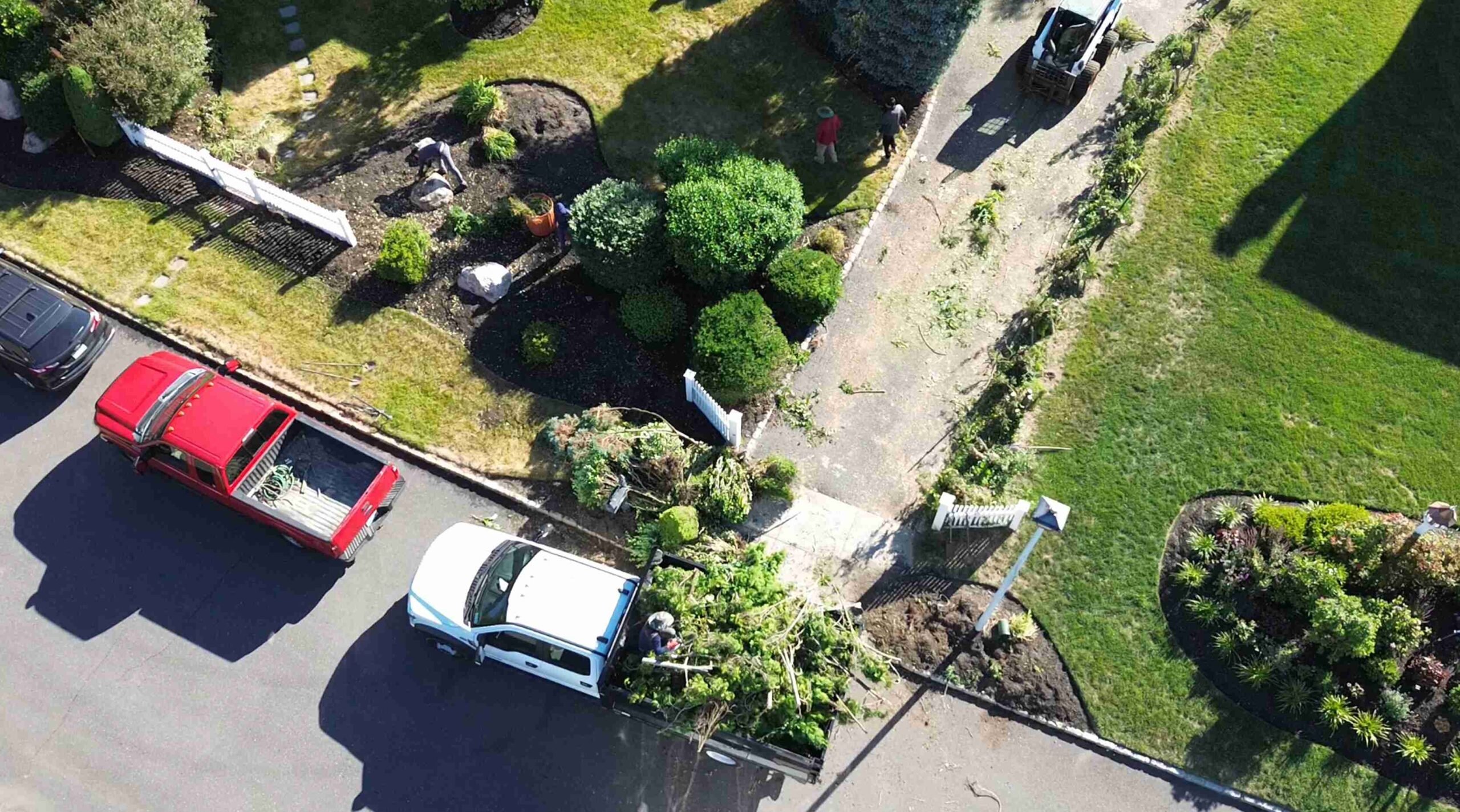
A Maison Pawli–vetted crew removes the old, leaning Leyland Cypress along the property line and replaces it with a straight new row of Green Giant arborvitae, start to finish.