The Fed Paused — Now What? A Realistic Translation for North Shore Buyers Who’ve Been Waiting

Everyone told you to wait for rates to drop. Rates dropped a little. Prices didn’t. Now inventory is tightening again on the North Shore, and “waiting” has a cost that nobody put in your spreadsheet.
I’ve been having a version of this conversation with buyers for the better part of 18 months. It goes something like this: they’ve been watching the Federal Reserve, watching Freddie Mac’s weekly rate survey, watching headlines that alternately promise relief and revise it away. They’ve done everything right — saved a larger down payment, improved their credit profile, stayed patient. And they’re still sitting on the sidelines, waiting for the signal that tells them the moment has arrived.
What I want to do here is give them a more honest framework than “wait for rates to come down” — because that framework has a cost, and the cost is now visible in the data.
—-
What the Fed Pause Actually Does (and Doesn’t Do) to Mortgage Rates
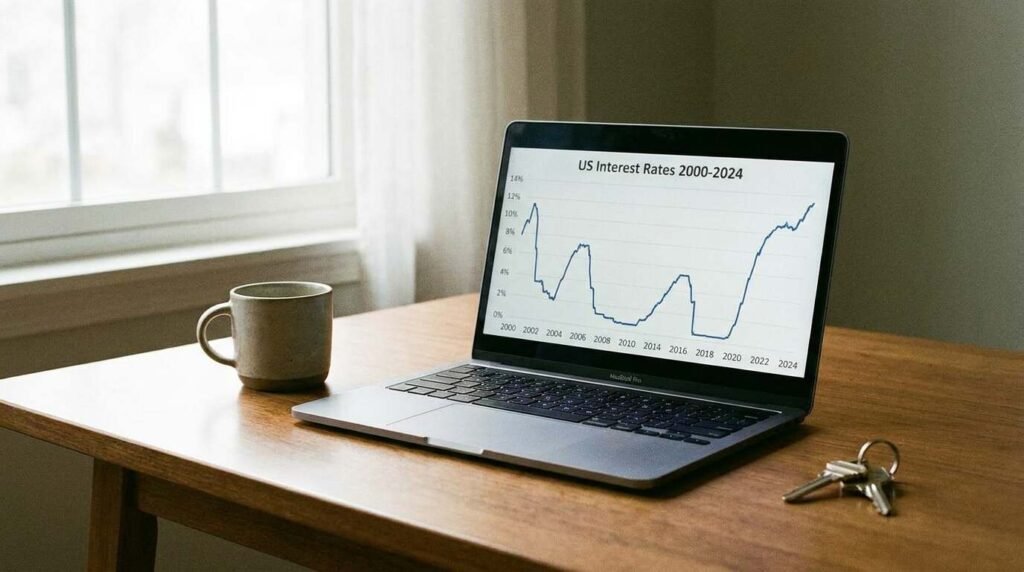
When the Federal Reserve pauses rate hikes, the mortgage market doesn’t hold a celebration. The relationship between the federal funds rate and the 30-year fixed mortgage rate is real but indirect — and in 2024, that disconnect has become more pronounced than many buyers expected.
The short version: the Fed controls the overnight lending rate between banks. The 30-year mortgage rate is primarily driven by the yield on 10-year U.S. Treasury bonds, which reflects a broader range of factors including inflation expectations, global demand for U.S. debt, and the bond market’s read on where the economy is heading. When those variables stay elevated — as they have throughout 2024, even after the Fed paused — mortgage rates stay elevated too, regardless of what the FOMC says in its statement.
The Mortgage Reports, one of the most reliable independent sources on mortgage rate mechanics, puts it plainly: while short-term lending rates closely follow the fed funds rate, mortgage rates more closely follow the 10-year Treasury yield. That distinction matters enormously for buyers who have been waiting for a Fed action to translate directly into relief at the closing table.
The practical implication: a Fed pause is not a mortgage rate cut. Buyers who interpreted the pause as a signal that rates would quickly follow are waiting for something the mechanism doesn’t deliver. Rate relief, when it comes, will lag the Fed’s actions by months — and the market will price it in before most buyers have the chance to act on it.
—-
North Shore Inventory Reality: Waiting for Rates Isn’t Free
Here’s the part of the calculation that most waiting-for-rates conversations leave out: inventory on the North Shore has not expanded to accommodate patient buyers. If anything, it has contracted.
The reason is familiar to anyone watching this market closely. Sellers who locked in 3% mortgages in 2020 and 2021 are not eager to trade those into a 7% environment. They are staying put. This lock-in effect has compressed active listing counts in North Shore ZIP codes — even as buyer demand has moderated, the supply side has moderated further, keeping the market tighter than raw demand figures would suggest. I covered this in more detail in the lock-in effect post from earlier this year — the numbers there are worth reading before any buyer decides their window has gotten larger.
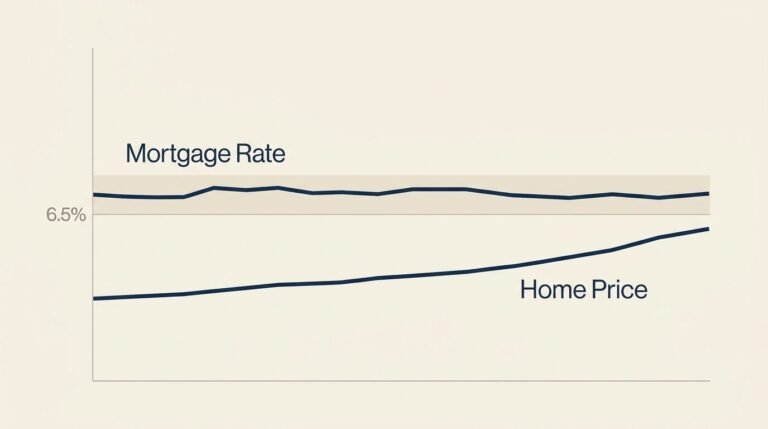
The result: a buyer who was waiting for rates to fall and inventory to rise has been wrong twice over. Rates have not fallen meaningfully. Inventory has not risen. And in the meantime, rents on the North Shore have remained elevated — which means the cost of continuing to rent while waiting is a real, calculable figure, not an abstraction.
—-
The Math on Buying Now vs. Waiting for a Rate Drop
Let me make this concrete, because the discussion gets too abstract too quickly.
Suppose a buyer is looking at a $600,000 home on the North Shore. At a 7% rate on a 20% down payment, their monthly principal and interest is approximately $3,196. If rates fell to 5.5% — a meaningful drop that would represent a significant shift from the current environment — that same loan at the same purchase price would carry a monthly P&I of approximately $2,724. The monthly savings: roughly $472.
But if that rate drop takes 18 months to materialize, and in the interim the home appreciates modestly at around 4% annually — consistent with current North Shore trends — that $600K home is now priced closer to $636K. The buyer who waited to capture the rate savings is now financing a higher purchase price. At 5.5% on $636K with 20% down, the monthly P&I is approximately $2,889. The buyer who waited ends up paying $165 more per month than the buyer who bought at 7% on the original price — and they absorbed 18 months of North Shore rent on top of it.*
This is not a universal argument for buying now regardless of circumstances. Some buyers genuinely need more time — for savings, for income stability, for life reasons that no spreadsheet resolves. But for buyers who have the down payment, the credit, and the income stability to qualify, the math of waiting has to account for both the cost of continued renting and the potential price appreciation offset. Most conversations about “waiting for rates” skip that side of the equation entirely.
—-
Which North Shore Towns Offer the Best Entry Points Right Now
If a buyer has done the analysis and concluded that now makes sense for their situation, the next question is where. The North Shore is not a monolith — entry points vary significantly by town, and the risk/reward profile varies with them.
For buyers working with budgets in the $450K–$600K range, the towns offering the best combination of value, livability, and future appreciation potential are, in my current read, the ones where character is established but price hasn’t fully caught up to it.
Sound Beach and Miller Place both offer genuine North Shore proximity and community identity at price points that feel increasingly rare this close to the Sound. I’ve written a full neighborhood profile on Sound Beach and Miller Place — both worth reading for what you actually get in each.
Smithtown and St. James sit slightly more central, with strong school districts and a mix of housing stock that gives buyers real choice across price tiers. St. James in particular has a preserved village character that tends to hold value through softer markets better than bedroom-community equivalents.
Port Jefferson Station — not the village, which prices itself differently — offers access to the same ferry, the same commute options, and proximity to Stony Brook University at meaningfully lower prices than village addresses.
For buyers with more flexibility above $700K, Mount Sinai, Setauket, and Stony Brook all have inventory worth watching closely. They don’t move as fast as the village cores, which gives patient buyers real room to negotiate without forfeiting the advantage of acting before rates soften and competition returns.
—-
How to Make a Decision Without Guessing What Rates Will Do
Nobody — not the Fed, not your mortgage broker, not the economists who have been predicting rate drops for 18 months — knows when 30-year rates will materially fall. Waiting for certainty in a market like this is its own form of decision: the decision to keep renting, at current rent levels, in a market where ownership costs and rental costs are closer together than they’ve been in years.
What I tell buyers who are genuinely undecided is this: make the decision on the merits of the house, not the guesswork about rates. If the home serves your life for the next seven to ten years — if the school district is right, the commute is manageable, the property is sound, the price is defensible on today’s comps — then buy it. You can refinance when rates move. You cannot rebuy the house you passed on.
The strategy worth considering is to lock in a purchase at today’s prices with a rate that is clearly refinanceable the moment conditions shift. Some lenders are offering programs that allow for one refinance without full closing costs within the first two to three years. That structure gives buyers a hedge against the timing risk they’re most worried about — without requiring them to predict what the Fed will do next quarter.
For more on the practical mortgage landscape for North Shore buyers, the mortgage options post for first-time buyers covers programs that most buyers never hear about — including several that are specifically relevant in the current rate environment.
—-
Real estate markets change. This post reflects conditions as of 2024. For current listings and market data, contact Pawli at Maison Pawli.
This post is for informational purposes only and does not constitute financial or mortgage advice. Consult a licensed mortgage professional for figures specific to your situation.
\* Monthly payment figures are illustrative, calculated using standard 30-year amortization on an 80% loan-to-value basis. Actual payments will vary based on lender, credit profile, insurance, and taxes.
—-