
The North Shore Fixer-Upper Guide: What to Buy, What to Skip, and What to Budget
There is a particular kind of buyer who walks into a dated kitchen, sees the original 1962 cabinetry, and feels something closer to possibility than dread. I’ve been working with that buyer for years. I know what lights them up, and I know — because I’ve watched it happen more times than I can count — what stops them cold six months into a project they didn’t fully understand when they made the offer.
This guide is for that buyer. It is also for the buyer who thinks they want a fixer-upper but isn’t sure, and for the buyer who has been burned once and wants to make a smarter second call. On Long Island’s North Shore, fixer-uppers are not a category to stumble into. The region’s housing stock is old, its soil is complex, its permit offices are chronically backlogged, and its appraisers have long memories. The opportunities are real. So are the traps. I want you to know the difference before you make an offer.
What “Fixer-Upper” Actually Means on the North Shore
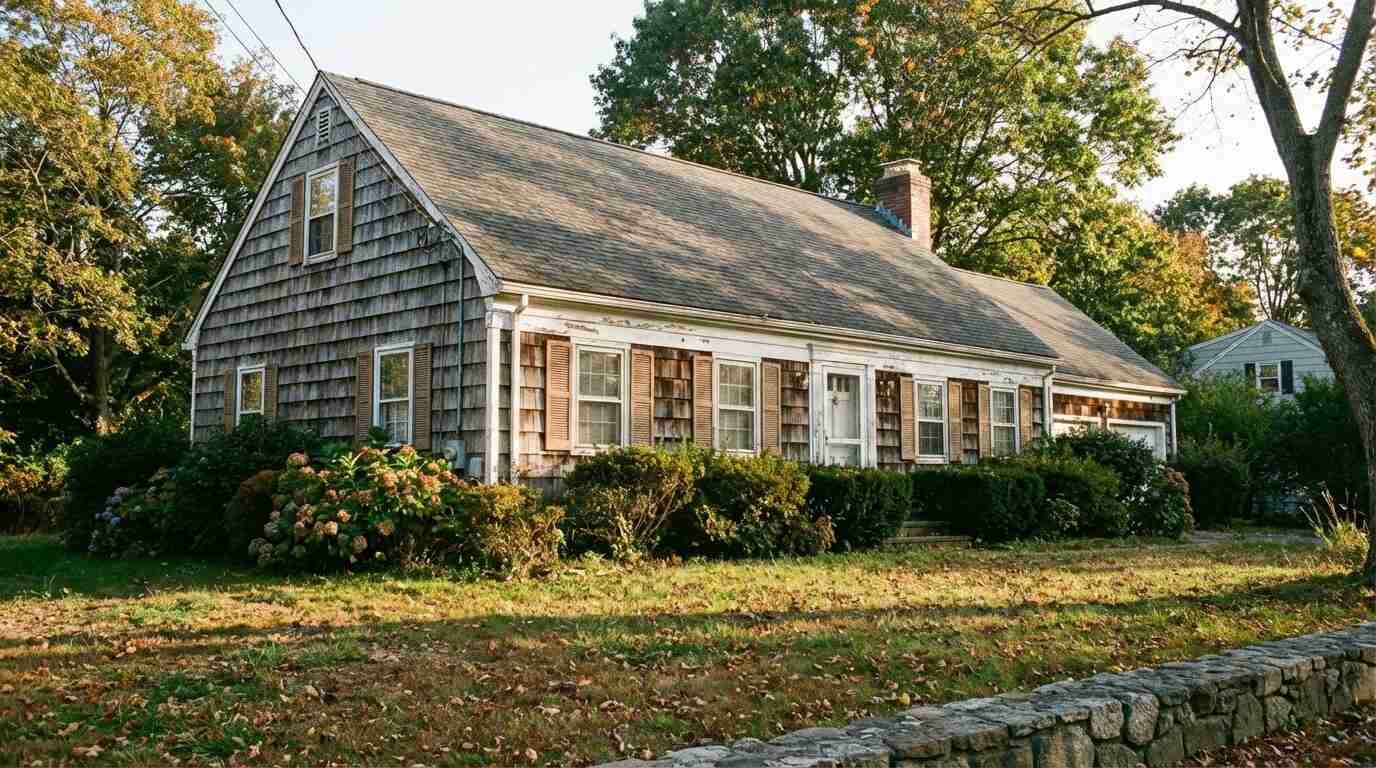
The term covers an enormous range. A fixer-upper can be a 1950s cape with original windows and a boiler that predates the Carter administration — cosmetically rough but structurally sound, with a renovation budget in the $80,000–$150,000 range depending on scope. It can also be a Gold Coast–adjacent Dutch Colonial with a collapsed rear addition, a cracked fieldstone foundation, and an oil tank buried somewhere in the yard that no one has located in thirty years. These are not the same animal, and they should not be priced the same way.
On the North Shore specifically, I think about fixer-uppers in three tiers:
Cosmetic candidates. Dated finishes, original fixtures, old carpet over hardwood floors, functional systems that are aging but not failed. These are the most forgiving purchases — the ones where a buyer with some tolerance for inconvenience and a decent contractor relationship can add real value without a single structural surprise. They are also the most competitive to bid on, because every experienced investor in Suffolk County knows what they are.
Systems-replacement projects. New roof, new HVAC, updated electrical panel, possibly new plumbing. The bones are good; the infrastructure has reached the end of its useful life. These require a larger upfront budget and a clear-eyed read of what the systems will cost to replace — numbers your inspector should be giving you in writing, not ballpark estimates over the phone.
Structural and environmental projects. Foundation work, remediation, major structural repairs, preservation easement complications, wetlands adjacency. These are the renovations that require specialists before you make an offer, not after. If you are a first-time buyer, a structural project on the North Shore is not where you should start.
The Soil Problem Nobody Mentions at the Showing
Long Island was shaped by glacial activity, and that history is not abstract for anyone trying to renovate here. The North Shore’s glacial till — a dense, irregular mix of clay, sand, gravel, and boulders deposited by the Laurentide Ice Sheet — behaves differently under foundations than the sandy soils of the South Shore. It drains poorly in some spots, expands and contracts seasonally, and creates settlement patterns in 1960s slabs that contractors from outside the region sometimes misread entirely.
Before you make an offer on anything with a slab foundation on the North Shore, read: Why Your 1960s Ranch Renovation Is Fighting the Soil. The short version: get a structural engineer’s assessment, not just a home inspector, before you commit.
The Depression-Era Structural Inheritance
A surprising percentage of North Shore fixer-uppers have bones that are better than they look. From the mid-1930s through the early 1940s, a federal program pushed standardized construction techniques across millions of American homes — including thousands on Long Island — that resulted in consistent framing quality, sound dimensional lumber, and structural integrity that has lasted nearly a century. What that program means for buyers evaluating Depression-era homes is worth understanding — the takeaway is that age alone is not a disqualifier. In many cases, it’s a structural advantage.
The flip side: older homes carry environmental liabilities that didn’t register as liabilities when they were built. Asbestos in floor tiles, pipe insulation, ceiling texture, and roofing material is common in any home built before 1980. On the North Shore, where the housing stock skews older than the national average, this is not an edge case — it is the baseline. The true cost of asbestos in Suffolk County fixer-uppers is a budget line that most buyers don’t see coming.
The Split-Level Problem
No floor plan generates more renovation paralysis on Long Island than the split-level. Built by the hundreds of thousands across Nassau and Suffolk Counties in the 1950s and 1960s, the split-level is structurally distinctive in ways that make standard renovation assumptions wrong. Opening walls, adding square footage, reconfiguring the entry sequence — all of these projects hit complications specific to split-level framing that a contractor unfamiliar with the type will not anticipate.
Inside the Long Island split-level covers the floor plan’s renovation logic in detail. The short version: splits can be renovated beautifully, but they require a contractor who has done it before, and the budget needs to account for the idiosyncrasies of the form.
The Kitchen Question
The single most common mistake I watch fixer-upper buyers make on the North Shore is gutting a kitchen they should have kept. Original 1960s cabinetry is often solid wood construction with dovetail joinery. Original 1950s tile is sometimes irreplaceable. Original mid-century layouts, while not always efficient by contemporary standards, occasionally have an architectural logic that a new kitchen will not recover.
This is not an aesthetic argument — it’s a financial one. Why Long Island fixer-upper buyers keep gutting kitchens they should have kept documents the pattern in detail, including the appraisal math that explains why a full kitchen gut in certain price ranges does not recoup its cost at resale.
The Appraisal Ceiling
There is a specific North Shore fixer-upper trap I call the sweat equity ceiling. A buyer purchases a distressed property, renovates it beyond the neighborhood’s price ceiling, and cannot sell it for what they put into it because the comps won’t support the number. Appraisers are not valuing your renovation — they are valuing your house against its neighbors. If the renovated home is worth $800,000 and the street has never cleared $650,000, the appraisal will not validate the gap.
The sweat equity ceiling is one of the most important concepts for any fixer-upper buyer to understand before they commit to a renovation scope.
Preservation Easements and the Gold Coast Adjacency Problem
The North Shore is dotted with properties that sit near historic districts, landmark designations, or preservation easements — and in a number of cases, the easement runs with the deed without the current owners having any meaningful awareness of it. For buyers looking at properties near the old Gold Coast estates, within incorporated villages with active architectural review, or adjacent to any county or state historic site, a title search that surfaces these encumbrances is not optional.
What preservation easements on Gold Coast–adjacent properties actually mean for your renovation budget covers the mechanics and the implications. These easements can constrain exterior modifications, window replacement, and even landscaping in ways that a standard home inspection will never flag.
Flood Zones and the South Shore Calculus
Flood zone fixer-uppers deserve their own section, because the math is categorically different. A distressed property in a FEMA-designated flood zone carries renovation costs that non-flood-zone buyers do not encounter: flood insurance at rates that have been rising steadily, elevation certificate requirements, NFIP substantial improvement rules that can trigger mandatory elevation of the entire structure if renovations exceed 50 percent of the home’s pre-storm value.
Why the cheapest houses on Long Island’s South Shore are suddenly the most expensive to renovate unpacks this in full. If you are looking at a fixer-upper in any AE or VE flood zone, this is required reading before you make an offer.
The Permit Problem
Permit processing times in Suffolk County have stretched significantly over the past several years. In some towns, simple renovation permits are running four to six months. Complex projects — additions, electrical panel upgrades requiring utility coordination, septic modifications — can run longer. This is not a reason to skip permits. Unpermitted work is a liability that attaches to the property and surfaces at resale, often at the worst possible moment.
What savvy renovators are doing differently in the face of Long Island’s permit delays covers the practical strategies. Read it before you sign a contractor agreement that assumes thirty-day permit turnaround.
What to Budget: A North Shore Framework
North Shore renovation budgets vary enormously by scope, but here is a working framework based on projects I’ve watched buyers complete over the past decade.
Cosmetic renovation ($60,000–$120,000). New flooring, kitchen refresh, bathroom updates, fresh paint throughout, exterior landscaping and curb appeal work. Assumes systems are functional and no structural surprises emerge.
Systems replacement ($100,000–$200,000). New roof, HVAC replacement, electrical panel upgrade, plumbing updates, windows. Cosmetic work layered on top pushes toward the upper end of the range.
Full renovation ($200,000–$400,000+). Gut renovation of kitchen and baths, systems replacement, structural repairs, potential addition or reconfiguration. At this level, careful attention to the appraisal ceiling is essential — know your neighborhood’s comparable sales before you commit to a scope.
Environmental remediation. Asbestos abatement, oil tank removal and soil remediation, mold remediation — these are add-ons, not line items within the above ranges. Budget them separately and get actual contractor bids before you close.
One additional note on financing: if you are considering purchasing a fixer-upper and financing the renovation at the same time, the FHA 203(k) rehabilitation loan is a program worth understanding. How the FHA 203(k) works for Long Island buyers explains the mechanics — it has real limitations, but for the right buyer in the right price range, it changes the math entirely.
What to Skip
There are fixer-upper situations on the North Shore that I would not encourage most buyers to enter, regardless of the price. Any property where the seller cannot document oil tank status. Any property in an active flood zone where renovation scope exceeds 50% of pre-improvement value. Any property with foundation issues you haven’t had independently assessed by a structural engineer. Any property where permit history is incomplete or where prior work was clearly done without permits.
In each of these cases, the price point is not the issue. The liability structure is.
A Final Word on Timing
The fixer-upper market on the North Shore has its own seasonal logic. The most distressed properties tend to sit through winter and hit peak competition in spring, when investor activity intensifies and multiple-offer situations become common even on properties with significant issues. Buyers who are patient and who have done their due diligence — contractor relationships established, financing pre-arranged, scope framework in place — are better positioned to move quickly and confidently when the right property appears.
That preparation is not a luxury. On this market, it’s the difference between a successful renovation and a transaction you didn’t fully understand when you signed. If you are considering a fixer-upper on the North Shore, I am happy to talk through the specific property and what the right pre-offer diligence looks like.
Real estate markets change. This guide reflects conditions as of April 2026. For current listings and market data, contact Pawli at Maison Pawli.
Sources
- FHA 203(k) Rehabilitation Loan — HUD.gov
- FEMA National Flood Insurance Program
- Suffolk County Division of Real Property — Permit Information
- New York State Brownfield Cleanup Program — DEC
- NYS Petroleum Bulk Storage — Oil Tank Regulations
- Suffolk County Department of Health Services — Asbestos Requirements
Go Deeper
These posts go further on specific topics covered in this guide.