North Shore Long Island: The Complete Living Guide
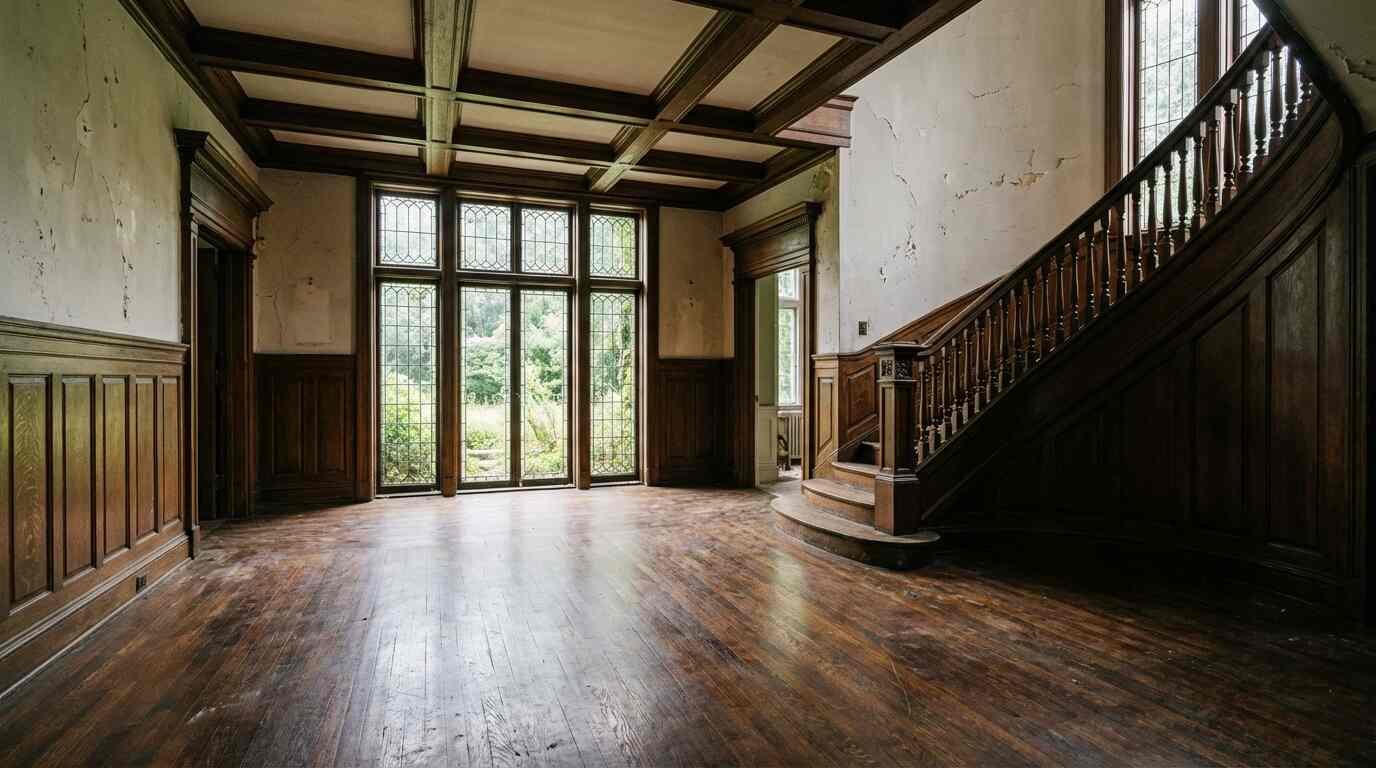
The first time I drove a client up 25A from the expressway, she went quiet somewhere around Cold Spring Harbor. Not politely quiet — genuinely stunned. The canopy closes over the road there, the Sound flashes through the trees, and the houses sitting back on their lots carry a century’s worth of intention in every setback and stone wall. She bought in Laurel Hollow four months later. That drive, she told me at closing, was when she understood what we’d been talking about.
I’ve told that story a few times since. It captures something about the North Shore that statistics don’t quite reach: the way this stretch of coastline operates on the visitor before the visitor has a chance to form an opinion. The Long Island Sound defines the northern edge. The glacial moraine defines the topography — the hills, the bluffs, the deep harbors that made this the most desirable shoreline between Boston and the Delaware Bay. What the Gilded Age built on top of that geography — the Gold Coast estates, the village greens, the carriage-house lanes — still shapes the character of every community here, even the ones that have remade themselves several times over.
This is the guide I wish I’d had when I started working this market. Not a list of superlatives, but a real account of how the North Shore is organized, what distinguishes one community from another, and what someone seriously considering a move here actually needs to know.
What Defines the North Shore of Long Island?
The North Shore runs east from the Nassau-Queens border roughly to Port Jefferson, though some definitions extend it further toward Smithtown and beyond. For practical purposes, the communities that define the North Shore’s character — its architecture, its market dynamics, its lifestyle — are clustered along a corridor from Manhasset and Port Washington in Nassau County through Cold Spring Harbor, Oyster Bay, Huntington, and Northport in Suffolk.
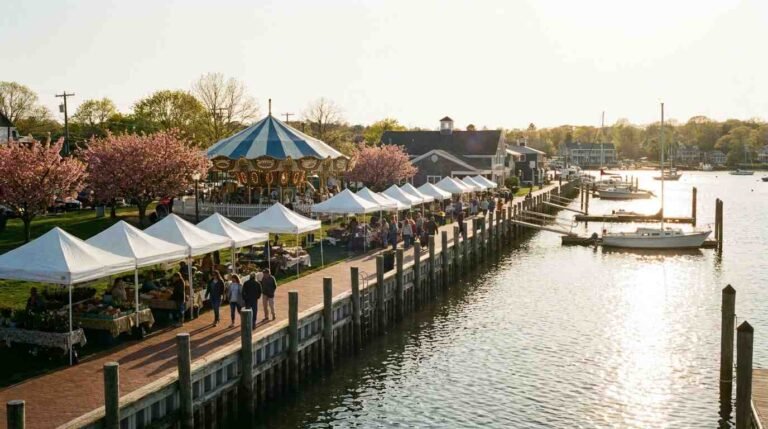
The unifying geography is the Long Island Sound. Every village on this coast sits at a different angle to the water — some directly on harbors, some on bluffs above the beach, some set back behind the tree line with water access via community beaches or private rights. The Sound is colder and calmer than the Atlantic-facing South Shore; it doesn’t have the oceanfront surf culture, but it has something harder to replicate: intimacy with the water, the kind that shows up in every cove, every marina, every kayak launch tucked behind a parking lot.
The other defining feature is density — or rather, its absence. Even in the villages closest to Manhattan, the North Shore resists the pressure toward density. Lots are larger here. Setbacks are deeper. The trees that have been here since before the Vanderbilts arrived are still, largely, here.
The Gold Coast Legacy: History and Prestige
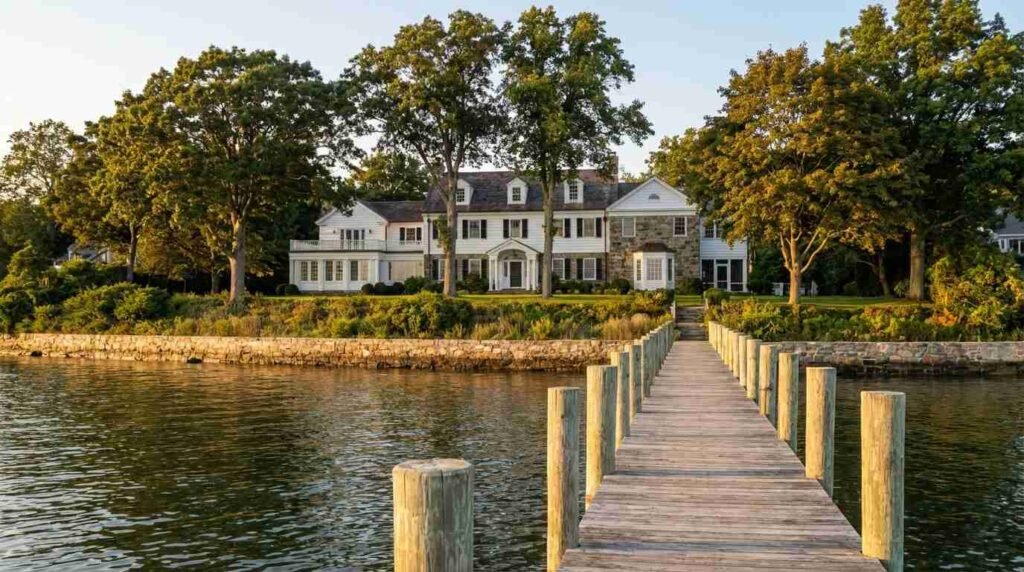
Between roughly 1890 and 1930, the wealthiest families in America built their summer estates on this coastline. Vanderbilts, Whitneys, Guggenheims, Pratts, Phippses — they came for the Long Island Sound, for the geography that echoed the Hudson Valley and the English countryside, and for the distance from Manhattan that was just short enough to make entertaining feasible. At its peak, the Gold Coast held more millionaires per square mile than almost anywhere in the Western Hemisphere. [VERIFY: this specific claim — rephrase as “among the most concentrated” if source can’t be confirmed]
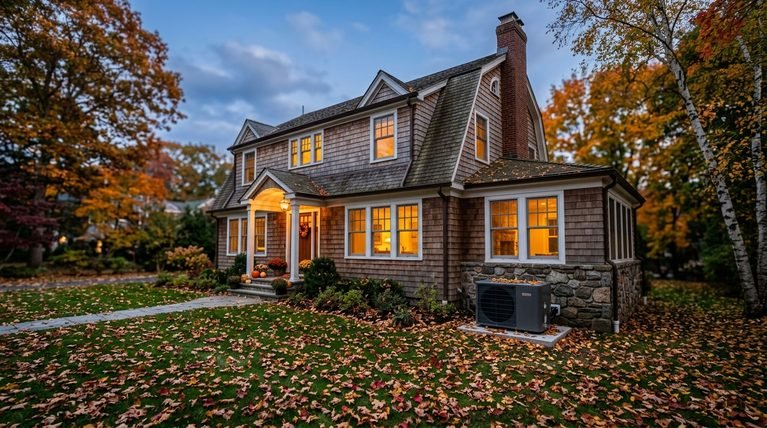
Most of those estates are gone. Some burned; some were demolished after the Depression made their carrying costs unsustainable; some were broken up and subdivided. But their presence still shapes the land. The long drives, the stone gate posts at the ends of private roads, the mature copper beeches and copper maples that no landscaper could replicate in a lifetime — these are the physical residue of that era. Even the parcels that were carved from estate grounds carry its spatial logic: larger than the surrounding suburban lots, placed with attention to sight lines and privacy.
For buyers, that legacy is not merely aesthetic. It is structural. The properties that sit on former estate parcels often carry deed restrictions, preserved easements, or historic designations that govern what can be built and how. I’ve written about preservation easements on Gold Coast–adjacent properties at length, and I’d encourage any buyer looking at older North Shore parcels to read that piece before going to contract.
North Shore Communities at a Glance
The North Shore is not one market. It is a series of distinct communities, each with its own personality, school district, price tier, and relationship to the Sound. Here is how I think about the major ones:
Nassau County communities — Manhasset, Port Washington, Roslyn, Great Neck — are the closest to Manhattan and the most densely developed. They operate almost as suburban extensions of the city, with LIRR commutes under 40 minutes and price points that reflect that accessibility.
The Oyster Bay corridor — Oyster Bay village, Cold Spring Harbor, Laurel Hollow, Lloyd Harbor, Mill Neck, Matinecock, Locust Valley — is where the Gold Coast is most intact. These communities have the largest lots, the most historic architecture, and the strongest preservation culture. They are also the most price-variable: a modest cape in Oyster Bay village and a waterfront estate in Lloyd Harbor are both “Oyster Bay area,” but they are not the same market.
The Huntington corridor — Huntington village, Huntington Bay, Lloyd Neck, Centerport, Northport — offers more variation: active village centers with dining and arts scenes alongside deeply residential neighborhoods with water access. The school districts here (Huntington, Elwood, Harborfields, Northport-East Northport) each affect value significantly and are worth understanding before narrowing a search.
Eastern Suffolk communities — Stony Brook, Setauket, Port Jefferson, St. James, Smithtown — tend to attract buyers seeking more square footage for the price, with proximity to Stony Brook University and the LIRR’s Port Jefferson branch. Port Jefferson village itself has undergone significant reinvention and is increasingly competitive for buyers who want walkability and a working waterfront. I’ve written about Port Jefferson’s real estate market in depth if you want the full picture on that one.
The Real Estate Landscape: What to Expect
The North Shore does not behave like a national real estate market. It has its own rhythms, its own supply constraints, and its own buyer psychology.
Inventory has been structurally tight for years — a condition I wrote about in detail when examining the lock-in effect keeping North Shore sellers in place. Homeowners who refinanced at sub-3% rates during 2020–2021 are not selling voluntarily, and the generational wealth embedded in many of these properties means heirs often prefer to hold rather than liquidate. The result is a market where well-priced, well-presented homes move quickly and over-priced listings sit long enough to stigmatize themselves.
Price ranges vary enormously by community and parcel type. At the entry level, you’ll find ranches, capes, and split-levels from the postwar era — many of them on the eastern end of the corridor — priced from the mid-$400s to the mid-$700s depending on school district and condition. Move up into the Oyster Bay corridor or toward the water anywhere along the Sound, and mid-range becomes $1M to $2.5M. Waterfront estates, historic parcels, and the surviving Gold Coast properties occupy a tier where pricing is driven as much by provenance and irreplaceability as by square footage.
What I consistently tell buyers: the market rewards preparation. Know your school district priorities before you start. Know what you’re willing to trade — land for commute, condition for character, privacy for proximity to town. The buyers who get confused on the North Shore are usually the ones who started without those anchors.
Top-Rated Schools on the North Shore
School districts are not a footnote here — they are a primary driver of value, sometimes accounting for significant price premiums between properties that are a half-mile apart but in different districts.
The consistently high-performing districts in Nassau County include Manhasset, Great Neck, Roslyn, and Syosset — all of which regularly rank among the top public school districts in New York State. In Suffolk County, Cold Spring Harbor, Northport–East Northport, Harborfields, Three Village (Setauket/Stony Brook), and Port Jefferson have strong reputations, with Cold Spring Harbor frequently cited at the top of regional and statewide rankings. [Current rankings from Niche.com and GreatSchools.org — verify before citing specific positions; rankings shift annually.]
What the rankings don’t capture is the variation within districts. A district’s aggregate score reflects the whole, but individual schools — elementary, middle, and high — can vary in programs, culture, and resources. Buyers with school-age children should visit, not just research, before committing to a community.
Dining, Culture, and the North Shore Lifestyle
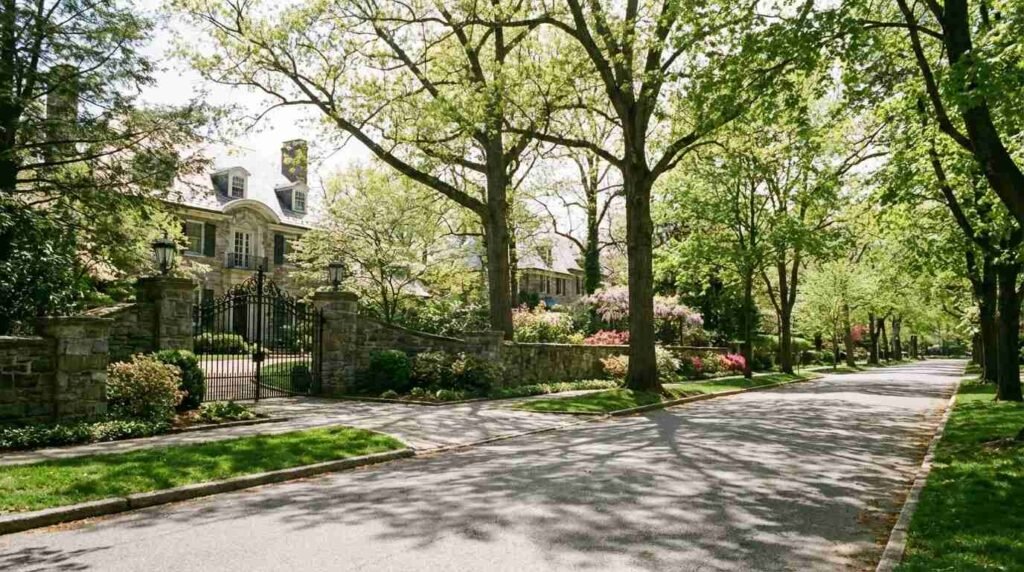
The North Shore is not the Hamptons. There is no seasonal parade of restaurants chasing the weekend crowd. What you get instead is something more sustainable: a genuine year-round food and culture scene built around the communities that actually live here.
Huntington village has the densest concentration of dining and nightlife, with a range that runs from long-standing Italian institutions to farm-to-table spots that have found their footing over the last decade. Cold Spring Harbor, Oyster Bay, and Port Jefferson each have their own village restaurant scenes — smaller, more intimate, calibrated to local habits rather than summer traffic.
Culturally, the North Shore punches above its weight. The Heckscher Museum of Art in Huntington has anchored an arts district since 1920 — I’ve written about its role in shaping a century of aesthetic culture on Long Island. The Vanderbilt Museum in Centerport, the Cold Spring Harbor Fish Hatchery, Sagamore Hill in Oyster Bay — these are not tourist attractions people drive past. They are part of the texture of life here, the reason a Sunday afternoon has somewhere to go.
The outdoor culture is equally serious. The Sound beaches — Hobart Beach, Sunken Meadow, Caumsett State Park, Crab Meadow — offer the kind of coastal access that would command premium pricing in almost any other market. The hiking, the kayaking, the fishing off the North Shore jetties — these are reasons people stay for decades.
Waterfront Living and Natural Beauty
The Long Island Sound is not the ocean. This is worth saying plainly, because buyers who come expecting the Atlantic experience — the wide open horizon, the surf, the barrier island drama — will be surprised. The Sound is enclosed, quieter, and in many ways more useful for day-to-day waterfront life: calmer water for boating, warmer shallows for swimming, a north-facing orientation that means extraordinary light in the afternoon and evenings.
Waterfront property on the North Shore ranges from direct Sound-facing lots on the bluffs to harbor frontage in villages like Port Jefferson, Northport, and Cold Spring Harbor to tidal creek access on the smaller coves. Each type carries its own maintenance profile, its own regulatory environment, and its own market dynamics. Bluff properties carry erosion risk that needs to be understood before purchase. Bulkhead maintenance on Sound-facing properties can be a significant line item that first-time waterfront buyers consistently underestimate.
The non-waterfront communities closest to the Sound — those with community beach rights rather than private frontage — often represent the best value proposition on the North Shore: proximity to the water’s culture and aesthetics without the carrying costs of direct frontage.
Getting Around: Commuting to Manhattan and Beyond
The Port Jefferson branch of the LIRR is the spine. It runs from Port Jefferson west to Jamaica and Penn Station, with stops at Stony Brook, Setauket, Port Washington, Syosset, Cold Spring Harbor, Huntington, Northport, and many points in between. From Huntington to Penn Station, a typical reverse-peak express runs approximately 55 to 65 minutes [verify current MTA schedules — times shift seasonally and with service changes]. From Cold Spring Harbor, roughly 50 to 60 minutes. From Port Jefferson, closer to 90 minutes on a local.
Oyster Bay has its own branch, less frequent than the Port Jefferson line, with service to Jamaica that connects to the Manhattan-bound trains. The Oyster Bay station makes the village manageable as a commuter community, though buyers for whom the train is non-negotiable should understand frequency before they fall in love with a house.
Driving is the alternative, and the North Shore has the infrastructure for it. The Long Island Expressway, Northern State Parkway, and Route 25A form the arterial grid. 25A itself — the old King’s Highway — runs the length of the North Shore through nearly every village on this list, and while it is not a fast road, it is a scenic one that rewards the commuter who is not in a hurry.
How to Think About Your Long Island Search
Buyers who approach Long Island as a binary — North Shore or South Shore — are usually thinking about it the wrong way. The real question is what kind of daily life you’re building. The South Shore offers ocean access, barrier island geography, and in communities like Bay Shore and Babylon, strong commuter infrastructure at lower price points than comparable North Shore towns. The North Shore offers the Sound, the Gold Coast history, larger lots, and a particular kind of residential character that has no direct equivalent anywhere else in the metropolitan area.
Neither is better. They are genuinely different expressions of Long Island. The buyers who struggle are the ones who haven’t decided which life they’re actually choosing.
Working with a Real Estate Advisor Who Knows the North Shore
The North Shore is a market where representation matters. The pricing variables — lot size, school district, proximity to the Sound, historic designation, deed restrictions, condition — interact in ways that require experience to read correctly. A broker who covers all of Suffolk County from a dashboard is not the same as one who has walked every block of Laurel Hollow and can tell you why the house at the end of the long drive last listed at a price that was 18% too high.
At Maison Pawli, I work exclusively on the North Shore because this is where I live, where I buy groceries, where I know which blocks get the afternoon light and which ones back to the noise from 25A. That specificity is the job. If you’re considering a move here — whether you’re buying or selling — I’d welcome the conversation.
Final Thoughts: Is the North Shore Your Next Chapter?
There are markets where you can find a house, and there are markets where you find a life. The North Shore is the second kind. The history is layered into the land. The Sound is not going anywhere. The villages that have survived a century of development pressure have survived because they are worth surviving — because enough people have decided, again and again, that this is where they want to be.
The question is not whether the North Shore is a good place to live. It is. The question is whether it is the right place for you — the right commute, the right school district, the right relationship to the water, the right balance of character and space and access. That question is worth taking seriously before the drive up 25A makes the decision for you.
Real estate markets change. This post reflects conditions as of April 2026. For current listings and market data, contact Pawli at Maison Pawli.
Sources
- Long Island Rail Road — Port Jefferson Branch schedules (verify current times)
- Niche.com — Best School Districts in New York
- GreatSchools.org — Long Island District Profiles
- Nassau County Department of Assessment
- Suffolk County Real Property Tax Service Agency
- The Lock-In Effect: Why North Shore Inventory Is So Tight Right Now
- North Shore Bluff Homes and the Erosion Question
- Holding Back the Sound: The Brutal Economics of North Shore Bulkheads
- Before You Touch the Bow Windows: Preservation Easements
- Port Jefferson’s Second Act
- The Heckscher Museum and a Century of Aesthetic Culture on Long Island