The Inspection Contingency Is Not a Formality: What Buyers Waive When They Sign Without Reading

Every competitive market produces the same bad advice: waive the inspection contingency to strengthen the offer. I hear it constantly, and I understand the logic — in a multiple-offer situation, anything that removes friction from a seller’s decision is worth considering. But the buyers who follow that advice without understanding what they’re waiving are not simplifying the transaction. They are absorbing risk that the contract was specifically designed to distribute.
This post is about what that risk actually looks like, in legal terms and in documented outcomes.
What the Inspection Contingency Actually Does
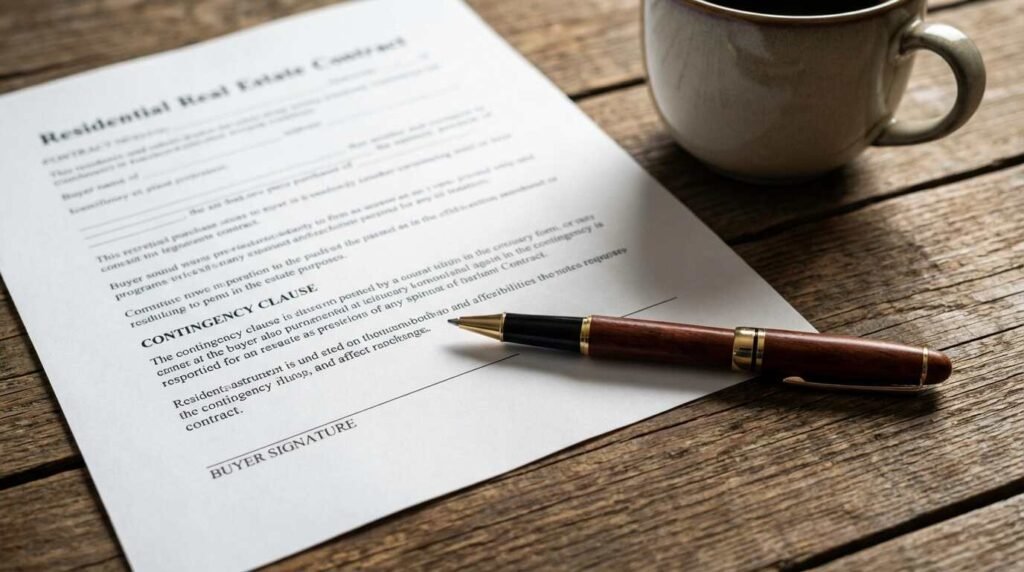
A standard purchase and sale agreement includes an inspection contingency that gives the buyer the right to commission a professional inspection of the property within a defined window — typically seven to fourteen days — and to withdraw from the contract, renegotiate, or request repairs based on the findings, without forfeiting earnest money.
That right is not incidental. It is the mechanism by which the contract balances asymmetric information. The seller has lived in the property. The buyer has seen it twice. The contingency exists because the law recognizes that a buyer cannot fully evaluate what they are purchasing during a showing.
When a buyer waives the inspection contingency, they are not simply agreeing to buy the property as it stands. They are contractually relinquishing the legal pathway through which they could have exited the deal based on physical condition — regardless of what the inspection would have found.
The Market Data Behind the Waiver Trend
According to NAR’s 2023 Profile of Home Buyers and Sellers, approximately 27% of buyers waived inspection contingencies in competitive markets during peak inventory-constrained periods. That figure is not evenly distributed — it concentrates in markets where days-on-market is low and multiple-offer situations are routine. Long Island’s North Shore has been that kind of market for several consecutive years.
The American Society of Home Inspectors (ASHI) has published findings consistently showing that professional inspections identify material defects in a significant percentage of residential transactions — including in homes that present well cosmetically. Roof condition, HVAC age, electrical panel issues, moisture intrusion in crawl spaces and basements: these are not visible during a showing, and they are not reflected in listing photographs.
The collision of those two data points — high waiver rates and high defect discovery rates — is where post-closing litigation originates.
What ‘As-Is’ Actually Binds You To
Many waiver situations involve a seller presenting the property as-is, a term buyers often interpret loosely. Under standard contract law, an as-is clause does not relieve the seller of the obligation to disclose known material defects — but it does substantially limit the buyer’s ability to renegotiate or exit after the fact.
More precisely: when a buyer waives the inspection contingency and accepts an as-is designation, they are agreeing that the physical condition of the property at the time of contract is the condition they are accepting at closing. Defects discovered after closing — even significant ones — do not generally constitute grounds for rescission or damages unless the buyer can affirmatively prove that the seller had actual knowledge of the defect and concealed it.
That is an expensive and difficult thing to prove in court.
What the Post-Closing Litigation Record Shows
State court records in Massachusetts, Texas, and Florida — three states with active residential real estate litigation dockets and publicly accessible case records — document a consistent pattern: buyers who waived inspection contingencies in competitive markets, discovered significant defects post-closing, and pursued sellers for damages, frequently lost because waiver language in the executed contract was found to be unambiguous.
In multiple documented cases, buyers argued that sellers had actual knowledge of defects — water intrusion, foundation settlement, failing HVAC systems — that were not disclosed. Courts examined the seller disclosure forms, found them facially compliant or at minimum ambiguous, and ruled that the buyer’s waiver of inspection was the operative document. Where the buyer had specifically waived the right to investigate physical condition, claims based on unknown-at-the-time defects failed.
The six-figure outcomes in these cases — repair costs, legal fees, and in some instances the cost of temporary relocation during remediation — were not recoverable from the seller. They were absorbed by the buyer.

The Middle Options Buyers Rarely Hear About
Waiver is not the only way to strengthen an offer against inspection contingency friction. Several approaches preserve buyer protection while signaling seriousness to the seller:
Pre-offer inspection. In some markets, sellers permit pre-offer inspections — a buyer commissions an inspection before submitting an offer and then waives the contingency with full knowledge of property condition. This removes the contingency while preserving informed decision-making. It requires seller cooperation and works best when the property has been on market for some days.
Contingency with a hard deadline and limited scope. A buyer can offer to limit the inspection contingency to structural and mechanical systems only, or to cap the dollar threshold below which they will not request repairs or credits. This narrows the contingency’s practical scope while preserving the right to exit for genuinely material findings.
Shortened inspection window. Reducing the contingency period from fourteen to five or seven days demonstrates seriousness without eliminating the right entirely.
None of these is universally available, and none is legal or financial advice. What they represent is a reminder that the negotiation around inspection contingency is more flexible than buyers are often led to believe — and that waiver is one point on a spectrum, not a binary choice.
What to Actually Read Before You Sign
The inspection contingency language in any contract is worth reading in full, not summarizing. Specifically:
What is the defined inspection period, and when does it begin — from contract execution, from acceptance, or from some other trigger? What is the notice requirement to exercise the contingency — written notice to the seller, to the listing agent, delivered how and by when? What remedies does the contingency provide — exit only, exit or renegotiation, credit only, repairs only? Is there a minimum repair threshold below which the contingency cannot be exercised?
Buyers who cannot answer those four questions about the contract they have signed are operating on assumptions rather than terms. In a dispute, courts read the contract.
The inspection contingency exists because buying a house without being able to evaluate it fully is structurally unfair to the buyer. Waiving it is sometimes the right call — when done with full information, pre-offer access, or specific strategic logic. It is never a formality.
This post is for informational purposes only and does not constitute legal or financial advice. Consult a licensed real estate attorney in your state for guidance specific to your transaction.
You Might Also Like: The Complete Guide to Buying a Home on Long Island’s North Shore — the full buyer’s guide covering every stage of the North Shore home purchase, from mortgage to closing.
Real estate markets change. For current listings and market data, contact Pawli at Maison Pawli.
You Might Also Like
- The Easement You Didn’t Know You Bought
- What Your Title Commitment Is Actually Telling You
- The Covenant in the Deed: How Restrictive Covenants Shaped Long Island Neighborhoods