Village of Belle Terre v. Boraas: A Case Brief of the Long Island Zoning Ruling on Who Counts as a Family
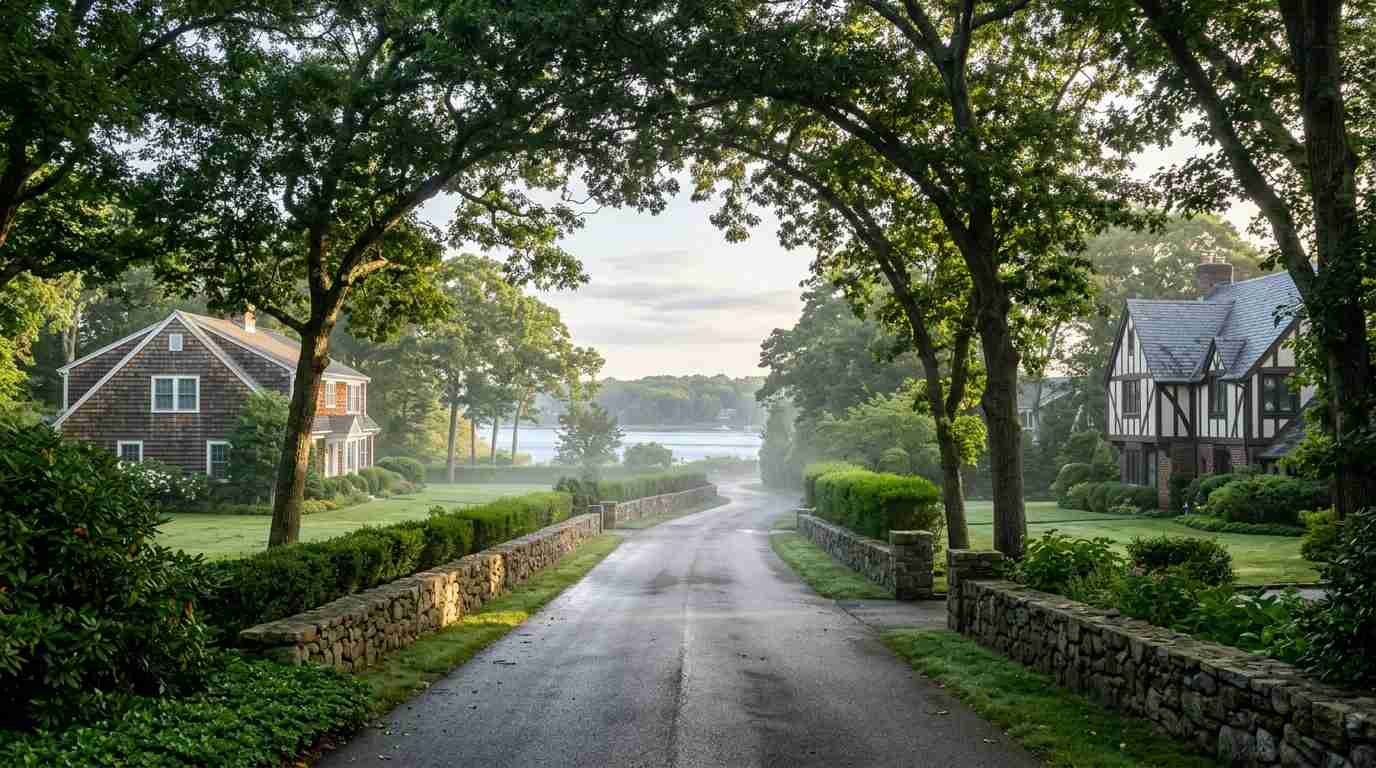
A lease signed in December 1971 for a house in a Long Island village of about 220 homes became, a little over two years later, a Supreme Court opinion that New York’s Department of State still discusses in its guidance on how a municipality may define the word family. The village was Belle Terre, on the Mount Misery peninsula beside Port Jefferson Harbor, and the case was Village of Belle Terre v. Boraas, 416 U.S. 1, decided on April 1, 1974.
What follows reads the case the way a case brief would: the setting, the ordinance, the facts, the question, the ruling, the two dissents, and the later decisions that narrowed it, with a closing section on New York law, which has gone its own way. Nothing here is legal advice, and the village’s current code is outside the scope of this post.
The case at a glance
| Item | Detail |
|---|---|
| Case | Village of Belle Terre v. Boraas, 416 U.S. 1 (1974) |
| Docket | No. 73-191 |
| Argued | February 19–20, 1974 |
| Decided | April 1, 1974 |
| Vote | 7–2 |
| Majority opinion | Justice William O. Douglas, joined by Chief Justice Burger and Justices Stewart, White, Blackmun, Powell and Rehnquist |
| Dissents | Justices Brennan and Marshall, in separate opinions |
| Lower courts | District Court upheld the ordinance; Second Circuit reversed |
| Claims | Equal protection, freedom of association, privacy and the right to travel |
Sources for the table: the opinion as reproduced by Justia, the official U.S. Reports text, and the Wikipedia case summary for the lower-court sequence.

The village
Few places make a tidier subject for a zoning dispute. The Supreme Court itself described Belle Terre as a Long Island village of “about 220 homes inhabited by 700 people,” with a land area of “less than one square mile.” Wikipedia’s entry on the village places it on the northeastern half of the Mount Misery peninsula, overlooking Port Jefferson Harbor and Long Island Sound, with all land access running through neighboring Port Jefferson, and reports a 2020 census population of 808.
The land had a longer history as an estate than as a village. Kenneth Brady, writing in TBR News Media in 2021, describes the roughly 1,200-acre Oakwood estate managed by Mary B. Strong, known as Lady Strong, and says Clinton L. Rossiter bought it in 1902 on behalf of investors who developed it into Belle Terre as a private residential community. The village’s own history pages credit the developer Dean Alvord, a golf course designed by Devereaux Emmet, and incorporation as a village on January 8, 1931, with Harry Purvis as its first mayor.
Untapped Cities, in a 2015 piece on planned communities, notes that Alvord built a grand canal 175 feet wide and 20 feet deep, modeled on Venice, between 1908 and 1910 at a cost of more than $250,000, and that 48 residences stood by 1917.
Protecting that character with law was not new to the village by 1974. Its history page on the late 1920s and early 1930s records a fight with a sand and gravel operation, ending with the line, “Victorious, Belle Terre was thereafter safe from the sand and gravel industry.” The account is the village’s own, and it says nothing about the later Supreme Court case.
The ordinance and the lease
Belle Terre’s ordinance limited land use to “one-family dwellings,” excluding lodging houses, boarding houses, fraternity houses and multiple-dwelling houses. Its definition of family came in two parts. The first covered one or more persons related by blood, adoption or marriage, living and cooking together as a single housekeeping unit. The second, quoted in the opinion, read: “A number of persons but not exceeding two (2) living and cooking together as a single housekeeping unit though not related by blood, adoption, or marriage shall be deemed to constitute a family.”
Relatives could therefore share a house in any number, two unrelated persons could do the same, and three could not.
In December 1971, the opinion records, the Dickmans, owners of a house in the village, leased it for 18 months to Michael Truman. Six unrelated students at the State University at Stony Brook ended up living there, and the village served a notice of violation. The owners and three of the tenants, Truman, Boraas and Parish, then sued under 42 U.S.C. § 1983. The other three students did not join. Per the Wikipedia summary, the tenants moved out while the litigation was under way.

The lower courts
A federal District Court upheld the ordinance. The Second Circuit reversed, concluding that it violated the students’ rights under the Equal Protection Clause of the Fourteenth Amendment. The village appealed.
The question
The challengers argued that the ordinance violated the students’ rights to equal protection, to freedom of association, to privacy and to travel. In short: could a village confine a residential zone to families as it defined them, and fix the number of unrelated persons who count as one?
The ruling
Writing for a 7–2 Court, Justice Douglas applied the deferential rational basis standard. “We deal with economic and social legislation,” the opinion says, and such lines survive an equal protection challenge if they bear “a rational relationship to a [permissible] state objective.” The Court found no fundamental right at stake that would call for closer scrutiny.
The opinion then turned to what a village may legitimately want. “The police power is not confined to elimination of filth, stench, and unhealthy places,” Douglas wrote, and it is ample to lay out zones where “family values, youth values, and the blessings of quiet seclusion and clean air” make an area a sanctuary for people. Elsewhere he called “a quiet place where yards are wide, people few, and motor vehicles restricted” a legitimate guideline in a land-use project addressed to family needs.
In practical terms, the holding is that a municipality may reserve residential areas for single-family dwellings and cap the number of unrelated persons sharing a home.
The two dissents
Justice Marshall dissented on the merits. In his view the ordinance burdened the freedom to choose one’s associates and a right to privacy protected by the Constitution, so strict scrutiny, not the Court’s rational basis test, should have applied. He also found the law poorly matched to its aims, describing it as underinclusive and “grossly overinclusive.” Zoning authorities, he wrote, cannot validly consider “who those persons are, what they believe, or how they choose to live.”
Justice Brennan dissented separately and opened with a narrower point: the constitutional challenge was “premised solely on alleged infringement of associational and other constitutional rights of tenants.” Wikipedia’s summary describes his objection as one of mootness, because the tenants had moved out. The opinion text excerpted for this post does not spell out the full reasoning, so that characterization rests on the summary.
Three years later: Moore v. East Cleveland
The Court drew a line around Belle Terre in 1977. In Moore v. City of East Cleveland, decided May 31, 1977, by a 5–4 plurality, the justices struck down an ordinance that defined family so narrowly that a grandmother could not live with two grandsons who were first cousins.
Belle Terre did not fall. The Court distinguished it instead: “The ordinance there affected only unrelated individuals.” East Cleveland, in contrast, had chosen to regulate “slicing deeply into the family itself.” In effect, the 1974 decision stood for ordinances that treat relatives alike and cap the number of unrelated occupants, while ordinances that choose among relatives were judged differently.
New York law since 1974
The Supreme Court decided whether the federal Constitution forbade Belle Terre’s ordinance. State courts have asked a different question under their own law. New York’s Department of State, in Legal Memorandum LU05, issued in March 2021 by its Division of Local Government Services, summarizes where New York’s high court landed.
According to that memo, in City of White Plains v. Ferraioli (1974), the Court of Appeals held that a foster home with ten children and two natural parents counted as a family, and that an ordinance could not exclude a household that, in the court’s phrase, is “in every but a biological sense” a single family. In McMinn v. Town of Oyster Bay (1985), it struck down definitions restricting unrelated persons by age, finding they “bear no reasonable relationship” to parking, density and noise objectives. In Baer v. Town of Brookhaven (1989), the memo says, the court held that a municipality cannot limit unrelated persons while allowing unlimited related persons.
Read against the Belle Terre text, that last summary points to a real difference. The ordinance upheld in Washington allowed unlimited relatives but only two unrelated persons, which is the pairing the memo’s summary of Baer says a New York municipality cannot use. Whether a particular ordinance is enforceable today is a question for a municipal attorney, not for a summary.
The memo also lists what New York municipalities still may do: use a discretionary review that lets a group prove it functions as an equivalent of a family, and set maximum occupancy limits based on floor space rather than family makeup. This post has not read the underlying decisions, only the state’s summary of them.
What the case means for Long Island owners and renters
The ruling is background, and not a rulebook, for anyone renting or sharing a house on the North Shore today. Rules about rental permits, accessory apartments and how many people may live in a dwelling vary by town and village, and the site’s guide to accessory apartments on Long Island sets out where several towns currently stand. For the wider range of North Shore communities, including incorporated villages with their own codes, see Best Villages to Live on the North Shore of Long Island, and for one private, guard-gated community, Inside The Hamlet Estates at St. James.
Belle Terre was decided on constitutional claims, not on the federal Fair Housing Act, and occupancy limits are a separate subject from fair housing protections. An owner, landlord or tenant with a specific question should ask a licensed attorney.
Questions about the case
What did Village of Belle Terre v. Boraas decide?
By a 7–2 vote on April 1, 1974, the Supreme Court held that a village ordinance reserving a residential zone for single-family dwellings, and allowing no more than two unrelated persons to live together as a family, did not violate the Constitution.
How did a Long Island village end up in the Supreme Court?
The owners of a house leased it to a group of Stony Brook students, the village served a notice of violation, and the owners and three tenants sued. The District Court upheld the ordinance and the Second Circuit reversed, which brought it to the Supreme Court.
Does the ruling still apply?
The decision has not been overruled, and the Court distinguished it in 1977 in Moore v. East Cleveland. New York courts, though, have restricted how municipalities may define family, according to the state’s Department of State, so a Belle Terre-style ordinance may not survive in New York. A municipal attorney can say what applies to a given code.
What is rational basis review?
It is the Court’s most deferential test. A law passes if it is reasonable, not arbitrary, and bears “a rational relationship to a [permissible] state objective.”
Is the village’s ordinance the same today?
This post has not checked the village’s current code. The ordinance described here is the one the Supreme Court reviewed in 1974.
This is for informational purposes only — consult a licensed attorney or financial advisor for your specific situation.
You Might Also Like
- Setauket, East Setauket, and South Setauket: What’s Actually Different Between Them
- Port Jefferson vs. Northport: Which North Shore Village Is Right for Your Next Chapter?
- North Shore Long Island Neighborhoods: The Insider’s Guide to Where to Live
- Suffolk County Septic Systems in 2026: Rules, Real Costs, and Up to $45,000 in Grants
Sources
- Justia: Village of Belle Terre v. Boraas, 416 U.S. 1 (1974)
- U.S. Government Publishing Office: U.S. Reports, Volume 416, page 1
- FindLaw: Village of Belle Terre v. Boraas
- Justia: Moore v. City of East Cleveland, 431 U.S. 494 (1977)
- New York Department of State, Division of Local Government Services: Legal Memorandum LU05, Definition of “Family” in Zoning Law and Building Codes
- Wikipedia: Village of Belle Terre v. Boraas
- Wikipedia: Belle Terre, New York
- Village of Belle Terre: history, 1913 to the 1940s
- Village of Belle Terre: Trouble on the Horizon and Belle Terre’s Victory
- TBR News Media: Hometown History, Lady Strong and the Oakwood Estate (Kenneth Brady, June 21, 2021)
- Untapped Cities: Gardens of Eden, 5 of Long Island’s 20th Century Planned Communities (November 19, 2015)