Relocating to Long Island from NYC: The Complete Guide for 2026
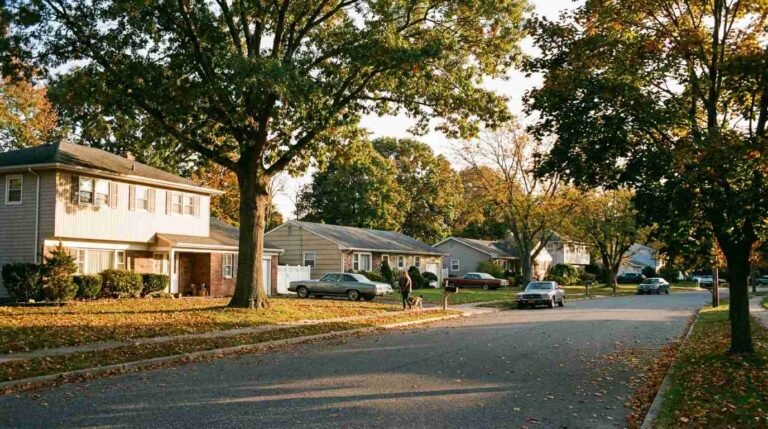
The third rent increase did it for a lot of people I know. For others it was the morning their daughter asked why the neighbors had a yard and they didn’t, or the realization that a two-bedroom in Astoria costs more than a four-bedroom in Miller Place with a finished basement and a driveway that actually holds two cars. Whatever the trigger, if you’re reading this, you’ve already done the math in your head — and the math is pointing east.
I’ve been brokering on Long Island for over a decade, and the past few years have brought a specific kind of buyer into my world: the New Yorker who’s done. Done with the lease treadmill, done with 700 square feet, done with parking that costs more than groceries. They’re not running away from the city. They’re running toward something — space, stability, a mortgage payment that makes sense, a school district they can trust. What they need isn’t a cheerleader. They need someone who will tell them what’s actually true.
This is that guide.
Why New Yorkers Are Choosing Long Island Right Now
The math has always been there, but a few forces have sharpened it in 2026. Remote and hybrid work arrangements have made the LIRR commute a two-or-three-day-a-week reality for a lot of professionals rather than a daily grind — which changes the calculus entirely. When you’re only commuting in Tuesday and Thursday, an hour on the train is a different proposition than five days of it.
At the same time, NYC rents for two-bedroom apartments in desirable neighborhoods have continued climbing past $4,000 a month in many areas. That’s $48,000 a year — closer to $50,000 after utilities — in rent that builds no equity, no permanence, no roots. A comparable mortgage payment on Long Island buys a three- or four-bedroom house with a yard, a garage, and a tax deduction.
The buyer I’ve seen most often lately isn’t the couple fleeing the city for the first time. It’s the couple who came to Long Island for a weekend visit, drove through a village like Port Jefferson or Huntington or St. James, had lunch somewhere that didn’t require a reservation made six weeks in advance, and thought: why are we still paying that rent?
What Your NYC Budget Actually Buys You on Long Island
Let me make this concrete. According to OneKey MLS data, the median sale price across Long Island in early 2026 runs roughly $650,000–$750,000 depending on the area and quarter. That sounds like a lot until you compare it to what it would take to buy anything comparable in the boroughs.
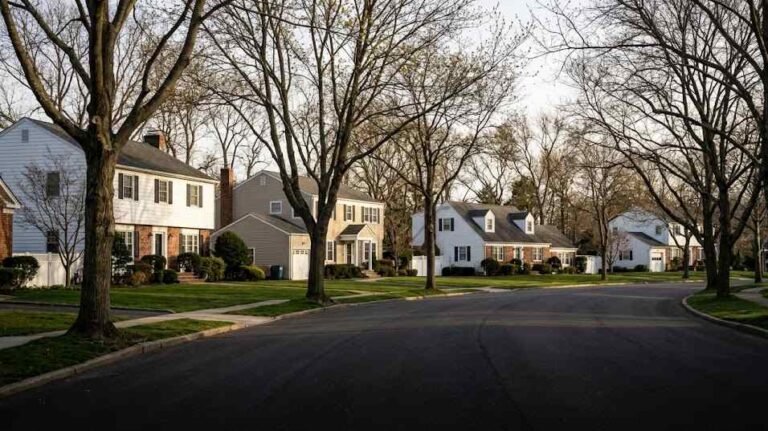
A $700,000 purchase on Long Island, with 20% down, puts your principal and interest payment around $3,400–$3,600 per month at current rates. For that, you’re typically looking at a three-bedroom colonial or expanded ranch with a yard, garage, and finished or finishable basement. The same monthly spend in Brooklyn or Queens might get you a one-bedroom condo with HOA fees and no parking.
On the more affordable end — towns in western Suffolk County, parts of Nassau outside the premium zip codes — you can still find solid three-bedroom homes in the $500,000s. On the higher end, North Shore waterfront and Gold Coast–adjacent properties run well past $1 million, but even there the space-to-dollar ratio is dramatically better than anything comparable in Manhattan or prime Brooklyn.
The equity argument is also real. Homeownership builds a balance sheet. Renting, however comfortable, does not.
Nassau vs. Suffolk County: Which Side Is Right for You?
This is the question I get asked most often by buyers coming from the city, and I’ll give you the honest version rather than the Chamber of Commerce version.
Nassau County is closer to the city — commute times from Nassau’s western edge (Great Neck, Manhasset, Garden City) to Penn Station run 30–45 minutes on the LIRR. The towns are denser, more walkable in many cases, and feel more urban to someone accustomed to Brooklyn or Queens. The trade-off: home prices in desirable Nassau towns are among the highest on the Island, and property taxes are notoriously steep. You’re paying for proximity.
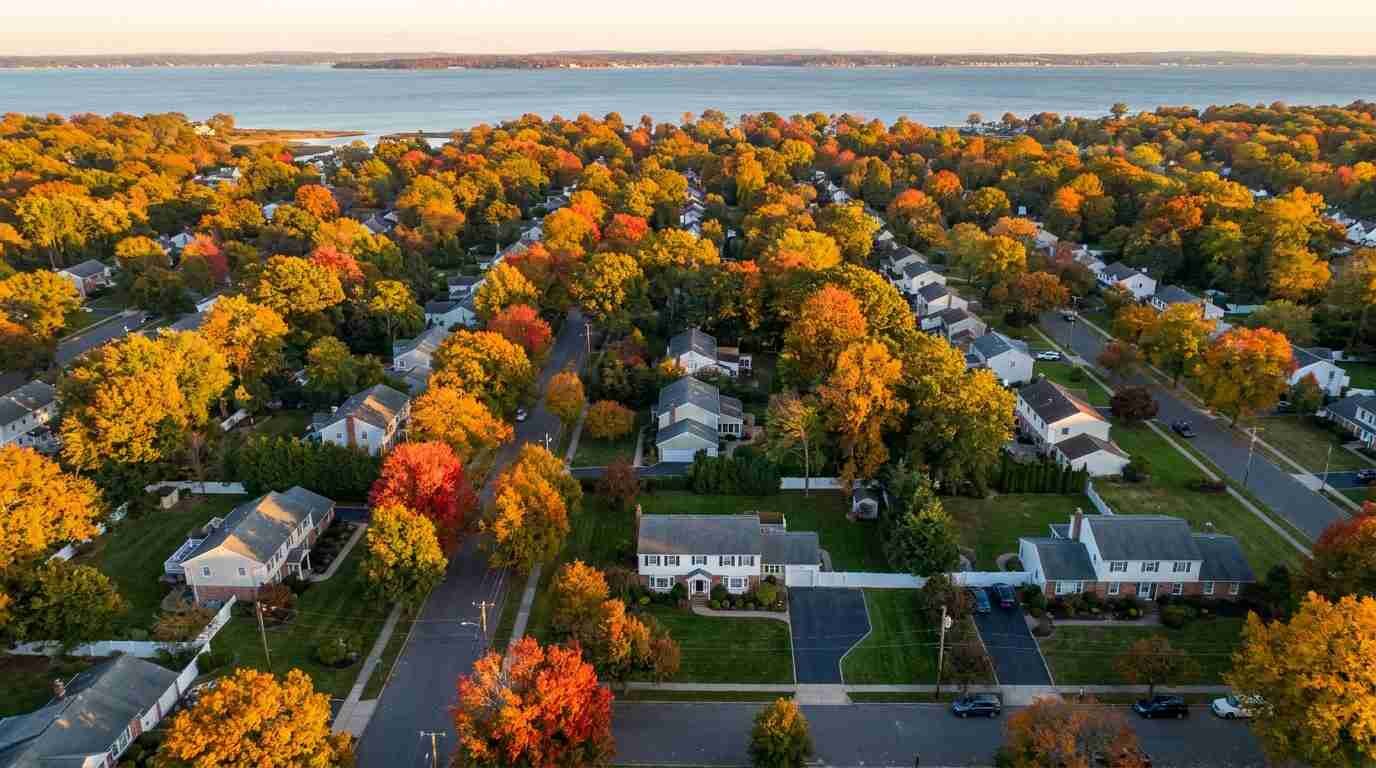
Suffolk County — particularly the North Shore, which is my home market — offers more space for the money, lower price points in many areas (though premium pockets exist along the water), and a lifestyle that’s genuinely different from anything in the boroughs. The commute is longer: Port Jefferson to Penn Station is an hour and forty-five minutes express, and not all Suffolk towns have express service. If you’re commuting daily, that matters. If you’re commuting twice a week, it’s a train ride with a coffee and a book.
For a fuller breakdown of which side of the Island suits your lifestyle, I wrote a dedicated comparison that’s worth reading alongside this guide: North Shore vs. South Shore: What Relocating Buyers Actually Need to Know.
The Real Commute Math: LIRR, Driving, and Hybrid Work
The LIRR is the spine of Long Island commuting. Here’s what the MTA timetable actually shows for some key corridors (off-peak express, where available):
- Garden City → Penn Station: ~35 minutes
- Huntington → Penn Station: ~65–75 minutes (express) / ~80–90 minutes (local)
- Port Jefferson → Penn Station: ~100–110 minutes (express limited)
- Ronkonkoma → Penn Station: ~75–90 minutes
Monthly LIRR passes vary by zone. From mid-Suffolk, expect to pay $300–$400/month for a monthly ticket. That’s real money, but it replaces a parking space, a MetroCard, and the time spent driving.
The hybrid variable changes everything. Buyers I’ve worked with who commute two or three days a week routinely choose towns an hour or more out — Stony Brook, Setauket, Smithtown — because the commute is a contained event rather than a daily tax. They’re buying a lifestyle seven days a week and commuting two of them. That math is very different from the traditional five-day calculus.
Driving is also relevant for buyers who work in Nassau or on Long Island itself. In that case, highway access (LIE, Northern State, 347, 25A) matters more than LIRR proximity.

Best Long Island Towns for NYC Transplants by Lifestyle
No list of towns is universal — the right fit depends on your budget, your commute pattern, whether you have kids, and what you’re looking for in daily life. That said, some towns consistently perform well for buyers coming from the city:
For the urban-to-suburban transition: Huntington Village offers walkable streets, strong restaurant and arts culture, and a Main Street that functions as a genuine town center. Port Jefferson has the same energy at a smaller scale, with a harbor that does something to you every time you see it. Both have LIRR stations and that critical mass of things to do on foot.
For families prioritizing schools: The Three Village area (Setauket, East Setauket, Stony Brook) has one of the strongest public school districts in Suffolk County. Smithtown Central is another perennially well-regarded district. Both areas offer good value relative to their school quality.
For space and quiet with reasonable access: Miller Place, Mount Sinai, Sound Beach — these North Shore hamlets deliver the land, the privacy, and the local character that city buyers often dream about without the premium of the marquee addresses. The commute is longer, but the lifestyle payoff is real.
For North Shore character with a premium price: Cold Spring Harbor, Lloyd Harbor, Nissequogue — these are the Gold Coast–adjacent addresses where the landscape is extraordinary and the price reflects it.
Long Island School Districts: What the Rankings Actually Mean
School district is the single variable that most reliably drives price per square foot on Long Island. Buyers coming from the city sometimes overweight rankings and underweight fit — a district ranked 12th in the state is not meaningfully worse for most families than one ranked 4th, but the price difference can be $100,000 or more.
What I tell buyers: look at the state report card data (available through NYSED), attend a school board meeting or two after you’ve moved, and talk to parents who actually have kids in the system. Rankings on Niche and GreatSchools are useful starting points but reflect a lot of inputs that may not be relevant to your family.
Strong Suffolk County districts that consistently appear in rankings: Three Village Central, Smithtown Central, Cold Spring Harbor, Northport-East Northport, Half Hollow Hills. Each of these anchors a price premium in the surrounding residential market.
Property Taxes on Long Island: The Full Picture (No Sugarcoating)
Long Island property taxes are high. There’s no softening that, and I’m not going to try. Nassau County in particular has some of the highest effective property tax rates in the country. Suffolk County is somewhat lower but still well above national averages.
What buyers should know:
The STAR exemption reduces school taxes for owner-occupied primary residences. The Basic STAR is available to homeowners under a certain income threshold; Enhanced STAR is available to seniors. If you’re buying as a primary residence, apply the day you close.
Tax grievances are real and they work. If your assessed value doesn’t reflect market reality, you can file a grievance — and many Long Island homeowners do, successfully. Your attorney or a tax grievance service can walk you through the process. Deadlines vary by municipality.
Budget for it. On a $650,000 home in Suffolk County, you might see annual property taxes of $10,000–$14,000 depending on the school district. In Nassau, expect higher. That’s $850–$1,200/month added to your housing cost. Run the full number before you fall in love with a house.
This is for informational purposes only — consult a licensed attorney or financial advisor for your specific situation.
Renting vs. Buying When You First Make the Move
Some buyers arrive on Long Island knowing exactly where they want to land. Most don’t. If you’re in the second camp, renting for six to twelve months before buying is not a failure — it’s a smart move. It gives you time to understand which neighborhoods feel right in different seasons, which commute corridors actually work for your schedule, and which towns have the daily texture you want.
The risk of renting is getting comfortable and delaying the purchase too long in a market where inventory remains tight and prices have historically trended upward. Set a decision deadline before you sign your lease — twelve months is reasonable. Use that year to get pre-approved, attend open houses even when you’re not ready to bid, and build your knowledge of the market.
For more on what to look for once you start attending open houses: What Buyers Should Actually Be Looking For at an Open House on Long Island.
What Most People Get Wrong About Relocating from NYC
The biggest mistake I see is buyers who treat Long Island as a lesser version of the city — a place you settle for. That framing will make you miserable even after you’ve moved somewhere objectively better for your life. Long Island is not New York City with a yard. It’s its own place, with its own rhythms, its own pleasures, and its own community culture that rewards people who lean into it.
The second mistake is rushing the neighborhood decision. Budget pressure, lease timing, or competition on a specific house can push buyers into areas that don’t fit their actual lifestyle. The house can almost always be found. Discovering three years later that you hate the commute or can’t stand the isolation — that’s harder to fix.
The third mistake is underestimating the lifestyle gains. I’ve watched buyers from Brooklyn or the Upper West Side move to a North Shore hamlet and spend the first six months telling me they miss the city, then spend the next six years telling their friends they should have moved sooner. The transition is real. Give it time.
How to Buy a Home on Long Island While Still Living in the City
It’s logistically harder than buying locally, but it’s done constantly. Here’s what makes it work:
Get fully pre-approved before you start looking. Not pre-qualified — pre-approved. A full underwriting review with your financial documents submitted and reviewed. In a competitive market, sellers on Long Island want to see that.
Work with an agent who communicates the way you do. If you need someone who can do a video walkthrough at 7pm because you can’t leave the city, that’s a reasonable ask. If you need detailed condition notes after every showing, ask for them. The logistics of buying remotely are manageable with the right partner.
Be ready to move fast. Good inventory on Long Island, particularly in the $600,000–$900,000 range in desirable school districts, moves in days, not weeks. If you’re commuting out for weekend showings only, you may miss things. Build in flexibility.
Plan at least two in-person visits before submitting an offer. The first visit tells you whether you like the house. The second tells you whether you actually know the block, the neighborhood, the feel of it at a different time of day. The Buyer Who Walked Through an Open House Twice and Paid $40,000 Less is worth reading before your first offer.
Your First 90 Days After the Move: What to Expect
The adjustment is real. City habits take time to unlearn — the assumption that everything is walkable, that restaurants are open late, that you can hail something instead of drive somewhere. Long Island’s car-dependent geography is a genuine shift, and there’s no point pretending otherwise.
What the first 90 days usually look like: a honeymoon period, followed by a moment of “what have we done,” followed by the gradual discovery that the life you actually live here — the Saturday farmers market, the neighbor who brings over tomatoes in August, the fact that your kids can go outside alone — is the one you were trying to build all along.
File for STAR within the first few months. Introduce yourself to the neighbors. Find the local diner. Understand your trash and recycling schedule. These are small things, but the small things are how you become local instead of a transplant.
Real estate markets change. For current listings and market data, contact Pawli at Maison Pawli.
Sources
- MTA Long Island Rail Road schedule and fare data: mta.info/lirr
- New York State Education Department school report cards: data.nysed.gov
- Nassau County property tax information: nassaucountyny.gov
- Suffolk County property tax information: suffolkcountyny.gov
- NYS STAR exemption program: tax.ny.gov
- OneKey MLS market data, 2026
- Niche school district rankings: niche.com