
No Car, No Curb Appeal — How Fire Island Sellers Stage Without a Driveway
The first time I walked a Fire Island listing, I had to reset every staging instinct I’d ever developed.
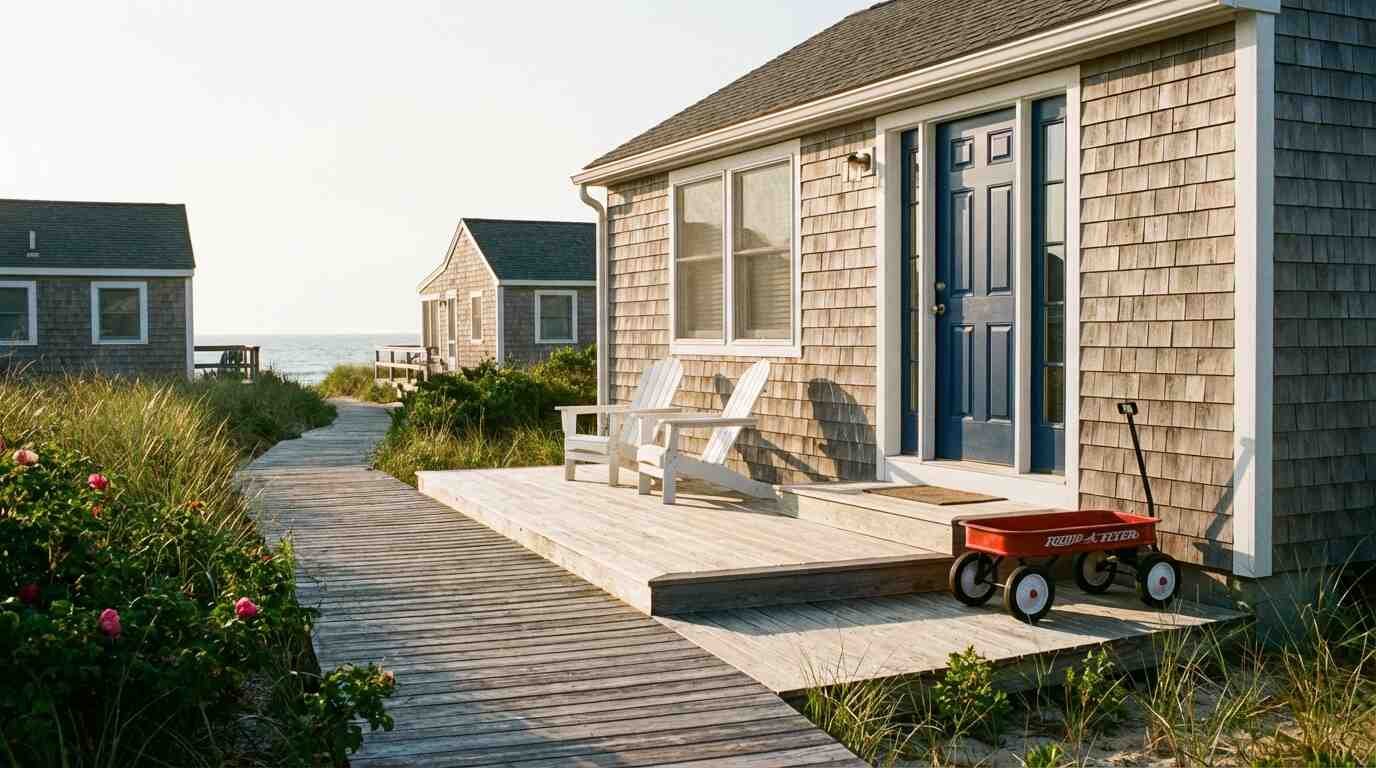
No driveway to sweep. No garage door to paint. No lawn to mow, no flower beds to mulch, no mailbox to update. The approach to the front door was a boardwalk — and whatever condition that boardwalk was in, whatever was sitting on the front deck, whatever a buyer saw in the first eight seconds of walking up to the house, that was the entire first impression.
Fire Island is car-free. The incorporated villages of Ocean Beach and Saltaire prohibit private vehicle traffic during the summer season; most of the island’s 17 communities operate the same way year-round for all practical purposes. Residents pull red wagons from the ferry dock. Bikes are everywhere. The boardwalk is the street.
This changes everything about how you stage a home for sale.
The Boardwalk Is Your Driveway
On the mainland, curb appeal is a literal term. The first thing a buyer sees driving up is the approach: the driveway condition, the garage, the landscaping from the street. These elements are well-established staging targets.
On Fire Island, your equivalent is the boardwalk-facing front. The moment a buyer rounds the corner onto your walk and sees your property, the impression is already forming. That walk is usually no wider than six feet, and your home is a few steps off of it. There is nowhere to hide, and no landscaping to distract from what’s actually there.
What to address before listing:
The deck boards and railings. This is your front yard. Weathered wood is fine — buyers expect it. Splintered, gray-green, actively rotting boards signal neglect and raise questions about what else hasn’t been maintained. Power wash everything. Replace any boards that are soft underfoot. Sand and re-seal the railings if they’re rough to the touch. Budget: $400–$1,800.
The entry. A fresh coat of paint on the front door — a navy, a black, a crisp white if the shingles are darker — does exactly what a new front door would do on the mainland. Add a simple outdoor mat, a small potted succulent or ornamental grass (salt-tolerant, low-maintenance), and clean hardware. This takes four hours and costs under $200.
The outdoor furniture. Remove everything that’s cracked, faded, or broken. Two Adirondack chairs in good condition, a small side table, something to put a drink on — that’s the scene. Buyers are not looking for a full patio set. They’re looking for the life.

The Wagon Is a Prop
Here is something I never thought I’d include in staging advice: the red wagon.
On Fire Island, the wagon is how you carry groceries from the ferry. It is how children drag buckets and boogie boards to the beach. It is, genuinely, a cultural artifact of this place — and the sellers who use it as a staging element understand something important about how buyers experience these properties.
A clean red Radio Flyer wagon, parked casually near the front steps or tucked alongside the deck, reads to a buyer not as clutter but as place. It says: this is how you live here. It’s the beach-house equivalent of a beautifully arranged mudroom bench with hooks and baskets — it communicates the life before the buyer has even walked inside.
Use it. Park it somewhere photogenic. Make sure it’s clean.
Community Vernacular Matters
Each Fire Island community has its own architectural personality, and staging that ignores this is staging that doesn’t close.
Ocean Beach is the island’s busiest and most diverse community — a mix of classic beach cottages, some older Colonials, mid-century ranch-style homes. The palette is white clapboard with dark trim, or cedar shingles going silver in the salt air. Staging here should lean into the vernacular: simple, clean, slightly nautical without being a lighthouse-themed caricature.
Saltaire is the most architecturally cohesive community on the island, built almost entirely on wetlands with most sidewalks as boardwalks. The homes here are notably tidier and more restrained in their presentation. Buyers in Saltaire are often repeat Fire Island people — they know what they’re looking for. Staging should be spare, quality-focused, no clutter anywhere.
Kismet, at the western tip near the lighthouse, has a slightly more funky, creative energy. Sellers here can afford a bolder color choice on the door or a more eclectic outdoor arrangement without alienating buyers — because Kismet buyers tend to be that kind of person.
Know your community. Stage to its buyer.
The Outdoor Shower: Non-Negotiable
If you have read anything on this blog about coastal staging, you have heard me say this before: the outdoor shower is the most loaded amenity in a beach house listing. And nowhere is this truer than on Fire Island.
Buyers imagine themselves using that shower after a day on the beach before walking through the door. It is not a utility fixture. It is the point of the whole thing. Clean cedar, good pressure, a hook for towels, a simple drain that doesn’t pool. If yours is functional but dingy, spend the $800 to make it beautiful. If it’s broken, fix it before photography. If you don’t have one and the house can support one, add it.
This is the upgrade with the highest emotional return on investment in a coastal property.
Photograph What You’re Actually Selling
The mistake I see over and over in Fire Island listings is photography that tries to approximate mainland listing photography. Wide-angle interior shots. The kitchen. The master bedroom.
These matter, but they’re not the lead. The lead is the deck at 8:30 a.m. with the bay behind it. The lead is the outdoor shower with morning light coming through the slats. The lead is the boardwalk approach to the front door with a wagon in the frame and the ocean visible at the end of the walk.
This is a lifestyle listing. A buyer sitting at a desk in Midtown Manhattan should open your listing and feel something before they read a single word of the description. If your photography opens with the galley kitchen, you have made a fundamental error about what you’re selling.
Practical photography notes: Shoot in April or early May for the best combination of available light and manageable temperatures. Bay-facing properties should be photographed in late afternoon when the water is warm with reflected light. Ocean-facing properties are better in morning, looking toward the water. Always include an exterior approach shot from the boardwalk — this is the equivalent of the curb-appeal photo on a mainland listing, and buyers expect it.
Inside: The Pare-Down
The interior staging of a beach house is not addition — it’s subtraction. Every unnecessary object is a message about the kind of life this house hosts, and if that message is “cluttered, complicated, full of someone else’s stuff,” buyers will feel that even if they can’t name it.
The rule: remove everything that doesn’t belong in a magazine editorial about someone’s perfect summer. Keep the rough linen, the bleached wood, the simple glassware. Remove the family photos, the mail pile, the extra beach chairs stacked in the living room, the plastic organizers on the kitchen counter.
What should remain: a sense that someone lives here beautifully and lightly.
Real estate markets change. For current listings and market data, contact Pawli at Maison Pawli.
The Bottom Line
The standard staging playbook was written for houses with driveways and lawns. Fire Island is not that market.
The sellers who do well here understand that they’re staging a whole experience — a way of arriving, a way of being outside, a way of moving through the summer. The boardwalk is the driveway. The wagon is the prop. The outdoor shower is the hero shot. Get those three things right, and you’re already ahead of most listings on the island.
If you’re preparing to list, I’d also suggest reading how the spring pricing window works on Fire Island
You Might Also Like
- Salt, Spray, and Staging: Beating Coastal Wear and Tear Before You List
- Your Beach House Is Sitting on Gold — Here’s How to Price It Before Memorial Day
- North Shore Bluff Homes and the Erosion Question: What Buyers Need to Know
Sources
- Fire Island Wikipedia — car-free community documentation: https://en.wikipedia.org/wiki/Fire_Island
- Ocean Beach Fire Island — community guide: https://explorersaway.com/ocean-beach-fire-island/
- Fire Island National Seashore communities — National Park Service: https://www.nps.gov/fiis/planyourvisit/fire-island-communities.htm
- Luxury Fire Island Homes — hidden gems neighborhoods: https://luxuryfireislandhomes.com/hidden-gems-the-best-fire-island-neighborhoods-you-should-know/