The Appraisal Gap Addendum Is a Negotiating Instrument, Not a Buyer Concession
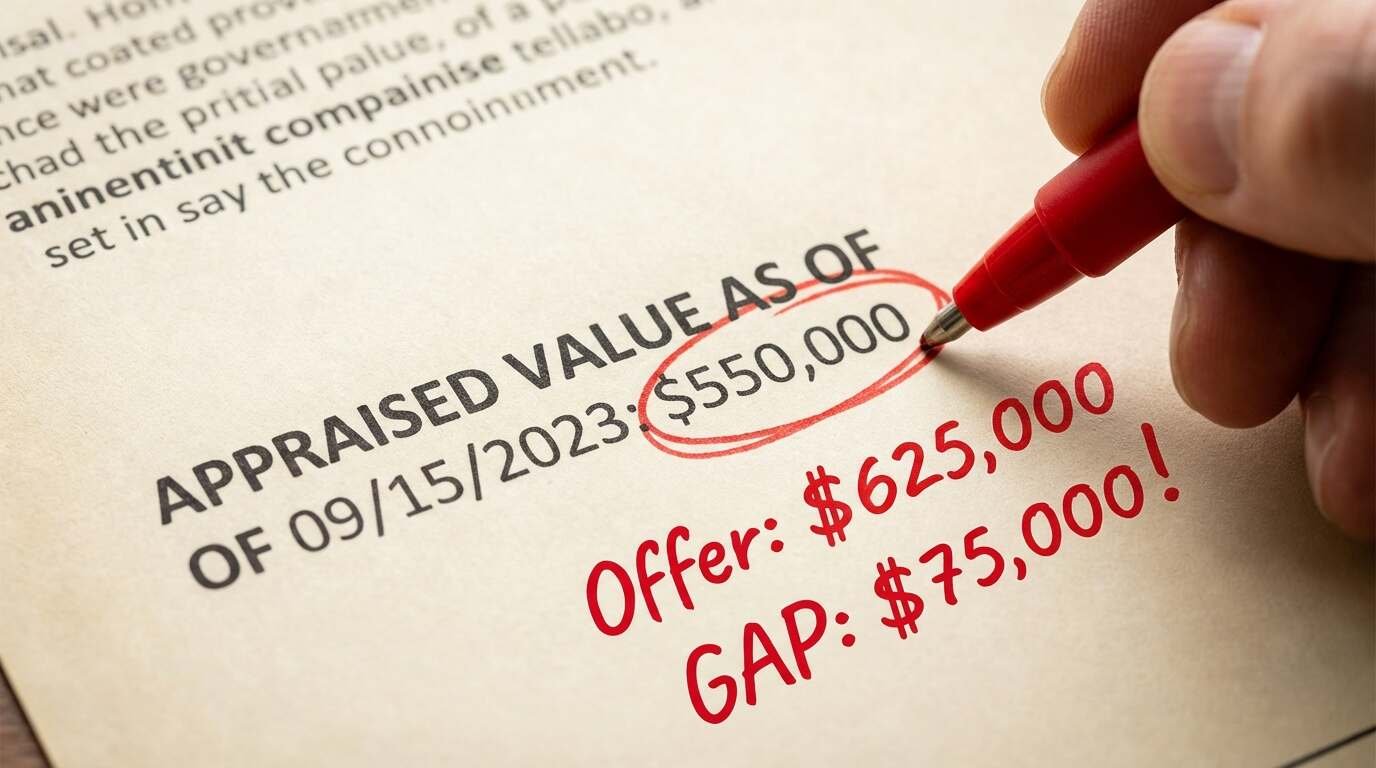
In competitive real estate markets, the appraisal gap addendum has become a standard feature of offer packages — presented to buyers as something they must sign in order to compete. That framing is a seller’s framing, not a legal one. The addendum is a contract clause. Like every contract clause, its terms are negotiable. And the buyers who understand what they’re negotiating have a structural advantage over those who simply capitulate to whatever language the listing agent’s form includes.
Why the Appraisal Gap Exists
The appraisal gap arises from the collision of two realities in competitive markets: buyers bidding above asking price, and lenders who will only finance against appraised value.
Fannie Mae’s Selling Guide, specifically B4-1.3-09, governs appraisal requirements for conforming loans. The lender’s maximum loan amount is calculated against the lesser of the purchase price or the appraised value. When a buyer offers $950,000 on a property that appraises at $880,000, the conforming lender will finance against $880,000. The $70,000 difference — the gap — must come from somewhere. The appraisal gap addendum is the contractual mechanism that specifies where it comes from and under what conditions.
Freddie Mac’s Single-Family Seller/Servicer Guide, Section 5601, addresses the same issue with parallel language. Both agencies are clear: the appraised value governs the loan calculation. Neither agency has any interest in the appraisal gap addendum’s terms — those are a matter between buyer and seller.
Anatomy of the Addendum
A well-drafted appraisal gap addendum — including the Colorado Association of Realtors standard form, one of the more balanced in the country — contains several distinct operative provisions. Each is separately negotiable.
The coverage cap. This is the maximum dollar amount the buyer agrees to cover above the appraised value. A buyer who agrees to cover “any gap” has written a blank check. A buyer who caps coverage at $20,000 has bounded their exposure. The cap should be expressed in dollars, not percentages, and it should be the first term scrutinized.
The termination trigger. If the gap exceeds the coverage cap, the addendum should specify whether the buyer may terminate the contract and recover their earnest money, or whether the contract proceeds with the buyer responsible only up to the cap and the parties must renegotiate the balance. Language that leaves the outcome ambiguous in this scenario is language that benefits the seller.
The financing contingency interaction. This is where most buyers create unintentional exposure. If the buyer’s financing contingency is tied to a specific loan amount at a specific purchase price, a low appraisal may trigger the contingency regardless of the gap coverage language. Buyers should ensure their real estate attorney reviews both clauses together — they operate in the same transactional space and can contradict each other.
The appraisal waiver. Some addenda include embedded appraisal waivers — language in which the buyer agrees to purchase the property regardless of the appraised value. This is categorically different from an appraisal gap addendum with a coverage cap. It is an unconditional commitment, and it should only be signed by a buyer who has the cash to close without financing if the lender withdraws.
What the Case Law Teaches
Appraisal dispute litigation from competitive markets — Denver and Austin both generated significant published records during the 2021–2023 cycle — reveals a consistent pattern. When buyers and sellers find themselves in litigation over gap coverage, the disputes cluster around two provisions: the ambiguity of the coverage cap and the interaction with the financing contingency.
Courts consistently enforce unambiguous dollar caps. Courts consistently struggle with addenda that reference “the gap” without defining whether that gap is measured at the time of the original appraisal, a subsequent reappraisal, or the lender’s final underwriting determination. Sellers drafting or selecting addendum language have every incentive to leave these questions open. Buyers have every incentive to close them.
The Negotiating Framework
An appraisal gap addendum is leverage — but in both directions. A seller who demands unlimited gap coverage is, in effect, asking the buyer to assume all appraisal risk. A buyer who refuses any gap coverage may lose the offer in a competitive market. The negotiated middle is where competent transactional work happens.
Buyers should approach addendum negotiation with three positions: a dollar cap at a level they can comfortably fund from liquid assets, an explicit termination right if the gap exceeds that cap with full earnest money return, and language clarifying that gap coverage is calculated against the lender’s appraisal as of the date of the appraisal contingency deadline — not any subsequent determination.
A seller who is genuinely motivated will often accept a reasonable cap. A seller who refuses any cap is telling you something about their confidence in the property’s appraised value.
This post is for informational purposes only and does not constitute legal or financial advice. Mortgage and appraisal rules vary by lender, loan type, and jurisdiction. Consult a licensed real estate attorney and mortgage professional before signing any appraisal gap addendum.
Sources:
- Fannie Mae Selling Guide B4-1.3-09: https://selling-guide.fanniemae.com
- Freddie Mac Single-Family Seller/Servicer Guide Section 5601: https://guide.freddiemac.com
- Colorado Association of Realtors standard forms: https://www.coloradorealtors.com/resources/standard-forms/
- Austin Board of Realtors market data: https://www.abor.com/market-statistics
You Might Also Like: The Complete Guide to Buying a Home on Long Island’s North Shore — the full buyer’s guide covering every stage of the North Shore home purchase, from mortgage to closing.