The Asbestos Ceiling Nobody’s Talking About: Why Suffolk County Fixer-Uppers Are Sitting on a Hidden Renovation Budget Line
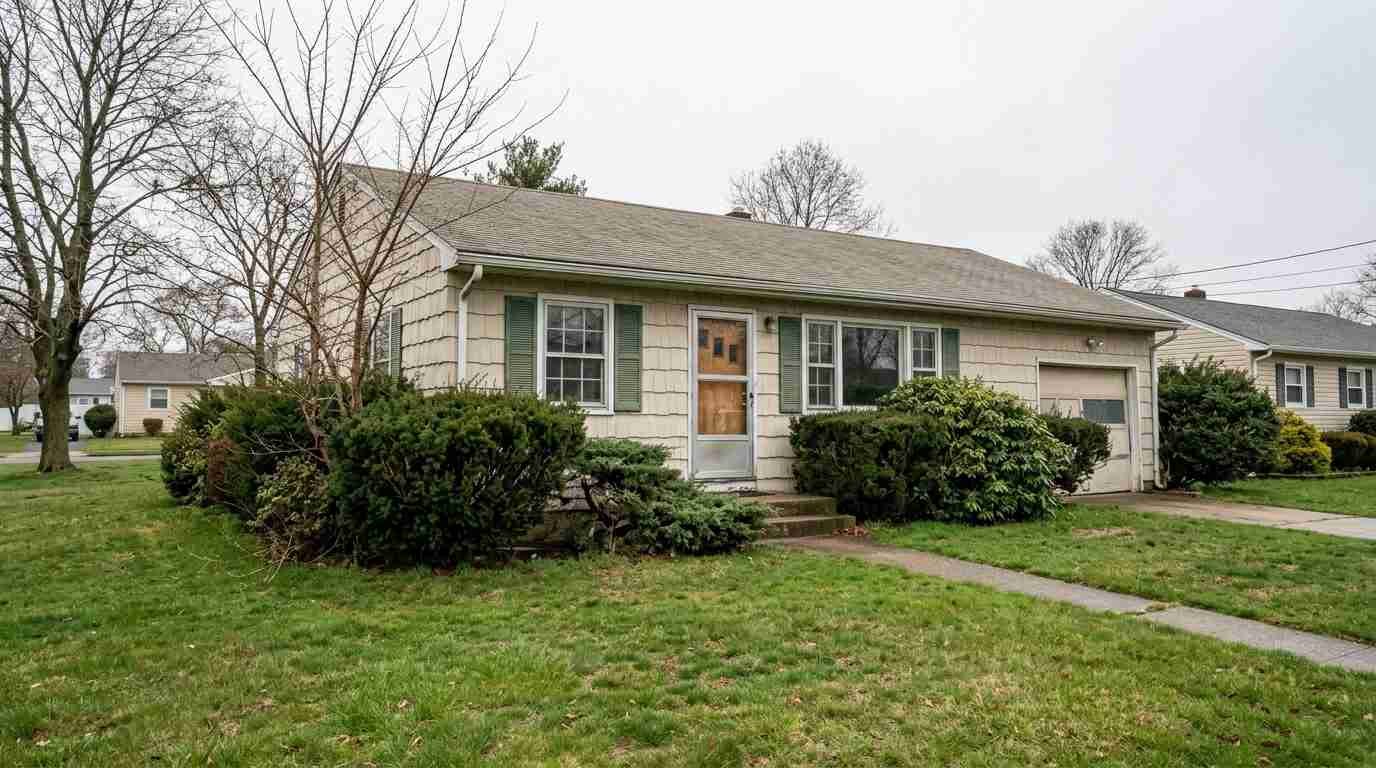
The call comes in around day three of demo. The buyer closed three weeks ago on a 1962 ranch in Centereach — good bones, right price, classic North Shore fixer-upper. The contractor pulled up the kitchen floor and hit a layer of 9×9 tiles under the vinyl. Same contractor opened the ceiling in the utility room and found what looks like loose granular insulation packed between the joists — brown-gold, pebble-like. He stopped work and called a testing company.
Results came back positive. The tiles test as asbestos-containing. The granular material is vermiculite — and as the EPA has stated publicly since 1999, if your home has vermiculite insulation, you should assume it may be contaminated with asbestos. Then the buyer called me.
I’ve had versions of this conversation many times. And every single time, the answer is the same: this was knowable, and it should have been budgeted before the offer was made.
Why Suffolk County Has a Particular Problem
Long Island’s mid-century housing stock is heavily concentrated in the pre-1980 construction window that defines the highest asbestos risk in American residential buildings. The postwar suburban boom that produced hundreds of thousands of homes across Nassau and Suffolk counties was built during the peak decades of asbestos use in residential construction.
Asbestos was not a corner-cutting measure. It was considered a high-quality material: fire-resistant, durable, excellent for insulation, and widely recommended by building authorities. By 1975, research had confirmed the link between asbestos fibers and mesothelioma and other serious lung diseases. Regulatory restrictions followed through the late 1970s and 1980s, leading to an effective ban on most new uses in residential construction. But by that point, the material was already in the walls, floors, and ceilings of millions of American homes — including a very large number in Suffolk County.
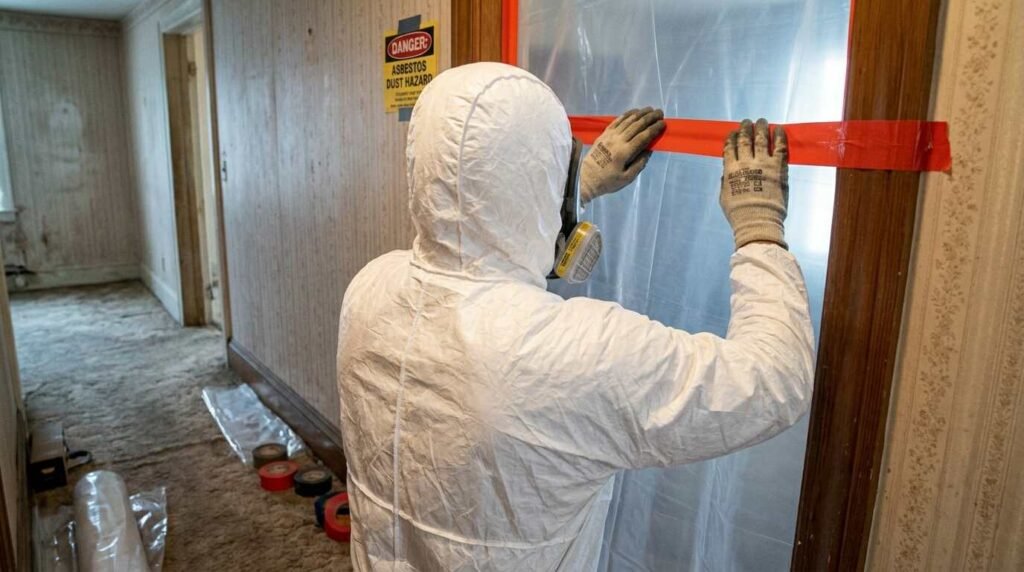
The Three You Need to Know About
Vermiculite Insulation. Vermiculite looks like small, brown-gold pebbles. In homes built between the 1940s and the late 1970s, it was commonly used as loose-fill insulation in attic floors, wall cavities, and sometimes ceiling spaces. An estimated 70% of the vermiculite sold in the United States between 1919 and 1990 came from a mine in Libby, Montana operated by W.R. Grace and Company — a mine contaminated with tremolite asbestos. When EPA testing in 1999 confirmed the contamination, the agency issued guidance still in effect today: if you have vermiculite insulation in your home, assume it may be contaminated with asbestos and do not disturb it. Vermiculite attic removal in the Long Island market runs between $5,000 and $20,000 depending on attic size and access conditions.
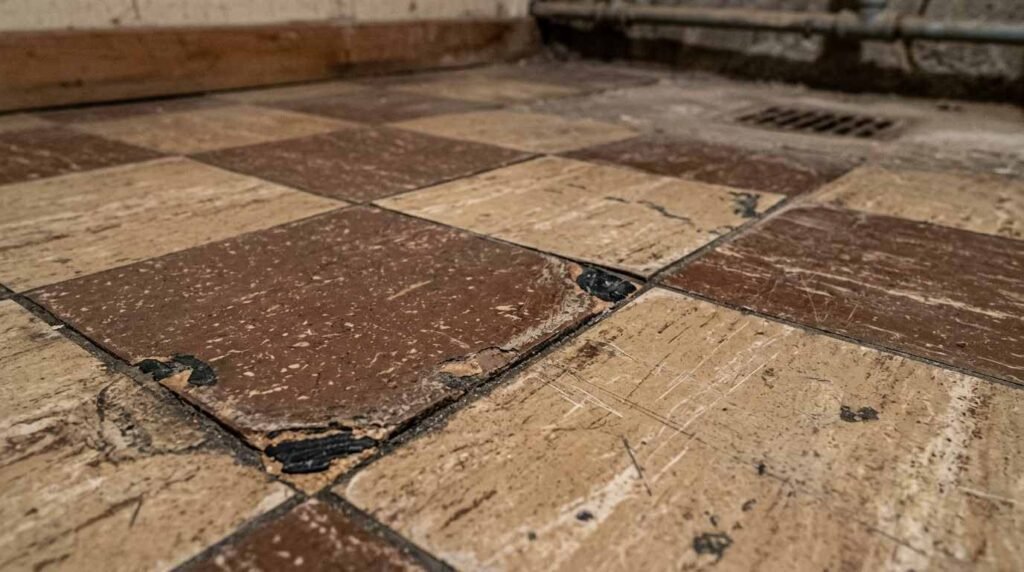
The 9×9 Floor Tiles. Walk into the basement of almost any Long Island home built between 1950 and 1975 and you are probably standing on them: nine-inch by nine-inch vinyl composition tiles in solid colors or simple patterns. They were manufactured with asbestos binders as a standard component until the late 1970s. Intact tiles are generally considered non-friable and are best left alone and covered rather than removed. The problem arises when you want to demo the floor, or when the tiles are cracked or deteriorating. Any mechanical disturbance of asbestos-containing floor tiles requires licensed abatement contractors in New York State. A full basement floor abatement in the Long Island market runs approximately $4,000–$10,000.
Pipe Wrap and Duct Insulation. Older boilers and hot-water heating systems in pre-1970 Long Island homes are often wrapped in asbestos-containing insulation — gray, textured, sometimes crumbling if the binder has deteriorated. Deteriorating pipe wrap releases fibers into the air of the space where the HVAC system is drawing air. If intact and well-bonded, encapsulation is sometimes an option. If friable, abatement is required before any renovation work proceeds. Pipe and duct insulation abatement typically runs $2,000–$8,000 depending on the system’s complexity.
New York State Law and What It Means for You
New York State’s asbestos regulations are among the more stringent in the country. The primary regulatory framework is 12 NYCRR Part 56, administered by the New York State Department of Labor’s Asbestos Control Bureau, which governs all asbestos abatement activity in the state. All abatement work must be performed by licensed contractors. Homeowners cannot legally perform their own asbestos abatement in New York. Projects above minimum thresholds require written notification to both the EPA Region II and the NYS DOL before work begins.
As of March 20, 2024, New York State sellers are now required to complete and deliver a Property Condition Disclosure Statement before the contract of sale is signed. The amended law eliminated the prior option of paying a $500 credit at closing to avoid the form. The updated PCDS directly asks about asbestos, and knowingly false or incomplete answers expose the seller to potential buyer claims even after closing. The result is that buyers of pre-1980 Long Island homes should assume that asbestos may be present and budget accordingly — rather than relying on the disclosure statement to surface it.
This is for informational purposes only — consult a licensed attorney and environmental consultant for guidance specific to your property and transaction.
The Pre-Offer Inspection Protocol
Before making an offer, or as a contingency in your offer, commission an asbestos inspection by a certified NYS Asbestos Inspector — someone not affiliated with a remediation contractor, to avoid the obvious conflict. The inspection involves visual assessment and material sampling, followed by lab analysis. Testing costs typically run $300–$800 for a residential property, with lab turnaround of two to five days.
If the inspection identifies asbestos-containing materials, you now have the information you need to get remediation quotes from licensed Suffolk County contractors, negotiate the remediation cost into your purchase price, and make a genuinely informed decision about whether the deal makes sense. The contractor who gets called after closing, when demo is already underway and remediation has to happen immediately with no negotiating leverage, is an expensive contractor. The inspector hired before the offer is one of the most cost-effective professionals you’ll engage in the entire transaction.
Room-by-Room Risk Assessment
Use this as a starting framework for any pre-1980 Long Island home. It is not a substitute for professional inspection — it is a way to direct that inspection.
Attic: Highest priority. Check for loose granular insulation (vermiculite). If present, do not disturb — get testing immediately. Basement floor: Check for 9×9 tiles. If intact, note condition. If cracked or friable, flag for abatement quotes. Basement mechanicals: Inspect pipe insulation and boiler jacket. Any gray, fibrous, or crumbling material warrants testing. Kitchen and bathroom floors: Original vinyl floor in any pre-1978 space may be asbestos-containing. Test before demo. Ceilings: “Popcorn” or textured spray ceilings applied before 1980 commonly contain asbestos. Do not sand, scrape, or disturb without testing. Exterior siding: Some homes built between the 1940s and 1970s used transite siding — a cement-asbestos composite that requires licensed abatement if it needs to be removed.
The Numbers, Consolidated
For a typical pre-1975 Suffolk County ranch or Cape Cod in need of renovation, a plausible asbestos-related budget line if multiple materials are present and need abatement: vermiculite attic, $5,000–$20,000; basement floor tiles, $4,000–$10,000; pipe wrap and boiler insulation, $2,000–$8,000; testing and air clearance, $500–$1,500. Total potential exposure in a full remediation scenario: $10,000–$40,000 before a single new tile goes in. This is not unusual. This is what Suffolk County fixer-upper buyers are absorbing regularly, often without having budgeted for it.
The buyers who budget correctly treat it like any other line item — priced into the offer, negotiated with documentation in hand, managed before demo starts. The buyers who don’t budget for it discover it mid-renovation, with a contractor standing by and no negotiating leverage left.
This is for informational purposes only. Consult a licensed asbestos inspector, NYS Part 56-licensed abatement contractor, and a licensed attorney before making decisions about asbestos testing, remediation, or real estate transactions.
Real estate markets change. This post reflects conditions as of April 2026. For current listings and market data, contact Pawli at Maison Pawli.
You Might Also Like
- The $40,000 Mistake: Why Long Island Fixer-Upper Buyers Keep Gutting Kitchens They Should Have Kept
- The Iron Ghost in the Yard: Why Sellers Need to Hunt Their Own Oil Tanks
- The Covenant in the Deed: How Restrictive Covenants Shaped Long Island Neighborhoods
This post is part of the North Shore Fixer-Upper Guide — a complete resource covering what to buy, what to skip, and what to budget before you make an offer on a Long Island fixer-upper.