The Lifeguard Towers Robert Moses Built to Watch More Than Swimmers
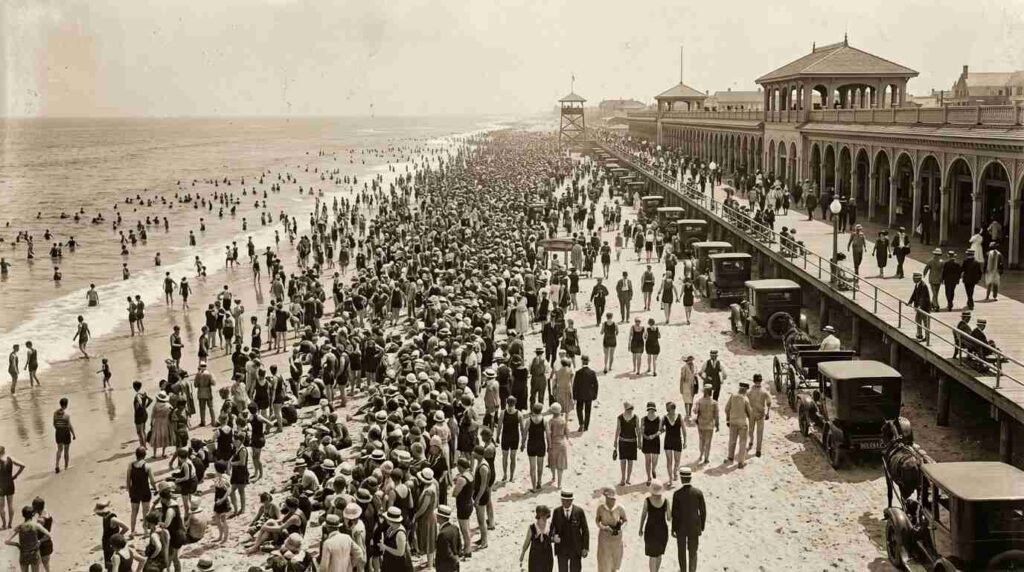
The first thing you notice from inside a Jones Beach lifeguard tower is the view. Not the water — though the water is there, the Atlantic spreading south in every direction on a clear day. What you notice is how much of everything else you can see. The parking fields, stretching back from the beach in numbered rows. The boardwalk below, with its stream of people. The approaches from the bathhouses. All of it laid out beneath you in sightlines that feel deliberately arranged, which is because they were.
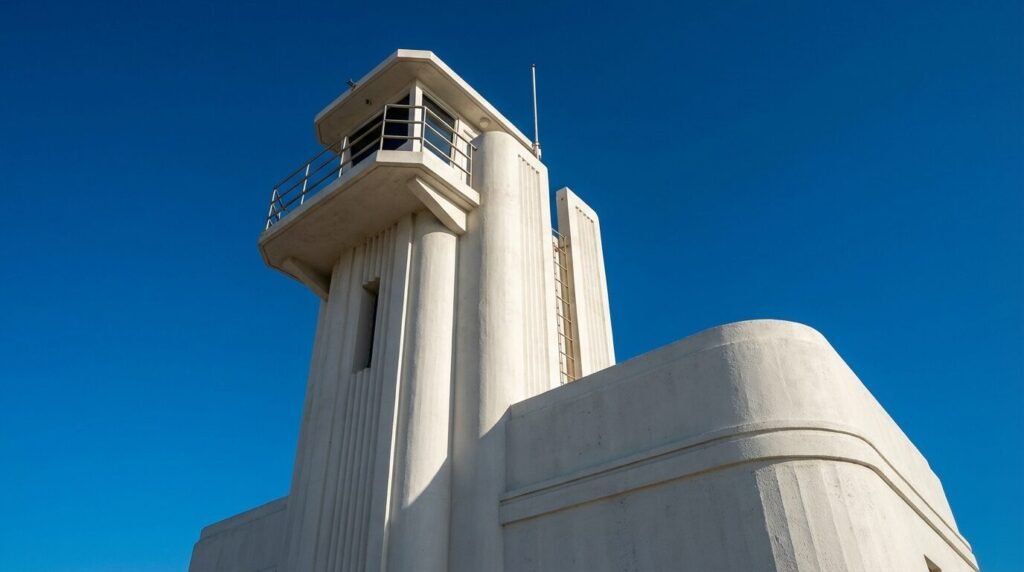
Jones Beach State Park opened on August 4, 1929. It was Robert Moses’s first major public achievement as president of the Long Island State Park Commission, and it remains — by raw visitor numbers — the most-used public beach on the East Coast. The lifeguard towers that Moses built that year are extraordinary objects: streamlined, Art Deco in their restraint, the white concrete glowing against blue sky with an almost Mediterranean authority. I have admired them for years without quite examining them. When I finally did, I found an architecture that was doing more than one job.
The 1929 Plans and What They Show
The original 1929 architectural plans for Jones Beach are held at the New York State Office of Parks, Recreation and Historic Preservation. Moses worked with architect Aymar Embury II on Jones Beach’s overall design — a coherent vision that extended to the siting and height of the lifeguard stations. What the plans reveal is not merely a concern for swimmer safety, but a systematic preoccupation with the park’s entire horizontal geography.
The towers were positioned not simply to maximize ocean visibility but to command overlapping fields of view across the beach crowds. Their height — elevated well above the dune line — was specified to provide what park planning documents of the era called “comprehensive crowd observation.” This language appears throughout progressive-era park design of the period, and it carried a specific meaning that the era understood without spelling out: who was here, in what numbers, and where they were going.
Moses’s administrative intentions for Jones Beach were not abstract. Robert Caro, in The Power Broker (1974), documented what the towers’ sightlines were meant to support: Moses made it difficult for Black groups to obtain permits for charter buses to the beach, and assigned Black lifeguards to what Caro described as “distant, less developed beaches.” The towers at the park’s primary fields were staffed to serve a crowd that Moses intended to remain predominantly white and middle-class — a crowd that arrived by private automobile, because the parkway bridges Moses designed were, according to testimony from his aide Sidney Shapiro, built low to prevent transit buses from reaching the park.
The evidence on the low bridges is contested — some historians have argued the case is overstated, and the Washington Post’s 2021 examination of the bridge question found the historical record genuinely contradictory. But what is not contested is what Robert Caro did one August day in 1967: he and his wife Ina sat in a Jones Beach parking lot and tallied the racial composition of arriving beachgoers. The column for white visitors was overwhelmingly longer than any other. This tally sheet is now part of the Caro Archive at the New-York Historical Society.
Beautiful Machines
None of this makes the towers less beautiful. That is part of the point.
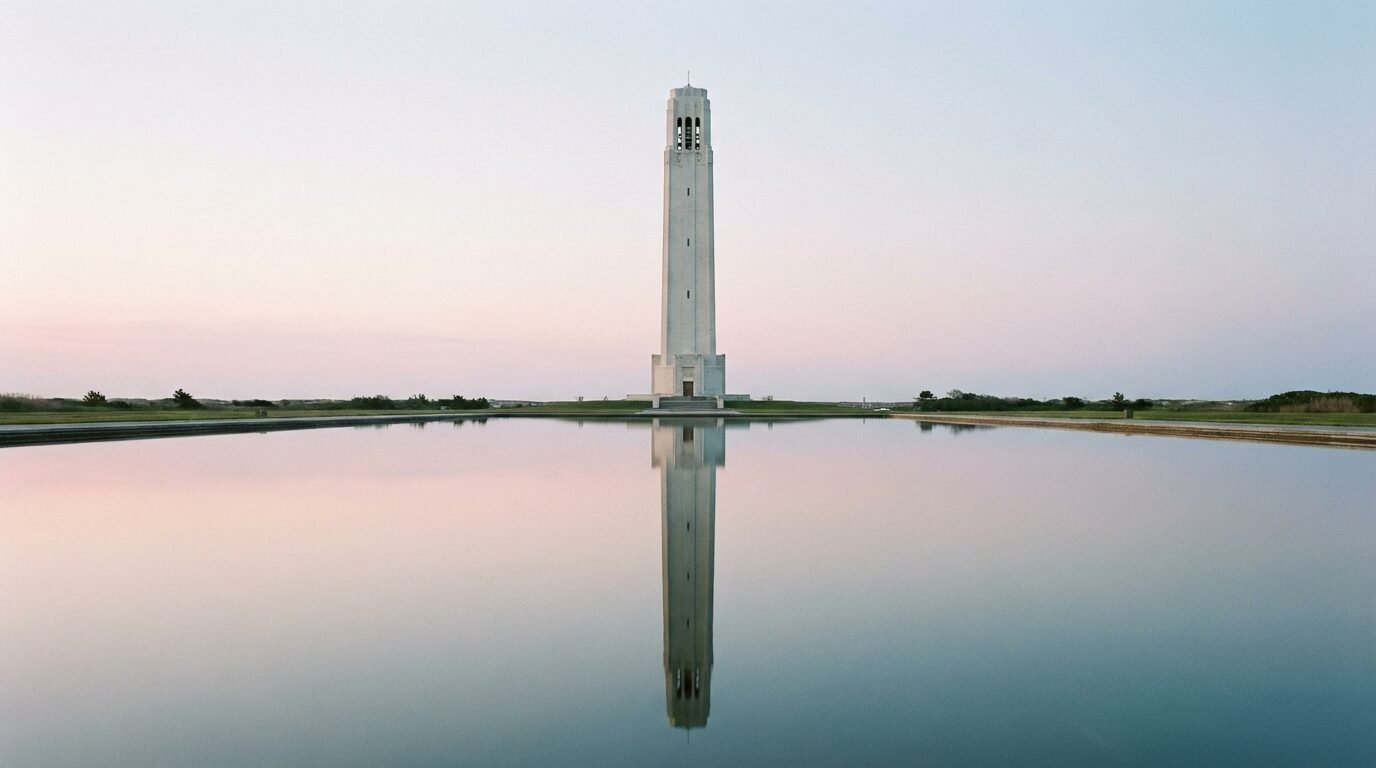
The Jones Beach water tower — “the Pencil,” as locals call it — is one of the finest examples of Venetian-inspired civic architecture in the United States, its campanile form lifted directly from the bell tower of St. Mark’s Cathedral and planted on the South Shore of Long Island. The bathhouses are magnificent: long, low, and formally rigorous, built of brick and limestone with maritime details that feel simultaneously Roman and American. The boardwalk stretches for miles and is, on a clear summer morning before the crowds arrive, genuinely one of the most beautiful public spaces on the Eastern Seaboard.
Moses wanted all of this. He wanted a park of sufficient grandeur that the question of who was not there would be overwhelmed by the spectacle of who was. The towers are part of that spectacle. They are watchtowers dressed as lifeguard stations, built in a style that announced power the way only confident power announces itself — through beauty, through scale, through the impression that what exists is inevitable.
The physical grammar of exclusion is often indistinguishable from the physical grammar of excellence.
The Class Architecture That Remains
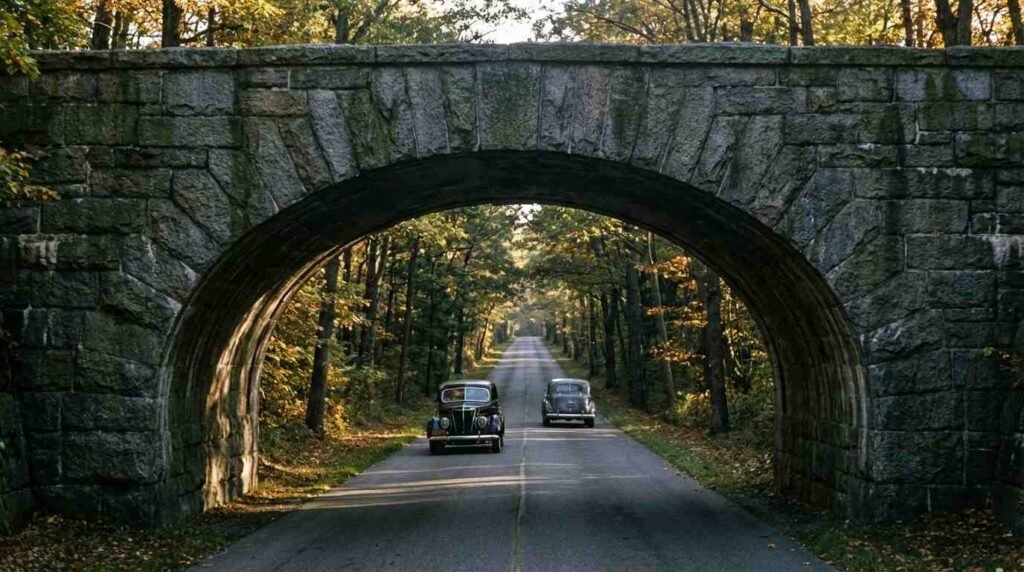
I drive the Wantagh State Parkway to Jones Beach sometimes in the off-season, when the parkway is nearly empty and the low stone bridges pass overhead in quick succession. Whatever the intent of those bridges — and the debate continues among historians — the effect of the park’s infrastructure on who could realistically access it in the Moses era is not seriously in dispute. Working-class families without cars, concentrated in the city’s dense boroughs, could reach Jones Beach by bus only after a long, circuitous route on local roads. The drive by private automobile from Nassau County took twenty minutes. The bus took most of the morning.
Moses built a park for a public. The question is which public.
This is not merely a historical curiosity. Long Island’s relationship to access — to the water, to its parks, to its neighborhoods — has roots in decisions made in the 1920s and 1930s that shaped the physical landscape. The restrictive covenants that controlled neighborhood composition in the postwar boom were part of the same cultural and political moment that gave Moses his power. The Gold Coast estates whose architecture told you exactly who was welcome and who was not preceded Moses by decades but operated on the same logic. Infrastructure encodes intention.
Standing in the Tower
I want to be honest about what it feels like to stand in a Jones Beach lifeguard tower on a busy summer weekend in 2026. It feels like standing at the center of something that works. The beach below is crowded in all the best ways — families, loud teenagers, people who drove an hour and are going to make every minute count. The lifeguards scan the water with a professional calm that is reassuring. The park functions, beautifully, as a democratic public space.
Moses, if he returned, would find a beach that looks like New York City rather than the beach he designed. Whether he intended that or not is a historical question without a clean answer. What is not a question is that the towers he built — those precise, elevated, sightline-optimized structures — now serve a crowd he worked to exclude. History reassigns the architecture even when it can’t reassign the intent.
The towers stand, doing their work. They watch the water and they watch the crowd. They are, in the end, just towers — and they are more than towers.
Real estate markets change. This post reflects conditions as of April 2026. For current listings and market data, contact Pawli at Maison Pawli.
You Might Also Like
- The Covenant in the Deed: How Restrictive Covenants Shaped Long Island Neighborhoods
- The Servant Stair and the Service Wing: What the Hidden Architecture of Gold Coast Estates Reveals About Today’s Luxury Floor Plans
- Building the Moon Buggy in Bethpage
Sources
- Robert Caro, The Power Broker: Robert Moses and the Fall of New York (1974)
- NY Historical Society — Inside the Robert A. Caro Archive: Jones Beach Tally
- NYS Office of Parks, Recreation and Historic Preservation — Jones Beach State Park architectural records (1929)
- Bloomberg — Robert Moses and His Racist Parkway, Explained
- Washington Post — Robert Moses and the saga of the racist parkway bridges (2021)
- Pinup Magazine — Low Life: Revisiting Robert Moses’s Exclusionary Design Scheme at Jones Beach
- Long Island History Project — Revisiting Robert Moses
- Rosalyn Baxandall and Elizabeth Ewen, Picture Windows (2000)