
The Assessed Value Is Not the Market Value: How Long Island’s Property Tax Grievance Process Can Reframe What a Seller Asks

Two Numbers in the Same House
Every property on Long Island carries two valuations that have almost nothing to do with each other. The first is the market value — what a ready buyer and a motivated seller agree a property is worth on any given day. The second is the assessed value — a figure set by the county’s Department of Assessment, updated on its own schedule, and used as the basis for calculating your annual property tax bill.
In theory, these numbers should track each other. In practice, on Long Island, they almost never do.
Nassau County has some of the highest property taxes in the country. Its assessment system has been the subject of sustained scrutiny — including Newsday investigative reporting from 2017 through 2019 that documented widespread inequities in how different properties were valued relative to their actual market worth. The county undertook a court-ordered reassessment beginning in 2019 in response to those findings. Nassau then froze its assessment roll beginning in the 2021–2022 tax year, a freeze that has continued through the 2025 and 2026 assessment years. The practical effect: assessed values have not changed for most properties in Nassau for several years, even as market values have moved considerably in both directions.
Suffolk County operates differently. Each of its ten towns sets its own assessments, and unlike Nassau, Suffolk does not reassess on a regular cycle. The county is notable for being one of the few jurisdictions in the country where regular reassessment is not standard practice. The result is that some Suffolk assessments reflect market conditions from a decade or more ago — and the only mechanism available to correct an overvalued assessment is the annual grievance process.
For a seller, understanding this system is not an abstraction. It is preparation.
How the Grievance Process Works
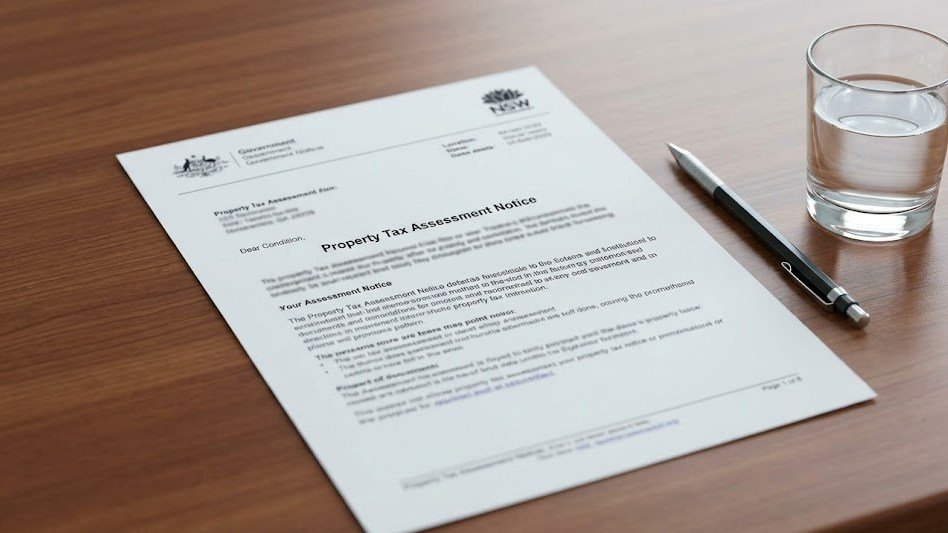
In both Nassau and Suffolk counties, property owners have the legal right to challenge their assessed value through a formal grievance process. The rules differ by county, but the architecture is the same: a homeowner (or their representative) presents evidence that the assessed value is excessive relative to market value or unequal when compared to similar properties, and an independent body reviews the claim.
Nassau County
In Nassau, grievances are filed with the Assessment Review Commission (ARC), an independent agency. The filing window typically opens January 2 and runs through early March, though Nassau has extended its deadline in recent years — for the 2027/28 tax year, the ARC extended its deadline to March 31, 2026. The process is entirely online and requires no attorney. The ARC reviews the filing, compares it against sales data and comparable assessments, and may offer a reduction. If the ARC’s decision is unsatisfactory, the owner may escalate to a Small Claims Assessment Review (SCAR) proceeding before a judicial hearing officer. Under New York State law, filing a grievance cannot raise your assessment — the ARC may reduce or leave an assessment unchanged, but it cannot increase it.
Suffolk County
In Suffolk, grievances are filed at the town level with the Board of Assessment Review (BAR). Grievance Day — the annual deadline — falls on the third Tuesday of May; in 2026, that date is May 19. The filing window opens May 1, giving homeowners less than three weeks to compile and submit their evidence. The BAR typically denies most Suffolk grievances at the administrative level, after which the owner’s recourse is SCAR — a filing made after the final assessment roll is certified, usually by August. SCAR proceedings in Suffolk often result in settlements before a formal hearing, and a successful outcome produces both a refund for the challenged year and a reduced assessment going forward.
The filing deadlines are strict in both counties. There are no extensions once the window closes. Missing a Nassau or Suffolk grievance deadline means waiting a full year for the next opportunity.
Why This Matters to a Seller
Here is where the conversation shifts from civics to strategy.
A buyer’s attorney or mortgage lender will pull the property’s assessed value and tax history as a matter of course during due diligence. When a home is listed at $1.2 million and the assessed value reads $480,000, the immediate question — which the buyer’s side will ask and the seller’s side should already have an answer to — is: what are the actual annual taxes, and is the assessment likely to be challenged or adjusted after closing?
For a buyer taking on a long-term mortgage, property taxes are a fixed annual cost second only to principal and interest. On Long Island, where total tax bills regularly exceed $10,000 to $20,000 per year, a meaningfully lower assessment is not a minor line item. It is a material factor in affordability.
A seller who can document a successfully grieved assessment — one where the tax burden has already been reduced and the lower figure is established in the record — has a concrete, verifiable selling point. Not “taxes might come down” but “taxes were reduced by X in [year], and that reduction carries forward.” That is a different conversation.
Equally, a seller preparing to list who knows their assessment is likely inflated has an opportunity. Filing a grievance in the cycle before going to market — or even during the listing period, if the timing works — can produce a documented lower assessment that appears in the public record before buyers do their due diligence. The cost of filing is nothing in Nassau (no fee required to file with ARC). The cost of not filing, when an overassessment exists, is paid every year and again at the negotiating table.

Gathering the Evidence
Both Nassau and Suffolk grievance processes are evidence-based. The strongest cases rest on comparable sales — documented sales of similar properties in the same market area that demonstrate a lower market value than the assessed figure suggests. For Nassau, the county’s online land records viewer provides access to assessment data, maps, photographs, and prior sales for comparable properties. For Suffolk, similar data is available through each town’s assessment office.
A formal appraisal from a licensed appraiser is not required but is often the most persuasive evidence, particularly in SCAR proceedings where a hearing officer will weigh competing data sets. For properties that have been purchased recently, the sale itself — if it was an arm’s-length transaction — is compelling evidence of market value.
The grievance form in Suffolk is RP-524, available through the New York State Office of Real Property Tax Services and from each town assessor’s office. Nassau’s ARC accepts filings electronically through its online system. Both processes are designed to be accessible to owners filing without representation, though professional representation — tax grievance firms, attorneys — improves outcomes in contested cases, particularly at the SCAR level.
What a Seller Should Do Before Listing
Pull your property’s tentative or final assessment from your county’s website. Compare the county’s stated market value estimate against recent sales of genuinely comparable properties in your area. If there is a meaningful gap — and on much of the North Shore, there is — understand where you are in the annual grievance calendar.
In Nassau, the window for 2027/28 opens January 2, 2026. In Suffolk, the 2026 Grievance Day is May 19. If you are preparing a listing for spring 2026 or later and your current assessment is inflated relative to your likely sale price, you may still be within a window where action is possible.
A reduced, documented assessment is a cleaner conversation at the table than a contested one. Long Island buyers — particularly at prices above $1 million — have attorneys and accountants who will ask the tax question. A seller who has already answered it, in writing, with a favorable outcome in the record, walks into that conversation from a stronger position.
This is for informational purposes only — consult a licensed attorney or financial advisor for your specific situation. Property tax laws and grievance deadlines are subject to change — verify current procedures and dates with the Nassau County Assessment Review Commission or your Suffolk County town assessor before filing.
Real estate markets change. This post reflects conditions as of the publish date. For current listings and market data, contact Pawli at Maison Pawli.
Sources
- Nassau County Assessment Review Commission — How to Appeal Your Assessment: nassaucountyny.gov/2207/How-to-Appeal-Your-Assessment
- Nassau County 2026 grievance deadline (extended to March 31, 2026): cutmytaxes.com
- Suffolk County Grievance Day 2026 (May 19): hellertaxgrievance.com
- New York State grievance procedures: tax.ny.gov/pit/property/contest/grievproced.htm
- Town of Hempstead — Challenge & Lower Your Taxes: hempsteadny.gov/369/Challenge-Lower-Your-Taxes
- Newsday investigative reporting on Nassau County assessment inequities (2017–2019) — verify current archive access at newsday.com before publishing
- New York State Office of Real Property Tax Services, Form RP-524: available at tax.ny.gov
You Might Also Like: For a complete overview of everything involved in selling on the North Shore — pricing, staging, legal obligations, and closing — see The North Shore Seller’s Guide.