Historic Homes on Long Island: What Buyers Should Know Before Falling in Love With an Old House
Long Island has one of the deepest stocks of architecturally significant older homes anywhere in the Northeast. The Gold Coast estate inventory, the colonial farmhouses of the North Shore, the Greek Revivals and Federals scattered through Suffolk’s older village cores, the Victorian summer cottages of Oak Beach and Cherry Grove, the early-20th-century Craftsman blocks of Huntington and Port Jefferson — the range is enormous and most of it is still in private hands, still being bought and sold, and still capable of surprising new owners in ways the listing photos did not prepare them for.
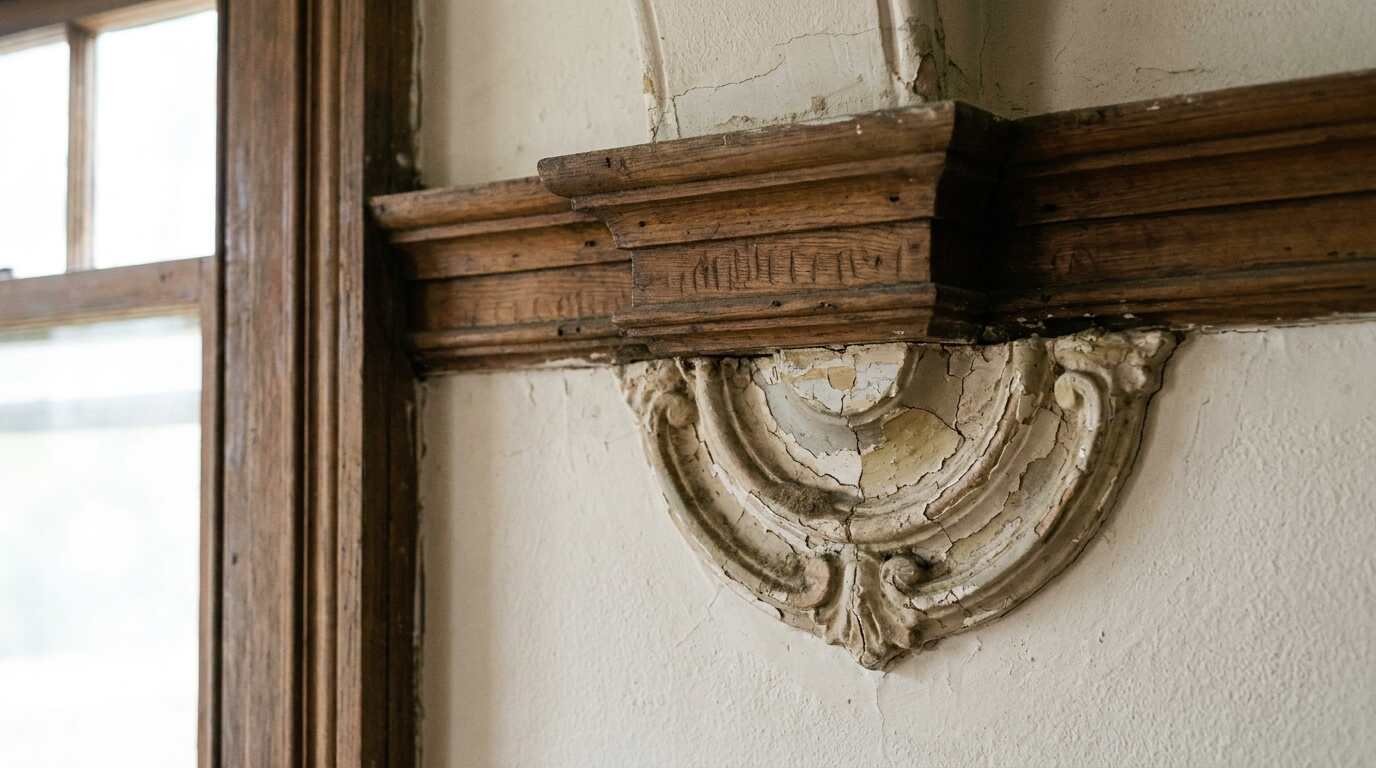
The trouble with falling in love with an old house is that the love often arrives before the file does. The wide-plank floors, the original mantelpiece, the hand-cut moldings — these are real and they are part of the asset. The cast-iron radiator system that hasn’t been serviced since the Eisenhower administration, the cloth-wrapped knob-and-tube wiring still feeding the second-floor bedrooms, the buried oil tank no one disclosed because no one remembered it was there — those are also part of the asset. Buyers who buy these houses well are the ones who walk in already knowing what they’re looking for. Buyers who buy them badly are the ones who walked in already in love and worked backward from there.
What ‘Historic’ Actually Means on a Long Island Listing
The word “historic” on a listing description has no single legal meaning. It can mean any of the following, in descending order of regulatory consequence:
The property is on the National Register of Historic Places — a federal designation managed by the National Park Service that confers eligibility for certain tax credits and rehabilitation incentives but does not, by itself, restrict what a private owner can do to the building. National Register listing is honorific in most regulatory respects.
The property is on the New York State Register of Historic Places — substantially overlapping with the federal register in eligibility and effect, again honorific in most private-owner contexts.
The property is locally designated under a town, village, or historic district ordinance. This is where the regulatory weight lives. Local designations frequently come with an architectural review board, a certificate-of-appropriateness process for exterior changes, and binding restrictions on what an owner can and cannot do. The North Shore villages of Cold Spring Harbor, Oyster Bay, and parts of Huntington and Setauket have varying degrees of local historic district overlay. Cold Spring Harbor’s overlay in particular has teeth.
The property is within a historic district — meaning the parcel itself may not be individually designated, but the surrounding district designation may govern exterior modifications, demolition, and additions.
The property is none of the above but is described as “historic” in the listing because it’s old and the listing agent wanted a romantic adjective. This is far more common than buyers realize.
Before I take a buyer seriously on a “historic” listing, I want to know which of these categories actually applies. The financial and practical consequences run on a spectrum from “no different from buying any other house” to “every exterior change you ever make requires a public hearing.” Those are not the same purchase.
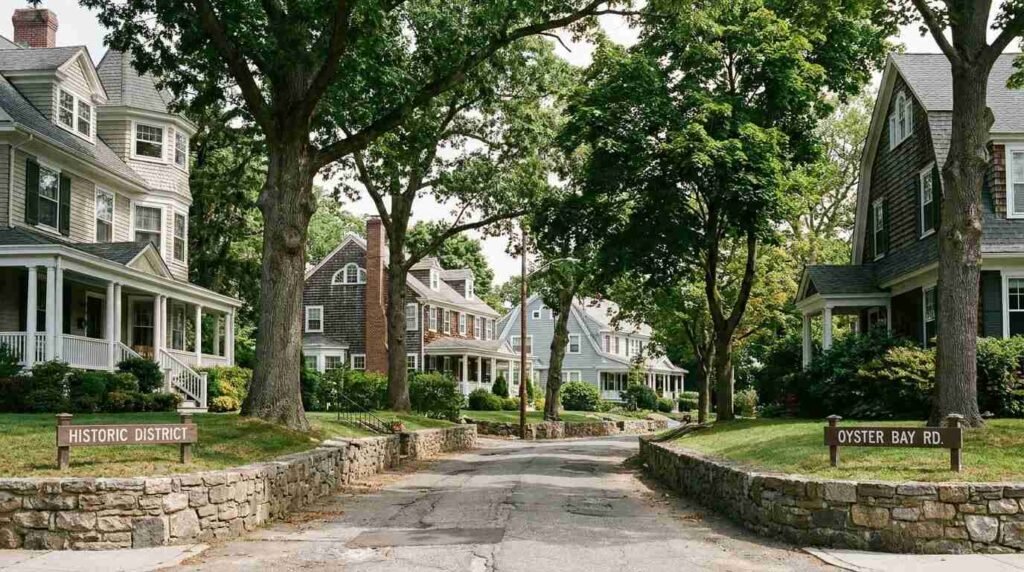
The Hidden Costs of Owning a Pre-War or Victorian-Era Home
The romance of the old house economy hides a fairly predictable cost structure that pre-war and Victorian-era buyers should plan for. None of these are reasons not to buy. They are reasons to budget honestly.
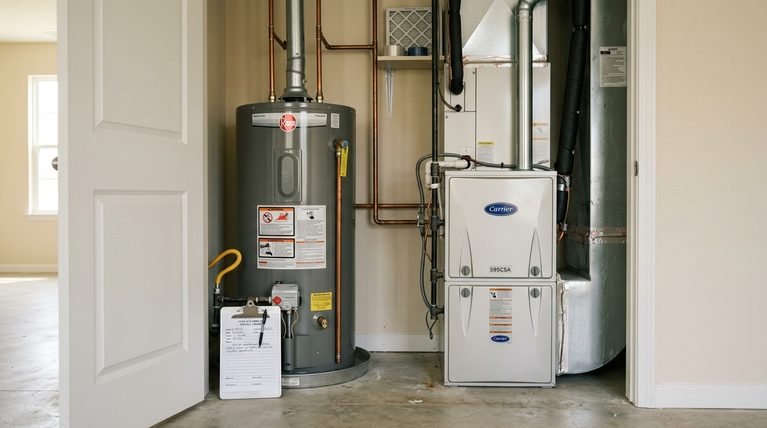
Mechanical systems are first. Older homes often run on legacy heating systems (steam radiators, hot water radiators, mid-century forced air retrofits), original or near-original electrical, and plumbing that is some combination of cast iron, galvanized steel, copper, and increasingly, recent partial repairs. Bringing any of these systems to current code is rarely cheap. A full electrical service upgrade on a Victorian-era home with original knob-and-tube wiring can run well into five figures before you reach the meter.
Hazardous materials are second. Lead paint is presumptive in any pre-1978 home and certain in any pre-1950 home. Asbestos appears in pipe insulation, floor tiles, ceiling textures, and original siding. Remediation costs vary enormously by scope, and on Long Island, Suffolk County has specific disposal requirements that affect the per-square-foot cost.
Building envelope is third. Original wood windows, original siding, original roof underlayments — these are typically beautiful, frequently restorable, and rarely energy-efficient. The trade-off between preserving the original envelope and modernizing for energy performance is real, and on a designated historic property the answer may not be available — local review boards routinely restrict replacement window options.
Foundation and structure is fourth. North Shore older inventory frequently sits on rubble or stone foundations that pre-date modern footing standards. Some are excellent and have lasted two centuries. Some are quietly failing and have for decades. The difference matters and is not visible from the dining room.
A Savannah-based historic homes specialist put the inspection economics well in a 2025 buyer’s guide, noting that a qualified historic home inspector will typically cost meaningfully more than a standard inspection but the detailed assessment of historic elements proves invaluable for the investment. The same math applies on Long Island. The cheap inspection is the expensive inspection in the long run.
Landmark Status: How It Protects — and Restricts — What You Can Do
Landmark status is a two-sided document. On the protection side, it can preserve the architectural character of a property indefinitely, prevent insensitive alteration by future owners, and in some jurisdictions confer access to grants, tax credits, and preservation funding. On the restriction side, it can prevent changes that a current owner wants to make — new windows, additions, exterior color changes, accessory structures, sometimes even paint.
The National Association of REALTORS puts the general distinction cleanly in its consumer guide on the topic, noting that homes within a historic district may require local review board approval for exterior changes. The specifics on Long Island vary by jurisdiction. Cold Spring Harbor’s historic district review is rigorous. Stony Brook Village’s review around the Stony Brook Village Center is rigorous. Some Town of Huntington districts are more permissive. Some Town of Southold districts on the North Fork are more permissive still.
The practical buyer move is to do the regulatory homework before contract, not after. Specifically: contact the relevant town building department and the historic preservation commission, request the actual designation language, and confirm exactly what level of review applies to the parcel under consideration. The seller may not know. The listing agent may not know. The town will know, and the answer is binding.
I’ve written separately on preservation easements specifically on Gold Coast-adjacent properties — a related but distinct issue where private preservation easements layered onto the deed can carry even more restrictive consequences than public designation.
Getting the Right Inspection for an Older Home
The standard home inspection — visual walkthrough, three to four hours, general assessment of systems and structure — is not adequate for a historic property. It is necessary, but it is not sufficient.
What a historic-property buyer should request, in addition to the standard inspection: a structural engineer’s review of foundation, framing, and any visible settlement issues; an electrical specialist’s review of original wiring scope, panel adequacy, and code-compliance pathway; a plumbing specialist’s review including a sewer line scope to identify cast-iron pipe condition and any roots intrusion; and on any pre-1978 property, environmental testing for lead and asbestos with documented sampling protocol.
The inspector themselves matters. A general home inspector who has done 2,000 inspections in postwar Levittown stock is not the right inspector for a Cold Spring Harbor 1840s farmhouse. The right inspector is one who has worked on historic inventory consistently, who knows the difference between concerning deterioration and acceptable patina, and who can read traditional construction methods without flagging every period-correct detail as a defect. I’ve written more broadly about home inspection red flags on Long Island’s older housing stock — relevant context for what to look for.
The other component of the right inspection is the insurance inspection — separate from the buyer’s diligence inspection, but worth requesting from the prospective insurer before binding coverage. Historic homes routinely require specialty policies, and the gap between what a standard homeowner’s policy covers and what an older home actually needs (full replacement cost with period-appropriate materials, code-upgrade coverage, ordinance or law coverage) is meaningful.
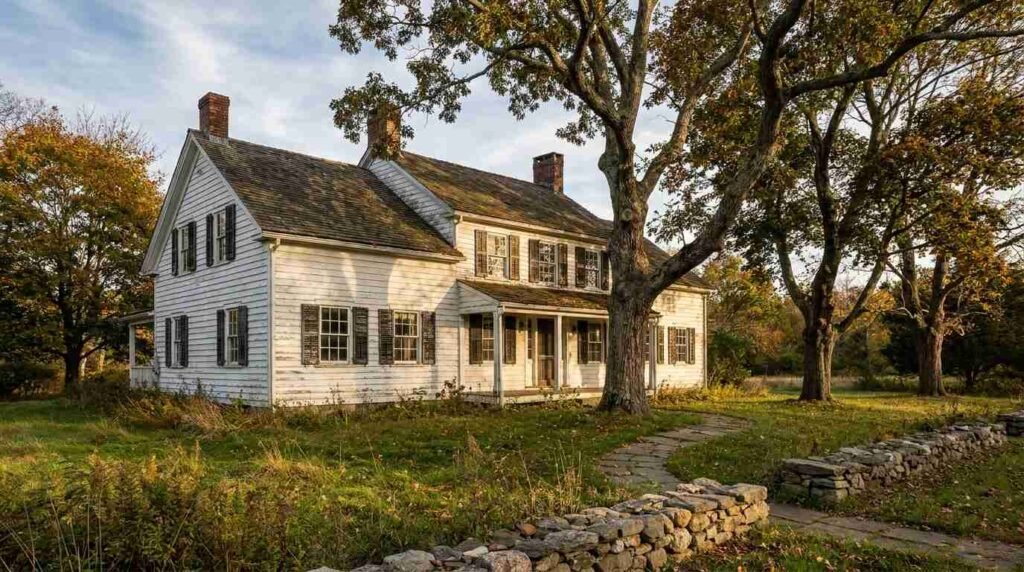
Why Historic Homes Can Still Be Smart Investments When Priced Right
The above is a list of costs and constraints, and reading it might suggest that historic homes are a bad bet. They are not. They can be excellent investments — they hold value well in stable markets, they appreciate strongly in markets that reward authenticity and craftsmanship, they are functionally irreplaceable, and the carrying-cost premium relative to comparable new construction is real but not dramatic when the home is priced correctly.
The qualifier matters: when priced correctly. A historic home priced as if its deferred maintenance and modernization budget has already been accounted for is a fair trade. A historic home priced as if those costs don’t exist is a buyer paying twice — once at closing, once during the first five years of ownership. The diligence work I’ve described in this piece is the work of figuring out which side of that line the listing sits on.
The Long Island historic inventory in particular has structural advantages that buyers should weigh. The Gold Coast and North Shore older housing stock includes properties that were built by craftsmen working at the absolute top of the early-20th-century American building tradition. The materials, the joinery, the structural over-engineering — these were houses built to outlast their builders by generations, and many of them are doing exactly that. Owning one means accepting a maintenance discipline. It does not mean accepting a depreciating asset.
There is also a market dynamic worth naming: in tight inventory cycles, period properties with documented provenance and good condition tend to outperform comparable new construction on resale velocity. The reasons are partly aesthetic and partly scarcity-driven. New houses get built. 1820 colonials do not. The supply curve is, in a real sense, fixed.
Pawli’s take: I won’t tell a buyer to avoid a historic home. I’ll tell them to buy one with their eyes open. The houses that get bought badly are the ones where the buyer fell in love at the showing and let the diligence be optional. The ones that get bought well are the ones where the buyer fell in love and then did the file work anyway — and either confirmed that the asset was what they hoped it was, or learned in time that it wasn’t. Either outcome is fine. The mistake is skipping the work. The Long Island historic stock is one of the great architectural inheritances of the Northeast. It deserves to be bought by people who understand what they’re buying.
You Might Also Like
- The Cold Spring Harbor Phoenix: Buying and Saving Gold Coast Ruins
- Before You Touch the Bow Windows: What Preservation Easements on Gold Coast–Adjacent Properties Actually Mean for Your Renovation Budget
- The Home Inspection Red Flags That Matter Most on Long Island’s Older Housing Stock
- Selling History: How to Price and Market North Shore Pre-War Details
- Miller Place, NY — The Historic District Nobody Rushed to Change
Real estate markets change. This post reflects conditions as of May 2026. For current listings of historic homes on the North Shore and across Long Island, contact Pawli at Maison Pawli. This post is for informational purposes only and is not legal or financial advice — consult a licensed attorney and financial advisor for your specific situation.
Sources
- National Park Service — National Register of Historic Places
- New York State Historic Preservation Office — NY State Parks
- National Association of REALTORS — Consumer Guide: Buying a Historic Property
- Heather Murphy Group — 7 Tips for a Successful Historic Home Inspection (2025)
- Chubb — 4 Things to Consider Before Buying a Historic Home
- Preservation Long Island