The Gut Rehab Math: Which North Shore Fixer-Uppers Actually Pencil Out
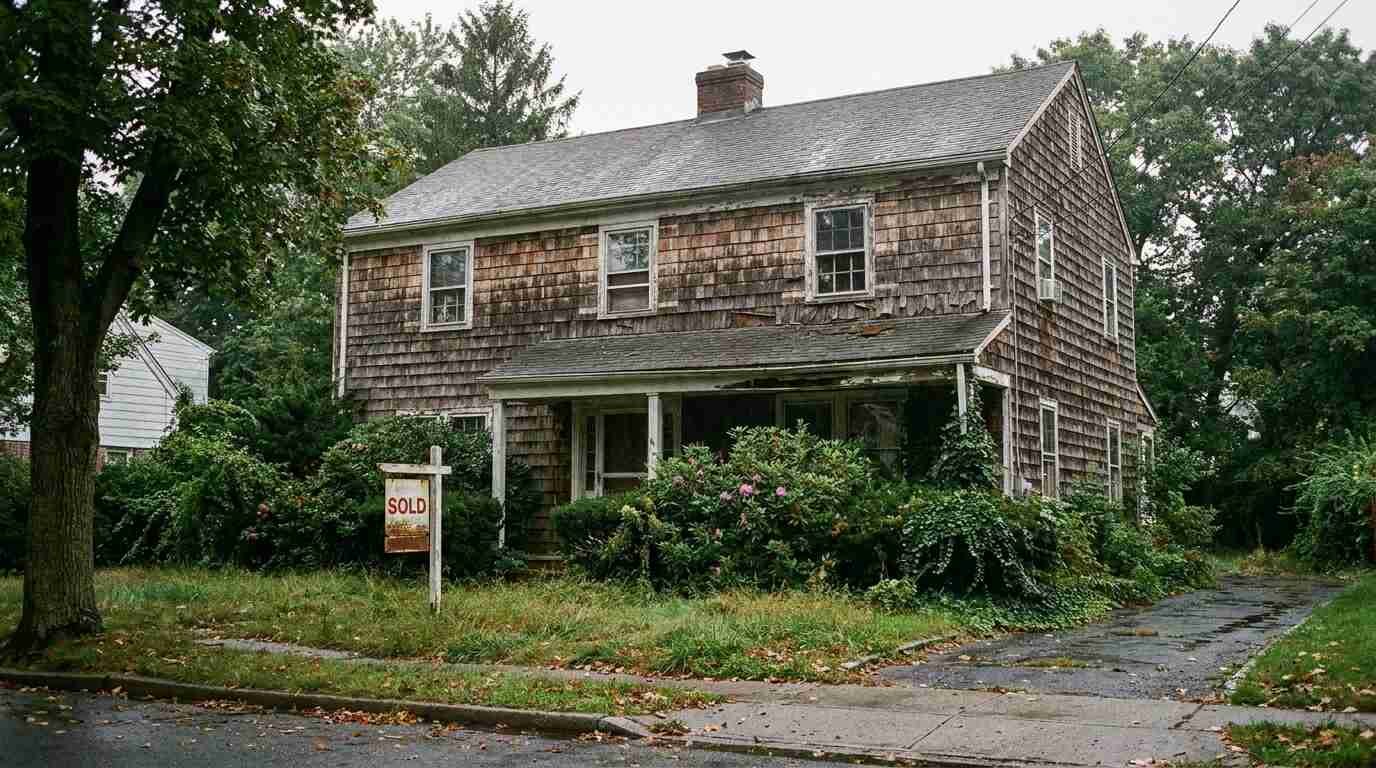
A $750,000 fixer in Lloyd Harbor sounds like a steal—until the contractor hands you a $380,000 scope of work and your ARV ceiling is $1.1 million. You’ve just bought yourself $130,000 in equity, on paper, before holding costs, carrying interest, permit delays, or the two surprises that live inside every wall on this island. That is not a deal. That is a very expensive education.
I’ve watched buyers fall in love with the bones of a house and forget to do the math until it’s too late. The North Shore has beautiful bones everywhere. It also has some of the most expensive renovation markets in the country, a permit system that moves at its own pace, and a resale ceiling in certain zip codes that doesn’t care how much you spent on the kitchen. Before you make an offer on anything that needs everything, you need to understand the spread—and whether it’s wide enough to survive contact with reality.
When the Discount Is Real and When It’s a Mirage
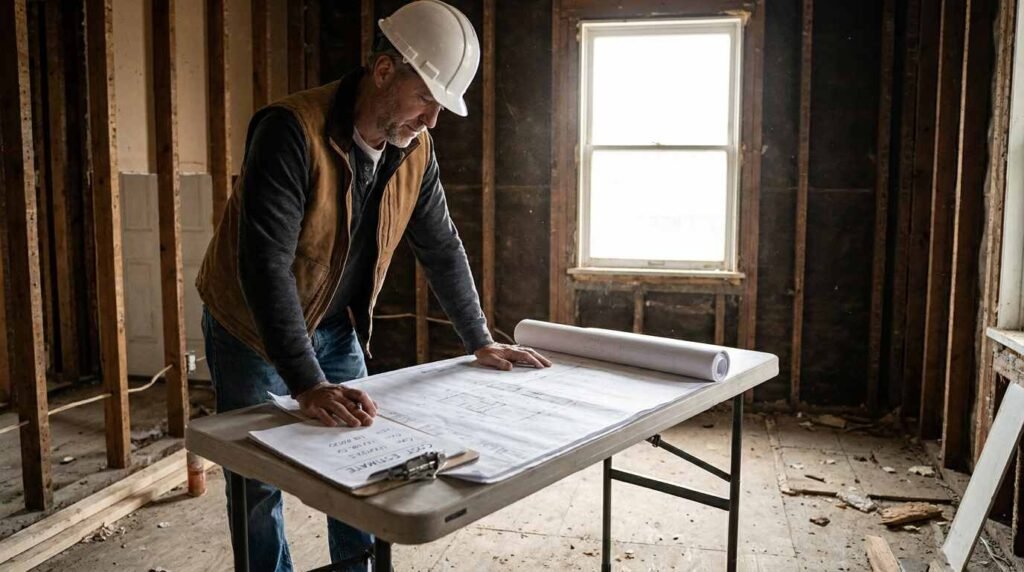
A distressed property is only a deal if three numbers work together: the purchase price, the cost to renovate, and the after-repair value. All three have to move in your favor simultaneously, which is rarer than the listing photos make it look.
The North Shore compounds this in ways that buyers coming from other markets don’t anticipate. Labor costs here run materially higher than national benchmarks. According to Remodeling Magazine’s Cost vs. Value Report for the New York metro region, a mid-range kitchen remodel costs roughly $85,000–$110,000 in this market—against a national average closer to $77,000. A bathroom addition runs $60,000–$80,000. A full gut of a 1,800-square-foot colonial, touching electrical, plumbing, HVAC, kitchen, and two baths, can reach $300,000–$450,000 depending on the town, the contractor, and what’s hiding in the framing. [VERIFY: Confirm current figures against Remodeling Magazine’s Cost vs. Value Report at remodeling.hw.net and RSMeans local cost data before publishing.]
It’s a point the team at Renovation Realty NY makes plainly: “Renovations in high-value areas like Suffolk County might warrant higher-end finishes and more extensive upgrades compared to more modest neighborhoods.” The location doesn’t just determine what you can sell for—it determines what the market will penalize you for skimping on.
Then there’s the permit reality. I wrote about this in more detail in Why Long Island Permits Are Taking 14 Months, but the short version is: carrying a gut rehab through a 12–18 month permit and construction cycle at today’s interest rates adds real cost to the equation. Mortgage payments, property taxes, and insurance don’t pause while you wait for a rough inspection sign-off.
The discount has to be large enough to absorb all of it. On the North Shore, I typically want to see at minimum a 20–25% spread between distressed purchase price and projected ARV—and I want that ARV supported by recent comps, not wishful thinking.
Where the ARV Math Actually Works: Three Towns Worth Running
Not every North Shore market has enough ceiling to support a gut renovation investment. Here are three where the spread exists—conditionally.
Northport
The village commands a premium that the surrounding hamlet often doesn’t yet fully reflect. A distressed colonial in Northport hamlet, away from the village core, can trade at a meaningful discount to renovated comps a half-mile away. If you can buy at $550,000–$620,000, renovate for $250,000–$320,000, and sell into a $1.0M–$1.1M comp set, the math has legs. The critical variable: proximity to the village. Buyers paying village-adjacent premiums are buying walkability and harbor access. A gut rehab that delivers a beautiful house on a busy road doesn’t capture the same ceiling.
Port Jefferson
The ferry premium is real, and I covered why in Why Port Jefferson’s Ferry Terminal Is the Most Undervalued Selling Point on the North Shore. Distressed inventory in the school district trades at a discount to turn-key product in a way that can support renovation math—but Port Jeff has a wide range of micro-markets within it. Village-adjacent and in-district homes have genuine ARV ceiling. Properties on the edges of the school district boundary need more scrutiny.
Oyster Bay Area (Nassau)
The Gold Coast adjacency creates interesting asymmetries. Smaller colonials and capes in Oyster Bay proper can be acquired at prices that, post-renovation, don’t fully reflect the school district and location premium the market is increasingly assigning to the area. [VERIFY: Pull current MLSLI sold data for Oyster Bay hamlet before publishing.]
The Red Flags That Turn a Discount Into a Money Pit
Experience has made me a thorough skeptic when I walk through a fixer on the North Shore. Here are the conditions that, singly or in combination, collapse the math even when the purchase price looks right.

Oil Tanks
Buried oil tanks are endemic to North Shore properties built before 1980. Remediation costs range from $10,000 for a clean decommission to $80,000+ for a contaminated soil scenario. I’ve seen buyers discover tanks mid-renovation after closing. The Iron Ghost in the Yard covers this in detail—read it before you make an offer on anything pre-1985.
Knob-and-Tube or Aluminum Wiring
Neither is immediately fatal, but both require full replacement for most renovation scopes and insurance purposes. Budget $18,000–$30,000 for a full rewire of a mid-size home, and understand that it affects every wall you open.
Asbestos
Particularly relevant in homes built between 1940 and 1978—pipe insulation, floor tiles, ceiling texture, siding. The Asbestos Ceiling Nobody’s Talking About covers the scope of this problem in Suffolk County. Remediation adds cost and time that buyers rarely price in adequately.
Septic Systems
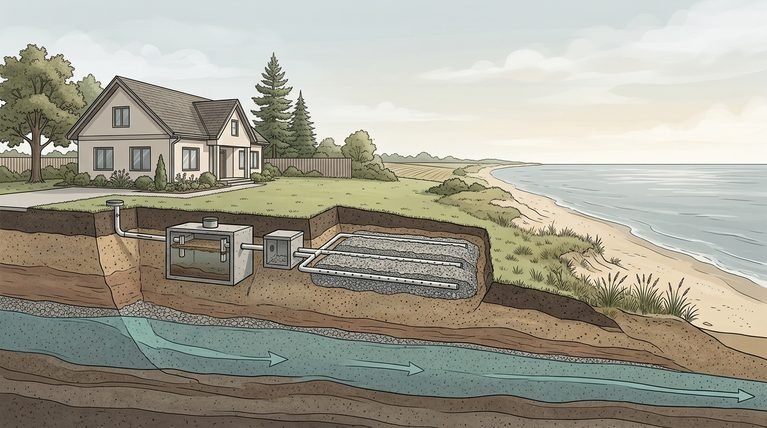
Suffolk County’s cesspool phase-out program is creating a new line item for buyers: properties with cesspools rather than properly designed septic systems may require full system replacement, which runs $20,000–$35,000 and requires Town Health Department approval and often survey work. This is an increasingly material cost in the renovation equation.
Foundation Issues on Glacial Till
North Shore soil is notoriously variable. The same glacial geology that makes this landscape beautiful creates differential settlement, hydrostatic pressure, and drainage problems that don’t announce themselves until you’ve started digging. Why Your 1960s Ranch Renovation Is Fighting the Soil covers this specifically. A structural engineer’s eye before you close is not optional on a true gut rehab.
How to Structure the Offer When the House Needs Everything
The mechanics of making an offer on a fixer-upper on Long Island are different enough from a standard purchase that they deserve their own attention.
First: the inspection contingency is your primary protection, and you should never waive it on a distressed property. A house that needs everything can be hiding structural, environmental, or mechanical conditions that change your renovation budget by six figures. The Inspection Contingency Is Not a Formality is required reading before you go to contract.
Second: consider a pre-offer walkthrough with a contractor. This is not standard practice, and sellers don’t always accommodate it, but it’s worth asking—especially if the property has been sitting. A contractor who can give you a rough order-of-magnitude estimate before you commit to a price protects you more than any contingency language will.
Third: build your contingency language carefully. A standard inspection contingency protects you against conditions you couldn’t see. Make sure your attorney structures the language to include the right to re-negotiate or exit based on estimated remediation costs, not just the presence of a defect. New York’s attorney review period gives you room here—use it.
Fourth: your offer price has to reflect the scope before you know the scope. If comparable gut-renovated product in the area sells at a given price, and you believe renovation will cost a certain amount, your offer price needs to leave room for the unknown that every gut rehab produces. I build in a contingency reserve—typically 15–20% of estimated renovation cost—as a buffer against the surprises that live in the walls of every house built before 1980.
The North Shore fixer-upper market rewards buyers who do the math before they do the showing. When the numbers work, they work well—this is a market where renovation equity is real and the ARV ceiling can justify serious investment. When they don’t work, they don’t work quietly. Do the arithmetic first.
This is for informational purposes only—consult a licensed contractor, attorney, and financial advisor for your specific situation.
Real estate markets change. For current listings and market data, contact Pawli at Maison Pawli.
Sources
- Remodeling Magazine, Cost vs. Value Report (New York Metro region)—verify current edition before publishing
- RSMeans Construction Cost Data—verify current regional figures
- Suffolk County Department of Health Services—Cesspool Phase-Out Program
- Renovation Realty NY: The Impact of Location on Fixer-Upper Renovations in Long Island
- Maison Pawli: The Asbestos Ceiling Nobody’s Talking About
- Maison Pawli: The Iron Ghost in the Yard
- Maison Pawli: Why Your 1960s Ranch Renovation Is Fighting the Soil
- Maison Pawli: Why Long Island Permits Are Taking 14 Months
- Maison Pawli: The Inspection Contingency Is Not a Formality