Long Island Property Taxes Explained for NYC Buyers
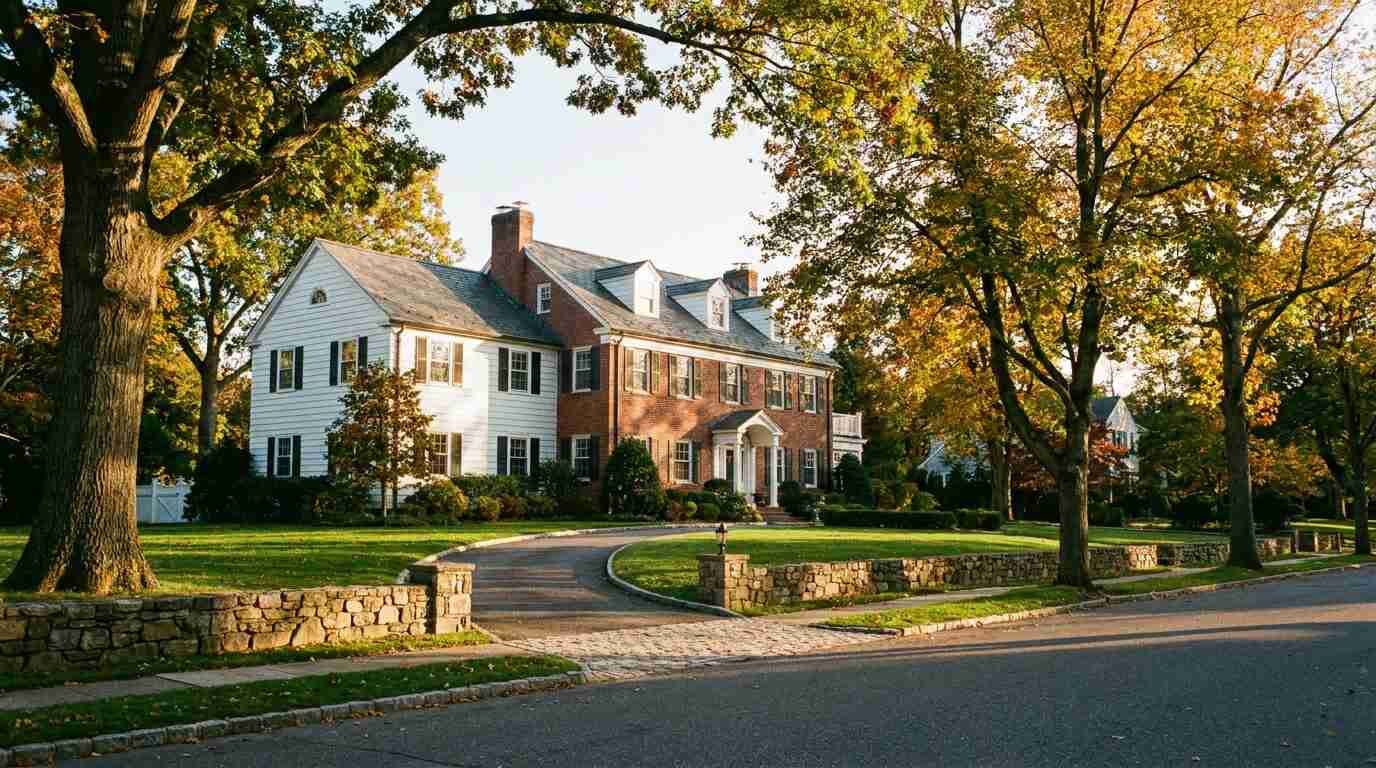
Long Island Property Taxes Explained for NYC Buyers
The number that stops most of my NYC buyers cold isn’t the asking price. It isn’t the down payment. It’s the tax line on the listing sheet — a number that tends to run between $12,000 and $22,000 a year on a typical North Shore home, and sometimes considerably higher. For buyers coming from a co-op or condo in Brooklyn or Manhattan, where property taxes were folded invisibly into a maintenance fee or simply weren’t a line item at all, it can feel like a wall.
It doesn’t have to. Long Island property taxes are real, they’re significant, and they’re unavoidable. But they’re also widely misunderstood — and once you understand how they actually work, how they’re calculated, what you get in return, and where the legitimate pressure relief valves are, they become a number you can plan around rather than a number that plans around you.
Here’s the full picture.
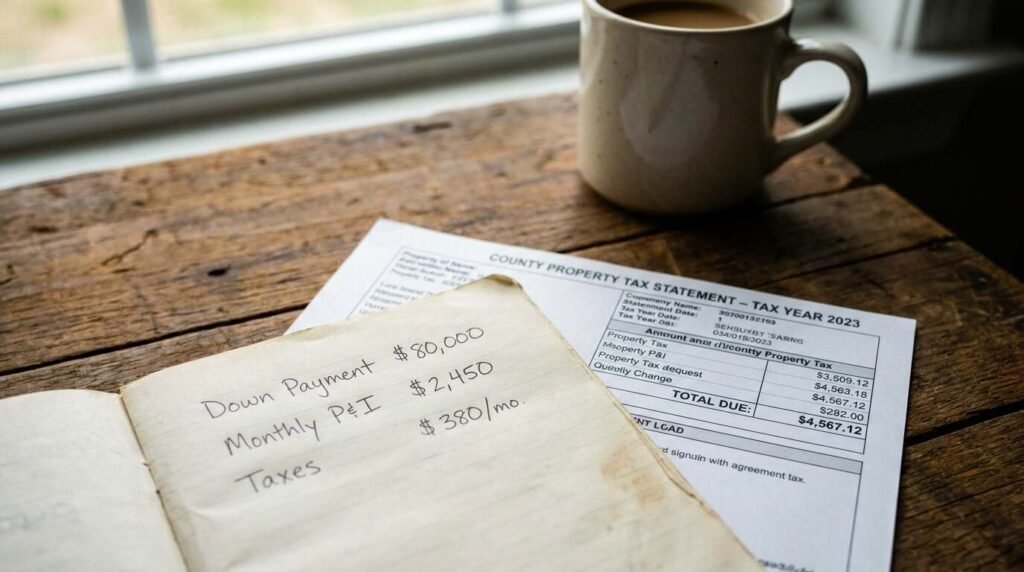
Why Long Island Property Taxes Are So High — and Why That’s Only Half the Story
Long Island consistently ranks among the highest property tax jurisdictions in the country. Nassau County in particular has appeared at or near the top of national property tax burden surveys for years. The reasons are structural, not accidental.
New York State funds a large portion of public services — particularly schools — at the local level rather than the state level. That means each school district, village, town, fire district, library district, and special service district has its own taxing authority, and each of those layers shows up on your bill. A typical Long Island property tax bill isn’t one number — it’s a stack of levies from four to eight separate taxing bodies, all added together.
The second reason is density of government. Long Island’s two counties contain dozens of incorporated villages, each with its own budget and tax rate. If your property sits within a village, you’re paying village taxes on top of town taxes on top of county taxes on top of school taxes. The more layers you’re under, the higher the aggregate bill.
What that tax bill funds, though, is considerable: among the top-performing public school systems in the state, well-staffed local fire departments (most of them volunteer, which actually keeps costs lower than professional departments in comparable markets), maintained parks and beaches, and municipal services that consistently outrank comparable suburban markets nationally.
You’re not throwing the money away. You’re paying for an infrastructure that holds long-term property values at a level New York City buyers consistently underestimate when they first look at the numbers.
How Nassau and Suffolk Calculate Property Taxes Differently
This is where a lot of buyers get confused, because Nassau and Suffolk operate under genuinely different assessment systems.
Nassau County assesses residential properties at a fixed percentage of market value — currently 0.1% for Class 1 residential properties. That sounds like a very low assessed value, but the tax rate applied to it is correspondingly higher. The real number that matters is the effective tax rate — what you’re actually paying as a percentage of market value — which for Nassau County typically runs between 1.5% and 2.5% depending on the municipality and school district.
Suffolk County assesses at full market value (100%), but actual assessed values often lag behind current market conditions. Suffolk’s 10 towns each conduct their own assessments on different schedules, which means assessed values can diverge significantly from what a property would actually sell for. Understanding the relationship between the assessed value on a Suffolk listing and its likely actual market value is something your attorney and broker should walk you through before you make an offer — it affects your ability to grieve the assessment, which I’ll get to below.
The practical takeaway: don’t compare tax bills between Nassau and Suffolk properties without understanding the underlying assessment methodology. A $9,000 annual tax bill in Nassau on a $750,000 home and a $9,000 bill in Suffolk on the same home can reflect very different effective rates — and very different grievance opportunities.
School Taxes: The Biggest Piece of Your Bill
On a typical Long Island property tax bill, the school district levy represents 60% to 70% of the total — sometimes more. This is the number that most directly drives variation between neighboring towns, between adjacent zip codes, and even between properties on opposite sides of the same street if they fall into different school districts.
School districts on Long Island operate as independent taxing authorities. Their budgets are voted on annually by district residents, and the tax rate is set to cover whatever the budget requires after state aid is applied. Districts with higher spending per pupil — generally the higher-performing districts — carry higher tax rates. This is not a coincidence. The correlation between school district quality and property tax burden on Long Island is direct and documented.
What that means practically: if you’re buying in Great Neck, Jericho, Cold Spring Harbor, or Syosset, you’re buying into some of the highest property tax environments on the island — and some of the most consistently top-ranked school systems in New York State. If you have school-age children, the math often works in your favor. If you don’t, it’s worth thinking through what you’re paying for and whether a district with slightly lower spend but strong outcomes fits your situation better.
I’ve covered how school district quality maps onto price per square foot across Suffolk County in a post worth reading alongside this one: Best School Districts in Suffolk County and What They Do to Price Per Square Foot.

STAR and Enhanced STAR: Credits That Actually Matter
New York State’s School Tax Relief (STAR) program provides a credit against your school tax bill if the property is your primary residence. It’s not automatic — you have to register — but for most buyers, it’s money left on the table if they don’t apply.
Basic STAR is available to any owner-occupied primary residence with household income under $500,000. As of the most recent program parameters, it provides a credit in the range of $300 to $700 annually, depending on your school district. It’s not life-changing, but it’s real.
Enhanced STAR is available to homeowners 65 and older with qualifying income levels (currently capped at around $98,700 for the 2025-26 school year). The credit is more substantial — typically $600 to $1,400 — and income thresholds are adjusted annually.
Both programs are now administered as direct credits rather than assessment reductions — meaning the State pays you directly rather than reducing the assessed value on your bill. You register through the New York State Department of Taxation and Finance at tax.ny.gov. Do it early; processing timelines can run several months.
One note for buyers coming from out of state or purchasing investment properties: STAR is available only on your primary residence. If you’re maintaining a New York City apartment while buying on Long Island, you’ll need to establish Long Island as your primary domicile to qualify.
(This is for informational purposes only — consult a tax advisor for your specific situation.)
What Grieving Your Assessment Can Save You
Assessment grievance is one of the most underutilized tools available to Long Island homeowners, and one I routinely encourage buyers to pursue — particularly in Nassau County, where the grievance process is more formalized, and in Suffolk towns where assessments haven’t been updated recently.
The premise is simple: if your property’s assessed value is higher than its actual market value, you’re overpaying taxes. You have the right to challenge that assessment through your municipality’s assessment review board. In Nassau County, grievances are filed with the Assessment Review Commission; in Suffolk, the process runs through each town’s Board of Assessment Review.
The deadline matters enormously. In Nassau County, the grievance filing window typically closes in late March. In Suffolk County, it varies by town but generally falls in late May. Missing the window means waiting another year.
You can file yourself using comparable sales data — your broker can often help you pull relevant comps — or engage a tax grievance firm that works on contingency (typically taking a percentage of the first year’s savings). The investment is minimal. For homes where the assessment is meaningfully above market, the savings can run into the thousands annually, recurring.
Post-purchase, this is one of the first conversations I have with buyers who close on properties where the assessed value feels high relative to what they paid. The tax grievance deadline for the year of purchase is often closer than people realize.
The Right Way to Budget for Property Taxes When You’re House Hunting
Here’s how I frame the conversation with buyers who are working from a monthly budget figure rather than a purchase price target: your total housing payment includes principal, interest, property taxes, and homeowner’s insurance. On Long Island, taxes are significant enough that they need to be built into your pre-approval math, not added on afterward.
Most lenders will escrow property taxes — they collect one-twelfth of your annual tax bill each month alongside your mortgage payment and hold it in reserve to pay the municipality when the bill comes due. This means your PITI (principal, interest, taxes, insurance) payment is the real monthly figure you’re committing to.
As a rough benchmark: on a home with a $15,000 annual tax bill, your escrow contribution is $1,250 per month. Add that to a mortgage payment on a $650,000 loan at current rates, and you’re looking at a total monthly obligation that can surprise buyers who sized their purchase based on mortgage payment alone.
I’d encourage every buyer in this process to read through How Property Taxes Work in Suffolk County: What Buyers Need to Budget Before They Close and What Closing Costs Actually Look Like on Long Island. Taxes affect both your recurring costs and your closing day figures, and the more clearly you understand each, the fewer surprises show up at the table.
Towns With Relatively Lower Tax Rates (Yes, They Exist)
Within Suffolk County, certain areas carry meaningfully lower effective tax rates than the North Shore’s higher-end communities. Smithtown, Hauppauge (within the Hauppauge school district), and parts of Brookhaven Town tend to offer lower aggregate bills relative to home value than comparable communities in Nassau or the higher-rated North Shore districts.
It’s worth noting that lower taxes don’t always mean lower total cost of ownership — you have to weigh what you’re getting in school district quality, commute, and home value trajectory alongside the annual bill. A home in a district with a lower tax rate but slower appreciation may cost more over a ten-year hold than a higher-taxed property in a market with consistent value growth.
The communities with the most punishing effective rates tend to be older, denser municipalities in Nassau County — certain parts of Hempstead Town, some of the Five Towns communities — where assessed values haven’t been updated to reflect market appreciation and the school districts carry high per-pupil spending.
The cleanest way to compare: ask for the effective tax rate (annual taxes divided by estimated market value) on any property you’re seriously considering, and use that figure rather than the raw dollar amount when comparing across municipalities.
What NYC Buyers Get in Return for the Higher Tax Bill
This is the question I hear most often, and it deserves a direct answer.
What you get: public schools that rank among the best in the country, with programs, facilities, and outcomes that would cost $40,000 to $60,000 per year per child in private tuition in New York City. You get responsive local government — genuine responsiveness, the kind where you can show up at a town board meeting and be heard. You get fire and emergency services that arrive in under five minutes because the station is three blocks away. You get maintained parks, beach access, library systems, and infrastructure that isn’t shared with eight million other people.
You also get a tax system that is, at least in principle, grievable — which is a lever that doesn’t exist for most residents of New York City.
And you get property values that have historically held and appreciated because the communities that produce those tax bills are precisely the communities that buyers compete to enter. The tax is not incidental to the value. It’s part of why the value exists.
The bottom line for buyers coming from the city: don’t let the tax line stop the conversation. Understand it, factor it correctly into your monthly budget, file for STAR the month you close, and talk to your broker about the grievance timeline in your specific municipality. The number is manageable. The life it funds is worth understanding on its own terms.
Real estate markets change. For current listings and market data, contact Pawli at Maison Pawli.
You Might Also Like
- How Property Taxes Work in Suffolk County: What Buyers Need to Budget Before They Close
- Best School Districts in Suffolk County and What They Do to Price Per Square Foot
- What Closing Costs Actually Look Like on Long Island
Sources
- New York State STAR Program — NYS Department of Taxation and Finance
- Nassau County Assessment Review Commission
- Suffolk County Real Property Tax Service Agency
- New York State Office of Real Property Tax Services