North Fork vs. The Hamptons: Why Savvy Investors Are Quietly Choosing Greenport Over East Hampton

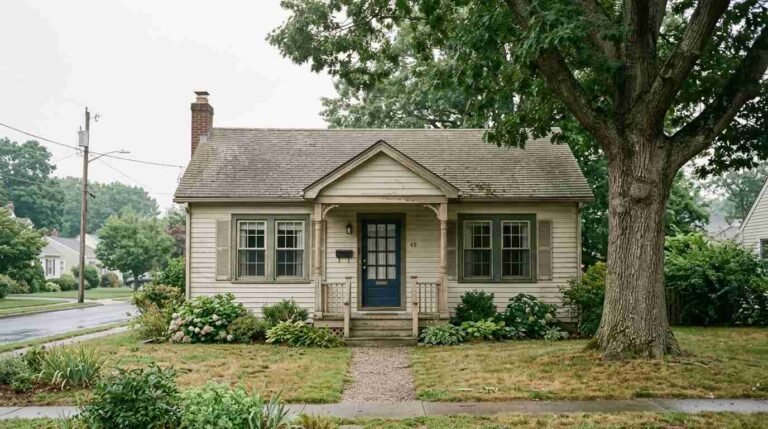
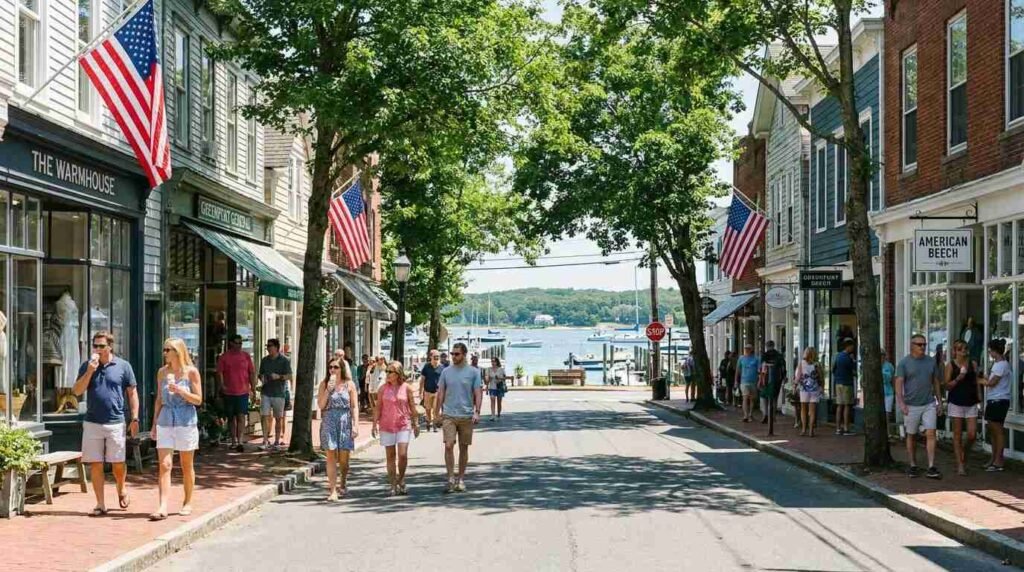
At Riverhead, the Long Island Expressway ends and you have a choice. Turn right and you’re heading toward Southampton, East Hampton, the Hamptons of the magazine spreads and the summer traffic and the median sale prices that make people put the phone down for a moment. Turn left and you’re on Route 25, moving through farmland and vineyard, headed toward Cutchogue, Mattituck, and eventually Greenport — a village at the literal end of the road that has been quietly accumulating real estate attention for reasons that make considerably more sense on a spreadsheet than a lifestyle brochure.
I follow the North Fork closely, even though it’s not my primary market. What’s happening there has implications for anyone watching how East End investment capital moves — and right now, a meaningful portion of it is turning left.
The Price Gap That’s Driving Capital Toward the North Fork
The Hamptons are not a bad investment. They’re just a different kind of investment — one where the entry point is high enough that the math requires either a very long time horizon or very favorable rental conditions to pencil out.
Median sale prices in East Hampton have regularly exceeded $2 million in recent years, and the upper end of the market has moved well beyond that. At those price points, carrying costs — property taxes, insurance, maintenance, management — absorb a significant share of gross rental revenue before you’ve touched the mortgage. Cap rates in prime Hamptons markets have compressed toward the low single digits for anything in reasonable condition. You’re betting on appreciation more than income, which is a legitimate strategy but a different one.
The North Fork entry point is structurally different. Median sale prices in Greenport and Mattituck have been running roughly 40 to 60 percent below comparable Hamptons properties, depending on the specific product. A three-bedroom with water views that would list at $1.8 million in East Hampton might list at $950,000 to $1.1 million in Greenport. The carrying costs are proportionally lower. The gross rental revenue is meaningfully lower too, but the ratio of income to investment has, for certain properties, looked more attractive on the North Fork than on the South Shore.
This spread has attracted a category of buyer who isn’t looking for a trophy — they’re looking for a business. Not the second-home buyer who wants to spend summers there and occasionally rent it out; the buyer who is running a short-term rental as an investment vehicle and needs the numbers to work from day one.
Short-Term Rental Demand: How Wine Country Tourism Is Reshaping Greenport and Mattituck
The North Fork’s rental demand story is built on something that didn’t exist at scale twenty years ago: the Long Island wine trail.
The Long Island Wine Council has documented substantial growth in wine trail visitation over the past decade, with the North Fork wineries — now numbering over sixty — drawing day-trippers and overnight visitors from New York City, New Jersey, and Connecticut throughout the spring, summer, and fall. That visitor base needs somewhere to stay, and the North Fork has very limited hotel inventory. Greenport has a handful of boutique hotels and inns. Beyond the village, the accommodation options are almost entirely short-term rentals.
What this has created is a rental demand season that runs longer than the traditional summer beach window. Wine tourism peaks in September and October — harvest season, when the vineyards are running tastings, events, and crush experiences. That extends the rental season meaningfully beyond Labor Day, which is when Hamptons occupancy typically falls off sharply. A well-positioned North Fork property can maintain occupancy through Columbus Day weekend and often beyond, adding six to eight weeks of revenue that a comparable Hamptons property might not capture.
The farm-to-table dining culture has reinforced this. Restaurants along the corridor, paired with farm stands and a seasonal food culture throughout the area, give visitors a reason to spend multiple nights rather than a single day trip. The overnight visitor generates a rental night; the day-tripper does not. For more on what makes the North Fork a year-round destination, see North Fork Wine Country Has a Secret Season. It’s Not Summer.
Cap Rates, Carrying Costs, and What the Numbers Actually Look Like
Cap rates on the North Fork are not exceptional. This is a lifestyle-adjacent real estate market, not an industrial or commercial market, and the cap rate conversation is different in that context. But for buyers running STR income as a primary investment thesis, the numbers have looked more interesting than the Hamptons comparison would suggest.
A rough framework, using illustrative figures that should be verified against current market data before any investment decision: a $1 million North Fork property in a town that permits short-term rentals might generate gross rental revenue of $80,000 to $110,000 annually, depending on location, size, and management quality. Annual carrying costs — property taxes, insurance, maintenance, and property management at roughly 20 to 25 percent of gross revenue — will consume a substantial portion of that. Net operating income in the range of $35,000 to $55,000 on a $1 million asset puts you in the 3.5 to 5.5 percent cap rate range.
That’s not a transformational return. But compare it to a $1.8 million Hamptons property generating $140,000 in gross revenue with proportionally higher carrying costs — the NOI-to-investment ratio may look similar or worse, while the capital at risk is significantly greater.
Important caveat: These are illustrative figures for conceptual comparison only. Actual rental income varies significantly by property, location, seasonality, management, and market conditions. Verify all figures with current AirDNA data, local property managers, and a licensed real estate professional before making any investment decision. This is not financial advice.
Zoning Realities: What Suffolk County Allows for STRs on the North Fork
Short-term rental regulation on the North Fork is real and materially affects the investment thesis. The towns that cover the North Fork — Southold and Riverhead primarily — have enacted STR regulations that buyers must understand before purchasing.
The Town of Southold, which covers Greenport, Cutchogue, Mattituck, and most of the North Fork wine corridor, has adopted STR registration and permitting requirements. Regulations have included owner-occupancy requirements for certain property types, cap limits on the number of rental days, and registration fees. The regulatory landscape has been actively evolving, and what was permitted under an earlier framework may look different under current rules.
The practical implication: a buyer purchasing a North Fork property as a pure investment without personal occupancy should confirm that the property qualifies under current STR regulations before assuming rental income. Properties in hamlets versus the incorporated Village of Greenport may be subject to different rules. Verify current Southold Town STR regulations directly with the Town Clerk’s office, and have your attorney review Code Chapter 280 (Zoning) and any supplemental STR legislation before closing.
Who’s Buying — and What They’re Targeting in 2025 and 2026
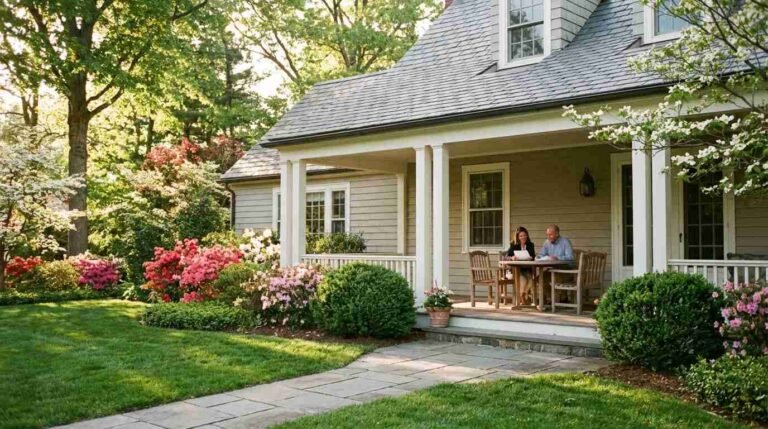
The buyer profile on the North Fork investment side is relatively consistent. It tends to be someone who has already priced themselves out of the Hamptons at the price point where the math works, or someone who specifically wants the wine country positioning as both a personal amenity and a marketing angle for the rental. “Stay in the heart of Long Island wine country” rents at a premium on short-term rental platforms in a way that “stay near the beach” does not differentiate.
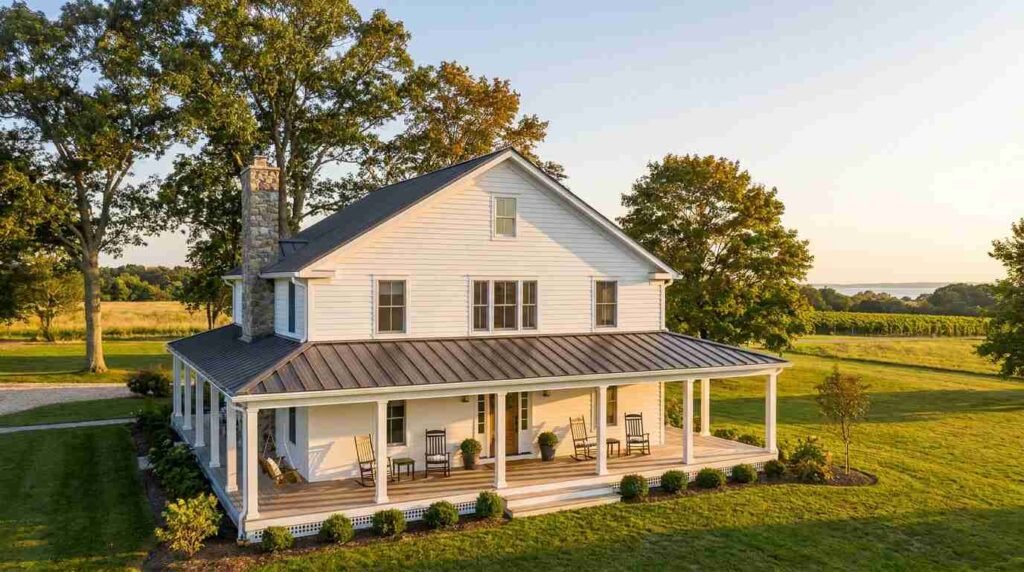
The properties moving fastest in the investment category tend to be three-bedroom houses within reasonable proximity to Greenport village or the Main Road wine trail corridor — properties that photograph well, are within walking or easy driving distance of multiple wineries, and have some outdoor feature that supports the weekend-getaway experience. Farmhouse aesthetics outperform colonial aesthetics in this rental market. A listing with vintage-style interiors and agricultural surroundings performs differently than a conventional suburban rental.
Mattituck and Jamesport are showing up in more investor conversations than they were two years ago, as Greenport inventory tightens and buyers look slightly further down the road. For a ground-level sense of the Greenport market itself, Greenport, NY Is the Most Walkable Village on Long Island gives useful context on what makes the village function as a destination. And for a broader read on how the East End gateway market has evolved, see Riverhead, NY Real Estate Market 2026: The Gateway Town That Got Serious.
If you’re looking at the North Fork as an investment market, the time to be early is receding — but it hasn’t passed. The Hamptons comparison is a useful frame not because the North Fork will become the Hamptons — it won’t, and shouldn’t — but because it explains where a certain category of capital is going and why. The spreadsheet, for a specific buyer with a specific strategy, points left at Riverhead.
This post is for informational purposes only and does not constitute legal or financial advice. Real estate investment carries risk. All figures referenced are illustrative and should be independently verified. Consult a licensed real estate professional, accountant, and attorney before making any investment decision.
Real estate markets change. For current listings and market data, contact Pawli at Maison Pawli.
You Might Also Like
North Fork Wine Country Has a Secret Season. It’s Not Summer.
Greenport, NY Is the Most Walkable Village on Long Island. Here’s the Exact Itinerary.
Riverhead, NY Real Estate Market 2026: The Gateway Town That Got Serious
Sources
Long Island Wine Council — annual visitor reports and winery directory
OneKey MLS — North Fork and East Hampton median sale price data
AirDNA — STR occupancy and revenue data for zip codes 11944 and 11952
Town of Southold Code Chapter 280 — Zoning
Suffolk County Real Property Tax Service