Cristóbal Balenciaga and the Art of the Empty Room: How One Designer Made Absence Feel Like Wealth
When Cristóbal Balenciaga closed his couture house in 1968, he did not hold a press conference. He did not issue a statement through his directrice, did not grant a final interview to the editors who had spent careers trying to understand what he was doing. He simply closed. The salons on Avenue George V went dark, and the clients — among them the Duchess of Windsor, Mona Bismarck, Pauline de Rothschild — learned of it the way one learns of a private loss: quietly, and from a source close to the matter.
This was consistent. Everything about Balenciaga was consistent, which is to say: everything was edited. The extraneous had been removed. What remained was only the thing itself.
The Architecture of the Salons
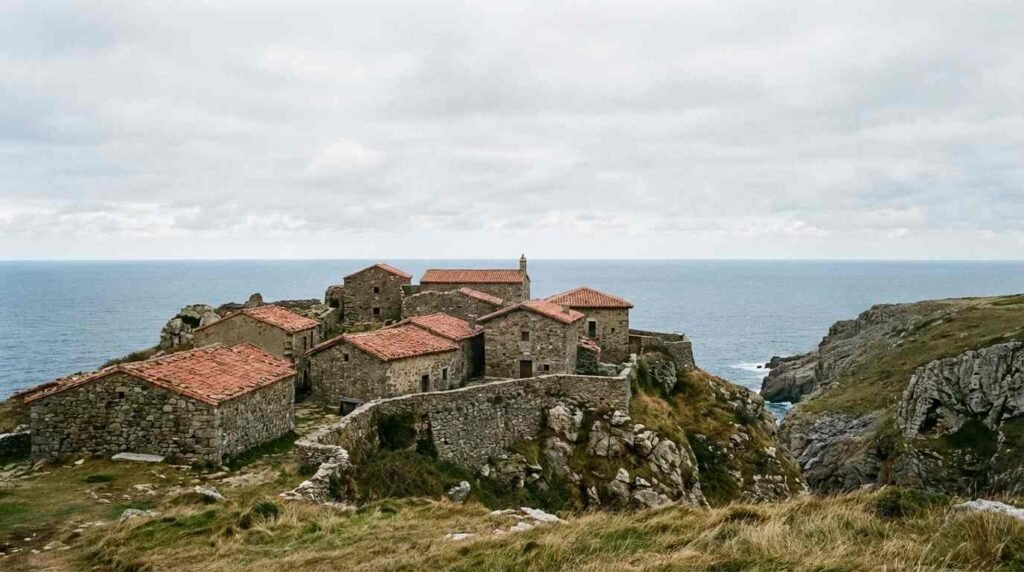
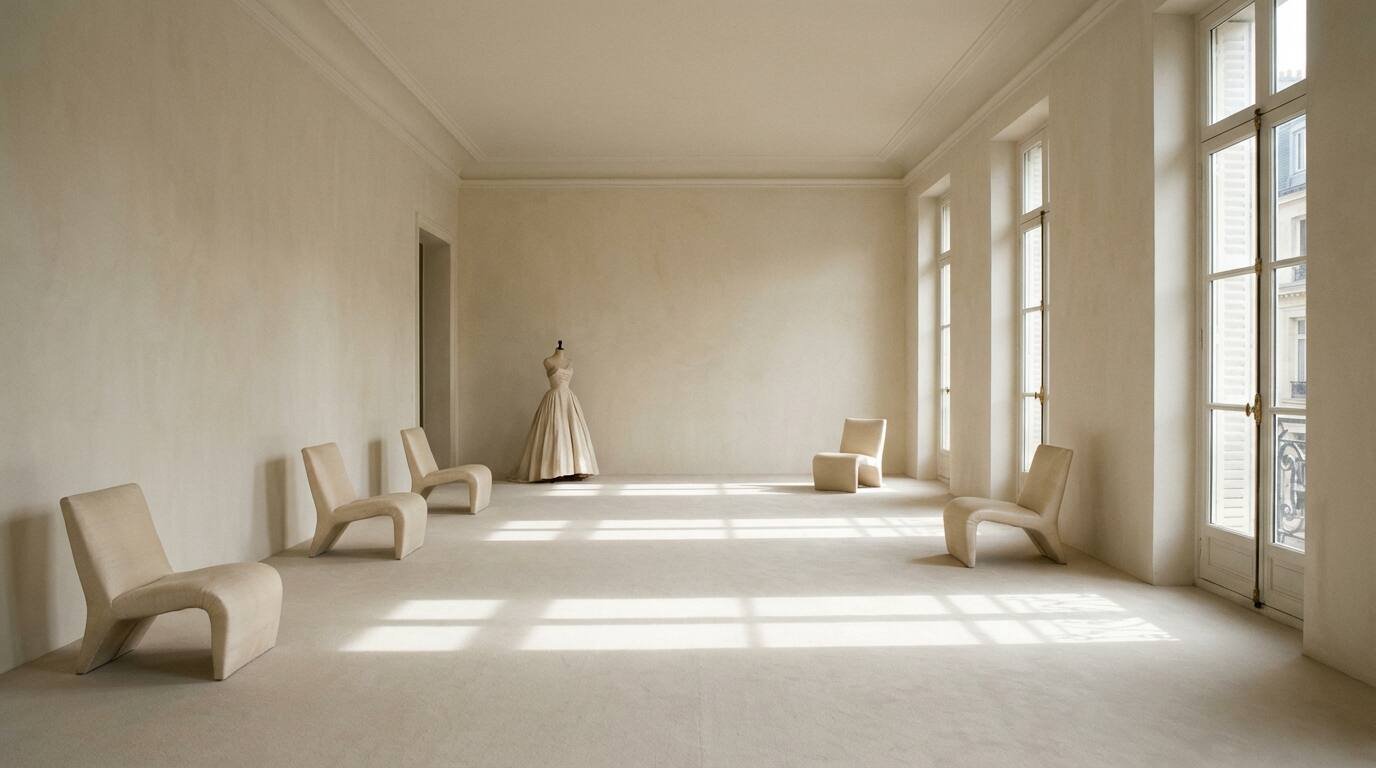
Cecil Beaton photographed the Balenciaga workrooms for Vogue in 1954, and those images remain among the most revealing documents in fashion history — not because they show the clothes, but because they show the rooms. The walls are bare. The furniture is minimal. The light is neutral. There is nothing to look at except the garments and the bodies that carry them.
This was not asceticism for its own sake. It was an argument about attention. Balenciaga had concluded — and the conclusion was structural, not decorative — that everything added to a room that was not the clothes was a form of interference. His clients were women who understood the difference between looking at something and being marketed to. He refused to market to them.
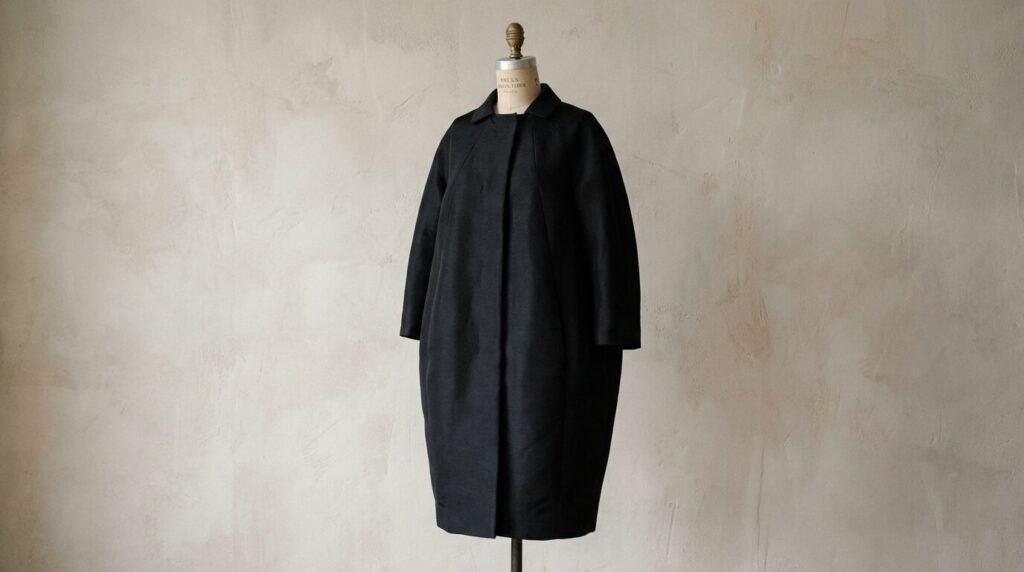
Hamish Bowles’s Vogue coverage of the Cristóbal Balenciaga Museum opening in Getaria, Spain in 2011 — the museum holds the primary archive of the house’s work — positioned Balenciaga as the supreme technician of 20th-century fashion. But what the Getaria collection makes clear, piece by piece, is that the technical mastery was always in service of the same principle: reduction. The famous 1957 sack dress, which scandalized buyers who had expected waists, was not a fashion provocation. It was Balenciaga removing a convention he had decided was unnecessary. The waist is not the body. The waist is a corset. Remove it.
What No Advertising Looked Like
Mary Blume’s biography The Master of Us All (Farrar, Straus and Giroux, 2013) documents the full strangeness of Balenciaga’s commercial practice. He took no advertising. He did not court the press — photographs of his collections were embargoed for weeks after presentation, and buyers who violated the embargo were not invited back. His client list was private in the way that serious things are private: not hidden, but not performed.
The models in his shows did not smile. The presentations ran in near silence. Clients sat for their fittings in rooms designed to contain nothing that was not necessary. What was extraordinary about this — and it was extraordinary, even in the 1950s, when fashion operated under very different conventions than it does today — was that none of it read as coldness. The clients returned, season after season, because what they were offered in those spare rooms was the rarest thing a designer can provide: the sense that they were being treated as intelligent adults who did not need to be dazzled.
The restraint was the luxury. The absence was the argument.
The Line to The Row
Business of Fashion’s 2018 profile of The Row documented what Mary-Kate and Ashley Olsen have said in their own terms: that the reference points for the house are European couture restraint, an architecture of dressing in which the quality of construction is the only ornament. The clothes are expensive not because of their branding but because of what they are. You have to look closely to see it. That is the point.
Balenciaga — Cristóbal Balenciaga, not the current house — refused social media promotion seventy years before social media existed, by the simple method of refusing all promotion. The logic is the same: if you have to explain the value, you have already lost the argument. True luxury is apprehended, not explained.
I think about this in the context of real estate fairly often. The properties on the North Shore that hold their value across generations — the houses on the harbor, the old Colonials on the ridge roads — are almost never the ones with the most visible improvements. They are the ones where someone made decisions a long time ago with enough confidence to leave things out. The stone wall that goes all the way to the property line. The rooms that don’t overcommunicate their purpose. The light that falls through windows placed by someone who understood what afternoon light does to a room in October.
Balenciaga would have understood all of it. He had been making that argument about fabric and silhouette for thirty years before he decided there was nothing left to say.
This post is for cultural and informational purposes. For questions about North Shore properties and what enduring quality looks like in a house, contact Pawli at Maison Pawli.