The Planting Fields Orangery as Artifact: What the Coe Estate’s Glass Structures Tell Us About the Gilded Age’s Obsession with Conquering Climate
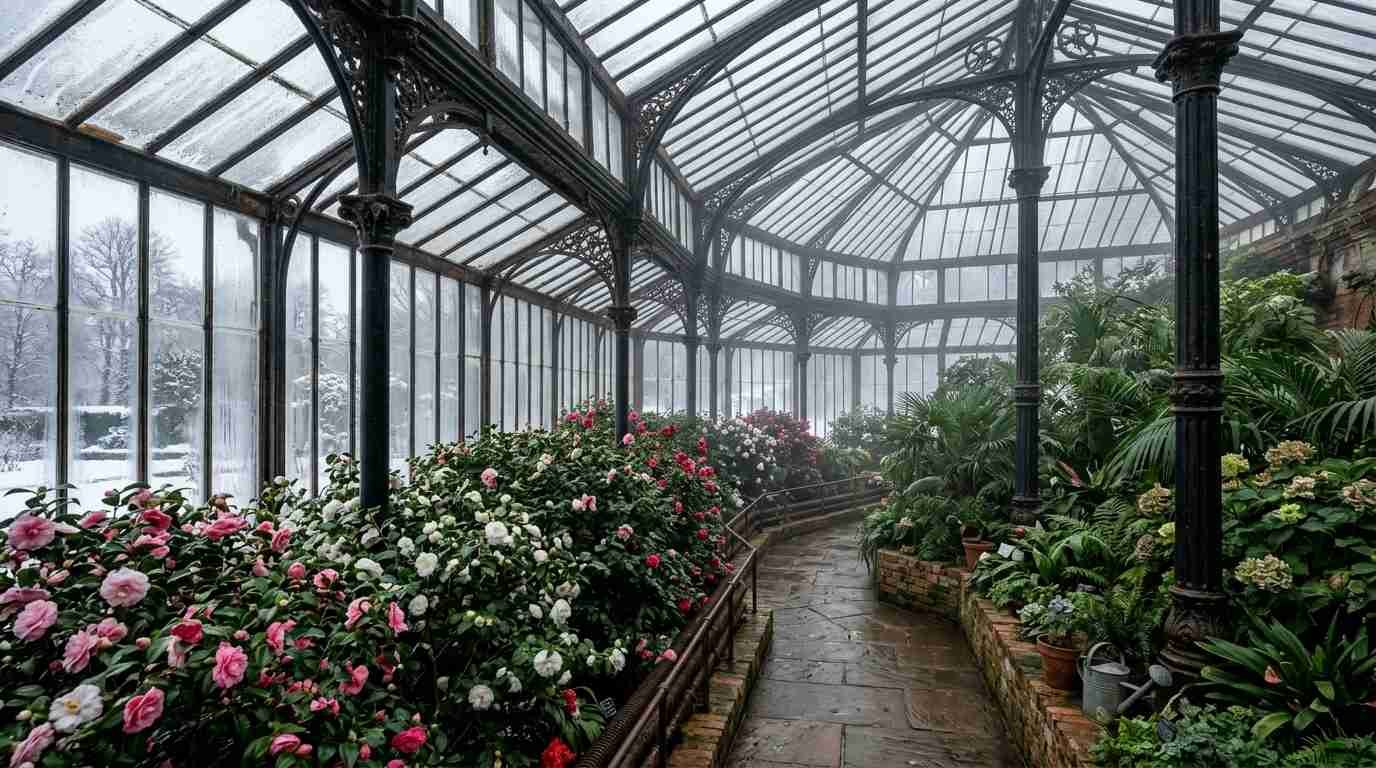
Walk into the Planting Fields camellia greenhouse in February — when the rest of Oyster Bay looks like a Wyeth painting, bare branches, grey sky, frozen ground — and you understand something immediately about the people who built it. The air inside is warm and heavy with the particular green smell of things that have no business surviving a Long Island winter. The camellias are in full bloom. Outside, it is February. Inside, it is not.
That gap is the subject. Not horticulture, not estate history in the conventional sense — but the gap itself. The engineered distance between what the climate is and what money can make it appear to be. The Coe estate’s surviving greenhouse complex at Planting Fields Arboretum State Historic Park is one of the last intact examples of that declaration on the East Coast, and it rewards exactly the kind of attention archaeologists bring to material culture: the question of what an object, examined closely, reveals about the people who made and used it.
The Site and Its Documentation
Planting Fields Arboretum comprises some 400 acres in Oyster Bay, managed by New York State. The Coe Hall estate and greenhouse complex are listed on the National Register of Historic Places — the National Register nomination is a foundational document for understanding the site’s architectural and historical significance, and it is unusually rich in physical description of the greenhouse infrastructure.
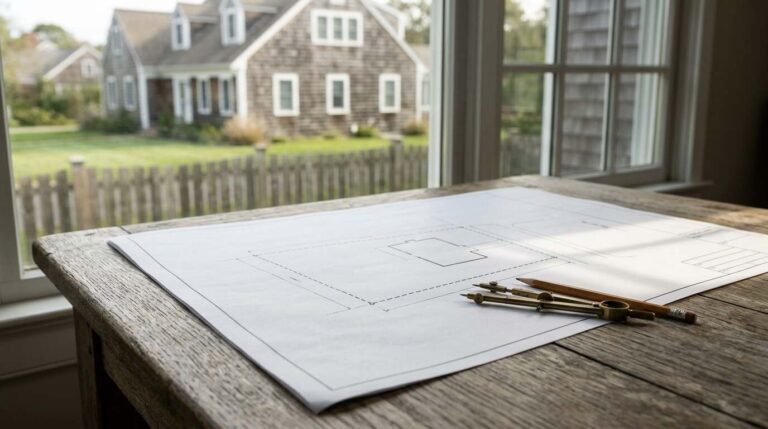
William Robertson Coe acquired the property beginning around 1913 and undertook systematic expansion of the estate’s horticultural infrastructure through the 1920s. The greenhouse complex was built beginning around 1918. The Olmsted Brothers — the landscape architecture firm founded by Frederick Law Olmsted’s sons — designed the landscape framework within which the greenhouse complex operates. Their original plans are held at the Frederick Law Olmsted National Historic Site archive in Brookline, Massachusetts, and they reveal the degree to which the greenhouse was designed not as a utilitarian afterthought but as a central element of the estate’s representational program.
The Planting Fields Foundation maintains the estate records and horticultural documentation — including planting records that constitute, in effect, a material culture archive of what the estate’s climate control apparatus was used to produce.
Glass as Status Technology
The orangery — a structure designed to overwinter citrus and other tender plants — was already an established European aristocratic form by the time the Gold Coast estates were being built. What the American Gilded Age did with the form was characteristically maximalist: the scale expanded, the technology advanced, and the symbolic content was amplified.
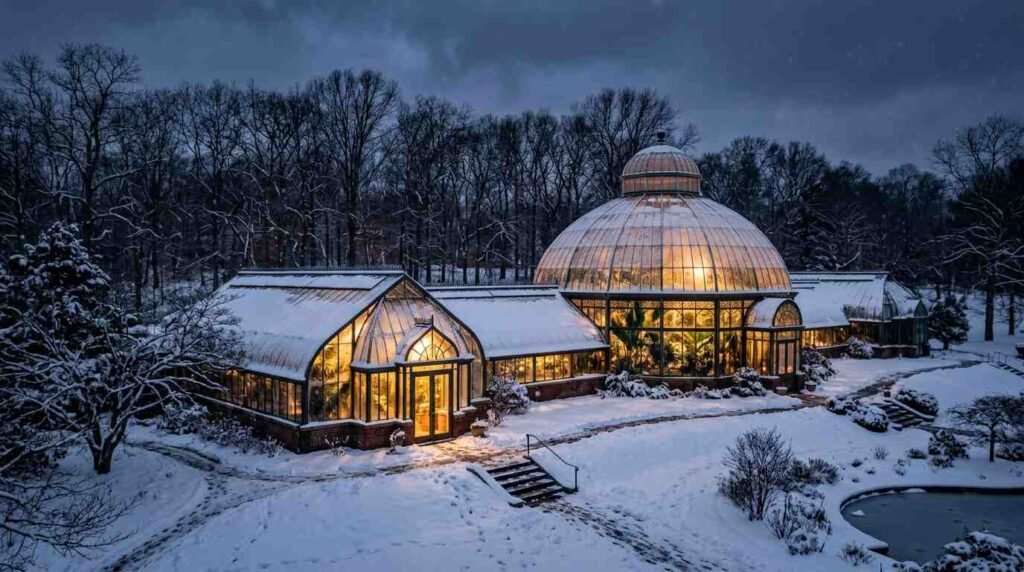
The greenhouse complex at Planting Fields is not one structure but several, linked and differentiated by function: the camellia house, the main conservatory, the cutting greenhouse, the propagation houses. Each is engineered to maintain a specific microclimate. Together, they represent an investment in climate control infrastructure that, in the 1920s, was the operational equivalent of today’s most advanced mechanical systems — expensive, technically demanding, and maintained by a significant permanent labor force.
That labor force is the invisible element in most accounts of Gilded Age horticulture. The planting records in the Planting Fields Foundation collections document the plants. The labor records — where they survive — document the gardeners, the glasshouse workers, the boiler operators who kept the coal-fired heating systems running through winter. The gap between those two sets of records is archaeologically interesting: the estate presents itself through its plants; its actual operation was sustained by people who appear mostly in payroll ledgers.
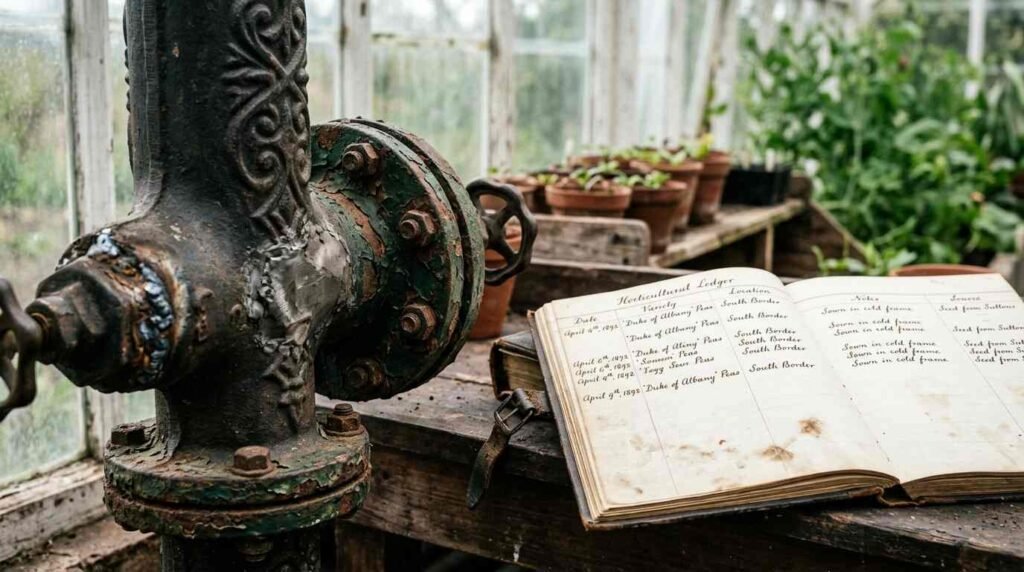
What an archaeologist notices about the Planting Fields greenhouse complex is not primarily the camellias. It is the infrastructure required to maintain them: the cast-iron heating pipes, the hand-cranked ventilation systems, the glass replacement records, the coal delivery schedules. The National Register nomination documents surviving examples of this infrastructure. The Olmsted plans show how it was integrated into the estate’s overall layout. Together, they constitute a physical argument about what the Coe household considered essential.
Climate Conquest as Performance
The Gilded Age greenhouse was not primarily functional. It was performative. The performance it staged was the conquest of natural limit — specifically, the limits imposed by geography and season on what could be cultivated, consumed, and displayed.
Citrus in February in Oyster Bay. Orchids in October. Camellias in bloom when the harbor is frozen. These were not luxuries in the sense of excessive comfort. They were arguments — made in living plant material — about the relationship between wealth and nature. The estate that could maintain a continuous bloom cycle regardless of season was demonstrating something specific about its owner’s position in the world: that natural constraint applied to others, not to him.
The documentary records are unambiguous about this function. The planting records preserved in the Planting Fields Foundation collections show not just what was grown but when it was scheduled to bloom — a production calendar for the estate’s social season. Dinner parties, weekend house parties, the visits of guests who would report back to New York society about what they had seen. The greenhouse was part of the estate’s social machinery, producing materials for display as surely as the kitchen produced materials for the table.
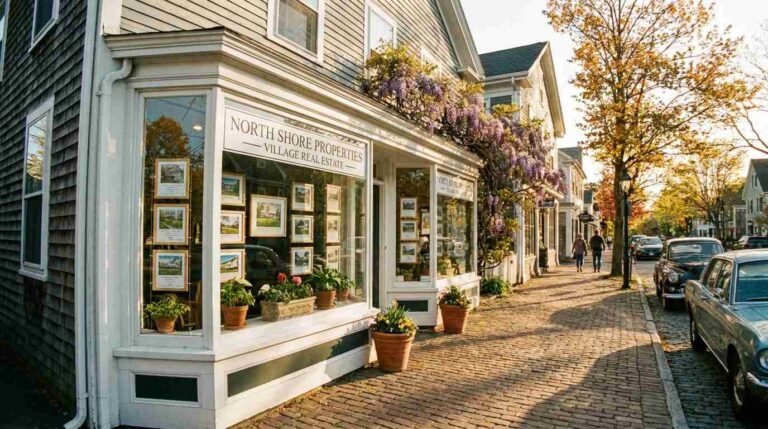
I’ve thought about this in the context of the properties I sell on the North Shore today. The impulse to control environment — to make a property present itself exactly as you wish, regardless of what the actual conditions might suggest — has not disappeared. It has simply scaled down and been given new names: staging, landscaping, smart home systems. The mechanism is the same. The Planting Fields greenhouse is its most extravagant surviving expression.
What Survives and What It Means
Most of the Gold Coast estate greenhouse complexes are gone. Some were demolished when the estates were broken up after World War II. Others collapsed under the cost of maintaining aging glass and iron infrastructure without the endowment to support it. The survival of the Planting Fields complex is, in this context, remarkable — and largely the result of New York State’s acquisition of the property in 1955 and the subsequent management by the Planting Fields Foundation.
What survives is not a ruin and not a replica. It is a working historic greenhouse complex — maintained, planted, and operated according to principles continuous with the original estate’s horticultural program, though at a scale and with a public mission the Coes would not have recognized. The camellias that bloom in February are the direct horticultural descendants of the plants the estate records document. The cast-iron pipes that heat the camellia house are original. The glass is not all original, but the structure it fills is.
For the archaeologist — and for anyone who looks at material culture with the kind of sustained attention it deserves — the Planting Fields greenhouse complex is an extraordinary artifact: a piece of Gilded Age infrastructure still in active use, still performing, in modified form, the function for which it was built. The conquest of climate is less triumphant now, more collaborative with seasonal reality. But the declaration embedded in the structure itself remains legible.
A greenhouse, built to last, will outlive its ideology. This one has.
Sources
- National Register of Historic Places nomination for Planting Fields: https://npgallery.nps.gov/GetAsset/6b59c877-c64d-4b43-8b1c-b2f47a3c87b8
- New York State Office of Parks, Recreation and Historic Preservation — Planting Fields site: https://parks.ny.gov/parks/74
- Planting Fields Foundation: https://www.plantingfields.org
- Frederick Law Olmsted National Historic Site archive — Olmsted Brothers records: https://www.nps.gov/frla/index.htm
Part of the Gold Coast Series: This post is one of fifteen pieces in the Maison Pawli Gold Coast cluster. For the full guide — surviving estates, architectural history, legal sediment, and what buyers need to know — visit The Gold Coast of Long Island: Gilded Age Estates, Architectural Heritage, and What Survives.