Why Hauppauge School District Homes Hold Value Like Almost Nowhere Else on Long Island — The Zoning Secret Behind the Numbers

The question I get most often from buyers who’ve been doing their research isn’t “which neighborhood has the best schools?” — they’ve usually figured that out before they call me. The question I get is the follow-up: why do homes in certain districts hold their value so differently from the ones right next door? Hauppauge is the clearest example I know of on Long Island, and the answer has almost nothing to do with what you’d expect.
Yes, the schools are strong. Hauppauge Union Free School District consistently ranks in the top tier of Long Island districts by academic performance, and New York State Education Department report cards back that up. But that’s correlation, not cause. A lot of Long Island districts have strong schools and still see home values that fluctuate in ways their test scores don’t explain. What makes Hauppauge different is structural — and it was designed that way.
The Architecture of the Tax Base
Most Long Island school districts are funded almost entirely by residential property taxes. When home values rise, so does the tax base. When they fall — or when reassessments lag — the district either cuts programs or raises rates. It’s a feedback loop that makes fully residential districts vulnerable in ways that buyers rarely think about when they’re evaluating a school system.
Hauppauge was built differently, and deliberately so.
The Long Island Innovation Park at Hauppauge — formerly and still commonly known as the Hauppauge Industrial Park — is the second-largest industrial park in the United States, spanning more than 1,400 acres and housing approximately 1,400 companies that employ roughly 55,000 people. What that means for the school district isn’t just jobs. It means a commercial property tax base that partially decouples the district’s funding from purely residential real estate pressure.
According to data from the Hauppauge Industrial Association of Long Island and the Long Island Builders Institute, industrial park businesses pay more than $44 million in real property taxes to the school district annually. That single figure reshapes the entire tax structure for residents: Hauppauge’s school district tax rate runs roughly 40% lower per household than the average tax rate in Suffolk County. The district itself acknowledges on its official website that the presence of businesses in the Hauppauge, Marcus, and Vanderbilt Industrial Parks has provided a healthy tax base from which the School District benefits.
The fourth-lowest tax rate of any school district in Suffolk County outside the East End, with top-tier academic performance. That combination is not an accident.
Why This Matters More Than Test Scores
I want to explain why this structural fact changes the buyer calculus — not just the tax bill, but the long-term investment logic.
When you buy in a district whose schools are funded primarily by residential property taxes, you’re making a bet on a system that’s tightly coupled to the housing market itself. If the district hits a rough patch — a budget year where the state cuts aid, a commercial vacancy spike on the main street, a recession that compresses home values — the feedback can be rapid and painful. Programs get cut. The quality signal weakens. The premium that buyers were paying for the school district starts to compress.
Hauppauge’s industrial tax base functions as a buffer. The commercial property in the innovation park doesn’t correlate directly with residential real estate cycles. When the housing market softened in 2008 and again in earlier corrections, the industrial park kept generating tax revenue that stabilized the district’s funding. The schools didn’t have to make the same reactive cuts that fully residential districts faced.
That stability is what serious buyers are actually buying when they pay a premium for Hauppauge. Not just a good school on a report card — a funding structure that’s more resilient than most of its neighbors.
The Renovation Analogy
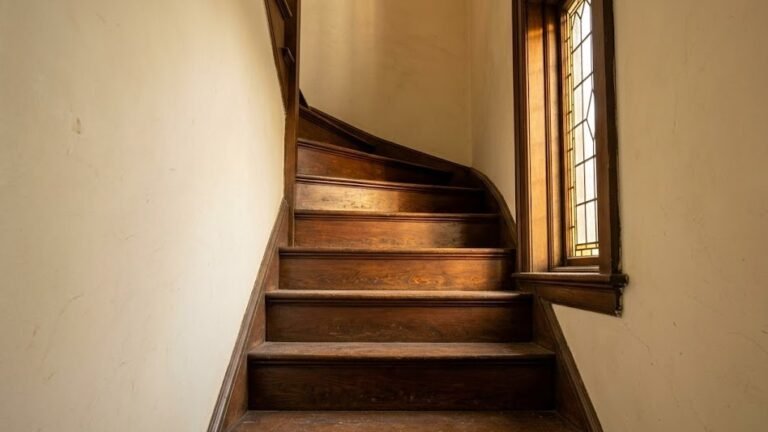
When I walk through a house with a buyer and we find something structural that’s been engineered well — good bones, a proper foundation, framing that was done right decades ago — that’s the conversation-stopper. Everything else about the house might be cosmetic. But the thing underneath, the thing you can’t see, is what makes everything else worth doing.
Hauppauge’s industrial tax structure is the foundation. The schools are the finish work on top of it. Both are real. But understanding which one is structural and which one is the result of the structure changes how you think about the long-term value of what you’re buying.

What It Means for the Market Right Now
A few things worth knowing if you’re actively looking in Hauppauge:
The district sits across two towns. Hauppauge UFSD straddles the boundary between the Towns of Islip and Smithtown. That means some properties in the district are assessed and taxed through one town’s system, others through the other. Verify which town your specific property falls in — and verify the current assessed value, the school district tax rate, and the total tax bill for that parcel. The general principle is consistent across the district, but the specific numbers vary.
The industrial park is not static. There has been ongoing discussion — and litigation — around proposals to introduce mixed-use residential development within portions of the innovation park. The Hauppauge school district filed suit against the Town of Smithtown over one such rezoning proposal, concerned about the potential impact on enrollment and the commercial tax base. Verify current status of this litigation and any recent rezoning decisions before acting on any specific parcel near the park boundary.
Inventory in the district is limited. Because the district’s value proposition is well understood by buyers who do their homework, properties that come to market in Hauppauge tend to move faster and with more competitive offers than the general Suffolk County pattern. If you’re working with a buyer’s agent who isn’t watching this area closely, you’ll miss things.
The Honest Broker’s Take
I’ve shown buyers houses in Hauppauge and had to explain this whole picture on the driveway. Most of the time, they arrive thinking they’re buying test scores. They leave understanding they’re buying a funding model — and that the model is why the test scores have stayed consistent for decades.
That’s the kind of structural insight that makes the difference between buying a house in a good school district and buying into a system that’s built to stay good. Those are not the same thing, and on Long Island, they don’t always come in the same package.
If you’re evaluating Mid-Island communities and want to talk through what the numbers actually mean for a specific property, that’s exactly the kind of conversation I have every week. maisonpawli.com/about/
You Might Also Like
- The Assessed Value Is Not the Market Value: How Long Island’s Property Tax Grievance Process Can Reframe What a Seller Asks
- What the Suffolk County Tax Grievance Deadline Actually Means for You
- Beyond the 30-Year Fixed: Mortgage Options First-Time Buyers on Long Island Rarely Hear About
Hauppauge is one of the communities profiled in my North Shore Long Island Neighborhoods: The Insider’s Guide to Where to Live, which walks through the North Shore and adjacent mid-island communities with the kind of detail that school rankings alone don’t capture.
Real estate markets change. For current listings and market data, contact Pawli at Maison Pawli.
Sources
- Hauppauge Union Free School District — About Hauppauge
- TBR News Media — Hauppauge school district lawsuit / tax rate data
- The Foggiest Idea — Hauppauge Industrial Park rezoning coverage
- Long Island Innovation Park at Hauppauge — Economic impact data
- TBR News Media — Long Island Innovation Park coverage
This post is for informational purposes only and does not constitute legal or financial advice. Consult a licensed attorney or financial advisor for your specific situation.