Shelter Island’s Proprietors’ Patent: How a 1666 Colonial Land Grant Still Echoes in Modern Property Boundaries
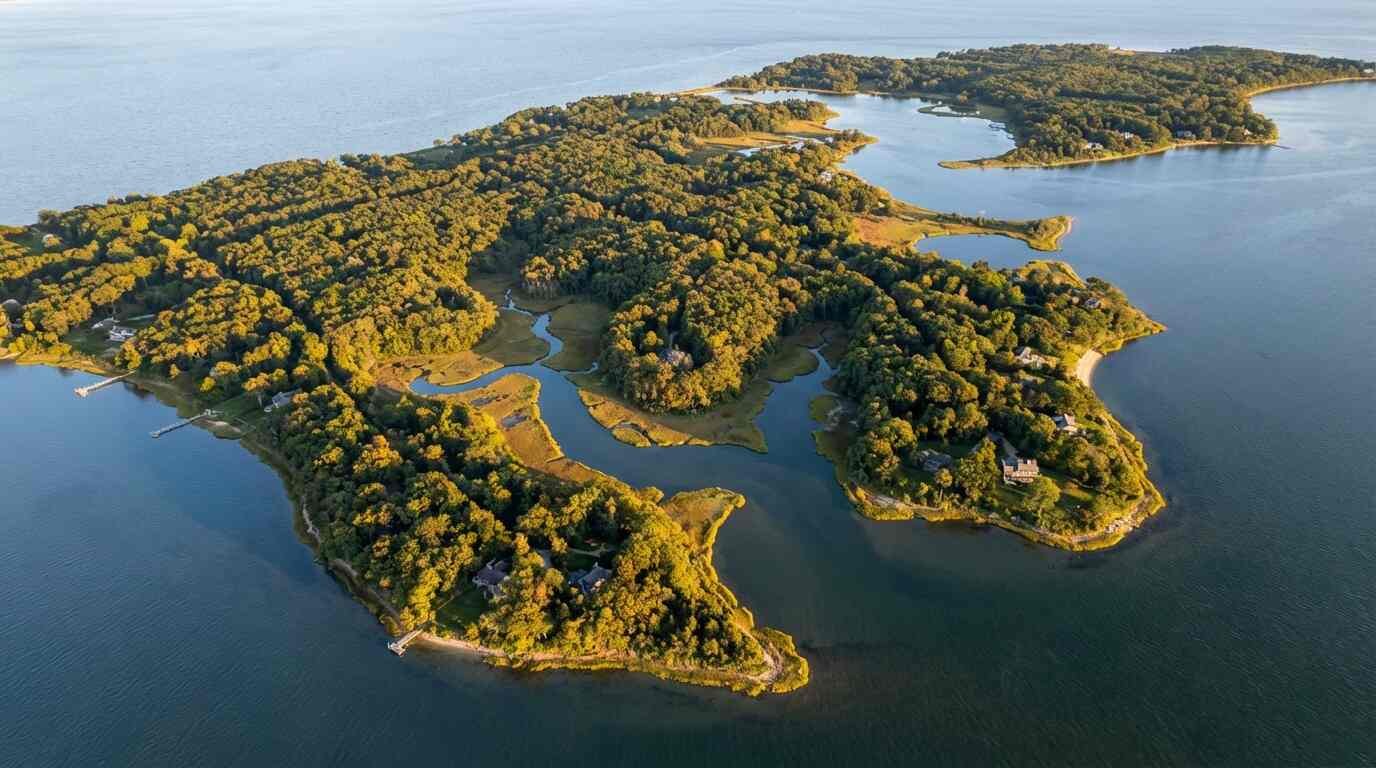
There are places on Long Island where the history of a property begins with the name of a developer, a subdivision map filed in 1962, and a mortgage satisfied in 1987. And then there is Shelter Island, where the chain of title reaches back through eleven generations of a single family, through a colonial patent granted by Charles II, through a purchase made not in dollars but in 1,600 pounds of sugar.
When I think about what it means to do real estate due diligence — really do it, not just check the boxes — Shelter Island is the place I return to. Because here, more than almost anywhere else in the American real estate market, understanding what you’re buying requires understanding where it’s been. The property history isn’t atmosphere. It’s document.
The 1651 Purchase and the 1666 Patent
Nathaniel Sylvester, a Dutch trader with English heritage and connections to the Barbados sugar trade, came to Shelter Island in 1651. He and three business partners — his brother Constant Sylvester, Thomas Middleton, and a fourth party — purchased the island from Englishman Stephen Goodyear for 1,600 pounds of sugar. They needed a provisioning farm to supply their Caribbean operations with food. Shelter Island’s white oak trees were also of value for shipbuilding.
The 1651 transaction was immediately contested. The Manhanset people, whose indigenous ancestors had lived on the island for thousands of years before European contact, disputed the legitimacy of the Goodyear sale — saying they had not relinquished rights to the entire island. In 1652, a second purchase was made, this time directly from the Manhanset themselves. Sylvester built his house, settled his family, and began farming.
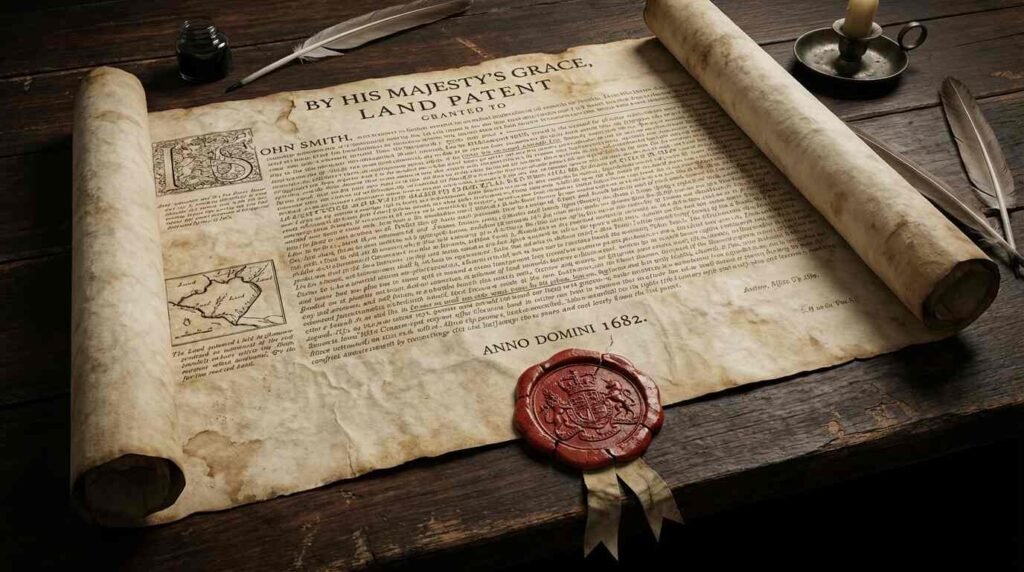
In 1666, King Charles II of England declared Sylvester’s holdings an official manor — the grant that produced the document historians and title researchers still reference when tracing Shelter Island ownership. That 1666 patent confirmed Sylvester’s manorial authority over the island in terms broad enough that its precise boundaries were not fully resolved for generations. When Sylvester died in 1680, he bequeathed the island to his five sons in equal shares. His eldest son Giles eventually consolidated ownership of four-fifths of the island, then sold a quarter of it to William Nicoll of Islip. A second major parcel — 1,000 acres in the island’s center — passed to George Havens in 1700. By 1730, when the first Town Meeting was held and twenty families were counted as island residents, the original patent had been parceled into a more complex ownership structure that would continue to evolve.
What all of this means for a modern buyer is this: a Shelter Island deed chain begins not with a subdivision map or a postwar mortgage but with a colonial instrument whose terms shaped the legal landscape of the island for centuries. The Sylvester Manor Archaeological Project, which conducted extensive excavations beginning in 1998, has documented the physical evidence of that early history. Mac Griswold’s The Manor: Three Centuries at a Slave Plantation on Long Island (Farrar, Straus and Giroux, 2013), which draws on the Sylvester family archives at NYU and the Shelter Island Historical Society’s proprietors’ records, provides the most detailed account of how that ownership history unfolded across generations.
The Proprietorship System and Its Title Implications
After the original manor was parceled among Sylvester’s heirs and subsequently sold in portions to other prominent families — the Nicolls, the Havens — Shelter Island developed what amounts to a proprietorship system: a network of overlapping ownership interests, shared rights, and communally held land that governed the island’s use for much of its early history.
Proprietorships were not unusual in colonial New England and New York, but Shelter Island’s particular history — an island, physically bounded, with a single founding patent and a small number of original ownership families — meant that certain title complexities persisted long after comparable systems elsewhere had been resolved by development and legal modernization.
The practical remnants of this history appear in title searches today in several forms:
Proprietors’ roads. Certain access corridors on Shelter Island trace their origins to roads established by early proprietors as shared passage across island land. Some of these were formalized in later deed instruments. Others exist in a more ambiguous state — used for generations, recorded in some form, but not always as clearly defined as a modern right-of-way grant would be. When one of these corridors appears in a Schedule B-2 exception, the question is what the underlying document actually says and what the practical use has been.
Common landing rights. Shelter Island’s geography made water access a central feature of daily life for most of its history. Rights to use specific landing points along the shore — for boats, for fishing, for commerce — were granted among early proprietors and their successors. Some of these rights were extinguished by subsequent development or deed releases. Others survive in title chains in varying states of clarity.
Tidal boundary questions. On any island, the boundary between private property and public tidal land is a legal question, not just a geographical one. The relationship between private land grants made under colonial patents and the subsequent development of public trust doctrine — which holds that tidal lands are held in public trust and cannot be privately alienated — has produced decades of litigation in New York. On Shelter Island, where waterfront ownership is often the central feature of a property’s value, understanding where the private boundary ends and the public tidal margin begins is not a question to leave to a casual reading of the listing description.
As I wrote in the post on East End dock rights, these boundary questions along Long Island’s tidal margins involve layers of colonial-era grants, common law principles, and modern regulatory frameworks that don’t always resolve cleanly. Shelter Island concentrates all of them in a compressed geography with an unusually deep legal history.
What This Means for a Modern Buyer
I am not suggesting that purchasing property on Shelter Island is an act of legal archaeology. Most modern transactions on the island proceed without unearthing anything that requires extraordinary legal intervention. The title system does its job.
What I am suggesting is that the due diligence standard for Shelter Island is meaningfully different from the due diligence standard for, say, a 1987 subdivision in Miller Place. The chain of title is longer, the underlying documents older, and the property rights that may appear in Schedule B-2 more likely to trace their origins to colonial or early American instruments that require some interpretive work to understand in their current form.
Specific practices that matter here:
Retain an attorney with East End experience. Real property law on Long Island is not uniform across the island. An attorney who handles North Shore residential transactions regularly may not have the same familiarity with Shelter Island title complexities as one who practices regularly in the East End. The Shelter Island Historical Society and the Suffolk County Clerk’s records office are both resources that a good East End real estate attorney will know how to use.
Request a survey that addresses tidal boundaries. If the property has any waterfront component — direct Sound or bay frontage, landing rights, dock access — a standard survey is not sufficient. The survey should address the tidal boundary specifically, and it should be prepared by a surveyor experienced in New York tidal boundary work.
Read the Schedule B-2 exceptions with your attorney before making an offer. As I described in the post on reading a title commitment, the Schedule B-2 exceptions are not boilerplate to be acknowledged and ignored. On Shelter Island, these exceptions may reference instruments from the early 19th century or earlier. Understanding what each exception means for your specific intended use of the property is the work that separates an informed buyer from one who discovers a problem after closing.
Understand what you’re actually buying. A Shelter Island property carries 370 years of ownership history. The 1666 patent is the foundation on which every subsequent deed instrument was built. That history is not merely romantic — though it is that too. It is the source document of the legal conditions you will be accepting when you take title. The buyer who understands this buys with open eyes. And in my experience, those are the buyers who don’t call me six months later with questions that should have been asked before the closing.
This is for informational purposes only — consult a licensed real estate attorney for guidance specific to your transaction.
Real estate markets change. For current listings and market data, contact Pawli at Maison Pawli.