The brochure never mentions the bulkhead.
You see the photograph — gray-blue water catching afternoon light, a dock extending into the Sound, maybe a kayak pulled up on a gravel beach — and something in you recognizes it as the life you’ve been describing in the back of your mind for years. Then you make an offer, go to contract, order the inspection, and find yourself sitting across a table from an engineer who hands you an eight-page report about tidal erosion, timber deterioration, and a repair estimate that starts at $400 a linear foot.
The Long Island Sound is beautiful. It is also relentless. And if you are buying waterfront property on the North Shore — in Mount Sinai, Sound Beach, Miller Place, Port Jefferson, Setauket, or anywhere that backs up to tidal water — understanding what a bulkhead is, what it costs, and what the law requires of you is not optional. It is the due diligence that separates an informed buyer from one who gets an expensive education after the deed is signed.
What a Bulkhead Actually Does
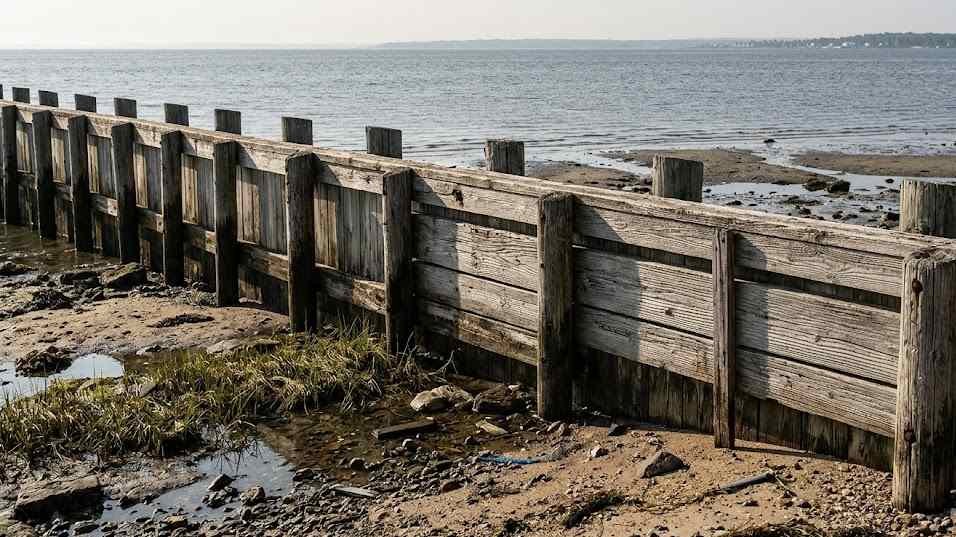
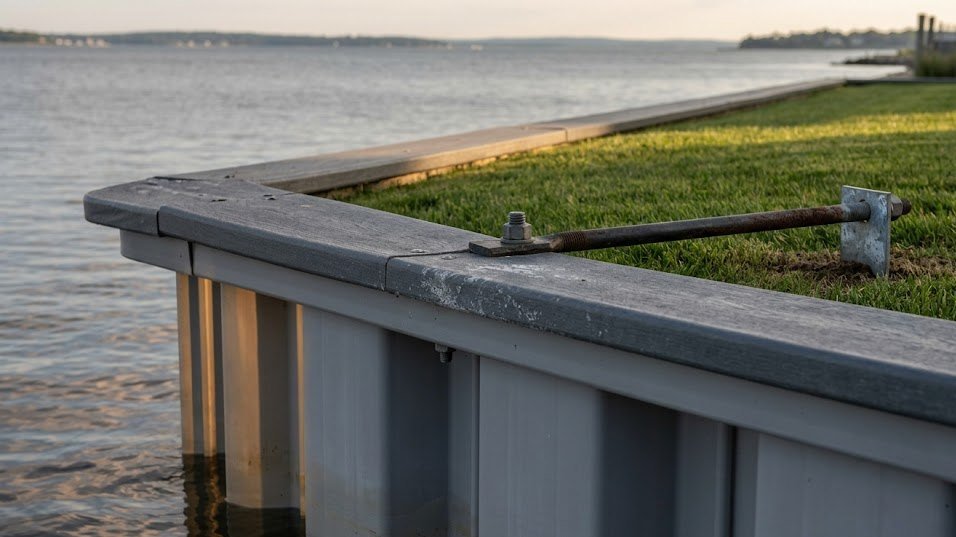
A bulkhead is a retaining wall built at the shoreline — typically timber, vinyl, steel, or concrete — designed to hold the upland soil in place against the constant pressure of tidal movement, wave action, and storm surge. Without it, the land behind the water’s edge erodes. That erosion isn’t always dramatic; it doesn’t require a hurricane. It happens slowly, persistently, every time the tide moves through.
On the North Shore, where properties along the Sound often sit on bluffs or gently sloped lots that end at tidal flats, a bulkhead isn’t a luxury. It’s load-bearing infrastructure for the property itself. The lawn, the patio, the dock — sometimes even the foundation of a house built close to shore — can depend on it.
Most bulkheads have a functional lifespan. Timber structures, once the standard, typically last 25 to 30 years before the pilings begin to fail and the deadmen anchors — horizontal timbers buried in the upland that hold the wall against tidal pressure — start to lose their grip. Vinyl and steel last longer, but no bulkhead lasts forever, and on the North Shore, “deferred maintenance” on a shoreline structure is never a neutral condition. Every season without repair is a season the Sound is working on your property unchallenged.
The DEC Is Involved — Always
Here is what surprises many first-time waterfront buyers on the North Shore: you cannot simply hire a contractor and replace a bulkhead. Any construction, repair, or replacement work on or adjacent to tidal waters in New York State falls under the jurisdiction of the New York State Department of Environmental Conservation.
The DEC’s authority comes from two overlapping regulatory frameworks: the Coastal Erosion Hazard Area (CEHA) program, which governs construction in mapped coastal erosion hazard zones, and the Tidal Wetlands Act, which regulates any activity that impacts tidal wetlands and their adjacent areas. For most North Shore waterfront properties, both apply.
What this means practically is that any substantial bulkhead work — replacement in kind, reconstruction after storm damage, new dock permits — requires a DEC permit before a hammer is swung. The permitting process involves a site inspection, environmental review, and approval of project specifications. For straightforward in-kind replacements, the process can move in a matter of months. For anything involving a change in footprint, a new dock, or work in a particularly sensitive tidal zone, it can take considerably longer.
The town also has a say. Both the Town of Brookhaven and the Town of Huntington, among others, have their own coastal construction permit requirements that run parallel to DEC review. You are not navigating one regulatory body — you are navigating two, sometimes three, with overlapping timelines.
None of this means waterfront property on the North Shore is an administrative nightmare. Thousands of homeowners manage bulkheads, docks, and coastal structures here successfully every year. But it means the costs and timelines for that management are real, they are regulated, and they should be priced into your decision.
What It Actually Costs
Ballpark figures for bulkhead work on the North Shore, based on market norms as of early 2026 — always get a licensed contractor’s site assessment before relying on any number:
Timber bulkhead replacement (in-kind): $350–$550 per linear foot Vinyl sheet pile replacement: $450–$700 per linear foot Steel sheet pile: $600–$900 per linear foot Repairs and partial section replacement: $150–$300 per linear foot, depending on scope New dock construction (floating or fixed): $1,000–$2,500+ per linear foot, depending on materials and configuration DEC permit preparation (environmental consultant fees): $2,500–$8,000+ depending on complexity
A typical North Shore waterfront lot might have 75 to 150 linear feet of bulkhead. Do that math at mid-range vinyl replacement pricing and you are looking at $50,000 to $100,000 for a full replacement — before any dock work, before any grading, before any upland restoration of the area disturbed by construction.
That figure is not meant to frighten. It is meant to inform. A bulkhead in excellent condition, recently replaced, is a genuine asset on a waterfront property — it represents 20 to 30 years before the next replacement cycle and gives you clean title to that shoreline without a deferred liability sitting in the contract.
A bulkhead at the end of its life is a different story. It needs to show up in your offer price.
What to Look for Before You Make an Offer
When you are walking a waterfront property with your agent, you are not just looking at the view. You are looking at the wall.
Signs of a bulkhead in trouble: – Visible bowing or deflection (the wall curving landward under soil pressure) – Gaps between panels or planks — a sign deadmen anchors are failing – Cracking or separation at the cap – Tiebacks visible on the landward side under tension – Soft or sunken ground immediately behind the wall – Discoloration, fungal growth, or visible rot on timber structures – Missing or deteriorated filter fabric behind the wall (visible where soil is washing through)
Any of these conditions warrants a professional inspection by a licensed bulkhead or marine contractor before you proceed. This is not your home inspector’s specialty. You want someone who works on these structures routinely, who can tell you whether what they see is cosmetic, manageable, or a full replacement scenario.
I always recommend buyers budget a separate line item for a marine/coastal structures inspection on any North Shore waterfront property. It typically runs $300–$600 and it can save you from a six-figure surprise after closing.
Dock Rights Are a Separate Question
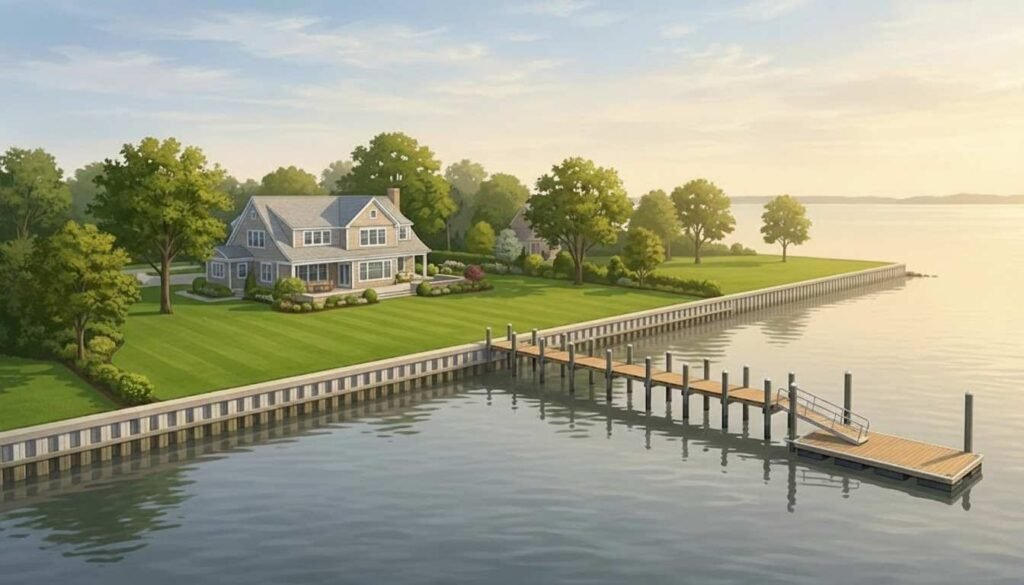
A bulkhead and a dock are legally distinct. Owning waterfront property does not automatically give you the right to build or maintain a dock — that requires a separate permit process, and the DEC, the Army Corps of Engineers (for structures in navigable waters), and the town all have potential jurisdiction depending on the dock’s configuration and location.
Existing dock permits transfer with the property, but they do not transfer indefinitely — permits have conditions, and if a dock falls into disrepair or is substantially modified without permit, the prior approvals may not protect the new owner.
If a property’s dock situation is central to why you want it — for a boat, for fishing access, for waterfront entertaining — have your attorney review the existing permits and their conditions before you close. Do not assume that because the dock is there, it is permitted, and do not assume that a permitted dock can be rebuilt in the same footprint without a new review process.
The Bottom Line for North Shore Waterfront Buyers
Waterfront property on the North Shore is some of the most genuinely compelling real estate on Long Island. The access to the Sound, the light, the sense of place — none of that is manufactured. It is real, and for the right buyer, it is worth every dollar of what it costs to maintain.
But maintaining it means understanding the bulkhead, the DEC, the permit process, and the lifecycle costs of coastal infrastructure. Buyers who understand this come to the table clearly. They make offers that reflect actual condition. They do not close into a deferred liability and then spend their first year as waterfront homeowners dealing with erosion that was visible from the dock before they ever made the offer.
The Sound will always be there. The question is whether you are ready to hold it back.
This post reflects conditions and regulatory frameworks as of early 2026. Environmental regulations and contractor pricing can change — verify all figures with a licensed contractor and confirm current DEC requirements at dec.ny.gov. This is for informational purposes only and does not constitute legal or financial advice.
Real estate markets change. This post reflects conditions as of April 2026. For current listings and market data, contact Pawli at Maison Pawli.
Sources
- New York State Department of Environmental Conservation — Coastal Erosion Hazard Area Program
- New York State DEC — Tidal Wetlands Permits
- U.S. Army Corps of Engineers — Regulatory Program, New York District: nan.usace.army.mil
- Town of Brookhaven — Environmental Protection Division (coastal permit inquiries)