
Inside the Long Island Split-Level: The One Floor Plan That Breaks Every Renovation Rule — and How to Work With It Anyway
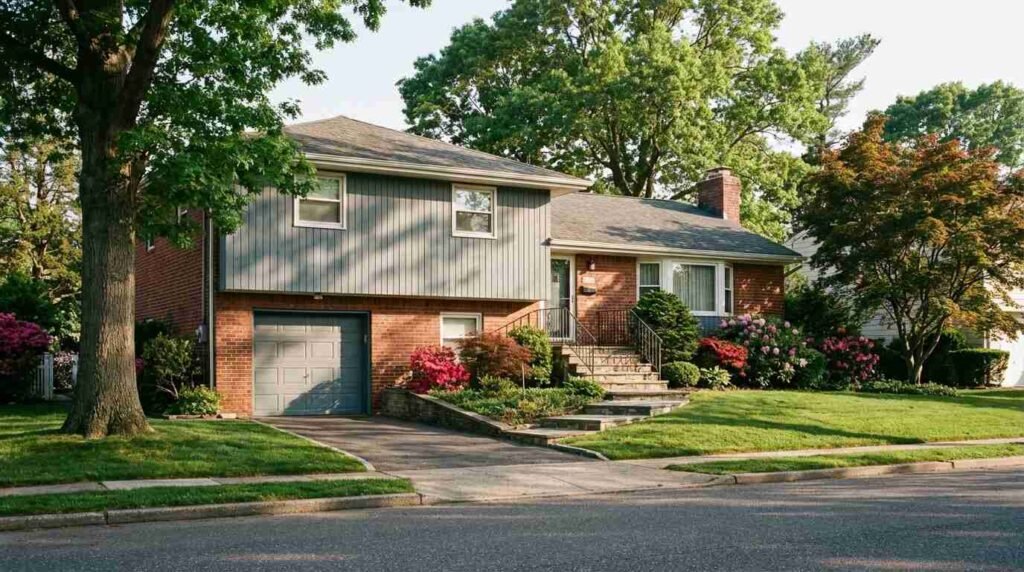
A contractor I know — fifteen years doing mid-century residential work across Nassau County — told me once that he can always spot a split-level on the call sheet before he even pulls into the driveway. “The address is enough,” he said. “Syosset, Plainview, Commack, Massapequa. Built 1958 to 1968. I know what I’m walking into.” What he’s walking into is arguably the most architecturally misunderstood floor plan in Long Island’s housing stock — and the one where renovation ambitions most reliably outrun renovation reality.
I’ve shown a lot of split-levels. I’ve watched buyers walk through them imagining the wall gone, the kitchen opened to the living space, the whole ground floor flowing the way the Instagram renovation accounts suggest it should. And then I’ve had to have a quiet conversation about load paths. The split-level was engineered for a specific domestic logic that made perfect sense in 1962 and resists modification in ways that cost real money. Understanding why — before you make an offer on one — changes your renovation budget and, ultimately, your resale math.
Why Long Island Has So Many of Them
The split-level’s concentration on Long Island is not an accident of taste. It’s a consequence of geography and the particular economics of postwar suburban development. Architectural historian Barbara M. Kelly, in her foundational study of Long Island’s suburban building boom Expanding the American Dream: Building and Rebuilding Levittown (SUNY Press, 1993), documents how developers adapted floor plans to the specific terrain and lot sizes of Nassau and western Suffolk counties. The split-level solved a problem: it allowed builders to maximize usable square footage on lots where the grade changed — and Long Island’s glacial moraine terrain, particularly through the central spine of Nassau and into Plainview and Syosset, offered exactly that topography. You could tuck a garage and utility space into the grade, step up to the main living floor, step up again to bedrooms, and arrive at a three-level house that felt generous without requiring the footprint of a full two-story colonial.
Drive through Plainview and Syosset today and count them. They’re on nearly every block, built in concentrated waves between 1955 and 1968 when those communities went from farmland to suburb in less than a decade. Nassau and Suffolk county property tax databases — searchable by construction year and building style through each town’s assessor portal — confirm that split-levels represent an outsized share of the housing stock in those zip codes relative to the rest of the region. This is relevant to renovation because it means your resale market is split-level buyers. Understanding what they want is as important as understanding what you want to build.
The Structural Problem With Open-Concept Dreams
Here is the fundamental issue: the split-level was designed with bearing walls that carry load across the transitions between levels. The half-flights of stairs — typically four to seven steps — connect levels whose floor and ceiling planes are offset, and the walls flanking those stairs are often structural, not cosmetic. Unlike a ranch house, where a contractor can sometimes identify the bearing wall, remove it, and install a flush beam with manageable disruption, the split-level’s load paths run through the very elements that define the floor plan. You cannot simply open the kitchen to the living room if the wall between them is carrying the weight of the bedroom level above.
This doesn’t mean it’s impossible. It means it’s expensive and requires a structural engineer’s stamp before a contractor lifts a hammer — and any reputable contractor should require exactly that. The American Institute of Architects New York chapter has published guidance on mid-century residential renovation that addresses this specific challenge. The solutions exist: steel moment frames, LVL beams, post-and-beam configurations that replace bearing wall function. But they add $15,000 to $40,000 to a project scope that buyers sometimes budget at half that, and they require permits that trigger municipal review — including, in some cases, the full plan review process rather than the faster over-the-counter approval.
HVAC is the second structural challenge. Split-levels were typically built with heating systems designed to serve discrete zones — each level a separate thermal world. Ductwork runs are complicated by the offset floor planes, and buyers who want central air conditioning retrofitted into a split-level often discover that the duct runs require either a dropped ceiling (which eats the already-modest ceiling height on the lower levels) or a mini-split system (more expensive to install but far less invasive). Neither option is wrong. Both need to be priced before the renovation budget is finalized.
What Actually Increases Value — and What Doesn’t
I want to be specific here, because this is where buyers and owners most often make expensive mistakes. The following observations are drawn from what I’ve seen move the needle in resale on Long Island split-levels specifically — not generic renovation ROI data that pools all housing types nationally.
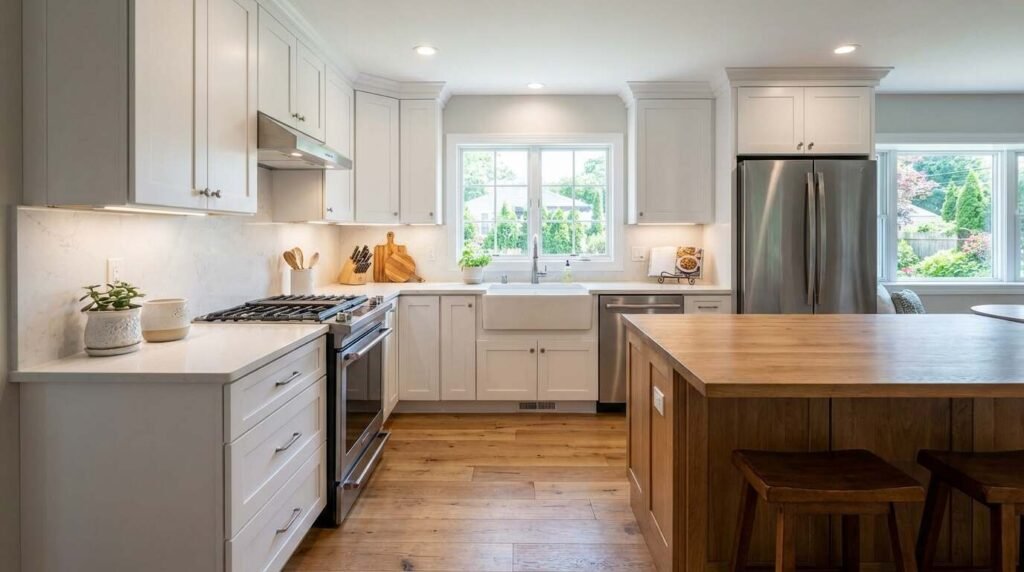
Kitchen renovation: high return, but scope matters. The split-level kitchen is almost always on the entry level — the middle level — and it typically opens to a dining area rather than a living room. A well-executed kitchen renovation (new cabinetry, countertops, appliances, updated lighting) returns well here because buyers compare it to every other split-level they’ve seen with a 1978 kitchen. You don’t need to blow out walls to win. New cabinets to the ceiling, quartz or stone countertops, a good range, undercabinet lighting — that’s the renovation that shows in photos and shows at the open house. Budget $40,000 to $70,000 for a kitchen that photographs and performs. Anything that requires structural work to “open it up” should be approached cautiously unless your resale price justifies the engineering cost.
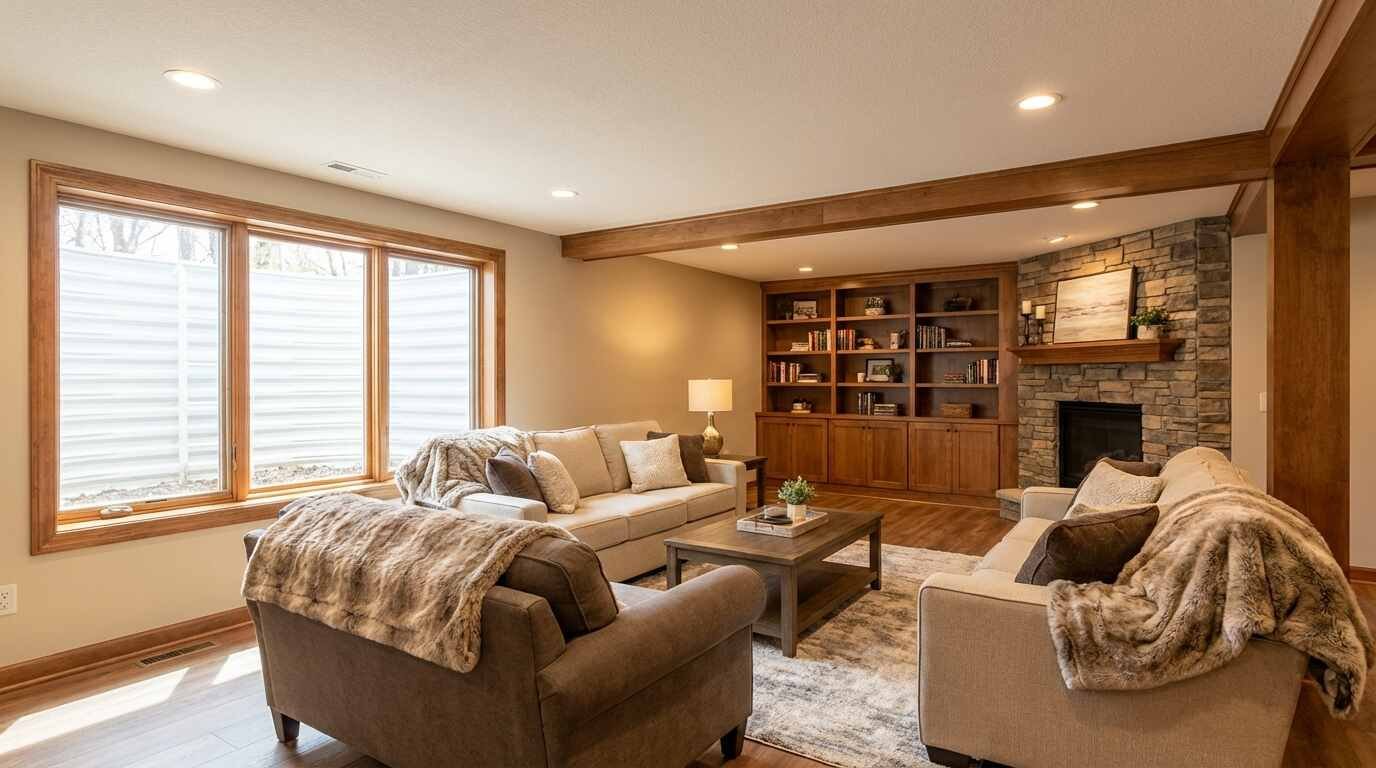
Lower level conversion: the hidden opportunity. The below-grade level — typically containing the garage, a utility room, and often an unfinished bonus room — is where Long Island split-level renovators find the most untapped value. Converting that bonus space into a proper family room, a home office, or a guest suite (with an egress window if bedroom use is intended) adds livable square footage at a cost that frequently outperforms the investment. Permit-required, yes. Expensive, no — relative to what it adds. Expect $20,000 to $45,000 depending on scope, egress requirements, and finish level. The market for that square footage on Long Island is real and consistent.
Primary bath renovation: do it. Split-level primary baths are almost always small, almost always dated, and almost always the first thing buyers notice on the bedroom level. A proper renovation — new tile, vanity, fixtures, shower, good lighting — runs $15,000 to $30,000 and shows immediately. It’s the renovation that makes a buyer feel the house has been cared for at the level that matters.
Removing the bearing walls to achieve open concept: approach with eyes open. If the structural engineering works and the budget supports it, a genuinely opened main level can differentiate a split-level in a competitive market. But the projects I’ve seen that go wrong — cost overruns, structural complications, permit delays — cluster here. If you’re going to do it, hire a structural engineer before you hire a contractor. Get the engineer’s stamp. Budget the full cost, not the best-case cost.
Two Real Project Profiles
I want to be honest that I’m drawing on composite profiles from the Long Island renovation work I’ve observed rather than naming specific homeowners — but the numbers are real and the project types are common.
Project A — Syosset, 1962 split-level, $95,000 total renovation: New kitchen (cabinets, quartz, appliances, lighting), primary bath gut renovation, lower-level family room conversion with egress window and new carpet, exterior painting, new entry door and sidelights. No structural work. No walls moved. The house sold in eleven days at $125,000 over what comparable unrenovated split-levels had closed at in the same zip code in the prior six months. The renovation return was exceptional because the scope was disciplined.
Project B — Plainview, 1965 split-level, $180,000 total renovation: All of the above, plus structural wall removal between kitchen and dining area (LVL beam, permit, engineer, steel post), full HVAC replacement with mini-split system on the lower level, new windows throughout, hardwood refinish on main and upper levels. The result was genuinely beautiful — a split-level that felt contemporary and open in a way that’s rare. It sold well, at $190,000 over unrenovated comps. The margin was thinner because the scope was broader, but the owner achieved what they wanted and came out ahead. The key: they knew the full cost going in. There were no surprises.
The lesson from both: the split-level rewards renovation that works with the floor plan rather than against it. It punishes scope that treats structural reality as a problem to be solved at the last minute.
If you’re looking at a Long Island split-level and want a clear-eyed read on its renovation potential and resale position, I’m glad to walk through it with you. That’s exactly the conversation I have at Maison Pawli — before an offer goes in, when the numbers still have room to move.
Real estate markets change. For current listings and market data, contact Pawli at Maison Pawli. This is for informational purposes only — consult a licensed contractor, structural engineer, and financial advisor for your specific situation.
You Might Also Like
- Selling History at Market Price: How to Price a North Shore Pre-War Home
- The Servant Stair and the Service Wing: What the Hidden Architecture of Gold Coast Estates Reveals About Today’s Luxury Floor Plans
- The Lock-In Effect: Why North Shore Inventory Is So Tight Right Now
Sources
- Barbara M. Kelly, Expanding the American Dream: Building and Rebuilding Levittown (SUNY Press, 1993)
- Nassau County Department of Assessment property tax database: nassaucountyny.gov/agencies/Assessor
- Suffolk County Real Property Tax Service Agency: suffolkcountyny.gov
- American Institute of Architects New York chapter — mid-century residential guidance: aiany.org
- Town of Oyster Bay Building Department (Plainview/Syosset permit records): oysterbaytown.com
- Town of Huntington Building Department (Commack permit records): huntingtonny.gov
—