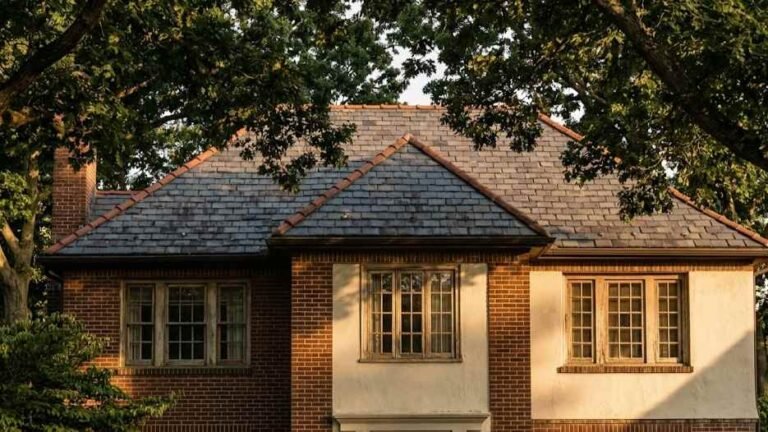
Before the Bulldozer: How a Forgotten Depression-Era Government Program Pre-Framed Thousands of Long Island Homes Still Standing Today
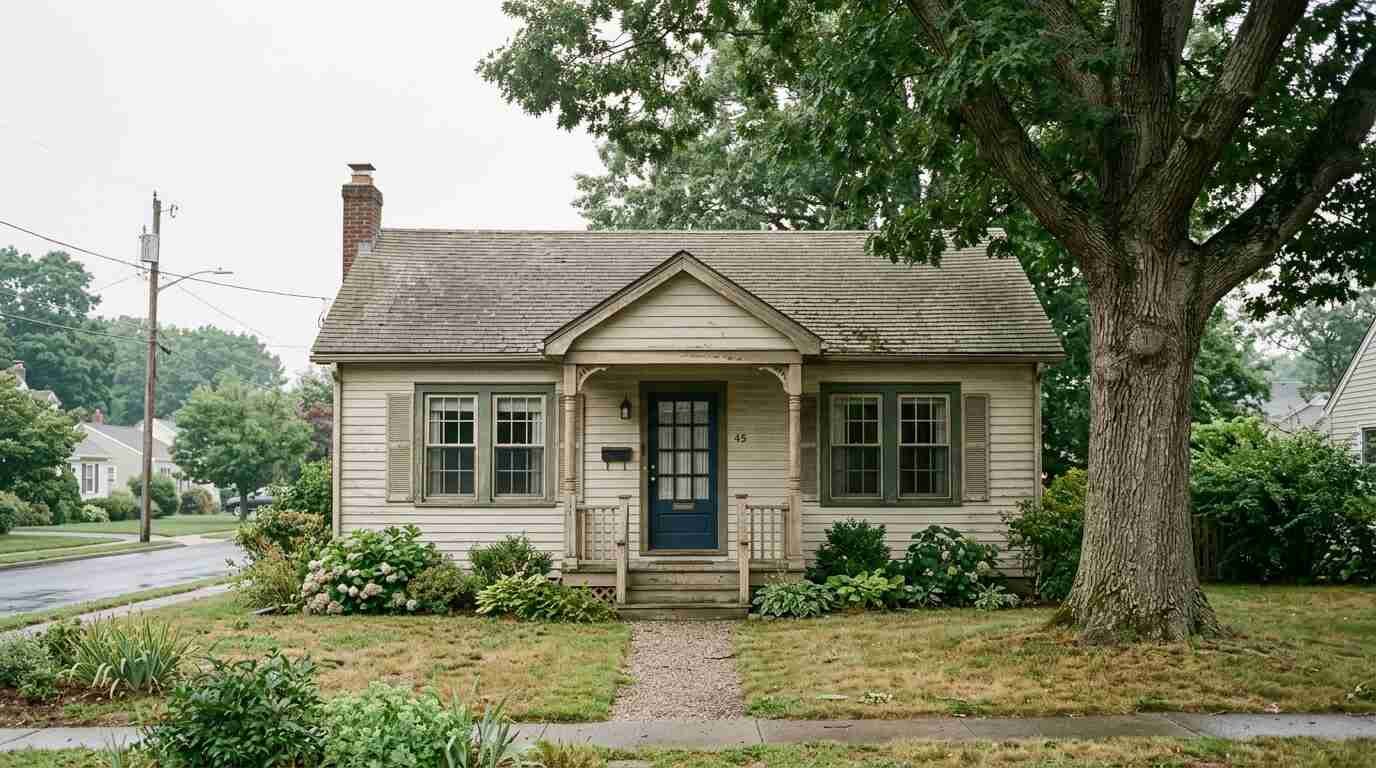
People who buy older homes in Huntington, Hempstead, or Babylon and then open the walls for the first time often come away surprised. Not by what they find — no hidden disasters, no decades of concealed problems — but by the sheer solidity of what’s there. The framing is tight. The lumber is heavy. The joinery, where it exists, was done by someone who understood what they were doing. They call me afterward and ask what explains it.
Part of the answer is craftsmen. Part of it is the materials available in that era — old-growth timber that simply isn’t milled anymore. But a significant part of the answer is a New Deal program most homeowners have never heard of, whose influence on Long Island’s Depression-era housing stock has been hiding in the walls for ninety years.
The Program Behind the Bones
The Home Owners’ Loan Corporation was created in 1933, in the depths of the Depression, as an emergency measure to stop the avalanche of home foreclosures — nearly a thousand a day at the crisis peak. The HOLC’s primary job was to purchase and refinance troubled mortgages, which it did at scale: by the time its lending authority expired in 1936, the agency had made over one million loans and held roughly a tenth of all non-farm U.S. mortgage debt.
The HOLC also developed one of the first standardized housing appraisal systems in American history — the color-coded “residential security” maps that have become notorious as a foundational document of redlining. The HOLC’s maps, now digitized and publicly accessible through the University of Richmond’s Mapping Inequality project, covered hundreds of metropolitan areas. Long Island’s communities were mapped as part of this system, and those maps are now searchable online.
The National Housing Act of 1934 created the Federal Housing Administration, and the FHA’s mandate went beyond mortgage insurance. The FHA established minimum construction standards — codified in documents beginning with Circular No. 2 in 1934 and growing substantially more detailed through the late 1930s — that any home seeking FHA-insured mortgage financing had to meet. According to the HUD history of its own Minimum Property Standards program, the 1934 circular already specified that “all parts of buildings shall be designed and constructed to safely support their own weight and that portion of the dead and live loads which they may carry.”
For builders developing homes in Nassau and Suffolk counties during the Depression and through World War II, FHA insurability wasn’t optional. It was effectively a market requirement. A home that couldn’t qualify for FHA mortgage insurance was dramatically harder to sell because buyers couldn’t access federally-backed financing. Builders who wanted to sell had to build to FHA standards. And those standards established a structural floor that produced better-built houses than the market would have demanded on its own.
What That Means Inside the Walls
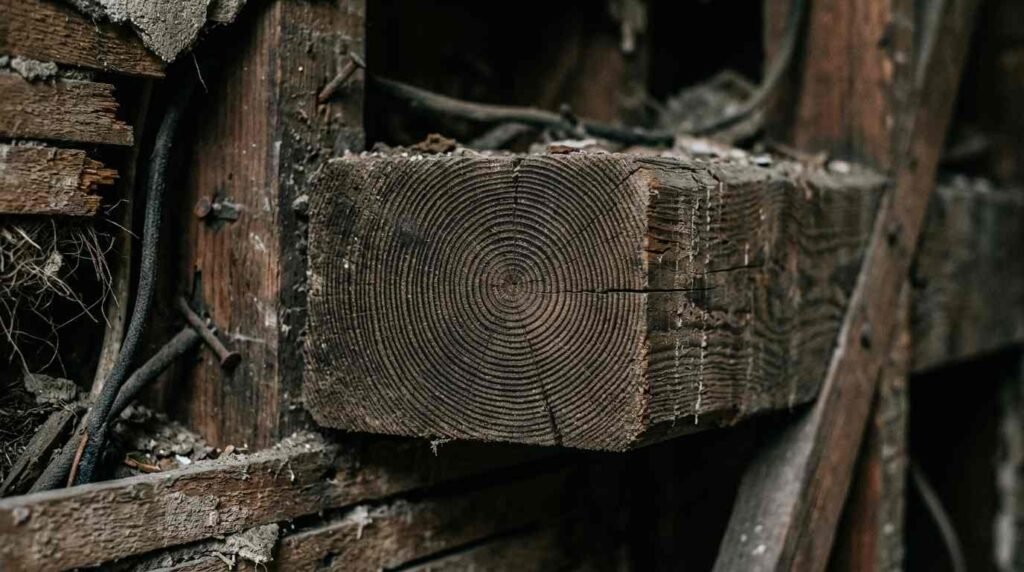
Old-growth lumber. The framing in Depression-era Long Island homes was built with timber milled from old-growth forests — timber with a tight grain structure, high density, and natural resistance to moisture and insect damage that simply cannot be replicated with contemporary framing lumber. Current dimensional lumber is milled from fast-grown plantation timber, which has wider grain, lower density, and shorter fiber length. When a contractor opens those walls and says the framing is in remarkable condition, they’re describing something real — and something that won’t come back if it’s removed.
Masonry and foundation work. Depression-era homes built to FHA standards generally have more substantial foundation and masonry work than was typical in the rapid postwar construction boom. The prewar homes, built more slowly by smaller contractors working to secure FHA approval on individual properties, typically show more careful foundation work, better drainage grading, and more substantial masonry.
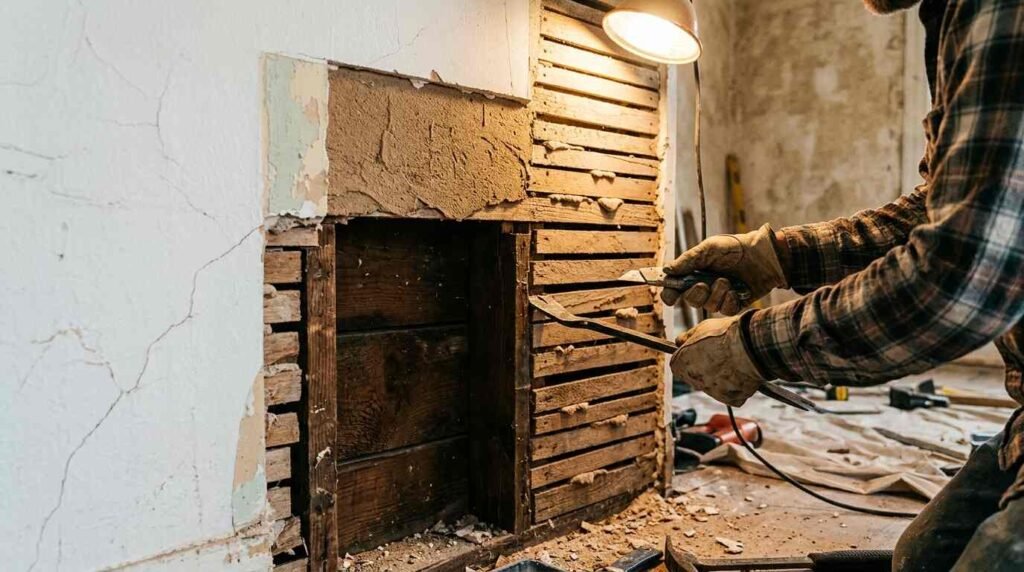
Plaster walls. The original interior walls in these homes are almost always three-coat plaster over wood lath — a system that produces a wall with greater mass, superior sound attenuation, and significantly better fire resistance than standard drywall. When renovators tear out original plaster to run new wiring or plumbing and replace it with drywall, they’re replacing a better material with a lesser one. Whenever possible, opening the wall selectively for mechanical work and patching the plaster is the better approach.
Insulation. This is where the Depression-era home’s virtues run out. Original wall insulation in these homes is often inadequate by modern standards — thin batts of early fiberglass, rock wool, or sometimes no insulation at all in interior wall cavities. Before you renovate anything else, get a thermal imaging assessment of the envelope. Adding modern insulation — blown-in cellulose is particularly appropriate in these homes given the wall assembly — will pay for itself in reduced energy costs within a few years.
Electrical and plumbing. Count on it: if the home hasn’t been updated, the original knob-and-tube wiring is still there, at least in part. Knob-and-tube is not inherently unsafe if it’s in good condition and hasn’t been covered with insulation — but it has no ground conductors, its insulation is aged, and no insurance company will write a policy on an unupdated system without significant premium penalties. Replumbing and rewiring are the non-negotiable updates — they should be budgeted as such.
The 1970s Contrast
Understanding what Depression-era homes have is easier when you understand what 1970s homes often don’t. The postwar boom’s second act — the ranch houses and raised ranches built across Long Island in the late 1960s and 1970s — was shaped by rising labor costs, commodity lumber prices, faster delivery expectations, and the effects of the oil crisis on material costs. All of these pushed construction toward lighter framing, thinner walls, and faster assembly methods.
The result is visible to any contractor who has worked in both eras. The 1935 Huntington bungalow and the 1972 Miller Place ranch house may be within blocks of each other on Long Island and within $50,000 of each other in asking price. Inside the walls, they are completely different buildings. Neither is a better investment categorically — condition, location, and price determine that. But a buyer who approaches both homes with the same renovation assumptions will consistently misjudge the scope of work in both.
The HOLC Maps and Your Neighborhood
The maps produced by the HOLC as part of its City Survey project from 1935 to 1940 are now publicly available through the University of Richmond’s Mapping Inequality project. If you’re buying in a community that was mapped — many Long Island communities were — you can see how the HOLC rated your neighborhood in the 1930s.
The maps carry a complicated history. Neighborhoods with significant Black and immigrant populations were systematically graded “hazardous” and colored red, which effectively shut those communities out of FHA-backed mortgage financing for decades. The long-run economic consequences of that exclusion are well-documented in subsequent research. But the maps also document, in their property descriptions and survey notes, what the housing stock in each area actually looked like in the late 1930s — giving a buyer or renovator a useful snapshot of the construction era that explains what they’ll find inside the walls.
What to Budget, What to Expect
If you’re buying a Depression-era Long Island home as a renovation project, here is how I’d frame the budget conversation — with the caveat that every property is different and these are ranges, not guarantees.
Non-negotiables: Full electrical update (knob-and-tube replacement): $8,000–$18,000 depending on size and access. Plumbing update if original: $6,000–$15,000. These are preconditions for insurance, resale, and safety.
High-value investments: Insulation upgrade (blown-in cellulose to walls and attic): $4,000–$10,000. Plaster restoration rather than drywall replacement: typically $6–$12 per square foot for skilled work, versus $3–$5 for drywall — but the plaster is worth more and should be preserved when structurally sound.
Where to exercise restraint: Original windows. If the weight-and-pulley double-hung windows are intact, have them weatherstripped and restored before pricing out replacement. A quality wood window restoration typically runs $200–$400 per window. Replacement windows in a Depression-era home often look wrong and can actually reduce resale value to buyers who understand what they’re looking at.
For a different angle on how federal programs shaped what you own on Long Island, my post on restrictive covenants in Long Island deed history covers another layer of the same era.
A Broker’s Note on These Homes
The Depression-era houses I show and sell are among the most underestimated properties on the North Shore. They come to market labeled as fixer-uppers — and they do need work, sometimes significant work. But they have bones that newer construction can’t replicate, in neighborhoods that have matured over nine decades into the kind of established, tree-canopied communities that buyers increasingly want.
If you’re considering one of these homes, go in with an inspector who has worked in pre-war construction, a contractor who has opened these walls before, and a realistic budget that separates the non-negotiable updates from the things that are fine as they are. What’s inside can surprise you — in the best way.
This is for informational purposes only — consult a licensed contractor, inspector, and financial advisor before making renovation decisions.
Real estate markets change. This post reflects conditions as of April 2026. For current listings and market data, contact Pawli at Maison Pawli.