Coopered and Forgotten: The Barrel-Stave Furniture of Centerport’s Vanderbilt Marine Museum and the Cooper’s Trade That Built It
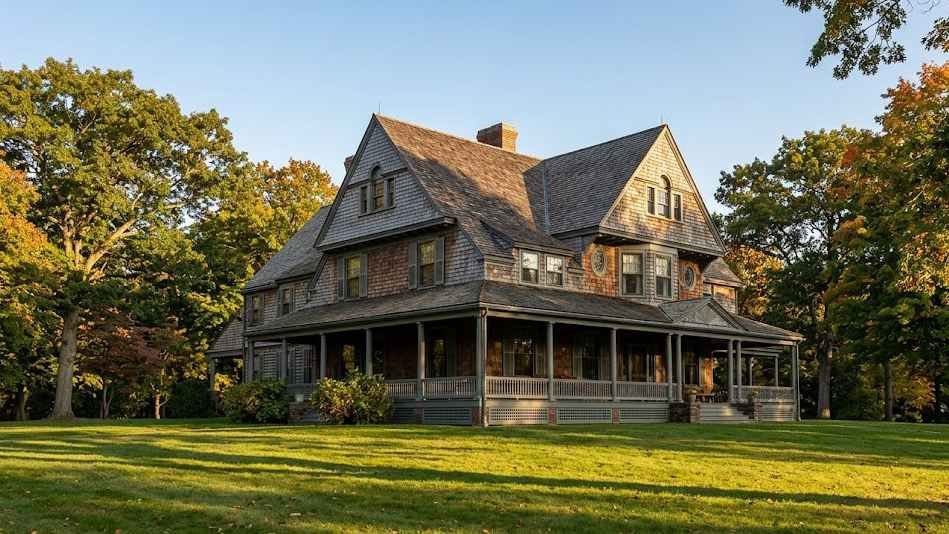
The drive up Little Neck Road in Centerport rises toward the water, and then the gatehouse appears — Spanish Revival arches, a bell tower, the suggestion of something Mediterranean dropped into the North Shore’s oak and locust woods. The Vanderbilt Museum does not announce itself quietly. Neither did the man who built it.
William K. Vanderbilt II spent the 1920s and 1930s circumnavigating the globe in his research yachts, collecting marine specimens, ethnographic artifacts, and the kind of objects that fill rooms the way a serious mind fills a silence — purposefully, without apology. His 43-acre Centerport estate, Eagle’s Nest, is one of the few surviving Gold Coast properties still intact as a public institution. What the Suffolk County Vanderbilt Museum preserves is not just the life of a wealthy man. It is a record of a particular moment when the craft traditions of the North Shore were being absorbed into estate-building on a scale that had no precedent here.
The furniture of Eagle’s Nest is part of that record. And some of it, if you know what to look for, was built the same way a barrel was built.
The Cooper’s Argument
Coopered construction is not a furniture technique by origin. It is an industrial technique — one of the oldest curved-wood methods in the American craft tradition, predating cabinet-making in this region by at least a century.
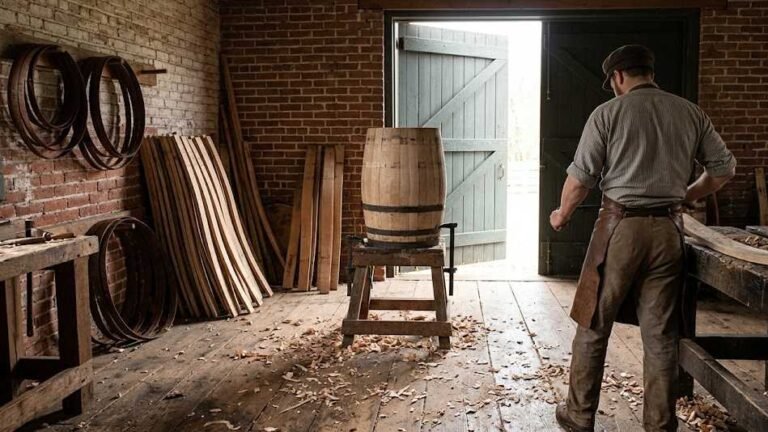
The principle is simple in description and demanding in execution. A barrel is made of staves: individual pieces of wood, each cut with a deliberate bevel on both long edges, so that when they are brought together under compression they form a curved, sealed cylinder. The staves taper slightly toward each end — this is what gives a barrel its characteristic belly. The edges must fit without gaps, because the barrel must hold liquid. The cooper works by eye and by sound, thumping the assembled stave set and listening for the tone that tells him the fit is right.
Slack or dry cooperage — used for flour, oysters, seeds, powders — allowed thinner, lighter wood. Stout or wet cooperage, for wine, vinegar, and spirits, required tighter grain, denser stock, and more precise joinery. In both cases the central technique was the same: curved surfaces built from flat pieces, bent not by steam but by the geometry of the cut itself.
When this geometry migrates into furniture — into a cabinet door, a curved drawer face, the side of a trunk or sea chest — the result is what the craft calls coopered joinery. The staves are shorter and thinner, the bevels are recalculated for the intended radius, the compression is achieved with clamps and glue rather than iron hoops. But the logic is identical. You are describing a curve with flat elements, each of which is asking the next one to go in a direction it would not choose on its own.

Long Island’s Cooper Economy
The North Shore’s oyster industry was, in the nineteenth century, one of the largest in the country. By the 1880s, New York City had become the center of the northern oyster industry, leading the country in overseas and transcontinental oyster shipments. At its peak, the Great South Bay’s oyster industry was producing 70,000 barrels per year.
Barrels. Every barrel was made by a cooper.
Everything shipped in the nineteenth century went in wooden containers — nails, cotton, tobacco, salted meat and fish, gunpowder, oysters, fruit, cement. The cooperage trade was one of the most common skilled crafts in American coastal towns, and Long Island’s harbor communities — Huntington, Centerport, Cold Spring Harbor, Oyster Bay — were harbor communities. In local waters, baymen harvested oysters, clams, lobster and finfish. Commercial fishing is now Huntington’s oldest industry. Mills ground grain; cooperages made the containers that moved it to market.
When corrugated cardboard was invented in 1902, everything changed overnight. Then Prohibition was the death knell for the industry. The need for barrels died out after that.
The timing matters. Cardboard arrived in 1902. William K. Vanderbilt II began building Eagle’s Nest in 1910 and continued through the 1930s. This means the craftsmen available to work on the Centerport estate in the 1910s and 1920s were men who had grown up in, or adjacent to, a working cooperage economy that was only then collapsing. Some of them would have had coopered construction in their hands — not as an art gesture, but as a trade skill that no longer had its original industrial application.
When Industrial Skill Becomes Decorative Technique
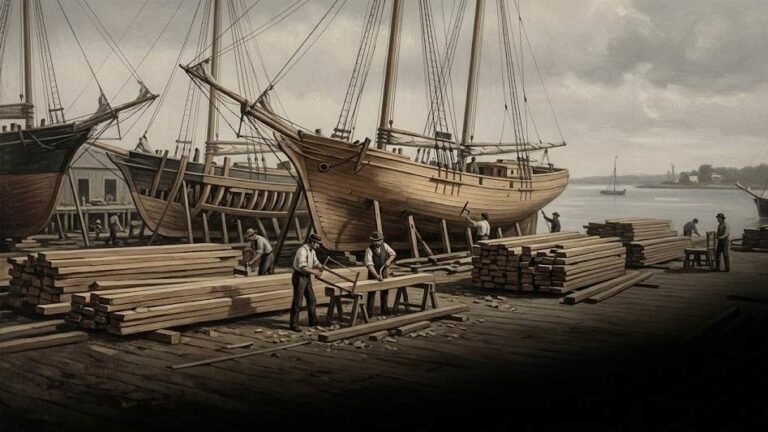
This is a pattern in the craft history of the North Shore Gold Coast estates, and it is worth naming directly. The estate-building boom of the 1890s through the 1930s drew on a local labor pool whose skills had been shaped by industries the estates themselves were rendering obsolete. Agricultural workers became groundskeepers. Boat builders became boathouse carpenters. And coopers — when the barrel market died — became furniture makers who happened to know how to describe a curve with a bevel cut.
The Vanderbilt museum complex includes a marine museum, wild-animal habitats, and a boathouse complex on Northport Bay. The furniture built to furnish these spaces was not purchased from Manhattan showrooms. It was built here, by craftsmen working in the North Shore tradition, adapting their methods to a patron who wanted objects that belonged to the water.
Coopered construction, in this context, is not an affectation. It is the most natural thing in the world — a barrel-maker’s son, building a cabinet for a man who collected fish, using the technique he had grown up watching. The curve is not a design choice. It is what the craftsman knew how to make.
The Museum Today
Eagle’s Nest is one of the few surviving Gold Coast estates, and the 24-room Spanish-Revival mansion — filled with priceless art and furnishings — remains as it was when Vanderbilt lived there. The Vanderbilt Museum complex encompasses a mansion adorned with furnishings and fine art, a marine museum housing a variety of marine and natural history specimens, a curator’s cottage, a seaplane hangar, a boathouse, gardens, and a collection of ethnographic objects.
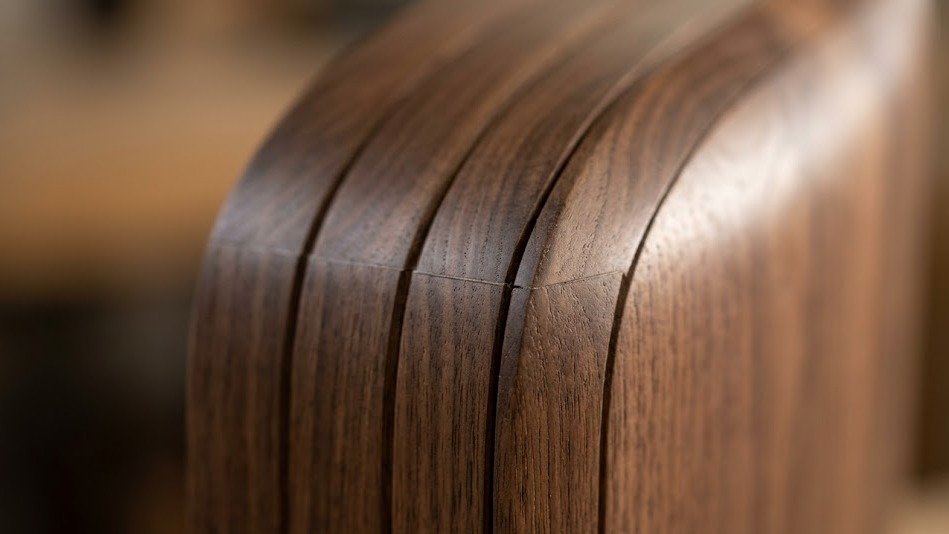
The collections staff at the Suffolk County Vanderbilt Museum are the right people to ask about specific furniture pieces and their construction methods. The museum’s archives hold the estate records and the catalog documentation that would confirm or revise what craft analysis suggests. What any careful visitor can do is look at the furniture in the marine museum context with new attention — at the curved surfaces, at how the grain runs on a convex face, at whether the curve was described by bending or by cutting.
A barrel-maker would know the difference immediately, by feel, by sound, by the way the edge-joint closes under pressure. So would any woodworker trained to read construction before finish.
A Footnote on Craft Continuity
The Gold Coast estate era is remembered for its architecture and its social world. What is less discussed is the craft economy it both depended on and helped destroy — the local tradesmen who built, furnished, and maintained properties like Eagle’s Nest, bringing skills from industries that were shrinking even as the estates themselves were rising.
Coopered furniture in the Vanderbilt Museum collection, if confirmed, would be one small piece of that larger story. A barrel-stave cabinet in a marine museum, built by a craftsman who learned the bevel from his father’s cooperage shop, shipping oysters to the city. The technique surviving the industry that created it, finding its way into decorative work, into the rooms of the very class whose appetite for Long Island waterfront had transformed the landscape those oyster barrels once moved through.
The Vanderbilt Museum is at 180 Little Neck Road in Centerport. It is open to the public and worth an afternoon. Go for the marine museum. Look closely at the furniture.
This is for informational and historical purposes only. For current listings and market data, contact Pawli at Maison Pawli.
Sources
- Suffolk County Vanderbilt Museum: vanderbiltmuseum.org/about-us/
- Wikipedia, “Vanderbilt Museum”: en.wikipedia.org/wiki/Vanderbilt_Museum
- Long Island Traditions, “Fishing”: longislandtraditions.org/fishing/
- Mystic Seaport, oystering on Long Island: research.mysticseaport.org
- Historic Hudson Valley, “Barrels and Coopered Goods”: hudsonvalley.org
- Lost Art Press, “John Cox and the Lost Art of Traditional Coopering”: blog.lostartpress.com
- Hudson Valley One, cooperage industry timeline: hudsonvalleyone.com
- Colonial Williamsburg, “Barrels and Buckets”: research.colonialwilliamsburg.org
- Town of Huntington, “19th Century Industry”: huntingtonny.gov